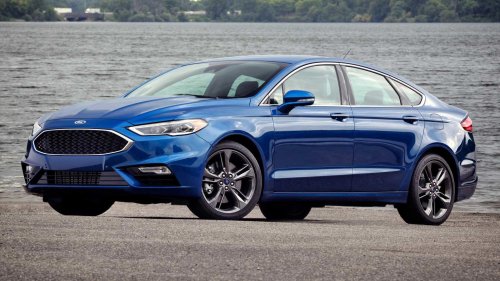
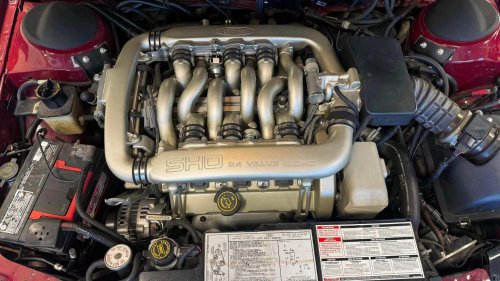
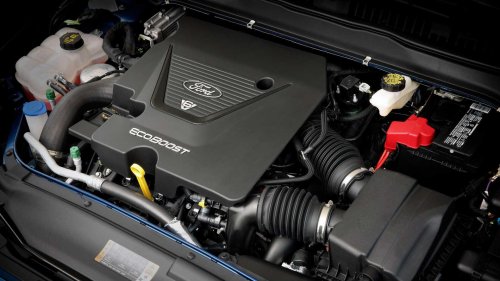
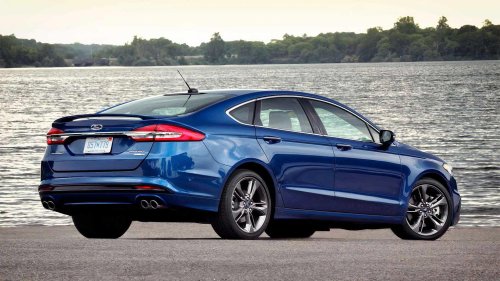
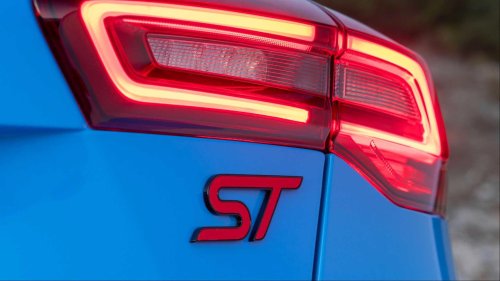
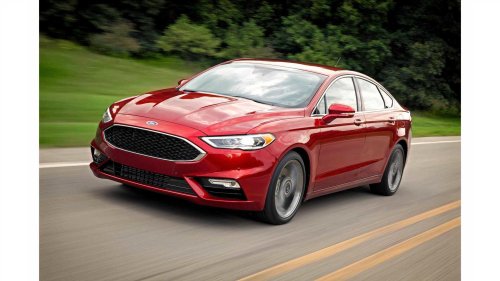
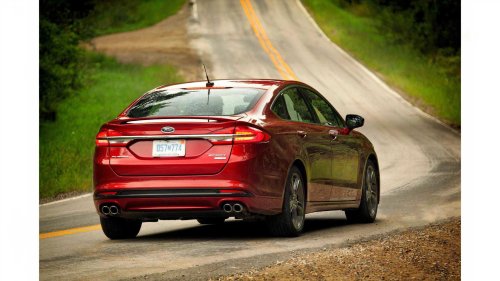
Fast cars have always been cool. Even non-enthusiasts feel that compulsion towards Jeremy Clarkson’s favorite things: speed and power. Until recently, with the arrival of 1,000 HP EVs, you typically paid the toll for speed and power by being noisy and conspicuous. A shouty exterior and the bellow of a charismatic engine are the hallmark of supercars after all. The Lamborghini Countach, for example, is anything but subtle. In fact, the Countach, Ferrari F50, Corvette ZR1, and all of their winged brethren stand in stark contrast to subtlety, but are awesome nonetheless. UPDATE: 2026/03/19 11:41 EST BY JARED SOLOMON This article has been updated with new perspective on the car's relevance in today’s performance car landscape.Despite the agreed-upon awesomeness of fast cars you know are fast, automotive enthusiasts have always harbored a fondness for “sleeper” cars. To the uninitiated, a “sleeper” is a car that doesn’t have to pay the toll for its speed. In other words, a sleeper car will still blend into traffic despite its underlying performance. You could be next to a car that could disappear over the horizon in five seconds, but you’d never know. Sleepers can often be aesthetically toned-down versions of faster cars, like the GT3 Touring, or wingless C8 Z06. Sometimes, they can just be fast cars that look like slower cars. The Chevy SS had a 415 HP 6.2L LS3 V-8 under the hood, but could easily be mistaken for a rental Malibu. Most commonly, though, sleepers are fast versions of regular cars, like a B7 Audi RS4, Volvo V70R, Lexus GS-F, or Ford Taurus SHO. A Fast Fusion? Ford Admittedly, if you think of a "sleeper" and Ford, you’re probably thinking of the SHO. The Taurus SHO debuted in 1989 with a 220 HP Yamaha-built 3.0L V-6 and continued to use that engine through its second generation. Believe it or not, it actually beat the Mustang GT and the BMW M3 of its day. The third generation introduced a 235 HP 3.4L Yamaha-built V-8, and when the sixth generation came around in 2010, the 365 HP 3.5L Ecoboost V-6 version followed shortly thereafter. The SHO is a quintessential sleeper, but an even sleepier sleeper was hidden away in Ford’s lineup in the final years of the 2010s.Cars & BidsThe Ford Fusion Sport is not quite as fast as the SHO, but it somehow manages to be more subtle. The Sport badge is almost as invisible as “SEL” or “Titanium” on the rear of the car. And it’s not as though there were many other clues to what powerplant was dormant beneath the hood. Here is a list of the exterior differences unique to the Fusion Sport: black mesh grill, “Sport Badge”, rear spoiler, and quad exhausts. Talk about subtle. The performance, however, was far from subtle.Ford As a mid-size sedan, the Fusion competed with well-loved marques such as the Toyota Camry, Honda Accord, Hyundai Sonata, Kia Optima/K5, and Chevy Malibu. The base Fusion 1.6L (later 1.5L) Ecoboost, as well as the 2.5L naturally aspirated Duratec engines, provided no more than 181 HP and 184 lb-ft of torque. On many of the upper trim levels, the ubiquitous 2.0L EcoBoost would up power to 245 and torque to 275. This is already massive power for a mid-size sedan. The most powerful sedan available (other than the Fusion Sport) was the V-6 Camry, which during the same period had 301 HP and 267 lb-ft. The Accord V-6 had 278 HP and 252 lb-ft, and the Accord 2.0 Sport pumped out an equally impressive 252 HP and 273 lb-ft. The other competitors had as much or less in their respective top trims. Ford engineers decided to put a truck engine in the Fusion. The 2.7L Ecoboost produces an astonishing 325 HP and 380 lb-ft of torque. Not only that, but it came with standard AWD, meaning it could put the power down just well enough for a 5.3-second zero-to-sixty run. Not Just An Engine Ford Fusion Sport sedan rear quarter Most “regular” cars that get stuffed with a bigger engine do only one thing better than their slower counterparts: straight-line speed. The Camry V-6, Accord 2.0 Sport, and other “fast” versions of normal cars typically get a nice power bump, and that’s all she wrote. While Ford certainly didn’t treat this like Porsche did with the GT3RS vs a base Carrera, they did add some nice upgrades that make the Sport a bit more of a value proposition. First and foremost is the standard all-wheel drive. Now, it's worth noting that you could spec AWD on a lower-trim Fusion, but it came standard on the Sport. And for good reason, given that 380 lb-ft would make a front-wheel-drive version an unwieldy, torque-steering nightmare. The other major performance upgrade was Ford's Continuously Controlled Damping (CCD). This uses electronically controlled valves in the shocks to adjust the dampers in as little as 2 milliseconds. This system isn’t completely dissimilar from MagneRide, but it utilizes a different method to achieve the same result. The big selling point at the time, as it relates to CCD, was Pothole Detection. In theory, it could stiffen the suspension on a single wheel in order to prevent the wheel from dropping into a pothole. A must-have if you drive on any roads in the state of Rhode Island. Why Not An ST? Ford Unlike the Focus and Fiesta ST, which were designed and marketed as fun, enthusiast-focused cars, the “Sport” models were considered more of a half-measure. The ST brand originally meant the car was manual transmission only and a hoot to drive. That said, the Focus ST may have had gobs of power, a more “sporty” suspension, and brake torque vectoring, but ultimately it wasn’t a far cry from what Ford had done to the Fusion, minus the three-pedal situation. It seemed that Ford originally intended to use the ST branding and didn’t want to muddy the waters with the Edge or Fusion, so they opted for the “Sport” branding. It was only later on that Ford decided any and every car could wear the ST badge, following in the footsteps of brands like BMW and Cadillac in their efforts to cash in on name equity. The Ford Edge Sport became the Edge ST, with only minor changes to its performance capabilities. Had the Fusion Sport been built today, it would almost certainly have worn an ST badge. The Fusion Sport Was Ahead Of Its Time Looking back, the Ford Fusion Sport feels like a car that arrived just a little too early — or perhaps just a little too late. At a time when most midsize sedans were focused on efficiency, comfort, and incremental performance gains, Ford quietly dropped a twin-turbocharged V6 with all-wheel drive into what was otherwise a very normal-looking family car.Today, that formula feels a lot more familiar.Modern performance cars are increasingly embracing the idea of subtle speed. Whether it’s high-powered EVs that deliver instant acceleration without drama or luxury sedans packing serious horsepower behind understated styling, the market has slowly shifted toward exactly what the Fusion Sport was doing years ago. It didn’t need aggressive vents, oversized wings, or flashy badges to prove a point — the performance spoke for itself.That’s part of what makes the Fusion Sport so interesting in hindsight. It wasn’t chasing the traditional “sports sedan” formula, nor was it trying to compete directly with German rivals. Instead, it carved out its own niche as a genuinely quick, all-weather, under-the-radar performance car for people who didn’t want the attention that usually comes with speed.In many ways, it foreshadowed the direction the industry is heading today — where being fast doesn’t necessarily mean being loud about it. And that’s exactly what defines a great sleeper. Death of Ford Sedans 17FusionSport_01_HR (2) Whether or not the Fusion deserved an ST badge is up for debate. That said, as Ford has proven in the last several years, people like the ST branding. We can only speculate as to whether different branding would have drawn more attention to a pretty killer sedan. Even if it had, sedans were dying then and are still dying now. The Fusion’s sales peak was in 2014 with 306,860 units sold, but only 110,665 in its final year, according to GoodCarBadCar. The segment leader, the Toyota Camry, sold 428,606 in 2014 and still managed to move 317,185 just last year. There is clearly still a market for sedans, but Ford felt it was no longer worth maintaining a presence in segments that were always dominated by Honda and Toyota, especially as demand for sedans continued to wane.17FusionSport_42_HR (1) Today, the Ford Explorer ST carries the torch for the forgotten Fusion. Though unlike the Fusion Sport, which always had an engine unavailable to the other trims, the Explorer ST’s 400 HP 3.0L Ecoboost V-6 can also be optioned on the Platinum trim. The Fusion Sport, then, is a celebration of what Ford is capable of in the sedan market. It may have been forgotten, but man, it is truly one of the coolest sleepers of the modern era.Sources: Caranddriver.com, ford.com, goodcarbadcar.com