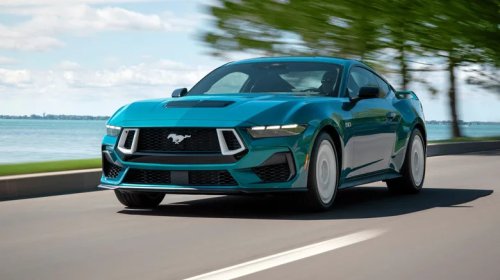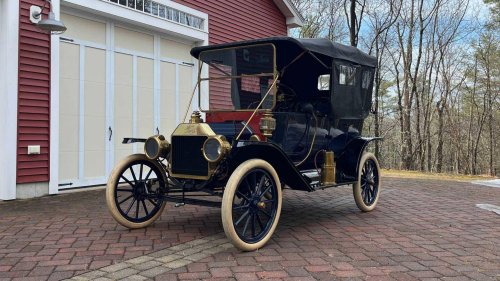
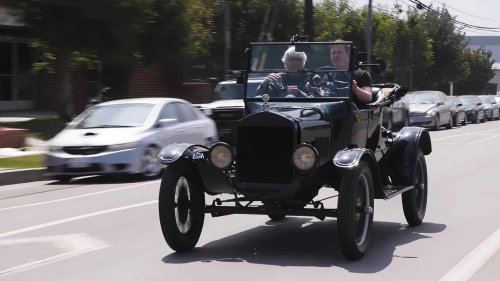
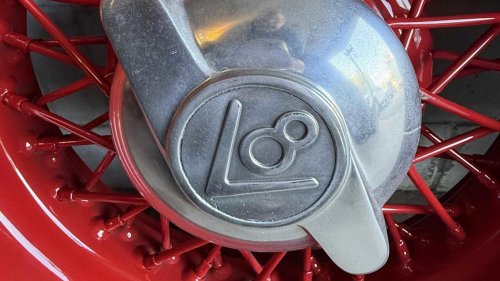
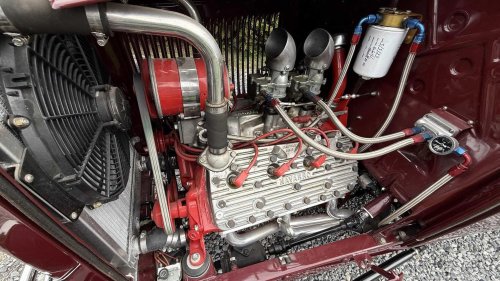
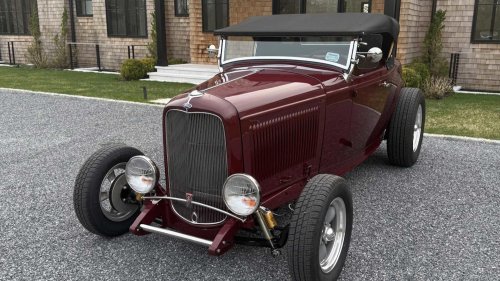
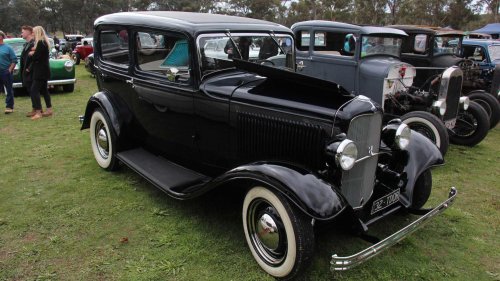



















Henry Ford introduced the first mass-produced automobile in 1908. His assembly line was a huge leap forward in manufacturing and forever changed the auto industry. But it wasn't his only major innovation. Near the end of his career, Ford also debuted an engine unlike anything the world had ever seen. The power plant saved the company and changed Detroit's future forever.In 1928, twenty years after the debut of the Model T, Henry Ford was beginning to look like a one-hit wonder. Fierce competition from innovative new mass market cars from the Dodge Brothers and William C. Durant's General Motors was gaining market share. By the early 1930s, shrinking sales because of the Great Depression threatened to shut down Henry Ford's company for good. But the 65-year-old inventor had one more trick up his sleeve. 1928: Ford Had Fallen Far Behind MecumHenry Ford revolutionized the auto industry when he introduced the world's first mass-produced car in 1908: the Model T, with its base price of $825. With further manufacturing innovations and sheer scale of production, he reduced the Model T’s MSRP throughout its production run. By 1925, the “runabout” configuration cost just $260. Ford famously said that any of his factory workers could afford to buy the car they assembled. This changed American culture forever.But by the end of the Model T's nineteen-year run, it was completely underpowered and outdated. The Model A offered some improvements when it debuted for the 1928 model year. But it suffered from an anemic four-cylinder engine. They weren't exactly fast cars, and other automakers were closing the sales gap. The Model A was starting to look like too little, too late. Then the Great Depression gutted sales and threatened to put the company out of business for good. When Four Cylinders Wasn't Enough Jay Leno's Garage, YouTubeHenry Ford’s first instinct may have been to further cut costs and lower the Model A’s MSRP. It had worked with the Model T. But then Chevrolet introduced a budget-friendly inline six-cylinder in 1929. The company even advertised “a six at the price of a four” to stick it to Ford. It worked, and the Bowtie finally beat the Blue Oval in sales.Ford was forced to close factories, sending tens of thousands of workers home. The entire company looked to Henry Ford for direction. The entire country looked to one of its richest entrepreneurs for inspiration. But Henry Ford was nowhere to be found. Henry Ford’s Secret Project Bring a Trailer Henry Ford and his five top engineers had fled the huge Dearborn engineering office and sequestered themselves in a forgotten building in what would become his Greenfield Village Museum. Fittingly, it was Thomas Edison's original lab, which he had donated to Ford, disassembled in Florida, and shipped to Michigan.The storied surroundings must have inspired the sixty-five-year-old inventor with a flurry of fresh ideas. Henry Ford tested some wild new engines, including an X-8, which had two banks of downward-facing cylinders. It did not run well. Ford’s greatest innovations had been in automobile manufacturing. It would be one final manufacturing innovation that would save his company and catapult the entire auto industry into the next decade. Beating Chevrolet At Its Own Game Bring a TrailerV8 engines were already common in luxury vehicles, such as the Grand Tourers that Ford’s Lincoln Division offered. Henry’s son, Edsel, headed that division. With a keen eye for design and a mind for marketing, he’d done very well with the brand. But when he told his father that they needed an entry-level eight-cylinder Ford to beat Chevrolet, Henry feared it was impossible.When Lincoln built a V8, it cast the engine’s block and cylinder heads separately. Then, on a bench, workers adjusted, fit, and sealed the pieces. It was a time-consuming process—expensive. In the 1930s, V8s were premium engines only available in luxury cars. Henry Ford realized that to beat Chevrolet, he would need to pour entire V8 blocks as a single casting. 1932: Ford’s “Flathead” V8 Debuts Bring a TrailerBy early 1932, Ford had succeeded. Using sand-casting, including multiple sand cores for the block’s channels, Ford invented an iron V8 “monobloc.”Henry Ford had configured the engine with a flat head and side valves inside the V. Ford collectors now call these the "flathead" V8 generation. Ford also used three main bearings instead of the customary five to reduce engine costs. Finally, the Ford engineers developed a fast, highly automated process to machine all eight cylinders at once. They used similar processes to rapidly test and fine-tune the rotating assembly components. Ford made multiple major innovations to build its first mass-produced V8. As a result, Henry Ford once more catapulted the industry ahead by years.Other technology in the new Ford engine included two water pumps, a generator/fan combo, and an aluminum intake manifold. The vehicle also featured the company’s first mechanical fuel pump. The new chassis had a longer 106-inch wheelbase and a drop-center frame for a lower, more stable ride. Now, Ford Motor Company just needed a car to package all this technology into. The Ford Family Fires On All Cylinders Sicnag via WikiMedia CommonsEdsel headed up the design of an improved Model A, built around the new V8. The result is the legendary 1932 Ford Model B and the V8-powered “Model 18.” Almost everyone simply called the Model 18 the "Ford V8.” It was an eye-catching and futuristic car in every respect. Innovations included moving the gas tank to the back for safety, integrating the sides of the body into the frame, and engineering a rear tire mount that doubled as a rear frame crossmember. It was still a traditional body-on-frame car. But all of its weight-saving innovations signaled the unibody future of the industry.The country took notice, with Ford hosting huge events at dealerships across the country. When police departments ordered cars, Ford threw parades. When actors bought cars, Ford organized photoshoots with complimentary deluxe editions. Historians estimate that within two days, nearly six million Americans had seen the new car. And they liked what they saw. It did not hurt that the single model gave 250,000 factory workers jobs all across the country.Some of the new Ford’s best reviews came from some of the country’s least savory characters. Bank robber John Dillinger reportedly wrote Henry Ford a letter, saying, “I want to thank you for building the Ford V-8 as fast and as sturdy a car as you did, otherwise I would not have gotten away from the coppers in Wisconsin, Minnesota, etc.” Clyde Barrow (of Bonnie and Clyde) also took pen to paper. "Dear Sir, While I still have breath in my lungs I will tell you what a dandy car you make. I have driven Fords exclusively when I could get away with one." The Engine That Saved Ford And Set The Direction For Detroit With a reliable and affordable V8, Ford was once again the automaker to beat. Its new car was an instant icon. The 1932 Ford was such a high-water mark for Detroit that it’s still one of the most prized vehicles among collectors and hot rodders alike.While the flathead V8 was the final project Henry Ford oversaw, it established the direction of the company for decades. The engine gave Americans “V8 fever.” You might say it’s an affliction the USA has yet to get over. You could also argue the 1932 Ford set the blueprint for one of the automaker's biggest successes 32 years later. In 1964, Ford once again made small, affordable, V8-powered cars cool—and it yet again invented a market segment—when it released the Mustang. But Ford's V8 story began with the 1932.