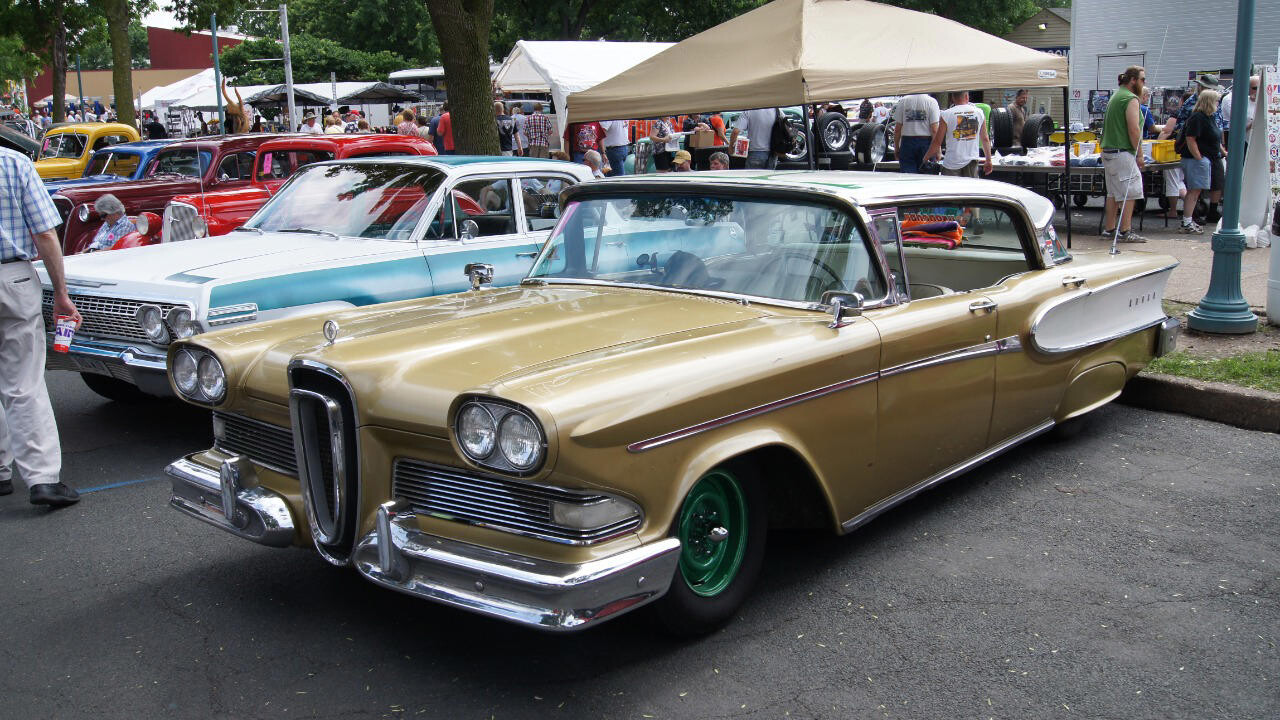
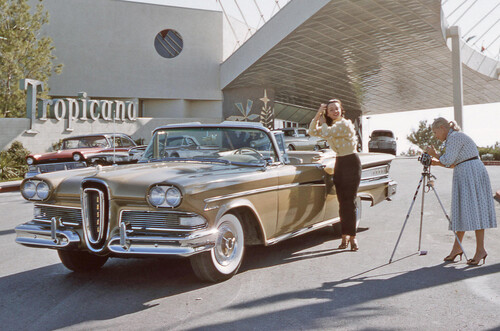
The 1958 Edsel Corsair didn’t just flop it became one of Ford’s biggest misstepsThe 1958 Edsel Corsair was supposed to be Ford’s bold new middle-class status symbol, a car that would slot neatly between humble family sedans and aspirational luxury cruisers. Instead, it became a case study in how a misread market, confused branding, and flawed execution can turn a heavily researched product into a punchline. For Ford, the Corsair was not just an unpopular model but a highly visible misstep that still defines the Edsel name nearly seven decades later. The big bet on a Whole New Brand By the mid-1950s, Ford wanted more than just Ford and Mercury on dealer lots. Executives saw General Motors dominating the mid-price field with Buick, Oldsmobile, and Pontiac, while Chrysler leaned on Dodge and DeSoto. To close that gap, Ford created an entirely new marque, positioned as a step up from the company’s mainline cars and a step below Lincoln. According to company history, the new division was headquartered in Allen Park, Michigan, and was conceived as a separate brand that would compete directly with Buick, Oldsmobile, Pontiac, Dodge, and DeSoto. The new name honored Edsel Bryant Ford, son of Ford Motor Company founder Henry Ford, whose legacy inside the company carried emotional weight. The resulting marque, Edsel, was marketed as the first new brand introduced by a major American automaker in decades, a bold move intended to reshape the middle of Ford’s lineup. Internal planning framed the project as a once-in-a-generation launch. Company leaders described it as a Whole New Brand, and period material recorded under General Year Information for the 1958 model year stressed that Ford Launches a Whole New Brand, not just a new model line. That ambition set expectations high long before the public ever saw a Corsair in person. The Corsair as flagship Inside the Edsel range, the 1958 Edsel Corsair sat near the top. Built on a longer wheelbase and sharing much of its structure with Mercury, the Corsair was intended as a premium choice for buyers who wanted more size and flash than a basic Ranger or Pacer. The Corsair name appeared on two- and four-door hardtops, including the 1958 Edsel Corsair 4 Door Hardtop that enthusiasts now describe as a short-lived but memorable piece of automotive history. One period recollection describes the 4 Door Hardtop as a premium model with distinctive styling and generous equipment, a snapshot of the optimistic product planning that surrounded the launch. Another enthusiast account of the 1958 Edsel Corsair highlights the mechanical and comfort features that were supposed to justify its price. The Corsair used independent front suspension and rear leaf springs for a smooth ride, a configuration that matched contemporary expectations for full-size American cars. Inside, the Interior was described with an emphasis on Features such as a Spacious cabin, bright trim, and optional luxury equipment that aimed squarely at the middle-class families Ford hoped to lure away from rival showrooms. These details show that on paper, the Corsair was not an underdeveloped car. It was a fully specified flagship for a carefully targeted new brand. Research, hype, and the $250 million gamble Ford did not stumble into the Edsel program casually. Company planners spent years studying consumer tastes, running clinics, and segmenting the market to find a gap between Ford and Mercury. One later analysis describes how Ford spent $250 million in 1957 money on the project, a figure also summarized as $250 m, and notes that the company believed it had researched the car more thoroughly than any vehicle in automotive history. Another account of the same campaign repeats the $250 million total and again uses the shorthand $250 m to underline the scale of the investment. That spending covered not only engineering and tooling but also an extensive marketing blitz. In promotional films, Ford Motor Company trumpeted the Edsel as the car that was truly new from name plate to tail lights. One vintage clip even refers to the 1958 Absel as the car that is new in every visible detail, a line that captures how heavily the company leaned on the promise of innovation. The public launch took place on what marketing called E Day, with the Edsel arriving in showrooms in September of 1957 amid a wave of advertising and dealer events. How the market moved while Ford was planning The problem for Ford was that the market shifted between the time executives approved the program and the moment buyers could actually purchase a Corsair. Analysts who later reconstructed the failure point first attributed it to timing. One detailed breakdown of the program lists Bad timing at the top of the reasons the Edsel floundered, noting that an Economic recession beset the U.S. just as the new brand arrived. A companion analysis that uses the same framework repeats that Bad timing and the surrounding Economic slowdown meant that buyers suddenly cared more about value and thrift than about dramatic styling and new nameplates. In that environment, a car positioned above a basic Ford but below a Lincoln had less appeal. Buyers who might have stretched for a mid-price model in a boom year instead stayed with cheaper full-size sedans or shifted to compact imports. The carefully drawn market niche that had looked so promising on Ford’s charts narrowed just as the first Edsels rolled out of plants in Ford and Mercury facilities. Design that divided the showroom Even without a recession, the Edsel’s styling would have been a risk. The Corsair carried the brand’s most distinctive cues, especially the vertical center grille that critics quickly likened to everything from a horse collar to a toilet seat. The intention was to give the new marque an instantly recognizable face. In practice, the look overwhelmed the rest of the design and made the car an easy target for jokes. Inside, the Corsair experimented with features that were meant to feel futuristic. Some cars included a pushbutton transmission selector mounted in the center of the steering wheel hub, an arrangement that looked advanced in brochures but confused drivers in daily use. The same enthusiastic description that praises the Corsair’s Spacious Interior and Features also hints at how unusual some of the controls felt compared with more conventional rivals. For a buyer cross-shopping Buick, Oldsmobile, or Pontiac, the Edsel’s dashboard and grille could come across as strange rather than aspirational. Quality problems on day one Styling alone did not sink the Corsair. Quality and reliability issues turned early adopters into vocal critics. One historical analysis of the program argues that perhaps the factors that harmed the Edsel’s reputation the most after it was launched were quality control and reliability. That account notes that while the engineering was broadly sound, execution was inconsistent. Cars left the factory with trim misaligned, paint flaws, and mechanical issues that should have been caught before delivery. Another retrospective on the same period adds that Edsels were being built in existing Ford and Mercury plants, meaning there was no distinction in craftsmanship or build quality to justify the new brand’s premium pricing. Instead of a carefully curated flagship experience, buyers sometimes encountered a car that felt hastily assembled. When combined with the bold styling, those lapses made the Edsel an easy symbol of corporate overreach. Marketing confusion and the mid-price maze Ford’s marketing strategy added another layer of difficulty. The company tried to position Edsel models, including the Corsair, in a narrow band of prices that overlapped with both high-end Fords and lower-end Mercurys. A detailed fact sheet on the 1958 Edsel describes how Ford’s management compared the company’s roster of makes with those of its Detroit rivals and decided that a Whole New Brand was needed to fill the perceived gap. Under General Year Information, the document explains that Edsel was slotted as a distinct make rather than a trim level, yet in practice, the cars shared much with existing Ford products. Buyers who walked into showrooms often struggled to understand why they should pay more for an Edsel instead of a well-equipped Ford. Another analysis of the program explains that the company’s own research, summarized under The Vision Behind the Edsel, had identified a desire for more personalized cars. Yet by the time the Edsel arrived, the brand’s identity was muddled. Even the name, honoring Edsel Bryant Ford, did not clearly signal where the car fit in the Ford Motor Company hierarchy. Sales targets that never materialized The sales numbers tell the story of how far the Corsair and its siblings fell short of expectations. A period report from the Boston Globe, quoted in a later Edsel sales and production history, records that Edsel’s boast of 55,000 sales in its first phase did not match reality. The same account notes that official final total production was 63,110 cars for that early period, a figure that covers the full range rather than just the Corsair. Those totals were a fraction of what Ford had forecast when it committed $250 million to the program. Another historical summary of the brand’s rise and fall points out that while the answers may vary somewhat when people explain the failure, Many people simply remember that it was a car introduced in the 1950s that failed miserably. That gap between internal goals and public memory is part of why the Edsel still stands as shorthand for a corporate flop. The Corsair’s place among Ford’s biggest flops In later rankings of Ford’s misfires, Edsel usually appears near the top. One enthusiast roundup of Ford’s biggest flops lists the Edsel alongside later misjudged models such as Aspire, Five Hundred, Ka+, and EcoSport, and introduces the segment with the phrase Bet You Ain’t Got One. The same piece refers to Edsel as an automobile marque that was planned, developed, and manufactured by the company as a major strategic move, yet now remembered mainly for its failure. Another modern analysis labels the Edsel brand as Ford’s Worst Bet and describes the Fatal Mistakes That Turned Edsel Into Ford’s Worst Bet in detail. That account argues that the Edsel brand flopped for several reasons and calls the outcome a perfect storm of misreading the market, overpromising innovation, and underdelivering on quality. A more Corsair-focused breakdown, framed around why Ford’s Edsel Corsair was seen as the biggest failure of the 1950s, adds that building Edsels in Ford and Mercury plants blurred any sense of exclusivity and made it harder to justify the higher price. Inside the failure: what planners missed Looking back through the planning documents and later analyses, a pattern emerges. The Ford team behind the Edsel did not lack data. One modern explainer on why the Ford Edsel failed describes how researchers gathered extensive feedback under a section titled The Vision Behind the Edsel. That narrative notes that the Edsel was named after Edsel Bryant Ford and stresses how thoroughly Ford Motor Company tried to understand what mid-price buyers wanted. The same source reminds readers that Henry Ford’s legacy loomed over the decision to honor his son with the new marque. More from Fast Lane Only Unboxing the WWII Jeep in a Crate 15 rare Chevys collectors are quietly buying 10 underrated V8s still worth hunting down Police notice this before you even roll window down The post The 1958 Edsel Corsair didn’t just flop it became one of Ford’s biggest missteps appeared first on FAST LANE ONLY.