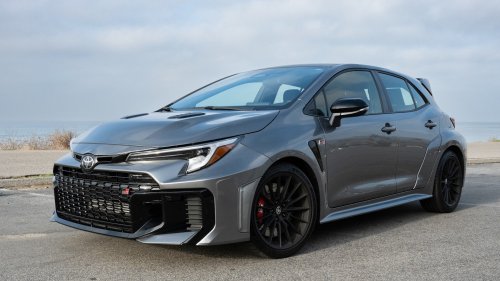
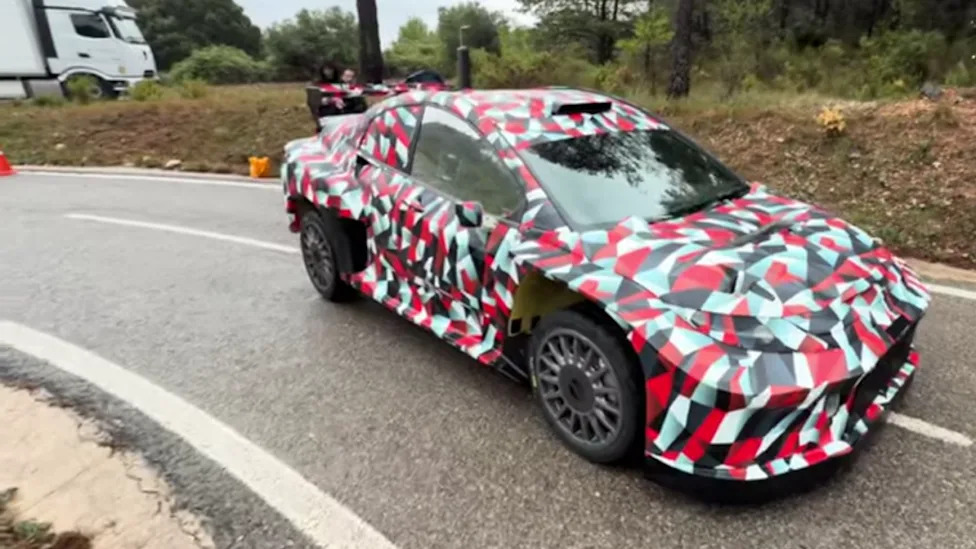
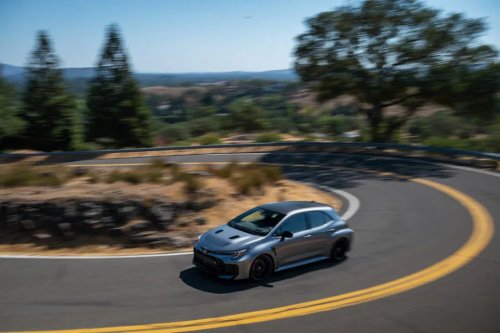
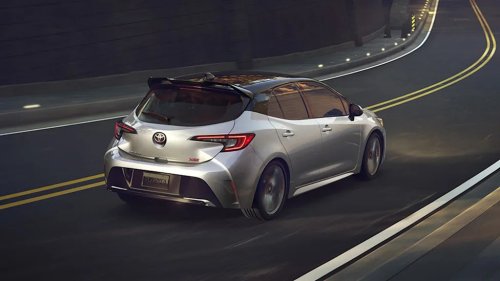
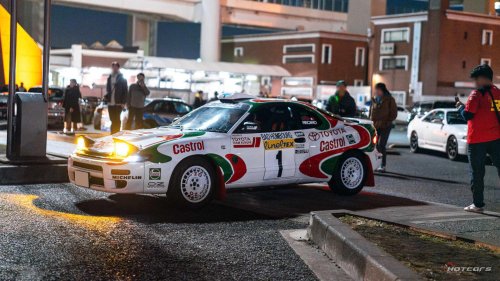
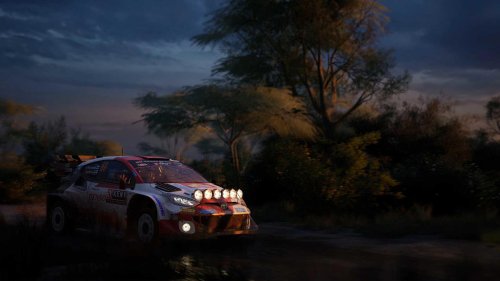
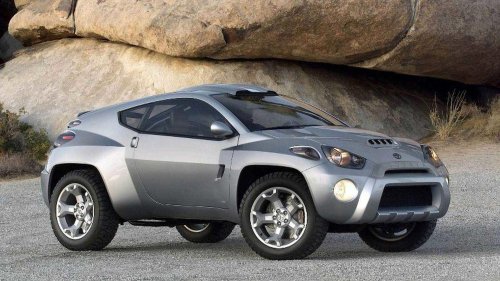
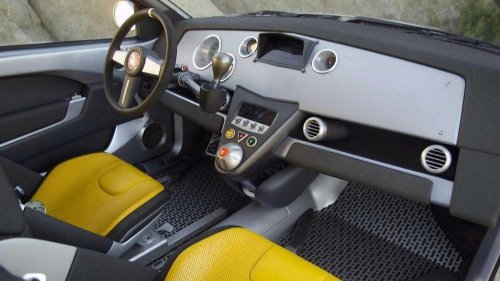
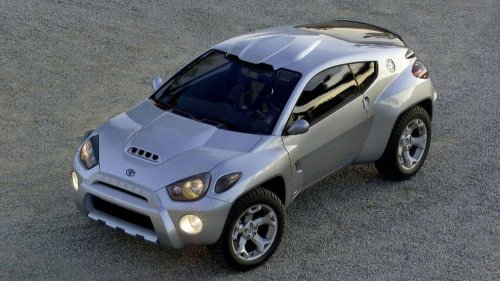
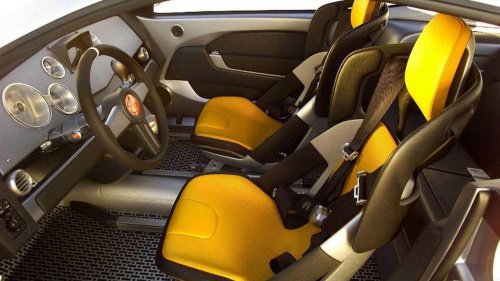
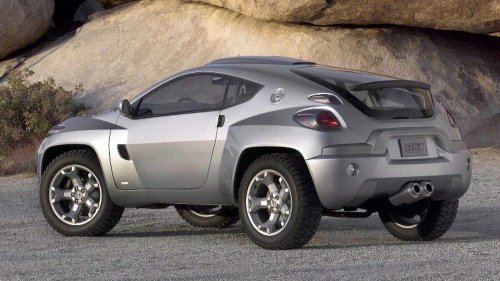
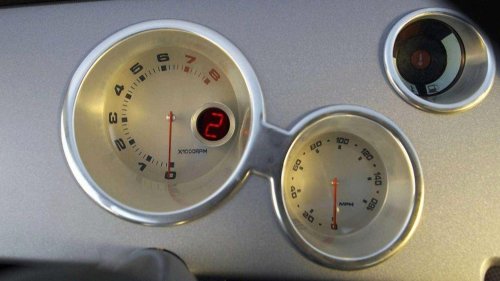
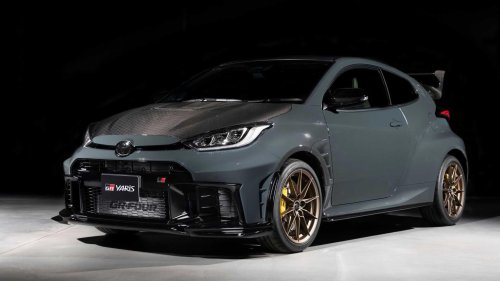
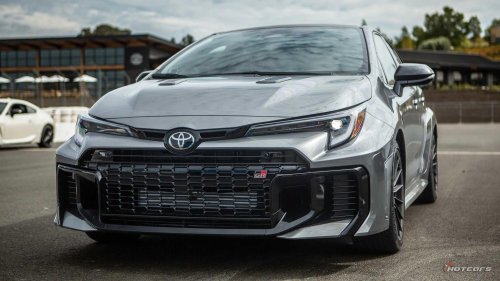
Sports cars usually like smooth pavement – they need grip, clean apexes, and roads that look like they were ironed flat. Off-road machines live by a different code—shrug at ruts, laugh at loose gravel, and treat broken ground like a challenge instead of a problem. Most car companies keep those worlds apart for a reason. Even today, when the Porsche 911 Dakar and Lamborghini Huracán Sterrato have made the whole raised-sports-car thing feel fashionable, the formula still sounds a little unhinged on paper.Toyota tried that mashup long before it became cool to put knobby tires on something expensive and dramatic. The result looked tough, compact, and just weird enough to scare the sensible people in the meeting room. Toyota Had The Pedigree To Dream Up Something This Wild Ayesh Seneviratne / HotCars By the time the concept appeared in 2001, the brand had already built a serious rally resume. The Celica GT-Four helped Toyota win drivers’ titles with Carlos Sainz, Juha Kankkunen, and Didier Auriol, while the company also grabbed manufacturers’ championships in 1993, 1994, and again in 1999 with the Corolla WRC. Toyota’s rally cars won on gravel and mud, often in brutal events like Safari Rally, where durability mattered as much as raw pace.Rally racing gave Toyota a different picture of performance. Circuit racing tends to celebrate low, wide, polished machines, while rally celebrates violence. Cars jump, slide, and claw for grip on surfaces that look like a road crew gave up halfway through the job. Toyota knew that look had appeal, too. It also knew younger fans noticed.Codemasters The company also had experience with vehicles that blurred categories. The original RAV4 already mixed passenger-car behavior with light off-road ability when it launched in 1994. By 2000, the second-generation RAV4 leaned even harder into the “stylish and rugged” pitch, with a full-time 4WD system, independent suspension, and a wide, low shape for a small SUV. In other words, Toyota already knew how to mix urban manners with dirt-road credibility.Then there was CALTY, Toyota’s California design studio. CALTY had opened in 1973 as the first North American design center established by a Japanese automaker, and by the early 2000s, it had become one of Toyota’s most important creative outposts. For this project, Toyota engineering did something unusual – it asked CALTY to come up with its own vehicle concept without the usual rules on platform, powertrain, or dimensions. The Toyota RSC Was A Rally Car For The Public Roads Toyota The machine that came out of that brief was the Toyota RSC, short for Rugged Sport Coupe. Toyota unveiled it at the 2001 Chicago Auto Show and said CALTY created it to explore a new kind of next-generation sports car aimed at young buyers. That goal alone made the RSC unusual – Toyota wanted to reach people who liked performance, image, and utility all at once, which sounds obvious now and sounded a little odd back then.The automaker described the RSC as a sporty two-plus-two body with four-wheel drive hardware and design cues pulled from rally cars. The exterior used hard edges, swollen fenders, and exposed-looking forms that made it seem assembled in a hurry for a desert stage. Inside, the cabin skipped comfort fluff and went straight for race-car theater. Toyota talked up the sparse, functional layout, a high-mounted sequential shifter, a GPS monitor, and lightweight carbon-fiber-backed bucket seats with full harnesses.Toyota Interestingly, Toyota kept showing the concept after Chicago, with appearances at the New York Auto Show and the 2001 Tokyo Motor Show, which suggested the company knew the idea had legs even if it never planned to build it. One of the designers behind it later noted that the show car itself was built in Torino, Italy, before heading to Chicago. So while the concept felt very California in spirit, it had a little Italian passport stamp in the story, too. Short Wheelbase And A Naturally-Aspirated V8 ToyotaOn paper, the RSC had the footprint of something much tighter and more playful than the average SUV. Toyota listed a 98.1-inch wheelbase, a 162.1-inch overall length, a 72.9-inch width, and a 61.1-inch height, plus big 31x10.5 R19 tires. The 1994 original RAV4 measured just 145.27 inches long, and Toyota’s later five-door expansion brought it to about 161.47 inches. The RSC sat right in that neighborhood, but it looked far meaner and far more focused.Toyota’s original Chicago launch material spent far more time on the design brief than on hard drivetrain numbers, and later articles noted that the concept never came with a detailed public tech dump. Still, surviving spec rundowns almost always describe the RSC as packing a naturally-aspirated V8 and a manual-style sequential setup. That lines up with the shifter, the race-car cabin, and the whole “rally toy for the street” theme, even if Toyota never treated the RSC like a normal brochure car.Toyota Those proportions tell the bigger story anyway. A short wheelbase, a squat stance, huge tires, and four driven wheels gave the RSC the attitude of a rally raid special more than a rock crawler. It looked like it wanted to blast across a fire road, spit gravel at the horizon, and make expensive noises while doing it. Why It Never Reached Production Toyota The official answer is the simplest one. Toyota said from the start that the RSC was a pure concept vehicle. The whole point was to make an emotional statement for young buyers, not to preview a production model. Toyota even framed it as something that was not meant for everybody to understand or appreciate. That's automaker code for, "Yes, this is weird on purpose."The business answer sits right behind that official one. The manufacturer also said the same thinking behind the Matrix informed the RSC, and it talked openly about chasing young buyers with high performance, high image, high utility, and affordable pricing. That last phrase likely killed any serious chance of a showroom RSC – a niche two-door 4WD coupe with a race-style interior, exotic proportions, and likely costly hardware would have been hard to build cheaply and even harder to explain to dealership shoppers. Toyota eventually created Scion in 2003 as a laboratory for attracting younger customers, which gave the company a far safer and cheaper way to test bold ideas.Toyota Let’s also imagine the market situation at the time – in 2001, it had clear lines. Buyers who wanted a sports car bought a sports car. Buyers who wanted an SUV bought something practical, upright, and honest about the fact that it might spend most of its life at a Target parking lot. The weird middle ground barely existed. That's why the RSC feels prophetic now—when Porsche launched the 911 Dakar and Lamborghini launched the Huracán Sterrato more than two decades later, the market finally had a language for dirt-road sports cars. Toyota just said the quiet part loud way too early. The Closest Thing To A Rally Car Toyota Actually Built Toyota If the RSC was the wild dream, the GR Yaris became the real-world answer, just in a different shape. When Toyota unveiled the GR Yaris in 2020, it called the car a homologation model born to win the World Rally Championship. Toyota Gazoo Racing went even further and described it as the brand’s first 4WD sports car and first WRC homologation model in 20 years. That's about as close as a major automaker gets to saying, "Yes, this one came straight from the gravel notes."The reason the GR Yaris matters here is not the body style, though—it's the method. The company said it built the GR Yaris from scratch using knowledge learned through WRC competition, then paired that work with the GR-Four all-wheel-drive system and a purpose-built sports 4WD platform. That approach had a lot of connection with the old Celica GT-Four and Toyota’s rally golden age. So while the GR Yaris never copied the RSC’s lifted-coupe silhouette, it absolutely carried the same belief that dirt-bred engineering could make a road car more exciting.David Alpert / HotCars For American enthusiasts, the GR Corolla is actually the closer local cousin. Toyota launched it with a six-speed manual and a rally-developed GR-Four all-wheel-drive system that lets drivers shuffle torque front to rear in different settings. Sure, it does not have the RSC’s cartoonish fender flares or concept-car swagger, and it definitely does not look like it escaped from a late-night sketchbook session at CALTY, but the spirit is there.That's what makes the RSC more than just an oddball concept from the early 2000s. It was a forecast—Toyota looked at its rally history, its growing SUV know-how, and the tastes of younger buyers, then imagined a sports car that didn't worship pavement. The market ignored that idea for years, then luxury brands made it trendy, and Gazoo Racing made the engineering case for it in a more practical form.Source: Toyota, Gazoo Racing
















 +5 others