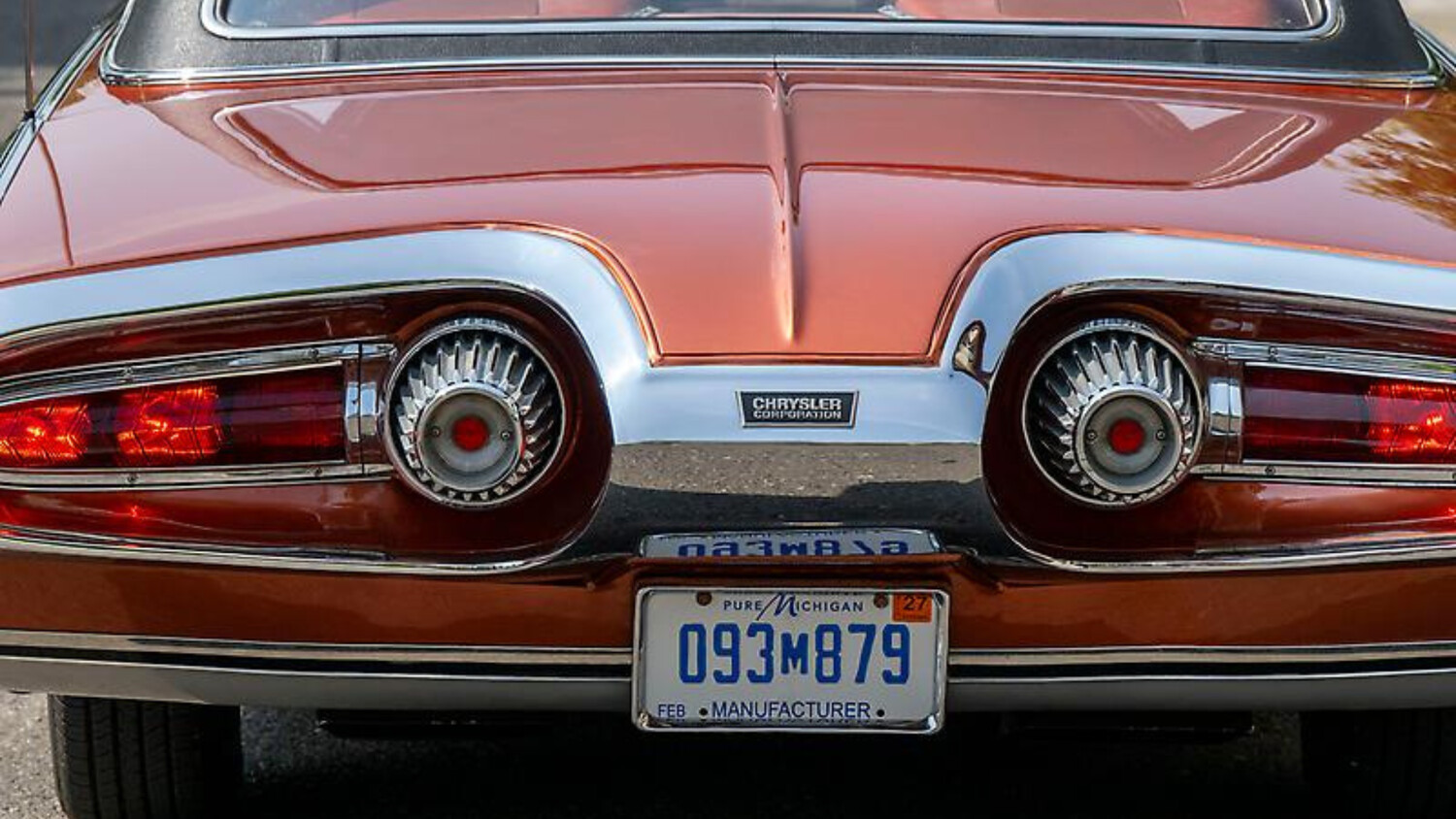
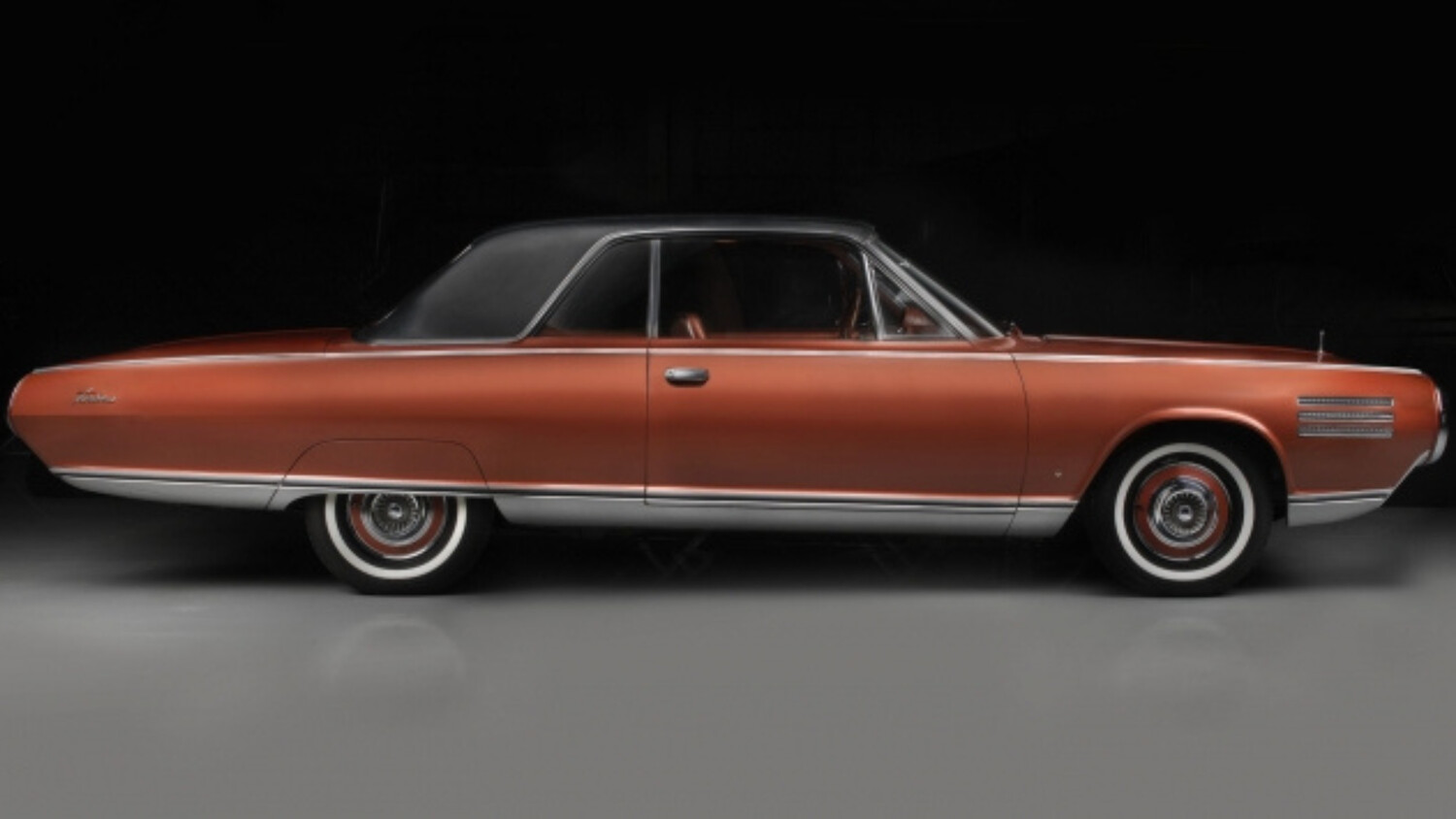
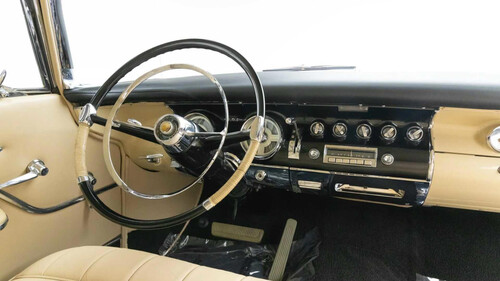
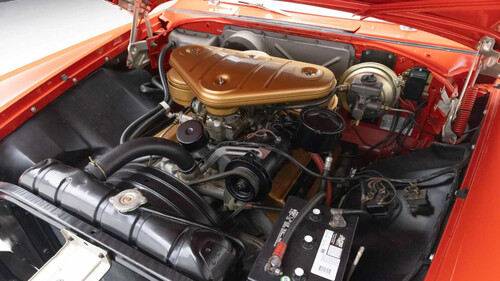
There is a specific kind of automotive heartbreak that comes from watching something genuinely brilliant get strangled before it can breathe. Not because the engineering failed, and not because the public rejected it. People loved it. They applied to Chryslerin their thousands for the chance to live with one. They drove it on their streets, parked it on their driveways, and handed it back three months later, most of them reluctant to let go.What came next is one of the most quietly devastating decisions in American automotive history. A technology that had been in development since the late 1930s, that had clocked more than a million real-world road miles, and that demonstrably ran on diesel, kerosene, jet fuel, vegetable oil, and on one well-documented occasion a full tank of Mexican tequila, was shelved. Then most of the cars were destroyed. Not in accidents. Deliberately. Forty-six of them, crushed and burned, because keeping them would have cost more than eliminating them.The engineering was not ahead of its time in any vague or promotional sense. It was structurally ahead of the regulatory framework built to govern it. That mismatch is exactly what killed it. A Program Four Decades In The Making Chrysler's turbine engine research did not begin with the car most people associate with it. Work on gas turbine propulsion started at the company in the late 1930s, and by 1953 the first turbine-powered prototype had completed a cross-country drive to confirm the technology worked on public roads. A series of increasingly developed turbine vehicles followed through the 1950s and into the early 1960s, each generation refining the concept further. What began as an engineering experiment had become, by the early 1960s, a serious contender for series production.By 1962, Chrysler had taken a fleet of turbine cars on a barnstorming tour across North America, Europe, and Mexico, giving rides to almost 14,000 people and drawing crowds that made the company's intentions clear. More than 30,000 people applied to participate in the full public evaluation program that followed. The cars selected for that program were bodied by Carrozzeria Ghia in Turin and assembled in Detroit, finished in a metallic paint Chrysler named turbine bronze. They remain among the most technically unusual vehicles ever handed to ordinary members of the American public, and the evaluation program itself is one of the most extraordinary public trials any automaker has ever run. What The Chrysler Turbine Car Is Worth Today via Stellantis MediaPutting a conventional valuation on the Chrysler Turbine Car is not straightforward, because no conventional market exists for it. Of the nine surviving cars, seven are in museums and not available for sale. The only private transaction in recent memory was chassis 991231, sold in early 2021 by the estate of collector Frank Kleptz and acquired by the Stahls Automotive Foundation in Chesterfield, Michigan. The sale price was never disclosed publicly, but the acquisition and the car's operational condition were confirmed through collector market reporting at the time.Based on that context, non-operational examples, if any were to become available, would likely open around $300,000 to $400,000. Operational cars in good documented condition are estimated in the $800,000 to $1.2 million range. A concours-grade running example with full provenance could realistically exceed $2 million at auction. The only comparable in terms of rarity and historical significance among American postwar cars is the Tucker 48, and even that sold 51 units before it was shut down. There are nine Turbine Cars left. That number is not going up. What Made The Chrysler A-831 Turbine Different via Stellantis MediaThe A-831 that powered the Chrysler was not a conventional engine with turbine components added. It was a gas turbine in the same fundamental sense as a jet aircraft engine, burning fuel continuously rather than in discrete combustion strokes. That distinction explains both what made it remarkable and what ultimately prevented it from reaching mass production.Continuous combustion meant no cold-start emissions spikes, no oil changes required, no coolant system, no distributor, and a parts count roughly one-fifth that of a comparable V8. The 425 lb-ft of torque available at stall meant instant response from rest, with no need for a torque converter to build load. It idled at 18,000 to 22,000 rpm. It ran on virtually any combustible liquid without adjustment. When Mexican President Adolfo Lopez Mateos filled one with tequila in 1964, it worked. The exhaust produced no carbon monoxide, no unburned carbon, and no raw hydrocarbons: on those specific metrics it was measurably cleaner and in a different performance category than the V8s in every other car on American roads at the time, and the engine generations that followed each one pushed further toward making it production-viable. The NOx Problem And The End Of The Program via Frist Art Museum The A-831's fatal regulatory issue came from the same characteristic that made it so different. Because it burned fuel continuously at combustion temperatures between 1,700 and 2,500 degrees F, nitrogen oxide output ran significantly higher than a piston engine operating at equivalent power. NOx forms when nitrogen and oxygen react under sustained extreme heat, and the turbine created exactly those conditions as a matter of basic operation.When the EPA was formed in 1970 and empowered by the Clean Air Act, it listed NOx as a criteria pollutant requiring compliance from every road vehicle sold in the US. Chrysler received a $6.4 million EPA development contract in 1972 specifically to address the NOx problem, and a seventh-generation turbine engine with improved emissions and fuel economy followed. A turbine-powered Chrysler LeBaron was built in 1977 as a potential production preview. But the engineering cost of closing the gap kept rising, and by 1978 Chrysler was in serious financial difficulty. The government loan guarantee that kept the company solvent in 1979 carried a condition: the gas turbine program had to end. It did. Why The Chrysler Turbine Fleet Was Destroyed via Frist Art Museum When the public evaluation program closed in January 1966, Chrysler faced an immediate practical problem. The car bodies had been manufactured in Italy and imported to the US under a tax exemption tied specifically to the evaluation program. Retaining the cars would have triggered substantial import duties. Selling them raised liability concerns Chrysler was not willing to accept. The decision was made to crush them. Forty-six cars were destroyed in the winter of 1966 to 1967 at an airport scrapyard near Detroit. It is also believed that one additional car was destroyed in a crash test at the proving grounds.Nine survived: Chrysler retained two, six went to museums, and one eventually passed into private hands through the Harrah Collection before being purchased by Jay Leno in 2009. Of the nine, five are confirmed operational. Leno's example is one of the most significant pieces in a collection built around exactly this kind of automotive near-miss. The irony of the whole program is that the NOx problem was a genuine engineering challenge, but not a fundamental dead end. The window to solve it closed before Chrysler had the resources or the regulatory timeline to finish the work. When Turbine Power Finally Made The Street, It Had Two Wheels MecumGas turbine propulsion did not disappear from road vehicles after Chrysler's program ended. In 2000, Louisiana-based Marine Turbine Technologies built something that caught the motorcycle world off guard. The MTT Y2K Superbike became the first turbine-powered motorcycle to receive street-legal certification, and its existence asked the same question the Chrysler program had raised nearly four decades earlier: how much power can a public road realistically accommodate?The Y2K used a Rolls-Royce Allison 250-C18 turboshaft, a unit designed for helicopter use, producing 320 hp and 425 lb-ft of torque at just 2,000 rpm. The torque figure matches the Chrysler A-831 exactly. It covered 0 to 60 mph in approximately 1.5 seconds, was clocked at 227 mph, and carried a starting price of $175,000. Guinness recognized it as both the most powerful and most expensive production motorcycle available, and it remains one of the most extreme street-legal vehicles ever offered for sale. Technically Legal, Practically Extreme Mecum Street-legal certification and practical road suitability are different things. Jay Leno, who owns serial number 002, noted that the exhaust heat at a standstill melted the front bumper of the car stopped behind him. MTT's CEO Ted McIntyre acknowledged selling the bikes selectively, only to buyers he judged capable of managing them. The follow-up model, the MTT 420RR, is still in production with a Rolls-Royce Allison 250-C20 producing 420 hp and 500 lb-ft of torque, a claimed top speed of 273 mph, and a price of approximately $300,000.The parallel with Chrysler runs deeper than the shared torque figure. Both programs demonstrate that gas turbine propulsion functions on public roads in principle. The practical constraints around heat management, emissions compliance, and the sheer volume of power involved are what separate that principle from a production line. Chrysler came closer to resolving those constraints for a four-wheeled road car than any manufacturer before or since. The MTT Y2K showed that on two wheels, with the right buyer and the right road, the turbine's case for street use is still very much open.Sources: Hagerty, Stahls Automotive Foundation, turbinecar.com, Marine Turbine Technologies, Mecum.