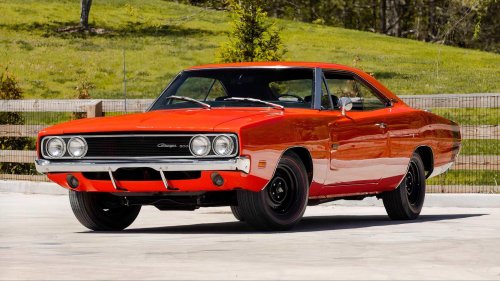
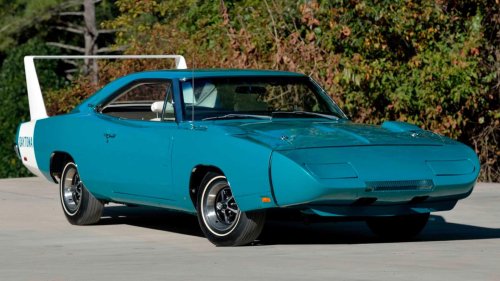
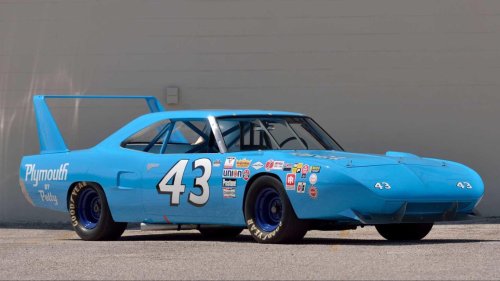
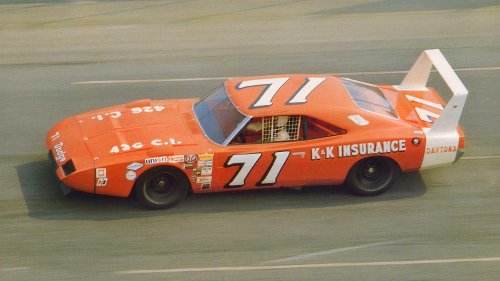
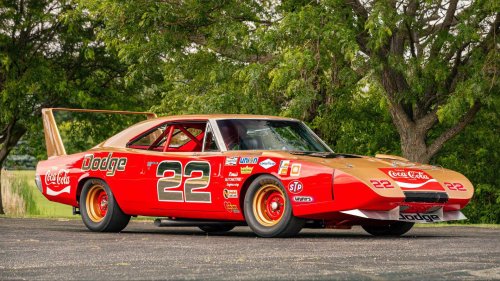
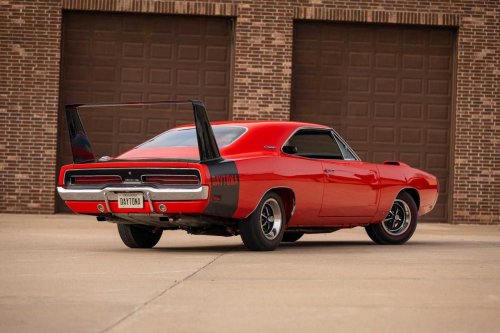
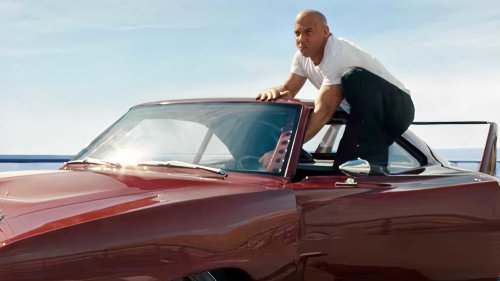
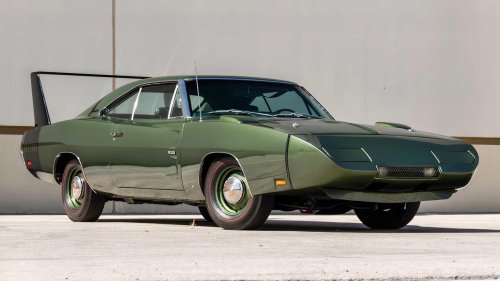



















The Ford Model T, introduced in 1908, had a 20-horsepower 177 cubic-inch four-cylinder engine and a top speed of maybe 40 mph. There were obscure race cars that could beat that top end, but at the time, that was benchmark for performance in an American car that people could actually afford. The 100 mph barrier in a mainstream ride wasn't hit until the 1949 Oldmobile Rocket 88 and then was obliterated by the 1957 Chrysler 300C, and its 375-horsepower 392 FirePower V8.Though acceleration times would quicken dramatically over the years, 120-ish mph remained the top speed for factory American performance rides for decades. With racing applications, cars were getting up to 150 mph and more, but in the late 1960s, a very special Dodge blew that away, topping 200 mph. The thing is, this car wasn't just a racetrack special, but was actually available for sale to the public. To hit that high mark, special tuning and tires were necessary, but a properly motivated owner could have gotten from Los Angeles to San Diego on the I-5 in 36 minutes, a trip that takes over two hours doing the speed limit. Dodge’s NASCAR Woes Stellantis In the early 1960s, Plymouth was kicking all the ass in NASCAR with the Belvedere, partially because of its 413 Max Wedge V8, and mostly due to Richard Petty being behind the wheel. Dodge desperately wanted the closed circuit glory and pinned its hopes on the 1966 Charger. Even with the recently introduced 426 Hemi V8, the Charger wasn't much of a contender, and it was a result of some poor design decisions. It turned out that the first-gen Charger's body created a tremendous amount of lift, which is horrifying at top speeds, and drivers actually described operating it like driving on glass.With the second-gen Charger, introduced in 1968, Dodge was hoping for a better NASCAR performance. But, while it didn't produce lift, it had a serious drag problem. The Charger's front fascia was reset and captured air, while the rails on either side of the back window created a flow dead zone that made competitive top speeds impossible. The Charger may have been the King of the Streets in both the first and second generations, but on the speedway, it was the court jester, merely existing to amuse rather than abuse the competition. Failure of the Charger 500 Mecum In 1969, Dodge developed the homologation special Charger 500 that they prayed would be the car to kill it on the NASCAR tour. The engineers took the flat grill from the Coronet, made a smooth rear window, and even flushed the side windows, which had been another source of drag.On paper, this car, especially equipped with the 426 Hemi, should have been a dominant stock car, but for whatever reason it simply wasn't. It had some mild success with a win or two, and some less embarrassing top 10 finishes, but it was by no means the track beast Dodge had hoped it would be. While others would have called it quits, Dodge was determined to own NASCAR and went to some extreme out-of-the-box thinking. Rise of the Charger Daytona Mecum Desperate times call for desperate measures and Dodge was almost in a panic to but a winner in NASCAR, so all conventional thinking was sidelined in favor of some radical, almost insane, innovation. Engineers figured they needed something aerodynamic that would stick to the track, so they took inspiration from jet fighters and gave the Charger a nose cone and a rear wing. The 1969 Dodge Daytona was the first aerocar, and it cut through the wind like a ballistic missile, while the wing not only created downforce, but also added stability at high speeds. Its unconventional looks may have initially illicited some chuckles, but once it got roaring, left people in awe. Flight Of The Aerocar In 1968 B.D. (Before Daytona) NASCAR laps were in the 160-170 mph range, which is pretty dang fast, but things were about to change. On March 24, 1970, Buddy Baker was doing some test laps at the International Motor Speedway in Talladega, Alabama in a '69 Charger Daytona, mostly to dial in the transmission. It turns out the four-speed was rarin' to go because he ripped off a 200.096 MPH lap and then followed that up with a 200.447 MPH one. This was the first time a driver logged a 200+ MPH lap on a closed circuit track in history. Bobby Isaac would beat that in a Daytona later in 1970 with a 201.104 qualifying lap, putting the world on notice that Doodge was unbeatable.The 426 Street Hemi cranked out 425 hp and 490 lb-ft of torque, but was probably more like 500+ ponies. The 200 MPH Charger Daytonas were equipped with the 426 Race Hemi, which was rated the same as the street version, but also much more powerful. There's no way of knowing the true power of Buddy Baker's or Bobby Isaacs' Daytonas, but hitting and maintaining high speeds requires a lot of horsepower. Considering that the top speed of Street Hemi cars was in the 135 mph zone, the 200 MPH Daytonas were obviously packing way more ponies under the hood. Plymouth Superbird Soars Mecum When NASCAR banned the 426 Hemi in 1965 until it could be homologated, Chrysler protested and skipped the season. So, Plymouth man Richard Petty jumped ship and started driving a Ford. Once the 1969 Charger Daytona hit the scene and dominated, Petty wanted to get behind the wheel of one.Chrysler denied Petty a Daytona, but had Plymouth create the 1970 Superbird, which was a Road Runner-based aerocar, just for him. Petty won 18 NASCAR races in 1970, piloting the Super Bird, which was a personal best, but astonishingly, didn't take the series championship that year. The message, however, was loud and clear that the Mopar aerocars were not to be trifled with. Mopar Owns Nascar Dodge The 1970 NASCAR season was the wildest in memory with nothing but nose cones and wild flying wings taking all the checkered flag at Superspeedways. Not only were the aforementioned Daytonas and Superbirds "winged warriors" kicking ass, Ford and Mercury unleashed the Torino Talladega and Cyclone Spoiler II aerocars.While the Ford's performed quite well, this was Mother Mopar's year and Bobby Isaac, in his #71 Charger Daytona, took the championship cup with 11 wins and 38 top 10 finishes. Bobby Allison was second in points, also driving a Daytona, and Richard Petty, despite his impressive win total, finished fourth. Four of the top finishers in 1970 were driving a Mopar aerocar, proving what killer race cars they were. De Facto Daytona Ban Mecum During their formative years, racing governing bodies had a tendency to ban anything that took the sport to a new level. The 426 Hemi was banned, if only temporarily, by NASCAR for being too powerful, and the NHRA required cars equipped with it to carry extra weight in hopes of slowing them down.After the most exciting season in its history, NASCAR decided the aerocar must go and, while not outright banning them, effectively insured nobody would try to race one again. For 1970, all aerocars were limited to 305ci engines, which is another way of saying they were no longer welcome on the circuit. There were a few attempts to put an anemic aerocar on the track in '71, but they were predictably unsuccessful. New Life as a Collector Superstar Mecum The '69 Charger Daytona may have been kicked out of NASCAR, but it has continued its rock star status as a collectible. To homologate the car for competition, Dodge sold 503 of these weird and amazing rides to the public, which ain't a whole lot. Only 77 of them were equipped with the 426 Hemi, which is unicorn going on Holy Grail, while the rest had 440 V8s. The thing is, Dodge may not have actually sold that many Daytonas, as there are rumors that they used VINs from 500s and R/Ts to show proof of hitting NASCARs 500-car requirement. Even if the production numbers are correct, this is one hell of a rare classic Mopar that commands top-dollar at auction. Daytona Pop Culture Icon Universal Pictures The 1969 Dodge Charger Daytona had a nice roll in Joe Dirt and served as Dominic Toretto's catapult in Fast and Furious 6, but the true sign of becoming a pop icon is appearing on The Simpsons. The season two episode, "The Way We Was" tells the flashback story of how the Simpson parents met, and at some point, Homer is driving an almost Sublime car that looks suspiciously like a Daytona. It's got the rear wing, albeit much shorter, and the fender swells of a Coke bottle Charger. The roofline is exact, and it even has the rear-quarter body accent of a '70 R/T, but it lacks the long nose cone, which doesn't necessarily disqualify it. The car is pretty banged up. So it's possible Homer smashed in the front end, making this very likely a Daytona from a Springfield Dodge dealer. 1969 Dodge Charger Daytona Market MecumThe first car to break the 200 mph barrier, and was so badass it got banned, is going to be a valuable ride, but the 1969 Dodge Charger Daytona is actually the most expensive classic hardtop muscle car on the market.Hagerty says a Concours condition Daytona with the 440 V8 is valued at $343,000 and the Hemi cars top out at $874,000. While that seems pricey, it's nothing compared to real-world auction sales. That Dark Green Hemi Daytona pictured above, despite having a meh paint code and wimpy wheels, sold for $3.3 million at Mecum Monterey 2024. It's a 1-of-22 four-speed with a beyond-impeccable restoration and only 1,845 miles on the odometer. So, it really is a Holy Grail Mopar, which always means a big-bucks gavel drop.Sources: Dodge, Hagerty, Mecum