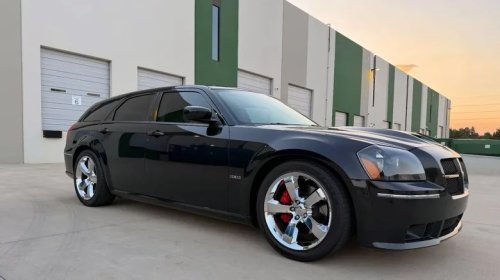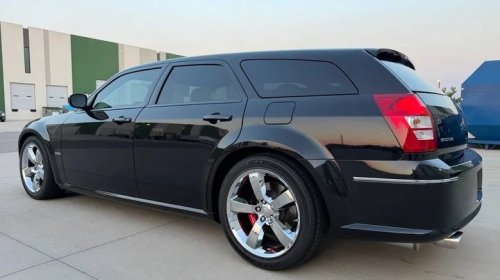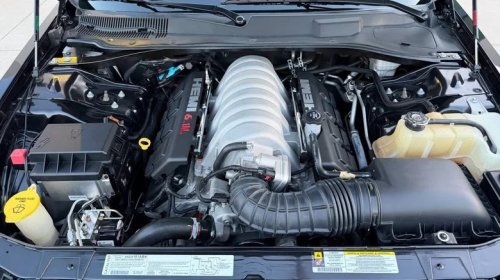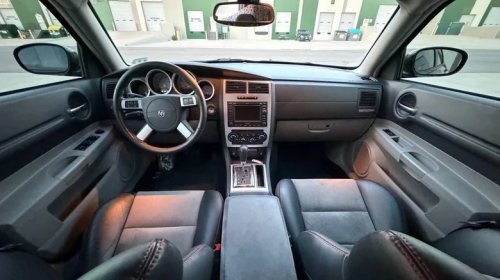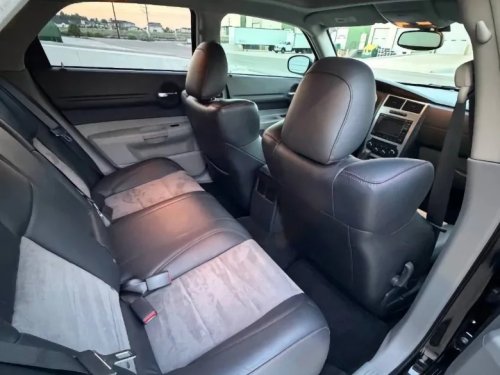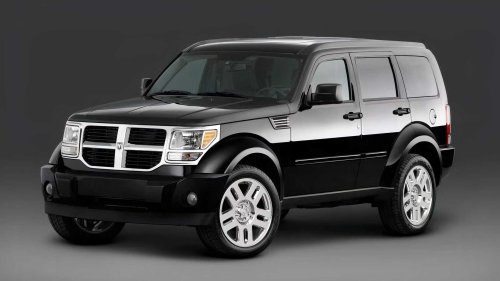
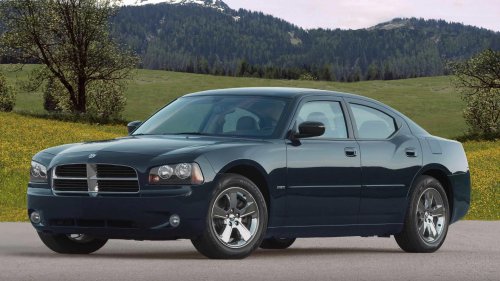
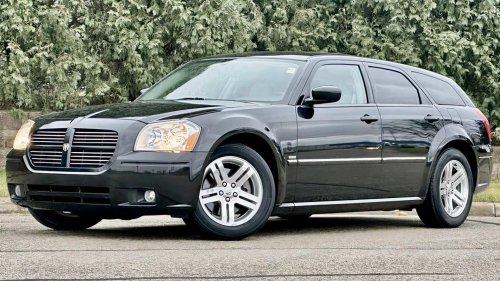
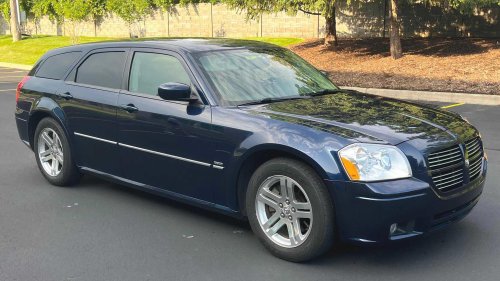
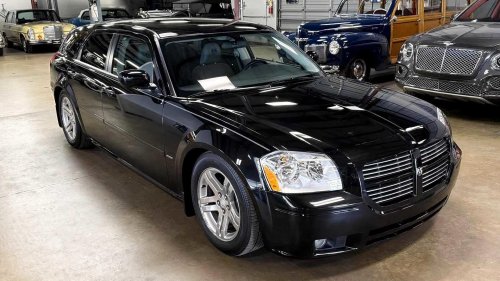



















The mid-2000s aren’t often pegged as being all that great for Dodge. In an era where its corporate owners contended with a business partnership doomed to fail, most roads led to nowhere for the brand during the turn of the millennium. But that didn’t mean there weren’t highlights mixed with the lows. There were smash hits like the phenomenal Viper SRT-10, the debut of an all-new Charger sedan, and the first new Challenger in decades. But these are all well remembered and thoroughly cherished. You can’t say the same about what we’re about to share with you. Dodge In the 2000’s: An OEM Stuck in Flux Dodge It’s easy to look back on those dog days at Dodge in the 2000s and think the folks at Mopar were just phoning it in. Certainly, offerings like the cool-looking but ham-fisted Nitro, the plucky but forgettable Neon, and the utterly awful in every way Journey, weren’t the pinnacle of refinement by any stretch. One of the main reasons why had nothing at all to do with Dodge’s deeply-skilled design team, a group that consisted of industry heavyweights like Michael Castiglione and Ryan Nagode.Instead, Dodge’s primary issue stemmed from the slow-moving cat fight between its long-time IP-holders at Chrysler, and their new corporate partners at Daimler. When Daimler-Chrysler formed in 1998, it was touted as “a marriage of equals” in official press material. With the guiding hands of Mercedes-Benz’s bosses now in the picture, the deal aimed to combine Mopar’s no-nonsense flair for style with relentless, quintessentially German refinement. But it was pretty clear come the mid-2000s who really called the shots, and it wasn’t the Americans.Then-Chrysler President Bob Lutz was quick to decry the “merger of equals” lingo as being as fake as a used car dealer’s smile. “The ‘merger of equals’ was a myth from the start,” Lutz said of his time working under the Daimler-Chrysler Group in his book, Car Guys vs. Bean Counters. “It was a German acquisition, and the cultural friction meant that while we got access to great Mercedes hardware, the soul of the American brand was constantly being negotiated.” In short, Dodge got the benefit of Mercedes tech under the skin, but anything that made it distinctly “American” was just another cost for Daimler to mitigate for the sake of profits. Dodge’s Next Big Wagon: It's a Charger Underneath Stellantis 2004 was a year wedged firmly in the catastrophic period of the Daimler-Chrysler story. A point where Chrysler’s shortcomings after the merger were already some of the worst kept secrets in the auto industry. But that didn’t stop the cold march of progress, a process that called for Dodge to design a large family station wagon to shore up a rapidly cycling lineup. At the heart of this new wagon was equally new and no less monumental in its longevity, the Chrysler LX platform.Forged from the rear subframe of the much-beloved W211 E-Class and front suspension geometry from the W220 S-Class, the LX was designed to be an adaptable rear-drive platform. Still, it needed to accommodate Mercedes’ Magna-Steyr all-wheel drive system if the production order called for it, which it often did. The result was a platform that could just as easily support the Dodge lineup as the ostensibly higher-class Chrysler fleet.Obviously, the LX is best remembered for bringing the Charger nameplate back after decades in exile. From this same platform, the shortened LC was developed, serving as the underpinnings of the revived Dodge Challenger. But what the LX also did was fulfill Daimler-Chrysler’s demand for that ever-tempting performance wagon segment. Dodge Magnum: Another Name Revived by the LX Platform Dodge The last time the Magnum name ran in the Dodge lineup came all the way back in 1978. If you could believe it, the Magnum served as a replacement for the defunct Charger that year. Based on the B-body platform that also carried the Plymouth Fury, Dodge Monaco, and the Chrysler Cordoba, the Magnum’s gigantic two-door coupe form factor screamed vintage late-70s Americana. The name also showed up on a number of sporty coupes in Brazil and Mexico during the 1980s. After that, the Magnum name disappeared for 15 years before reappearing at the 2003 Detroit Auto Show.In its standard trims, the Magnum was a serviceable American alternative to global wagons in the market. Heavy hitters like the Subaru Outback, the Volvo V-Series, and the Volkswagen Passat were its primary rivals, and the base 190-horsepower 2.7-liter V6 launch engine reflected this. The 2.7 V6 was a flawed engine prone to premature failure, and it only served to make the 250-hp, 3.5-liter V6 in the mid-tier SXT look more tantalizing.With 40.2 inches of rear legroom and 71.6 cubic feet of space in the back with the seats folded, the Magnum had SUV-level practicality in a far smaller package. Aside from this, the more pedestrian Magnum trims had little to offer that wagons from other brands couldn’t do better. But that didn’t mean V8 trims couldn’t pack heat when it was asked to, and that brings us to the Magnum’s real big selling point. That being, its chops as a legit V8 muscle wagon. Magnum R/T: A Hidden Gem From a Mundane Wagon Cars & Bids Many sing the praises of the Magnum SRT-8. With its 6.1-liter HEMI V8 and 425 hp on offer, it was closer to an E63 AMG or a CTS-V than a VW or a Volvo. But notched right below the screaming SRT, there was the Magnum R/T, the proverbial sweet spot between pedestrian and eye-catching. Visually, there wasn’t much of anything about the R/T’s exterior that’d distinguish it from the average V6 all-wheel drive grocery-getter. Dodge Magnum R/T Specs There weren’t giant 20-inch chrome wheels or snarling bulges in the hood line to accommodate a massive 6.1-liter HEMI. That’s because the R/T used the 6.1 big boy’s slightly smaller cousin, the 5.7. The 5.7-liter HEMI was still a fresh face for the 2005 model year, and the Magnum was among the first non-trucks to make use of it. With 340 hp sent to the rear wheels through a 5-speed 5G-Tronic automatic gearbox from Mercedes, the Magnum R/T was quick enough, but not so gaudy that boy racers try to drag you at every stoplight. Zero to 60 was handled in the high five-second range; top speed was electronically limited to around 135 mph. A Surprisingly Cool and Surprisingly Rare V8 Wagon Credit: Hemmings For a partnership perpetually in decline, the Magnum R/T and its shoutier SRT-8 counterpart were two serviceable entries lost in the shuffle of endless Challengers, Chargers, and Chrysler 300s riding on the same platform. Of the roughly 170,000 to 200,000 Magnum wagons built, the vast majority were V6s. Among them all, less than 5,000 SRT-8s were built between 2006 and 2008. Though precise data on R/T production is limited, pristine examples with barely five-digit odometer readouts can touch $30,000 on places like Hemmings marketplace. For a Daimler-Chrysler product from the mid-2000s that isn’t a Charger, that’s pretty darn great value. In lesser condition, bearing a reasonable amount of wear and tear, you can find them online for well south of $10,000, or even $7,500 if you’re willing to do some DIY work.At that price point, you’ll be contending with some of those Daimler-Chrysler mechanical gremlins. Chief among them? That’d be with the Multi-Displacement System (MDS) cylinder deactivation system, which, while efficient when it works, often grenades the engine if oil changes are lagged on. But let’s be real, can you argue with a semi-modern V8 wagon that you can buy for the cost of a downpayment on a new car? It might not last for long, but it’ll be fun as heck while you have it.Sources: Hemmings, Mopar Insiders