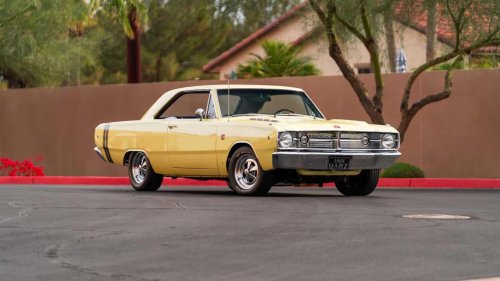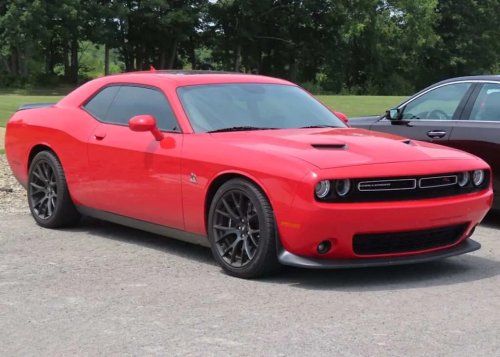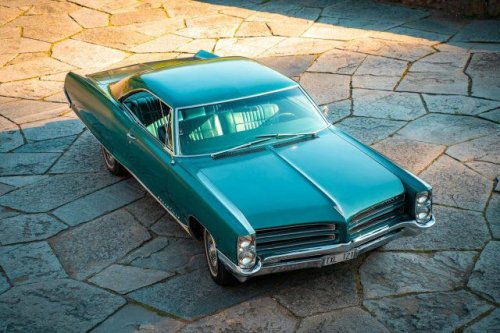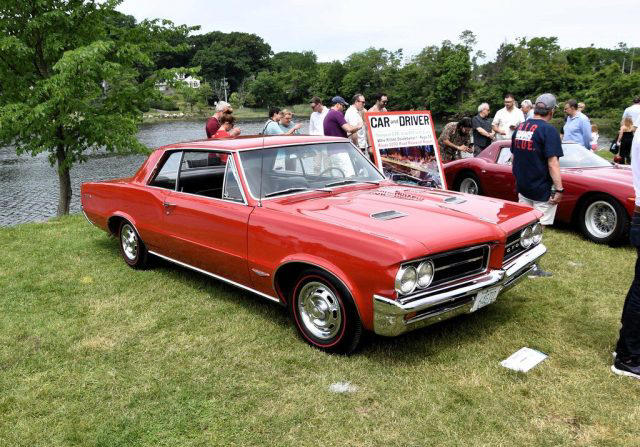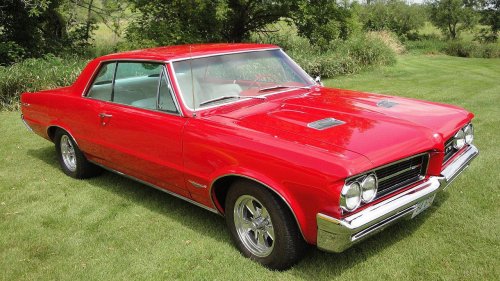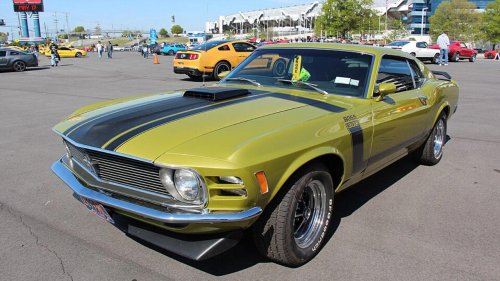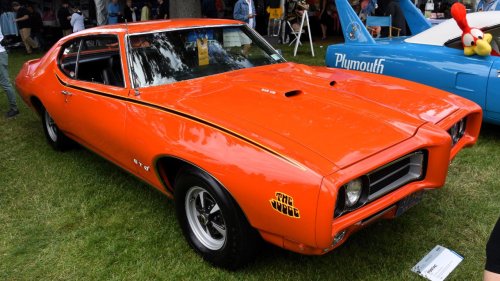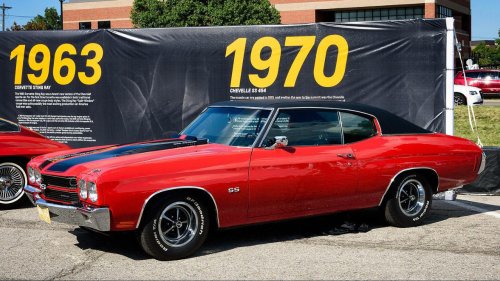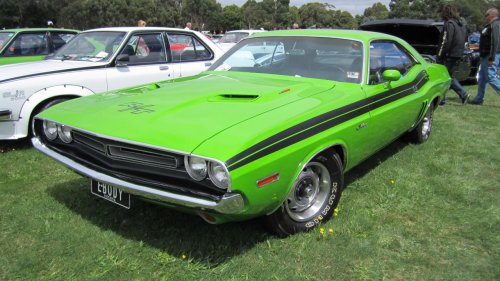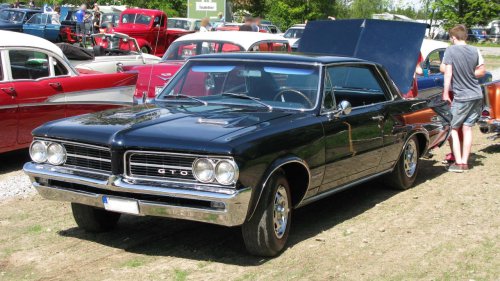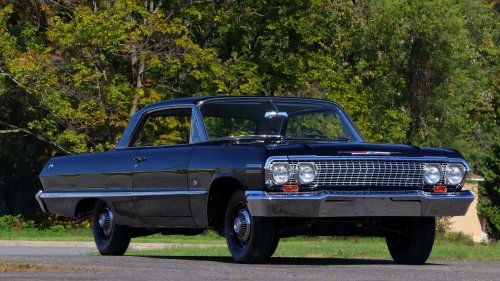
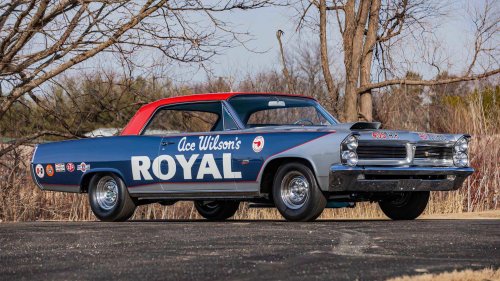
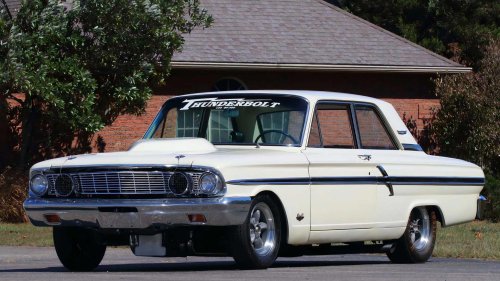
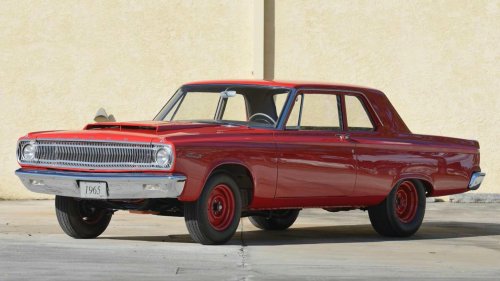
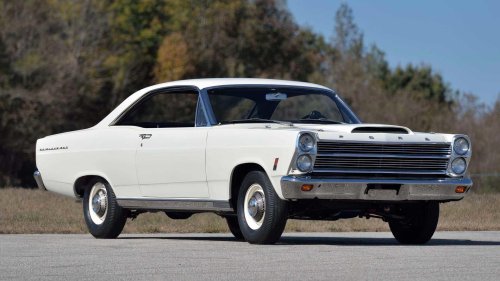
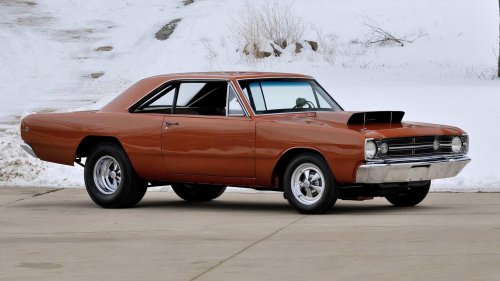




















The idea of stuffing way too much horsepower under the hoods of moderately-sized vehicles, like the 815-horsepower Ford Mustang GTD or the 1,000+ pony Dodge Challenger SRT Demon 170, seems like a modern concept, but Detroit has been making awesomely inappropriate rides for decades. The Golden Age of American Muscle kind of sprang from the rise in popularity of professional racing, with consumers itching to own the cars their favorite drivers were tearing up the tracks in. The 1964 Pontiac GTO was the first car to deliver high performance at an affordable price, and its success unleashed a juggernaut of street machines.To capitalize on both the muscle car craze and racing enthusiasm, many Big Three automakers built limited-edition factory drag cars with unreal amounts of horsepower to promote their brands. These cars were intended for the track, but were 100 percent street legal, meaning some of them ended up in the hands of normies. Professional drivers know how to handle cars with insane power, but the average person is not equipped to deal with a 10 or 11-second muscle car. Modern performance vehicles have safety features like anti-lock brakes and traction control, but back in the 1960s, there was nothing to harness the raw power of these factory-built beasts.To give you the most up-to-date and accurate information possible, the data used to compile this article was sourced from various manufacturers and other authoritative sources, including Mecum and Bring a Trailer. Cars are ordered chronologically by their release date. 1963 Chevrolet Impala Z11 This One Goes To 11 Mecum Most people have probably never seen an Impala going faster than 35 MPH, and that's because the lowrider culture has embraced these Chevys as the rollin' slow and low ride of choice. The truth of the matter is that at one point, the Chevrolet Impala was the most powerful production model in America. The '62 Impala with the 409-horsepower 409-cubic-inch V-8 was such a burner that the Beach Boys wrote a song about it. They probably should have waited a year because in '63, Chevy came out with the special-edition Impala Z11, equipped with a dual-quad 427-cubic-inch V-8 that was conservatively rated at 430 ponies. Impala Z11 Power And Performance 50 Impala Z11 were built as factory drag cars, and on the track, they were guaranteed to run under 11 seconds. That fact calls into question the official power rating, because cars that quick definitely have more juice under the hood. There are no dynos or credible sources for the true horsepower of the Impala Z11, but authoritative estimates put it at around 510. The awesome power of this car may have, in part, been part of the reason why GM would ban engines over 400 cubic inches in intermediate cars later that year. GM may have been thinking about potential lawsuits arising from letting a bunch of dopes get behind the wheel of cars with this level of performance. 1963 Pontiac Catalina Super Duty Swiss Cheese Pontiac Blows Holes in the Competition Mecum Pontiac didn't want to be left out of the factory drag car sweepstakes, so they super-equipped a 1963 Catalina with a 421-cubic-inch V-8 fed by two Carter AFB 4-barrel carburetors. All cars like this from the '60s had weight reduction schemes, including aluminum or fiberglass panels, plus stripping them of all comfort and luxury, but the '63 Catalina Super Duty took things to the extreme. With holes drilled in the frame to shed some extra pounds, this car was known as the "Swiss Cheese Pontiac", and it lived up to the name by blowing holes in anything that lined up against it. Catalina Super Duty Power And Performance There is a theme on this list that all of these cars had underrated power, and that's not just a fanboy fantasy, as the acceleration times don't lie. The Catalina Super Duty was rated at 405 horsepower, which ain't enough to move the full-size car down the quarter-mile in the low 12s. Most likely, it was over 500 ponies from the factory, and even higher on the track after it was souped up. Pontiac only made 14 of these glorious cars, making them some of the rarest classics of the era. In fact, that car pictured above just sold for $742,500 at Mecum Indy 2025, and another '63 Catalina Super Duty went for $473,000 in the same auction. 1964 Ford Fairlane Thunderbolt The God Of Thunder And Rock 'N Roll Mecum It may seem weird to bring this up after so many centuries, but a thunderbolt is not an actual thing, scientifically or meteorologically speaking. A flash of lightning is considered a bolt, but thunder is the sound it makes and isn't delivered in bolt form. Then again, the 1964 Ford Fairlane Thunderbolt is an actual thing that roars like thunder and accelerates like a blast of lightning, so maybe science is wrong on this one. The term comes from ancient mythology, where Gods such as Zeus and Thor would hurl thunderbolts or wield them as weapons, which sounds a lot like this Ford factory drag car. Fairlane Thunderbolt Power And Performance The '64 Thunderbolt wasn't so much a myth as it was a legend, capable of ripping off quarter-mile ETs in the mid-11s, with its mighty 427-cubic-inch Side Oiler V-8. Now here's where the science comes in, because this engine was rated at 425 horsepower, but as we've already shown, even with lightweight body parts and additional weight reduction, it ain't enough for an 11-second car. Best estimates put the Thunderbolt at 540 ponies, and while that's not a scientifically-proven fact, it is a theory that can't be disproved. Ford only made 100 of these god-like rides, and several of them were registered for street use, so some suckers got to feel the full power of Valhalla in a red light challenge. 1965 Dodge Coronet A990 Funny Car, Serious Ass Kicker Mecum The 1965 Dodge Coronet A990 is remembered as that strange-looking car with the altered wheelbase that killed everything it raced, but there is some disinformation going around about it. There's a popular misconception that the Dodge drag cars left the factory with their wonky wheelbases, but that was actually performed either by individual drivers or at Chrysler's racing division "skunkworks." In any case, the A990's front wheels were moved 10–15 inches forward, in front of the engine, and the rear wheels shifted 10 inches toward the center of the car to put more of the vehicle's weight over them. This centering of the wheelbase increased grip, which is a big plus in drag racing. Coronet A990 Power And Performance The altered wheelbase Coronet A990 could stick a launch like no other vehicle, and thanks to its 426-cubic-inch Hemi V-8, looked like it was shot out of a cannon. Due to its goofy stance, the A990 was the first set of wheels to be called a "funny car," which would eventually become an NHRA racing class. The Coronet A990 was as dominant on the drag strip as the 426 Hemi-equipped Mopars were in NASCAR, and both got the full Ford "Karen" treatment. Ford was able to successfully get the 426 Hemi banned from NASCAR, but none of their complaints mattered to the NHRA, so Blue Oval banned their drivers from competing against the A990. Dodge had originally planned on building 210 Coronet A990s, but most sources say that only 101 ever existed. 1966 Ford Fairlane 500 R-Code Decoding The R-Code Mecum Ford looked to continue the legacy of the Thunderbolt with the fifth-gen Fairlane by creating another factory drag car masterpiece. The 1966 Fairlane 500 R-Code had the same 427-cubic-inch Side Oiler V-8, as well as all the performance that came with it. The R-Code, however, doesn't have as rock-solid a performance spec sheet as its predecessor. The only documented quarter-mile time for the R-Code is 13.0 seconds, which ain't bad for a street machine, but a snail's pace as a drag car. We know that the R-Code was a successful car on the strip, so it had to pull better ETs than that. Fairlane 500 R-Code Power And Performance For the 1966–1967 seasons, the Fairlane 500 R-Code dominated NHRA S/S-B and A/S classes with drivers like Bill Lawton and Gas Ronda behind the wheel, so given the acceleration times of other cars of the era, it had to have been an 11-second car or better. Unlike the rest of the cars on this list, the R-Code was never available to the general public, reserved for select Ford drivers. Only 57 were ever made, making them top-dollar collectibles, with maybe 25 still in existence. The fifth-generation Fairlane was a tragically overlooked classic-era muscle car, and the behind-the-scenes distribution of the R-Code made it practically invisible, but collectors are waking up with Bring a Trailer selling a couple for over $250,000 each recently. 1968 Dodge Hemi Dart N.S.F.W. Hemi-Powered Mopar Mecum As was mentioned before, Ford complained that the 426-cubic-inch Hemi V-8 was too powerful and got it temporarily banned from NASCAR until it could be homologated, meaning that a certain number had to be sold to the public. The threshold was only 500 units, but Chrysler decided to make it available to almost all Dodge and Plymouth models. Unfortunately, those were just the intermediate cars, so the Dart was locked out of the Hemi frenzy, which was probably a good thing because that kind of power in a compact could be dangerous. Luckily, we don't have to speculate on that point, as the Dart eventually did get a Hemi in 1968, with a collaboration between Dodge and Hurst Performance, and it was every bit as insane as predicted. 1968 Hemi Dart Power And Performance The '68 Hemi Dart was just as its name would suggest: a Dart with a 426 Street Hemi impossibly squeezed into the engine bay. Chrysler was uncomfortable with factory-installing Hemis in compacts, so that work was supposed to be done by Hurst, but it actually wasn't. In addition to the massive power upgrade, the Hemi Darts were stripped of every weight-adding comfort like rear seats, carpets, insulation, etc., and fitted with fiberglass fenders to make them ferocious drag cars that ran in the low 10s. The Hemi Dart was made to compete in the Super Stock drag racing class, but it was a street-legal ride, though Dodge discouraged any non-track use. Only 80 were produced, but they were sold through Dodge dealers, so it's likely that a few actually ended up as street terrors. 1968 Plymouth Hemi Barracuda Street Legal Outlaw Mecum The 1968 Hemi Barracuda was Plymouth's counterpart to the Dodge Hemi Dart, but was somehow just a little bit quicker. The Dart was kind of a shoebox on wheels, while the second-gen Barracuda fastback had some sexy aerodynamic curves that must account for its slightly better quarter-mile time. It's also rarer than the Hemi Dart, with just 50 units built by Plymouth and Hurst Performance. It, along with the Hemi Dart, was so dominant in the Super Stock Classes that the NHRA forced both cars to carry extra weight in hopes of slowing them down, but they still kicked ass, which is a tribute to the 426 Race Hemi, which could have been up to a 600-horsepower monster. 1968 Hemi Barracuda Power And Performance A lot of people mistakenly believe that a car is illegal for street use because it has raging horsepower, but actually, it's the absence of basic safety features like bumpers, headlights, and turn signals, as well as exhaust systems that don't meet emission standards. The Hemi Barracuda had everything it needed to be registered as a street-legal ride, but this, again, was highly frowned upon. In fact, they came with a window sticker disclaimer stating that they were intended for track use only, as well as the bummer news that the factory warranty was void. Most of the '68 Hemi Barracudas were delivered directly to Chrysler-backed racing teams, but a few did make it to showrooms as a way to bring in foot traffic and generate interest. It seems like a stretch, but hopefully at least one of these rocket sleds ended up as the most feared street machine in town.