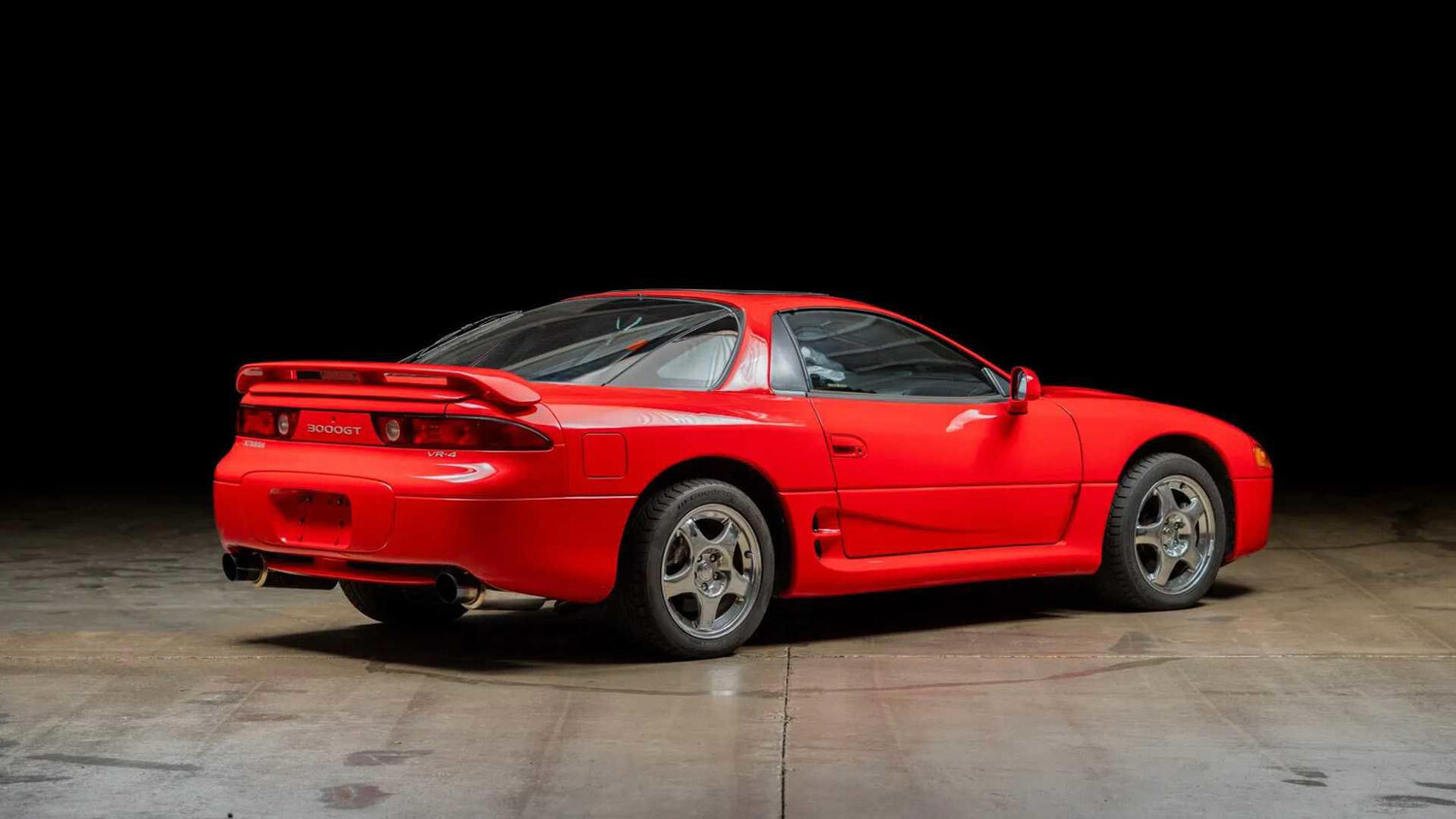
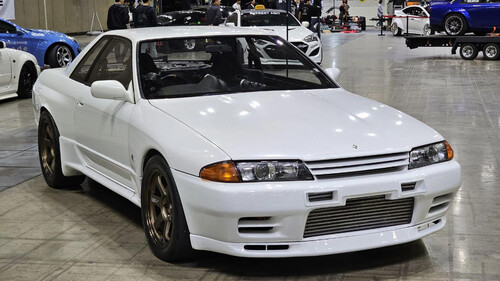
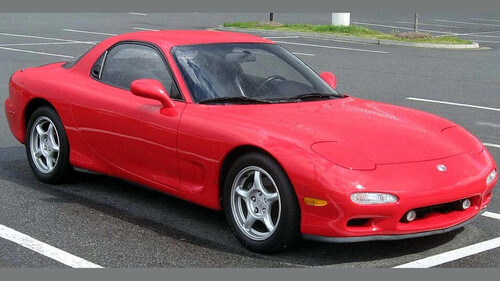
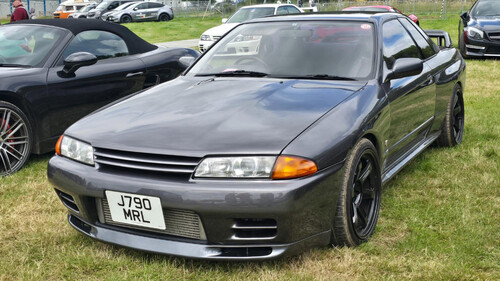
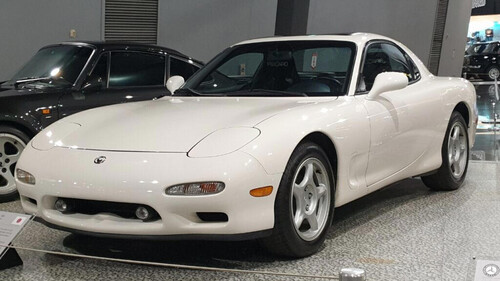
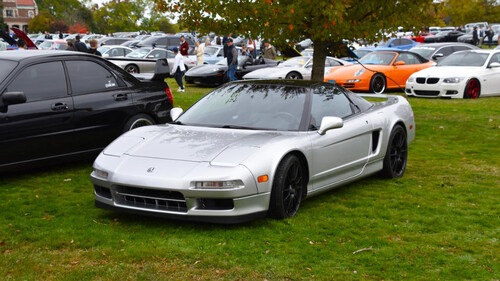
The early 1990s were ambitious times for Japanese sports cars. Honda reshaped supercar standards with the NSX to reflect lightness and everyday usability, Mazda proved that a rotary engine could deliver a world-class driver's car with the RX-7, and Toyota gave the automotive world one of the most desirable JDM sports car with the Supra and its 2JZ-GTE engine. These cars earned their reputations and have remained in the spotlight to this day, with their prices skyrocketing. But this Golden Age of JDMs also gave us another serious driver’s car that often flies under the radar. Though it did match its rivals in technical ambition, it quickly slipped into JDM oblivion and despite its technologically advanced, performance-oriented configuration, the Japanese manufacturer behind it was not able to build the legacy this sports car deserved. When Japanese Manufacturers Decided To Beat Europe At Its Own Game Honda Japanese manufacturers have been true industry pioneers when it comes to offering affordable, reliable and exciting sports cars, but this wasn’t always the case. Up until the late 1980s, European carmakers dominated the sports car market, although their sports cars often lacked reliability. This pushed Japanese manufacturers to take on a new challenge to try and build sports cars that could compete with European automakers, all while maintaining their reliability standards.Honda led by example with the development of their first-generation NSX. The first Honda supercar was fast and challenged the supercar standards set by manufacturers such as Ferrari by proving that a supercar could be quick without being subjected to constant maintenance visits at your local dealership. Ayrton Senna drove the NSX prototype at Suzuka in 1989, which only emphasized the legitimacy of Honda’s first supercar. From Challenging European Supercars To Challenging European Sports Cars Bring A Trailer Nissan also attempted to challenge European standards with their “901 Activity;” an ambitious internal push to make Nissan a world leader in dynamic performance by 1990, with the launch of key sports car models. Under this project 901, Nissan launched the 300ZX (Z32), which used the Corvette and Porsche 944 as development benchmarks, as well as the R32-generation Skyline.Japanese manufacturers also challenged the European grand tourer, with one Japanese manufacturer pushing this idea further than most of its rivals. Instead of simply building a straightforward, front-engine sports coupe, the carmaker went on to load its flagship performance GT with all of its latest tech, such as four-wheel steering and electronically adjustable suspension. Though these characteristics are now considered standard features in modern cars, they were perceived as heavy and overly complicated in the early 1990s, going against the grain of building a light and affordable car. The Forgotten Performance Grand-Tourer, The Mitsubishi 3000GT VR-4 Via: Bring a Trailer The Mitsubishi 3000GT VR-4 was introduced in the United States in 1991 as a high-tech, performance version of the standard 3000GT. Powered by a twin-turbo, 3.0-liter DOHC V6 engine, the 3000GT VR-4 produced 300 horsepower and 307 lb-ft of torque, and was paired with a Getrag five-speed manual and full-time all-wheel-drive system. Despite the car’s heavy weight at around 3,800 lbs, the VR-4 was fast for its time, with a 0-60 mph time in the mid-five-second range, and a top speed of around 154 mph. Though not the fastest sports car, the 3000GT VR-4 delivered on its grand-touring promises. All four wheels worked to put the power down, while the VR-4’s chassis technology provided more stability at speed. The 3000GT provided a comfortable cabin with a grand touring layout to make it more usable over long distances than many of its lighter rivals, such as the Mazda RX-7 or Toyota Supra. Priced at around $35,000 (approximately $85,000 today), Mitsubishi impressed by offering a performance GT that carried the kind of technology that would usually be associated with far more expensive sports cars. The Tech That Made The Mitsubishi 3000GT VR-4 Ahead Of Its Time Bring a Trailer As its flagship vehicle, Mitsubishi packed the 3000GT VR-4 with its latest technology and much of it has a modern echo. Mitsubishi’s electronically controlled suspension points toward today’s adaptive damping. Its active aerodynamics system was one of the earliest in the industry and adjusted the front chin spoiler and rear spoiler. Though the technology was still in its early form on the Mitsubishi grand tourer, the philosophy behind it can be recognized today, with the use of electronics and moving surfaces to make speed more stable, efficient, and controllable.The same thing applies to Mitsubishi’s four-wheel steering. The VR-4 used rear steering above 30 mph; a technology that can be seen on current sports cars. For example, current Porsche 911 variants use rear-axle steering to sharpen agility at low speeds and improve stability at higher speeds. Mitsubishi took steps ahead of its competition, attempting to build a grand tourer that was ahead of both local and European competitors. How The 3000GT VR-4's Advanced Tech Led To Its Demise Bring a Trailer Despite the Mitsubishi 3000GT VR-4’s revolutionary features, these strengths were unfortunately too subtle, especially next to other sports cars at the time. The RX-7 offered a groundbreaking rotary engine, lightness and a perfect 50/50 balance, while the Toyota Supra came with a far more robust and tunable engine than the VR-4. The high-tech 3000GT had more convincing to do, in a market that was not yet familiar with its new systems.The same technology that made the VR-4 special also made maintaining it a challenge. Active aero, electronically controlled suspension, four-wheel steering, twin turbos and early-1990s electronics were all part of the appeal when the car was new, but these eventually turned into complex and expensive problems that needed proper maintenance over the years.Some clean Mitsubishi 3000GT VR-4 models remain, and those surviving examples are time capsules preserving the 1990s’ JDM era, offering glimpses of a time when Japanese manufacturers gave the automotive world some of their most radical sports cars to challenge Europe.