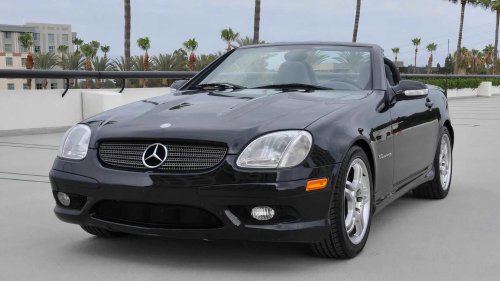
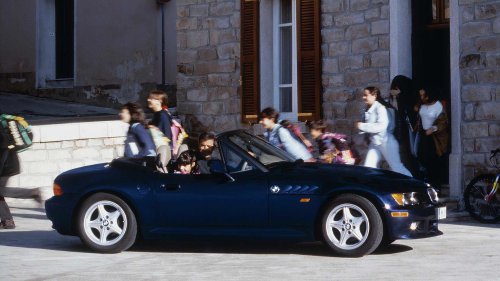
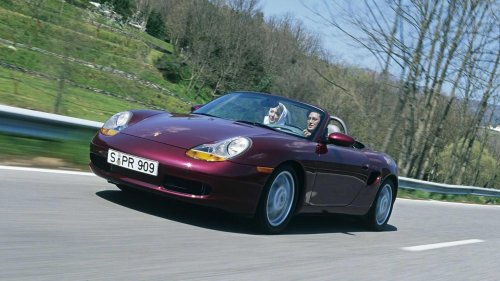
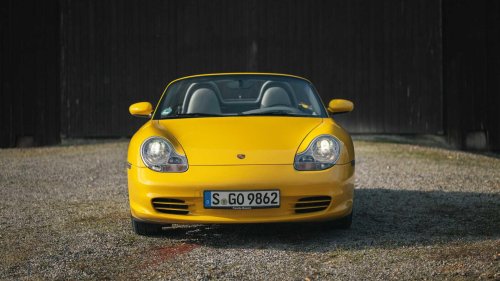
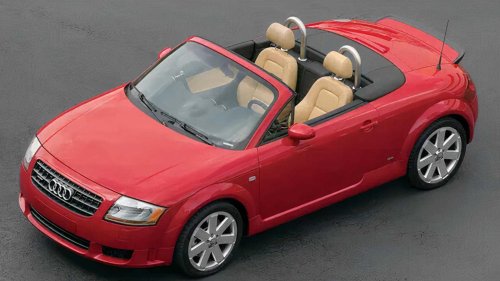
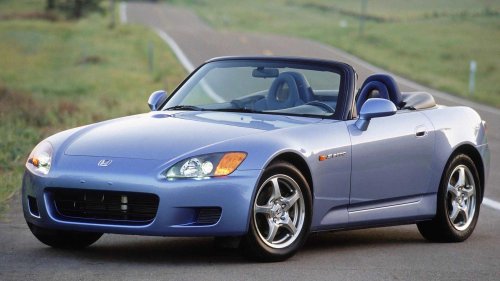
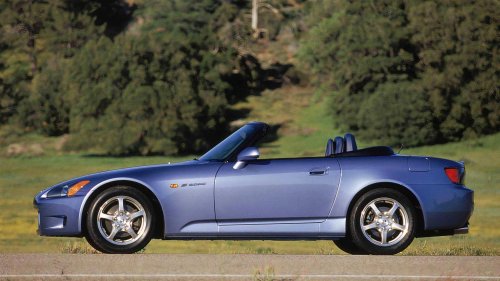
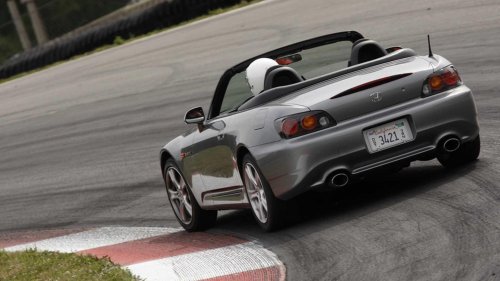
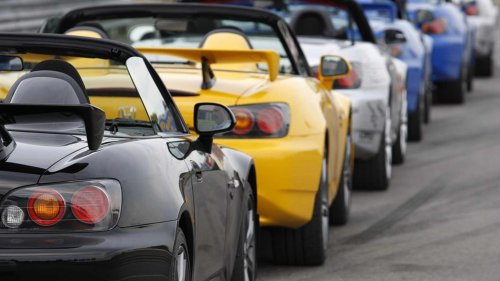
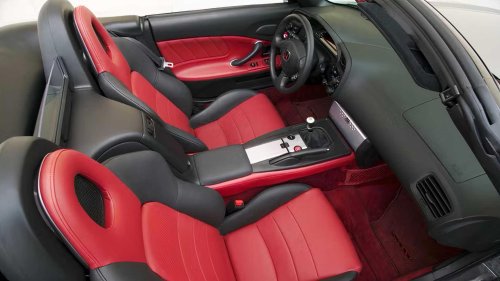
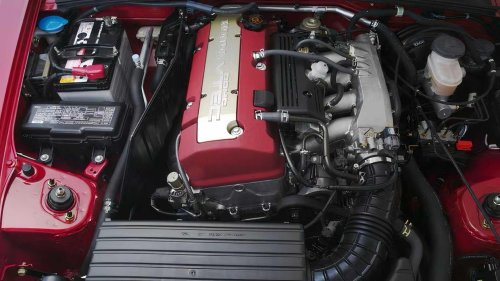
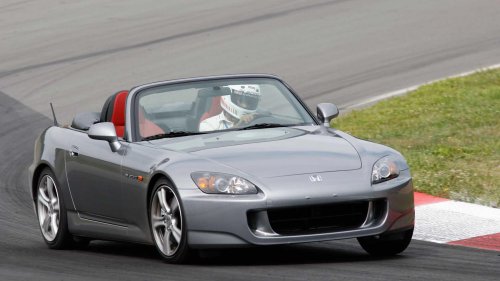
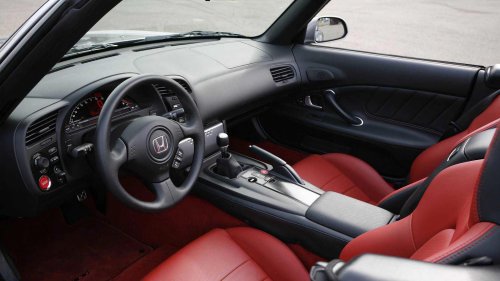
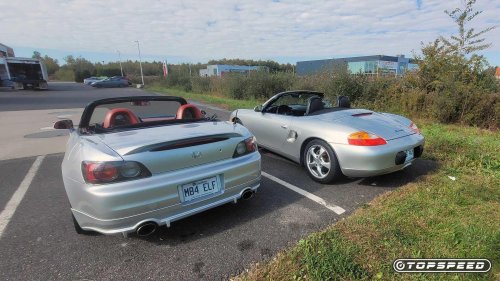


















At the turn of the millennium, Honda debuted a standout driver's car. It had a relatively high price for a Japanese sports car—an MSRP of about $32,000. Among enthusiasts, this car became celebrated. Yet once production ended, the broader automotive world seemed to forget it.Since then, time has been on its side, because this particular Japanese sports car hasn't faded into irrelevance, unlike most of its contemporaries. Instead, it has greatly appreciated. Once you compare it today to the German rivals of its era, the numbers tell the whole story. The Roadster Wars Of The 1990s And 2000s BMWIn the late 1990s, open-top sports cars had something of a renaissance. The fiercest competitors of the era included most major European automakers. At the time, it was clear: if you wanted a roadster, it should probably be a German one. The German Golden Era Bring A TrailerIn 1995, BMW debuted the first-ever Z3 Roadster, and so began the so-called roadster wars of the 1990s and 2000s. Soon after, in 1996, Porsche released the first-ever Boxster, then the Audi TT and Mercedes-Benz SLK arrived in 1998. Within half a decade, a once nonexistent roadster market became crowded. Yet, each German offering brought something slightly different to the table. The Z3 featured a silky smooth inline-six, the SLK was a proper luxury tourer, the Boxster brought mid-engine dynamics, and the TT introduced turbocharged performance. If you wanted a roadster in the late 90s, it only made sense to select a German option. There was a diverse selection available, and German prestige and pedigree were legendary. Japanese alternatives weren't even under consideration at the time. Spending More = Better BMWGerman roadsters did not come cheap. Of all the options, Porsche was the brand that demanded the highest entry price. When the Japanese alternative arrived, it was about $6,000 cheaper than an equivalent Z3 and $15,000 less than a base-model Boxster. At the time, the base Porsche Boxster was about $45,000, as was the BMW E46 M3. For additional context, that is the equivalent of $87,000 in today's money, or the same price as a 2026 BMW M3 Competition xDrive Sedan.Porsche Yes, a base-model Boxster that made 200 horsepower on a good day cost G80 M3 money in the late 1990s. That was a price point that most enthusiasts could not afford then and still can't afford now. However, brand loyalty is a special concept, and most buyers assumed the prices were reasonable considering the legacy of these German brands. Buyers assumed the Porsche badge justified the premium and would help the car retain value. That assumption turned out to be a massive mistake. The Harsh Reality Of The Collector Car Market PorscheTwo decades later, the collector car market views the roadster wars of the 1990s and 2000s a little differently. The reality of the current market has upended just about every common belief about what actually gives a car value and what makes a car worth keeping decades later. German Cars Are Cool (Until You Need To Fix Them) PorscheThe first-generation Porsche Boxster, also known as the 986, ultimately was a failure in more ways than one. Its Achilles heel was the infamous IMS bearing failure—the greatest engineering catastrophe in Porsche's star-studded history. This issue alone made long-term ownership of a 986 Boxster a dubious proposition. Even if the IMS bearing issue never existed, the hottest flat-six engine equipped in the facelifted Boxster S was just slow and uninspiring. With current 986 Boxster prices about a third of what you would pay for a 996 Porsche 911, the 986 feels less and less worth it every passing year. For a car that once was the top dog of the segment, the 986's fall from grace is a true spectacle to behold. The 986 Boxster demonstrated that no legacy is as sacred as it appears when the car simply isn't up to snuff. Japan's Answer To The Roadster Question AudiThe collector market tends to reward certain traits: reliability, scarcity, and purity. There was only one car from the entire roadster renaissance of the 1990s and 2000s that delivered all three of these qualities—and it wasn't German. The car was less expensive than a base model 986 Porsche Boxster or a well-optioned BMW Z3, but nowadays, it's easily worth more than either of those cars. This value shift occurred incrementally over the years, and its popularity among young drivers has kept it relevant. The car that was once dismissed as unworthy of being in German company has now become the most desirable roadster of its generation. That car is none other than the Honda S2000. The Honda S2000: Purity Over Prestige HondaWhen first designed, the Honda S2000 was never intended to be a collectible car of some sort. It was designed as a pure driver's car—built by engineers and enthusiasts who loved speed and the art of driving. That singular focus is what managed to keep the S2000 relevant today and why it easily surpassed its ostensibly superior German rivals. The Value Retention Germany Never Experienced HondaIf we look at the Hagerty 'Valuation Tool', a 2000 Porsche Boxster in good condition is valued at $12,500. In our opinion, that is still way too much money for a 986 Boxster, but let's just use it as a reference. For comparison, a 2000 Honda S2000 is valued at $26,300 in good condition, over twice the value of the Boxster. A concours-condition Boxster will run you about $31,000, while the equivalent S2000 is about $51,300. Let's not forget the Boxster was the most expensive roadster you could buy in its era and cost the equivalent of a 2026 BMW M3 Competition xDrive back then. HondaThe S2000 tells the opposite story. Classic.com data show that S2000 values have increased by 32 percent in the last five years, with transactions up 30 percent in the same period. The value of mint-condition S2000s has also increased by an average of 10 percent year-on-year. That's before we even start talking about the S2000 CR, the rarest variant of the Japanese roadster. An S2000 CR in excellent condition, as most are, is now worth $108,000. Is it worth that amount of money? Absolutely not, but it just goes to show you how desirable these roadsters truly are among collectors. Why The Market Values S2000s Now HondaYou might wonder how the S2000 could be worth so much now. However, once you understand the focus and clarity of this sports car's vision, it starts to make more sense. Unlike most roadsters of its era and modern sports cars, the S2000 never compromised its driving experience in any regard. As far as mechanical integrity, it is one of the purest expressions of driving excellence ever produced. Yet, somehow, it also manages to be more reliable and cheaper to maintain than the German equivalents that were once viewed as superior.Honda The Honda S2000 scored four out of five stars on RepairPal's reliability scale and has an average annual repair cost of just $456. A 2000 Boxster will cost you double that per year for a significantly diluted experience. That reliability difference becomes more apparent over decades of ownership, and the market prices it accordingly. The S2000 has a Hagerty Vehicle Rating of 78 out of 100, which means it leads the collector market. Once you consider its purpose-built ideology and Honda's legendary build quality, the S2000 offers exactly what most shoppers desire in the collector market. The S2000 Was Always The Better Driver's Car William Clavey | TopSpeedValue retention and all that is cool, but what makes the S2000 a true gem is its engineering philosophy. German rivals thought their ideas were good, but they all eventually aged like milk in comparison to the ultimate Japanese roadster. The F20C: An Engine Directly Descended From The Heavens HondaWhen the Honda S2000 debuted in mid-1999, it put the entire sports car segment on notice. The 9,000 rpm redline and 240 horsepower output of its F20C inline-four engine made it the most powerful naturally aspirated four-cylinder ever produced. That statement was true 25 years ago and still is today. That's how downright amazing the F20C engine is. With 123.5 horsepower per liter, this Japanese roadster rivaled the likes of Ferrari in terms of output per liter.Honda The F20C is the ultimate naturally-aspirated VTEC engine, and for over ten years, it held the record for the highest power output per liter of any naturally aspirated engine until the quarter-million dollar Ferrari 458 Italia came along. The Boxster's flat-six was smooth, but in the end, it was lackluster in terms of performance and a travesty in terms of reliability. The F20C, comparatively, became one of the most recognizable performance engines ever produced. It was a true masterclass of engineering and ideological purity that still has a resounding impact on us today. The Chassis That Rewards Your Every Move HondaThe S2000's engine was undoubtedly the star of the show, but every aspect of the driving experience was carefully considered and constructed. Honda ensured that chassis balance would also be another one of the S2000's highlights. It first achieved this by adopting a front-mid engine layout that allowed for a perfect 50–50 weight distribution. Then it gave the S2000 double-wishbone suspension front and rear, giving the sports car the best responsiveness and control possible.William Clavey | TopSpeed Then, to enhance its dynamic performance, it added a Torsen limited-slip differential. As if it couldn't get any better, the standard six-speed manual transmission proved to be one of the most tactile gearboxes ever placed in a production vehicle. The mid-engined Porsche Boxster drove well, but its driving engagement felt amateur next to the S2000. Over two decades later, there still has not been a single sports car of any variety that feels like an adequate replacement for Honda's ultimate roadster. Some things are too good to be replicated.