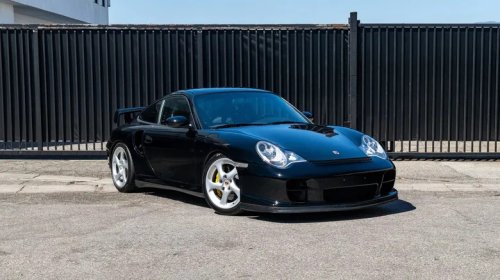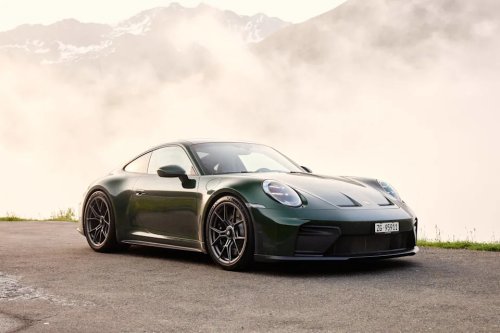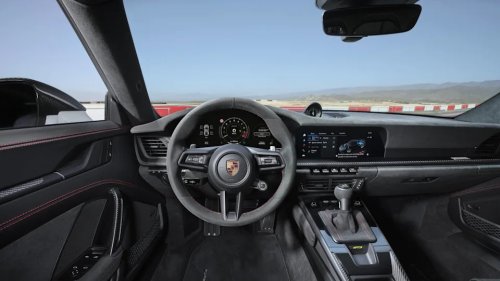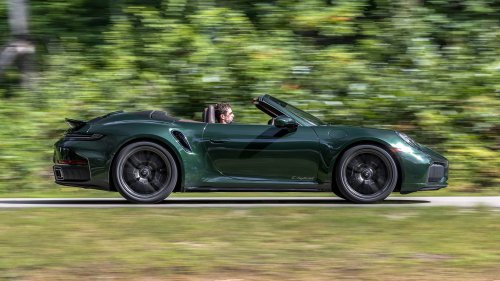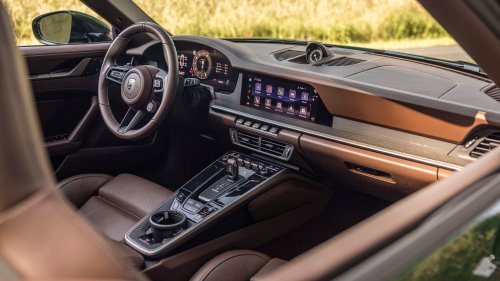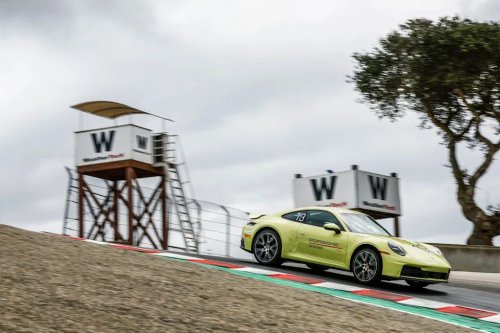
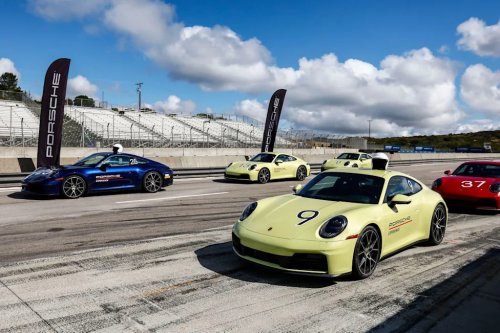
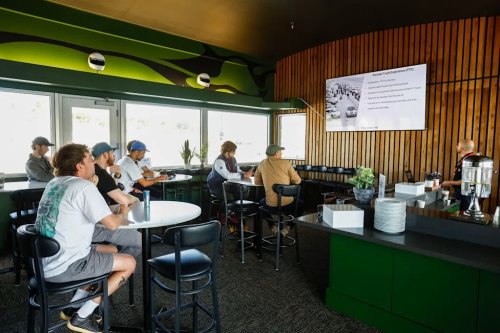
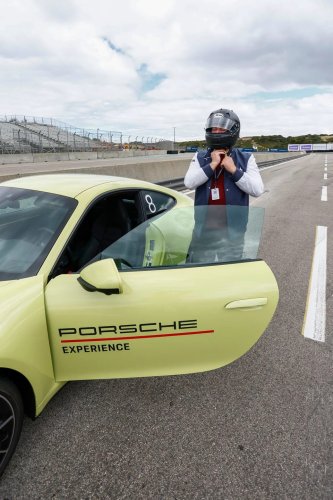
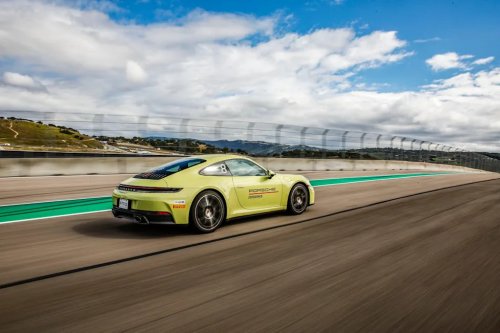
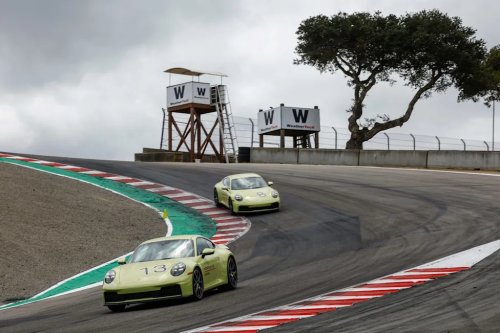
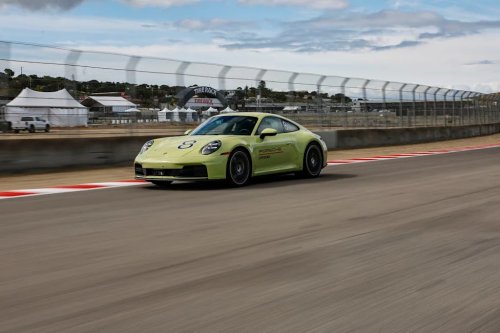















A Porsche 911 S Is the Tool to Learn Laguna SecaJuergen Tap (Juergen Tap)Laguna Seca is one of the West Coast’s most famous race tracks, but it’s also a great place to drive at lower intensity. Porsche is launching its track program at the legendary circuit, under the same PTX or Porsche Track Experience branding it already uses at Barber Motorsports Park in Alabama. I did a condensed program to get a taste of what is on offer, focused almost entirely on track time in the school’s fleet of 911 S models. It was a blast.PTX Laguna Seca offers five courses, ranging from introductory programs all the way up to an advanced event that features extensive time in a current 911 GT3. Though similar in name, this is a separate program from the Experience Center tracks Porsche operates in Los Angeles and Atlanta. The PTX events are more like a conventional high-performance driving experience, longer and sometimes even multi-day events that involve a major teaching element in addition to plenty of on-track time in 911s.Juergen Tap (Juergen Tap)Fellow Porsche nerds will be interested to know that the PTX 911 S fleet is made up of otherwise-identical cars in four colors, all of which seemed to feature heated and ventilated seats but not the Sport Chrono package. That meant no hand-timing laps from inside the car, but data loggers filming both inside and outside let drivers watch laps back with a G-force display and live audio after the event.AdvertisementAdvertisementThe 911 S is the most popular version of the 911 by sales volume, making up about a third of the total in the U.S. That makes it a representative car for a wide variety of 911 owners who would run in a PTX event. For those of us without a 911, it makes a good fit because it is predictable, balanced, and solidly poised with a bit of understeer dialed in. It may lack the absurd front-end grip, steering feel, and naturally-aspirated power of the GT3, but the S’s relatively mild manners make it a perfect tool for learning a track in.Juergen Tap (Juergen Tap)My day began in the classroom, going over the basics of performance driving and some of the ways to approach specific corners on the track. Two big focuses here were on weight transfer and the contact patches of individual tires, two factors that play a major part in what the car is doing after any given input. Instructors showed a series of diagrams illustrating when and where to balance steering, braking, and acceleration, emphasizing how a measured sequence of inputs maximizes lap time and where over-exuberance would lead to trouble.In a typical program, some of the lessons taught in the classroom would be hammered in more directly with in-field programs on autocross and skid pad setups. But as I was there the day after an IMSA race, with cars and transporters still busy, all of my time behind the wheel came on the track itself.Juergen Tap (Juergen Tap)The on-track action started with extensive lead-follow, learning the line behind instructors. Like just about everyone else with access to a gaming console over the past 30 years, I have thousands of simulated laps of Laguna Seca under my belt. But reality beats virtual reality every time, with the need to also get comfortable with exactly how much of Laguna’s kerb the instructors wanted us to take in their fleet of immaculate cars.AdvertisementAdvertisementThe rest of the day was spent slowly picking up speed in groups until the entire line of cars was running full speed for a full lap. My group, running two Cartagena Yellow Metallic cars behind a blue instructor's car, followed closely at low speed as momentum built toward taking the corners with full aggression. My instructor, watching from the front of the group, radioed advice and instruction on how to adjust lines and optimize speed.Juergen Tap (Juergen Tap)My biggest surprise of the day was Laguna Seca's often-ignored Turn 1. It hardly even shows up on a broadcast, but the kink in the front straight shows up right as the track bends downhill toward the better-known Turn 2, the Andretti Hairpin. When I was cruising along slowly on the straights to line up perfectly for the corners, I paid no mind to it. By the time I was cresting over it at 130 mph at the end of the day, the front end of the 911 felt exceptionally light, and I got the sense that any big input would be a bad idea. The instructors also showed me how to line up the car to keep the gas planted and stay on line into turn 2, something that finally became second nature near the end of the day.The rectangular Andretti Hairpin itself is one of a few corners on the track that requires a slightly unorthodox approach, staying off the first apex and waiting patiently to throw throttle back in before hitting the second apex with more aggression. It is a tough corner to get right, and instruction was a huge help here, although on a couple of occasions it took the form of my instructor telling me I missed my apex, just as the microphone in the car's video logger picked up me yelling "missed the apex" to myself.Juergen Tap (Juergen Tap)Turns 3 through 5 are an increasingly faster series of 90-degree-ish corners, the last of which felt massively quick as I headed uphill toward the famous Corkscrew. I was instructed extensively on how to best approach the legendary left-right complex, but I found myself also using muscle memory self-taught somewhere around Forza Motorsport 2.AdvertisementAdvertisementTurn 9, my favorite corner on the track, saw me hold onto serious downhill speed with only minimal braking. Using up more of the track on exit was another common note for me, although it meant a longer adjustment to get in line for the relatively slow right-hander at 10. Turn 11, the corner where Dries Vanthoor memorably went the wrong way in the 2025 IMSA race after a last-corner attempt to salvage a runner-up finish, felt relatively straightforward after spending early laps practicing an entry that would set me up for maximum speed onto the front straight.Juergen Tap (Juergen Tap)In total, I spent about three hours on track over two sessions, plenty of time to make the transition from hesitant newcomer to being able to say I know the way around one of America’s most famous tracks. And while I could have gotten the same seat time at a regular track day, it wouldn’t have come with anything like the level of expertise shared by the experienced instructors.PTX events at Laguna Seca are running and available for public registration right now, starting at $3500 for single-day events, although the number that are already fully booked is a strong indicator of how popular they already are. If you have the cash and the time, it's a great experience. I definitely left the day feeling like a better driver than when I started it.You Might Also LikeIf You Can Only Own One Car, Make It One of TheseThese Are the Most Popular Cars by State