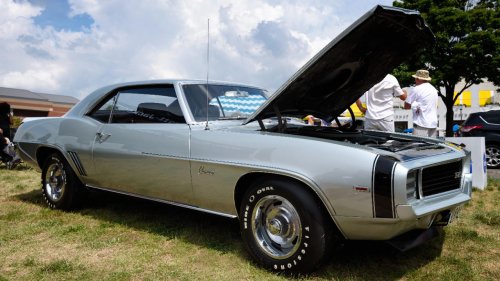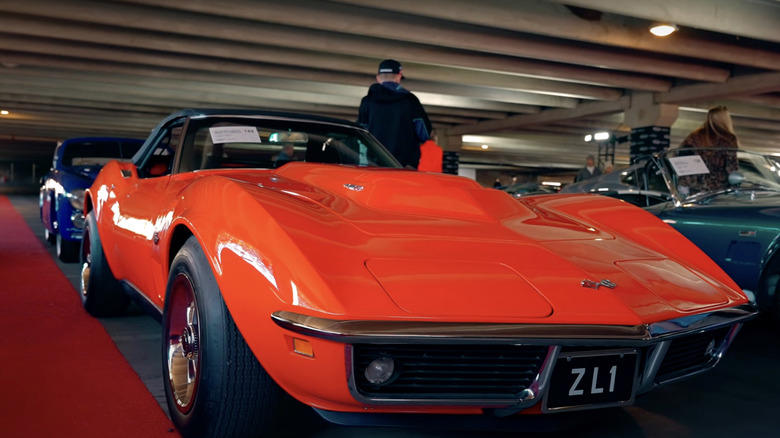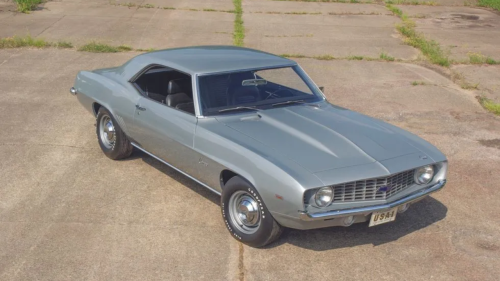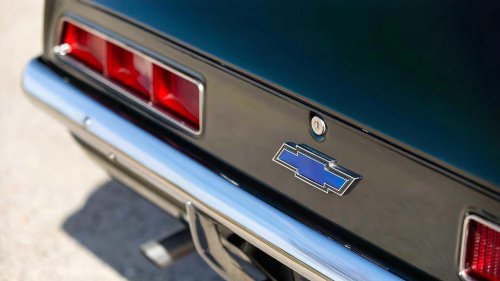
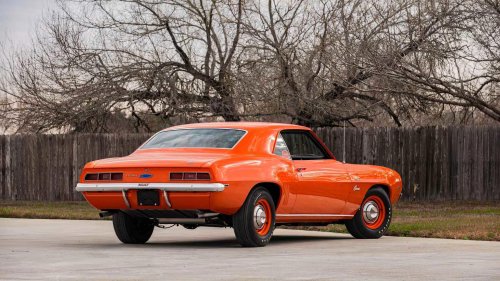
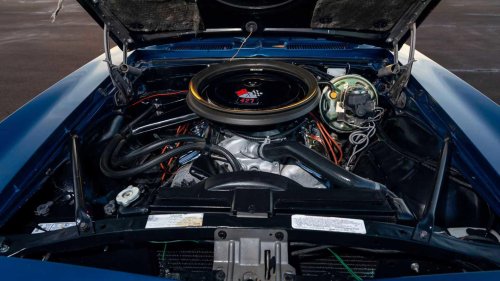
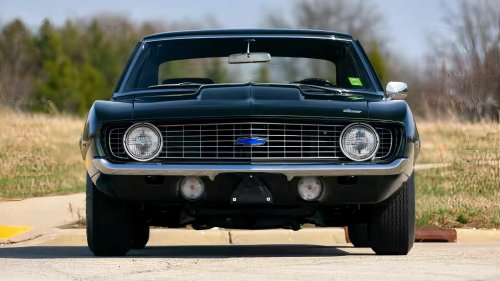
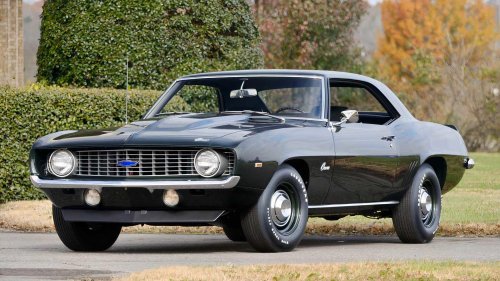
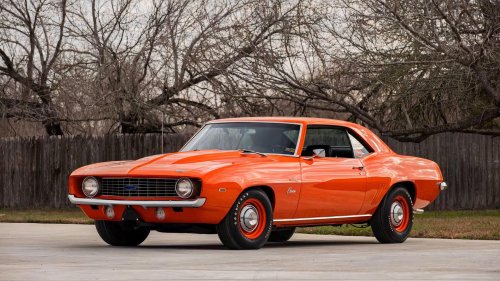



















By the late 1960s, muscle cars were already getting out of hand. Horsepower numbers were climbing, engines were getting bigger, and manufacturers were finding ways to push limits without technically breaking their own rules. A wild time for the automotive industry, but there was still a line. No matter how aggressive things got, what showed up in a showroom still had to make sense to the person buying it, and this car didn’t.It arrived with hardware that didn’t belong in a street car, a price that didn’t match its badge, and performance that most buyers weren’t prepared to deal with. Realistically, it looked like just another option. In reality, it was something else entirely. When it finally reached dealerships, even the people selling it weren’t sure how to explain it. When A Street Car Starts Acting Like A Race Car MecumThe horsepower war was already in full swing in 1969. Big-block engines were everywhere, and buyers expected serious performance. But there was still an understanding. Even the fastest cars had to work as street cars first. They needed to idle, handle traffic, and feel usable to someone driving it every day. Race cars were a totally different world. If you wanted one, you built it or bought a purpose-built one. What sat on a dealer lot might have been inspired by racing, but it wasn’t supposed to be a race car itself.That’s where things started to shift; engineers and dealers looked for ways to go further, and the gap between street and race began to close. And in one case, it disappeared completely.Fun Fact: The ZL1 engine was so expensive it made up most of the car’s price. The all-aluminum 427 alone cost over $4,000 in 1969, which was more than the price of many entire cars at the time. The Loophole That Let This Wild Muscle Car Happen MecumGeneral Motors had already tried to control how far things could go. One of the biggest restrictions was the 400-cubic-inch engine limit for smaller cars. It was meant to keep performance in check and avoid turning everything into something unmanageable.But there was a way around it, and it was quite interesting. The Central Office Production Order system, or COPO, was originally designed for fleet and special builds. It allowed dealers to request configurations that weren’t available through normal ordering channels. In the right hands, it became something much more powerful.MecumA few dealers realized they could use COPO to completely bypass GM’s internal rules. Instead of building cars that stayed within the limits, they could order something far more aggressive. Something that wasn’t really meant for the average buyer. What came out of that process didn’t feel like a clever workaround; it felt like something that wasn’t supposed to happen in the first place. The 1969 Camaro ZL1 Was Never Meant For Showrooms When this Chevy finally showed up at dealerships, it still carried a familiar name. It was a Camaro, at least on the surface, with the same shape, same badge, and same place on the showroom floor. Underneath, it was a completely different story. The ZL1 package brought an all-aluminum 427-cubic-inch V8 originally developed for Can-Am racing. Chevrolet rated it at 430 horsepower, but most agree that number was conservative.In reality, the output likely pushed well beyond 500 horsepower, placing it in a completely different category from anything else wearing a Camaro badge. The numbers alone help explain why this car didn’t make sense in a showroom. Even compared to other big-block Camaros, the gap was hard to ignore.Via Mecum Auctions1969 Camaro ZL1 Key SpecsThis was a race engine dropped into a production car and sent out the door with a VIN. Voilà! And at a time when muscle cars were already getting faster every year, this felt like skipping a few stages entirely.Fun Fact: Some ZL1 Camaros were originally built as automatics. While most people picture them as stripped-out drag cars with manuals, a handful left the factory with automatic transmissions, which makes them even rarer today. Why The ZL1 Failed The Showroom Test MecumIf the performance didn’t make it difficult to sell, the price did. A standard Camaro was accessible and that was part of the appeal. The ZL1 wasn’t. With a price pushing past $7,000, it landed in a space that didn’t make sense for most buyers walking into a Chevrolet dealership. For that kind of money, people expected something different. A Corvette, or something that clearly looked like a high-end performance car.MecumDealers were left trying to explain a car that didn’t fit their usual pitch. It looked like a Camaro, but it wasn’t priced like one. It delivered performance that went far beyond what most customers could realistically use, and in many cases, far beyond what they even wanted.Some cars sat. Others were quickly moved into drag racing, where they actually made sense. A few were discounted just to get them off the lot. The issue wasn’t whether the ZL1 was impressive. Iy was that it didn’t belong in the environment where it was sold. How It Went From Unsellable To Untouchable Time changed the story completely. What once felt like a mismatch eventually became the entire appeal. Only 69 examples were built, and that alone would have made the ZL1 special. But the way it came to exist and the way it was received at the time are what really set it apart. These days, the market has shifted in a pretty dramatic fashion. The same car that once struggled to find buyers now sits at the top of the muscle car world.Fun Fact: The ZL1 was faster than most dedicated race cars right off the showroom floor. With minor tuning, these cars were running low-11-second quarter miles, which was serious race territory in 1969, not typical street car performance.1969 Chevrolet Camaro ZL1 Front three-quarter shot Recent 1969 Camaro ZL1 Sales Those sales tell you how the market sees these cars now. Mileage, documentation, and originality don’t just influence value. They define it. The best examples have moved well past the million-dollar mark, while even higher-mile cars still sit in territory most muscle cars never reach.What’s changed isn’t just the price, it’s how the car is understood. The same things that made it difficult to sell in 1969, the engine, the price, and the lack of a clear purpose, are exactly what collectors are paying for now. It no longer feels out of place. It's more like one of the clearest examples of how far the muscle car era was willing to go.Condition and originality still matter, but the baseline has shifted into seven-figure territory. What once felt overpriced now looks like one of the most important factory performance cars ever built. And more than anything, it represents a moment something made it through that pushed further than the market was ready for. It was a wild car for a wild time, and the current market reflects that pretty accurately.