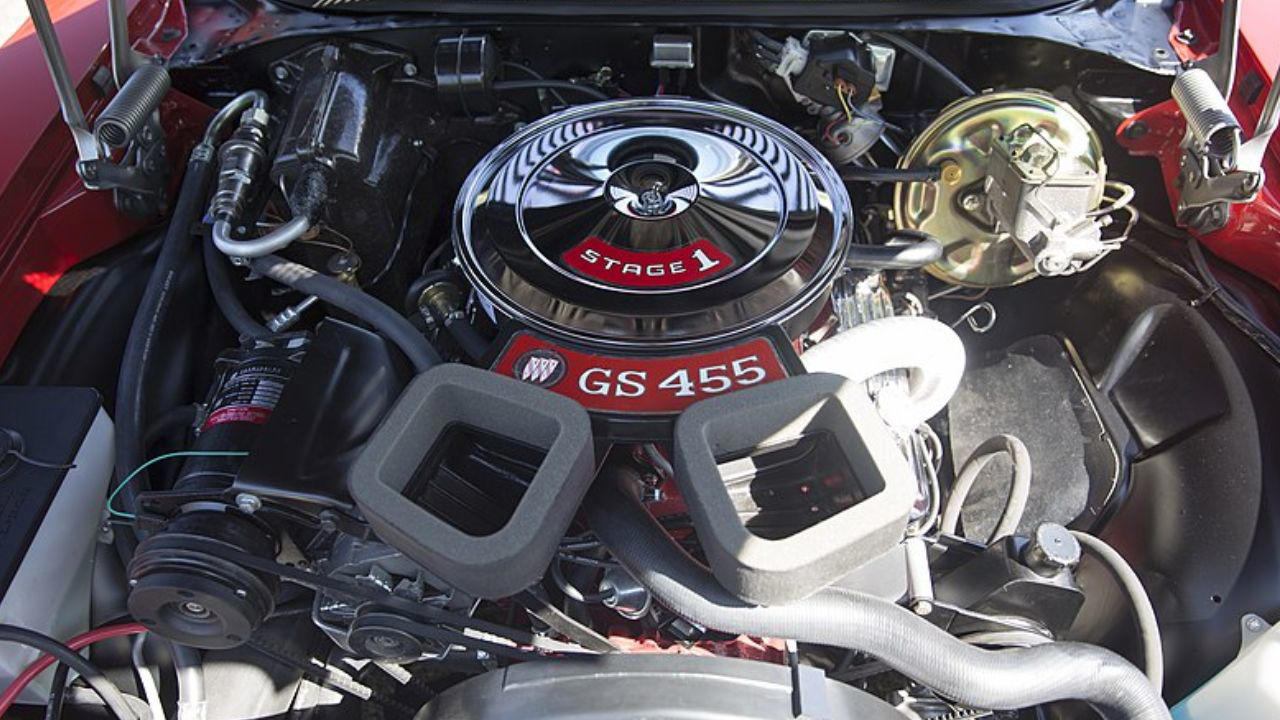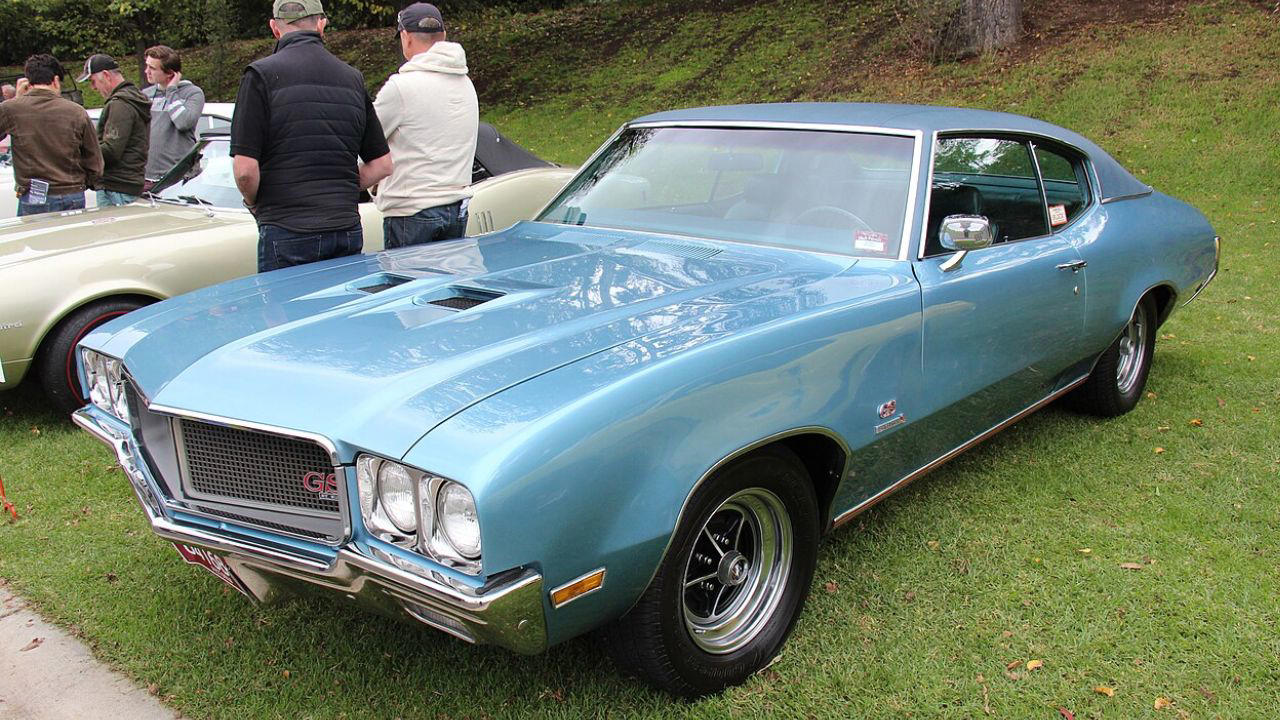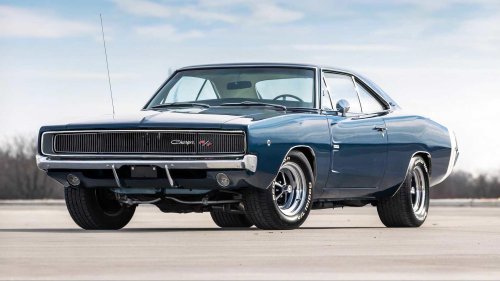
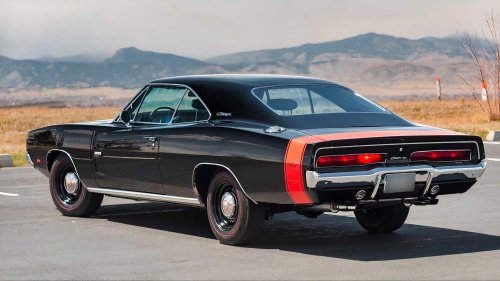
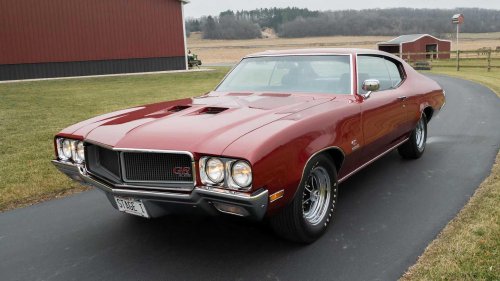
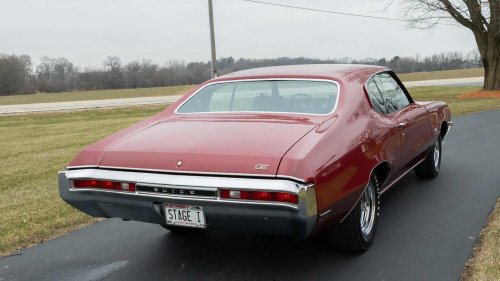
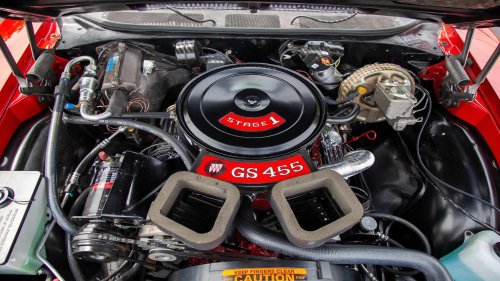
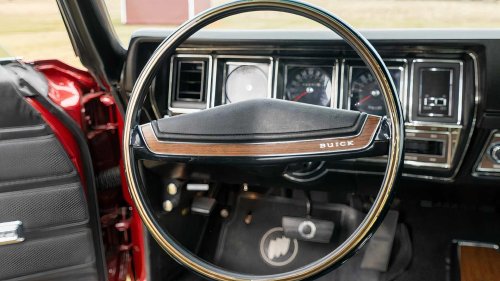
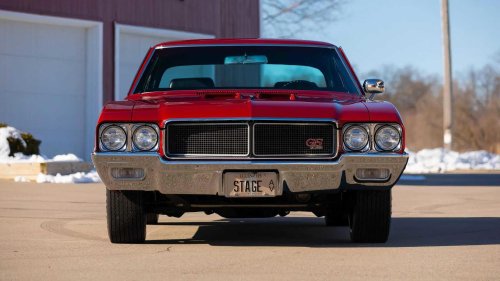


















When it comes to the muscle car scene of the '60s, words like Hemi and Boss are passed around like the crown jewels of the era. It's not surprising, because if you wanted to win everything from bragging rights, to nights at the drag strip, you had to aim for the best, most recognized models. These were the cars from the big players that nobody messed with. No one, that is, apart from an oft-forgotten middle-aged brand that wasn't really selling itself on burnouts at Woodward. This company dared to shake off its conservative image, enter the muscle car scene and start duking it out with the big boys, with some output figures that terrified the competition. The Muscle Car Power Wars Were Raging In The '60s Mecum The term "muscle car" had only just been coined in the mid '60s, following the introduction of John DeLorean's weekend project, the Pontiac GTO. The baby boomer generation were reaching driving age, young buyers had money, and the youth wanted to rebel — there couldn't be a better time for powerful V8-powered coupes. But within a year or two, things were getting a bit out of hand. Case in point is the 426 Hemi unit that appeared on the option sheet for the 1966 Charger. No One Dared Upset The Establishment In The '60s Mecum This was a straight-up race-bred engine, and let's not forget that it had been banned outright in NASCAR for 1965 as a pushback against its dominance. For 1966, Chrysler needed a street version in order to race the Hemi, and hey presto, a slightly tuned down Hemi with softer cam and inline dual four-barrel arrangement could now be fitted in your Charger, ready to drive to the store for a loaf of bread.TThe 425 horsepower at 5,000 rpm and 490 pound-feet of torque at 4,000 rpm were eye-watering. Likewise, the Mustang Boss 302 (1969 to 1970) was a similarly exotic homologation model, produced to meet the eligibility requirements of the SCCA Trans-Am series, although it had a lesser (but probably much higher) 290 horsepower and 290 lb-ft of torque. It would take a brave company to step into the arena with these high-tech competition-bred machines. 1970 Buick GS 455 Stage 1 AKA "Hemi Killer" Bring A TrailerNot many people would have expected Buick to be the one to try. Even though Buick had brought out models such as Riviera GS, the company still had a reputation as being a little upmarket and more suited to older, more conservative professionals than the usual cigarettes in the sleeve brigade who would race their cars at the weekends. Taking on the might of cars like the Charger Hemi was a tall order, but Buick had a secret weapon. Buick Rolled Out A 455 And Then Added Some More Bring A Trailer Buick launched the Gran Sport, or GS, in 1964 and the second-gen, which was based on the Skylark Custom, arrived four years later. This wasn't exactly lacking in power, with the standard 350 V8 with 4-barrel model having 280 horsepower, and the GS 400 version offering 340 horses. Buick offered a cold-air Stage I and Stage II induction kit available from early 1968, giving the 400 a decent 345 horsepower, which should have been enough for those Buick-buying doctors and lawyers.But it wasn't, so Buick shoehorned in a 455 in 1970, with the GSX model being decked out in the A9 package, which included every handling and appearance add-on the company had to hand. The standard engine had 350 horsepower and 510 lb-ft of torque, which didn't just put it squarely in Hemi Charger territory—it kicked it out of the park when it came to torque. No wonder the 455 GS Stage 1 became known as the "Hemi Killer". How The 455 Stage 1 Punched Above Its Weight Bring a Trailer | User: Stlcm If the GS or GSX, which came in Saturn Yellow or Apollo White, meant Buick was now well out of its comfort zone, the company didn't seem to care, throwing in one last sucker punch by offering the 455 with the Stage 1 option. For just $115 extra, the GSX Stage 1 took things further, with improved cylinder heads with larger valves, hotter cam, and a higher compression ratio. It was an open secret that the official 360 horsepower was seriously underrated.That 510 lb-ft of torque wasn't just the greatest amount of twist in an American-made car of the time, it held that title for 22 years, only being toppled by the 8.0-liter V10-powered Dodge Viper of the early '90s. In one fell swoop with the GS and GSX, Buick, a company that wasn't battling it out for NASCAR and engineering exotic parts in a secret lab, had slain the titans of the muscle car scene. But It Is The Standard GS 455 Stage 1 That Was The True Overachiever Bring A Trailer At this point, it's worth pointing out that the GSX package was around $1,195 on top of the standard GS 455. That made the car almost $4,500, which actually made it several hundred bucks more than both the Charger and Boss Mustang. However, if you didn't add the GSX package, the GS 455 Stage 1 still had 360 horsepower and that legendary 510 lb-ft of torque, but this model would be more like $3,500. This meant that it was seriously punching above its price range when it came to performance. There were reports of magazines punting these cars down the quarter mile in the mid-13s, with high five-second sprints to 60 mph. In one magazine test, a 1970 Dodge Challenger R/T Hemi managed a quarter mile in 14.1 seconds. The GS 455 Stage 1 Is The Alternative Mighty Muscle Car You've Been Looking For Bring A Trailer The GSX Stage 1 didn't come cheap when new, and they are not exactly bargains now. It's not surprising considering their rarity—just 678 were built for 1970—but these cars will now set you back $114,000 in good condition, says Hagerty. The GS 455 Stage 1 sister car, however, with its record 510 lb-ft of torque, is a relative bargain, however. For one of these cars from 1970, expect to pay $50,300—that's more than half the price. Compare that to $101,000 for a 1970 Charger Hemi, and you have a seriously powerful and fairly unique muscle car for a fraction of the cost. Who says the GS 455 Stage 1 doesn't still punch above its weight?Sources: Hagerty.com