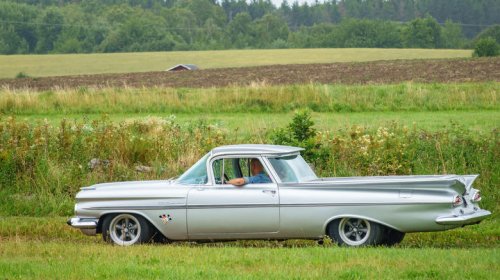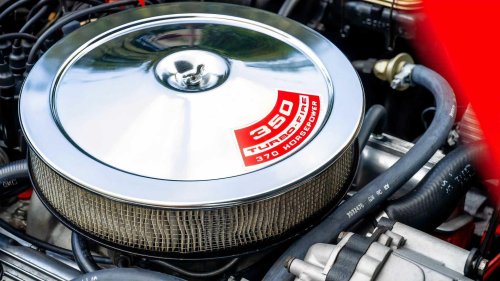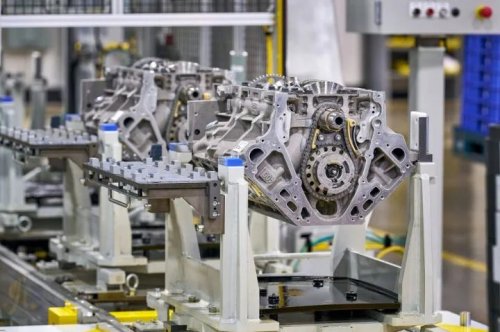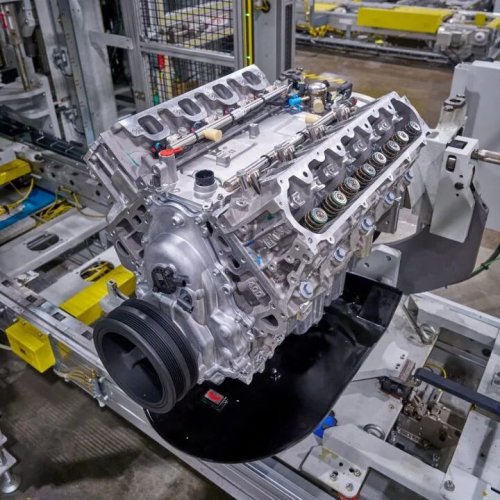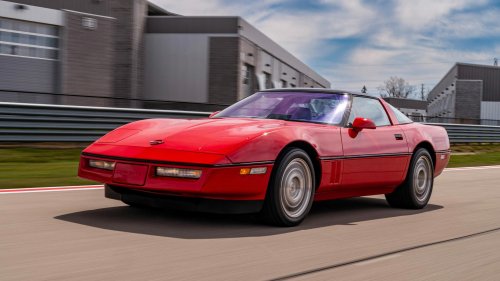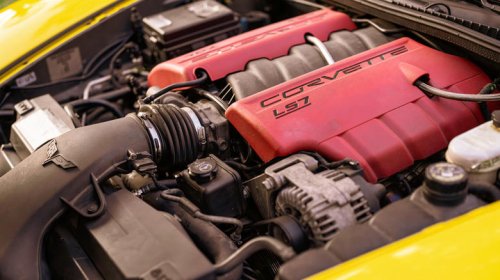

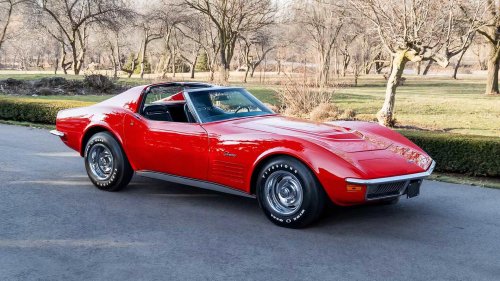



















Small-block V8 engines may not be as brawny or powerful as their big-block counterparts, but they completely revolutionized the car industry. However, since the V8 became a staple American power mill, one small-block V8 engine stood out as the most dependable of the bunch.For more than five decades, this reliable small-block V8 engine was the backbone of American performance. It powered everything from classic muscle cars to pickup trucks and even boats. It was sold as a crate engine that’s been utilized in hot rods, and it’s been a trusted and iconic engine that’s become the perfect choice for many drivers over the years. This is the most reliable small-block V8 ever made. The Chevy 350 Is The World's Most Reliable Small Block ShutterstockBetween 1955 and late 2011, Chevrolet produced over 100 million small-block V8s (carbureted and fuel-injected), marking it as one of the most produced engines in history – but one specific variant seems to be the champion when it comes to mileage and durability.The engine that refuses to die is the Chevy small block V8 – specifically the 350 cubic inch variant that made its way into a plethora of models, from bona fide muscle cars to pickup trucks and family sedans. The Chevy 350 is considered one of the best engines of the 20th century. In fact, it was named one of the ten best engines of the 20th century by Wards Auto World. A more fitting recognition of how well this engine performs is the number of vehicles that logged high-mileage figures using the Chevy 350. The Camaro Was A Great Place To Begin American Muscle Car Museum Chevrolet began producing small-block V8 engines in 1955, but they were a 256-cubic-inch (4.3-liter) engine. It took twelve years for GM to create the high-performance Chevy 350 engine, which started out in the 1967 Chevrolet Camaro.The 1967 Chevrolet Camaro gained popularity for its balance of power and durability. The Chevy 350 engine in this muscle car produced 295 horsepower, which meant it could outperform many rivals while maintaining reliability, which is exactly what Chevy fans were looking for.Once it was used in what would become one of the most exciting muscle cars of the era, the Chevy 350 engine went on to power everything from the Corvette to the Caprice. It’s been used in pickup trucks, performance cars, sedans, and wagons. GM made extensive use of the 350 engine across its lineup until 2004, when it was discontinued in favor of modern, fuel-efficient engines. Evolution Of Fuel Tuning The 1985 Chevrolet Corvette was the first car using a Chevy 350 to feature fuel injection instead of the four-barrel carburetor setup that had been the standard for nearly twenty years. Other passenger cars equipped with the engine continued to use the older system. In the early 1980s, computer-controlled emissions systems became standard on all versions of the Chevy 350. Throttle-body fuel injection became standard for this engine around 1988. Chevy 350-Powered Cars Have Gone On To Reach Incredible Mileages What Makes The Chevy 350 Reliable? The Chevy 350 wasn’t just another step in small-block evolution – it became the gold standard for durability and performance. Its cast-iron block and heads made it nearly bulletproof, while its use of a timing chain instead of a belt meant fewer failures and less upkeep.The pushrod OHV design kept things simple, with fewer moving parts to break, and low compression ratios ensured the engine never felt overworked. That’s why the 350 thrived everywhere: from muscle cars and family sedans to farm trucks and even boats. It was easy to wrench on, forgiving of neglect, and backed by an aftermarket so huge that replacement parts were always cheap and available.This mix of toughness, simplicity, and accessibility made the 350 practically unkillable – a workhorse that could rack up hundreds of thousands of miles. For gearheads, it’s the definition of a reliable V8—an engine that outlasts trends and still earns respect decades later. The Chevy 350 Pickup Truck That Clocked Over 1.3 Million Miles Bring a Trailer A 1991 Chevrolet C1500 Silverado equipped with the Chevy 350 and owned by Frank Oresnik clocked more than 1.3 million miles without major repairs. It only required regular maintenance and minor parts replacement. This is a true test of the longevity of the Chevy 350 small-block V8 engine. This truck and engine didn’t have anything extra special or showy; it’s a simple cast-iron engine with throttle-body injection and GM durability.This 1991 Chevy truck was used for daily delivery runs across the Midwest, sometimes reaching 700 miles in a single day. Frank stayed on top of the maintenance, ensuring the truck received an oil change every 3,000 miles. During the 1.3 million miles, the transmission had to be replaced a couple of times, but the reliable small-block V8 engine remained intact.Other truck owners, one with a 1996 C1500 and another with a 1995 version, reported on Chevytalk.org forum, surpassing 500,000 miles on the original engine and transmission. In fact, multiple owners of these trucks have reportedly reached more than 300,000 miles without any issues. A YouTube video (shown above) shows the owner of a 1995 Chevrolet Suburban with a 5.7-liter small-block V8 engine reaching 500,000 miles on the original motor. The Reliable Power Of The Chevy Small Block 350 Chevy small block 350 The Chevy 350 engine evolved over several years, as you would expect an engine that lasts for nearly five decades to do. This small-block V8 was built with either a 4.00 or 3.48-inch bore and stroke, with horsepower ranging from 145 to 370. The torque rating reached as much as 380 lb-ft, making this engine extremely useful for towing, leading to its use in pickup trucks and large SUVs. The Chevy 350 Matters In An LS World In today’s world, one of the most popular choices in engine swapping is a GM LS V8 engine, which is the successor to the Chevy 350. Still, the most reliable small-block V8 engine is popular as a crate engine. Its simplicity, with no complex electronics or fancy direct injection, makes it easy to use. It's also an affordable engine with incredible parts support and legendary reliability, which makes it an amazing engine for nearly every V8 application. An Easy Engine To Work On A 5.7-liter GM crate engine is one of the most popular choices among enthusiasts building hot rods and other project vehicles in their garages. The Chevy 350 has long been considered one of the easiest engines to rebuild and is commonly modified for increased performance with aftermarket parts. There is massive aftermarket support for this popular and reliable engine.Several websites offer crate versions of the Chevy 350 in various levels of tune, providing customers with the right configuration for many vehicles. Some of these sites include gearheadengines.com, Rebuilt-Auto-Engines.com, and Jegs.com. If you are looking for a modified 350 for a high-performance muscle car, SummitRacing.com has you covered. Popular Chevy Muscle Cars Powered By The Chevy 350 V8 GR Auto Gallery Chevrolet Chevelle The Chevy 350 also made its way into some of the industry's most iconic muscle cars. Prior to 1970, the Chevelle was most commonly ordered with a small-block Chevy 350 V8 engine. This engine was often modified by homegrown tuners learning to work on these engines in their own garages. Chevrolet Bel Air When people talk about the 1957 Chevy, they’re usually thinking of the Bel Air. Chevy sold other trims that year, but the Bel Air’s styling made it the true icon. This generation lasted a long time and eventually added the Chevy 350 to the mix in 1969. Some tuners take this engine and put it in the ’57 version to have one of the best engines ever made matched with an iconic car. Chevrolet El Camino The car/truck combination that is the Chevrolet El Camino lasted for a few decades, going from 1959 until 1987. During that time, the El Camino adopted smaller V8 engines, like the Chevy 350, allowing this car/truck to become a powerful and impressive muscle machine that could last a long time. LT-1: The High-Performance Variant Mecum Auctions In 1970, Chevrolet released the LT-1 350, featuring 11:1 compression, solid lifters, a Holley 780 cfm carb, and ramhorn manifolds. In gross terms, it delivered up to 370 hp in the Corvette and 360 hp in the Camaro.