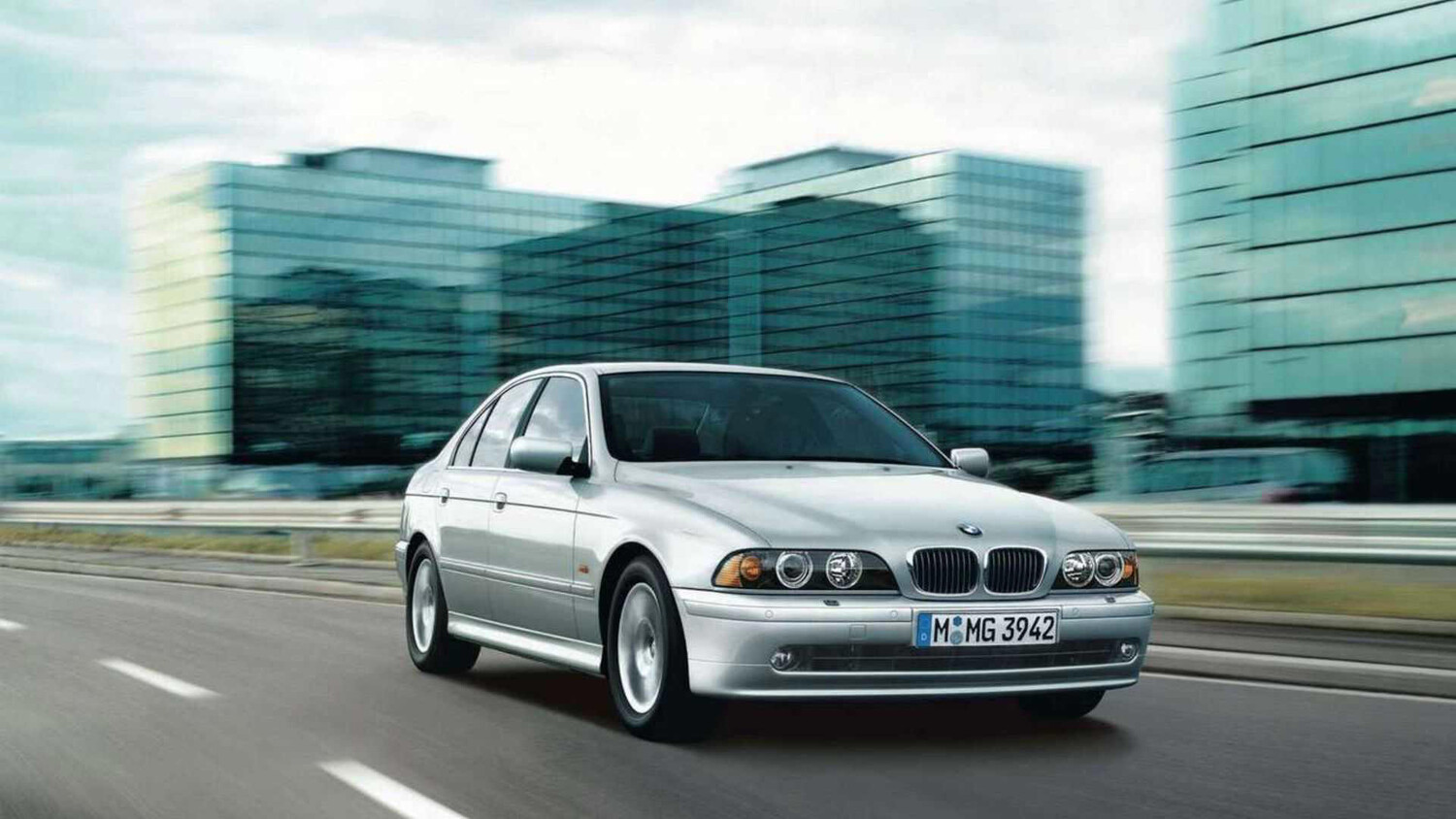
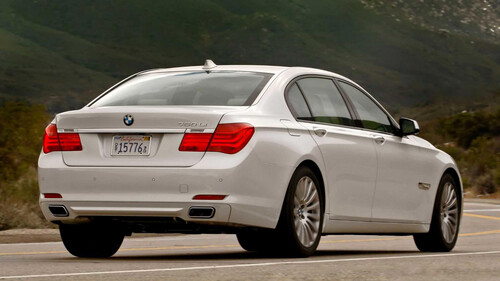
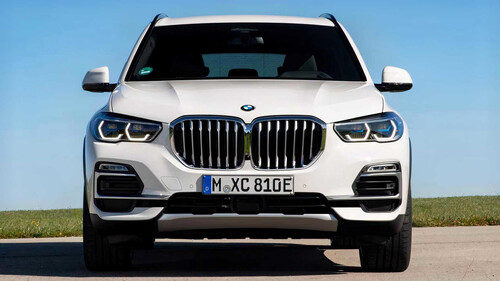
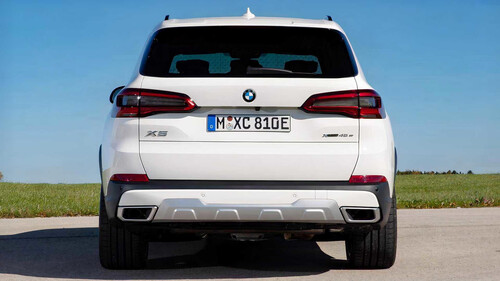
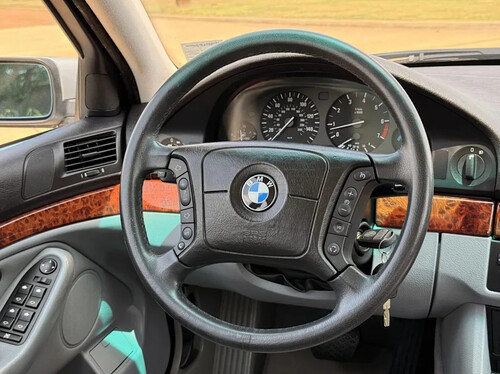
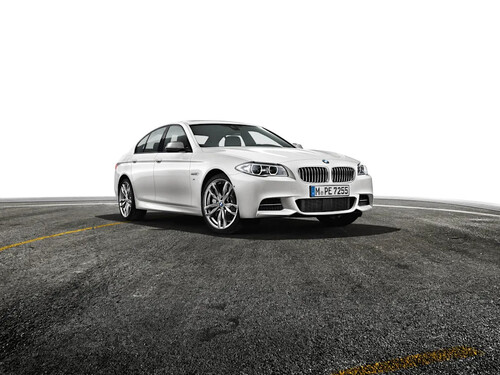
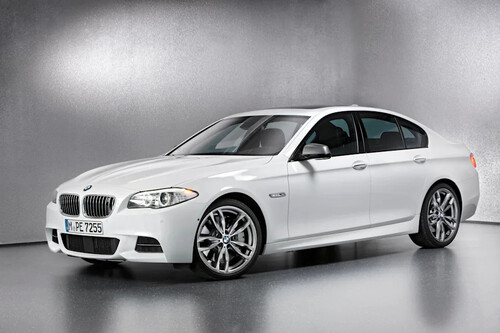
BMW carries a legendary reputation. It's been around for decades, and has been held in extremely high regard when it comes to things like racing, technological advancement, and style. It's also been at the forefront of championing the pursuit of driving pleasure, and has even used the slogan "The Ultimate Driving Machine" in the past to describe its products. In short, if you've ever been at the helm of virtually any performance-oriented Bimmer, you'll know what we're talking about.However, one thing BMW hasn't really been known for is reliability. Most of you reading this will know that German luxury cars are hardly known to rival Toyota when it comes to dependability. Repairing BMWs can also get expensive, especially once they start to show their age. One engine, though, goes against this stereotype. It's the M57 six-cylinder diesel, and it's been known to last nearly 500,000 miles with just simple maintenance. The best part? Buying a used model equipped with some form of M57 could be one of the smartest pre-owned market strats out there. The M57's Entrance Into The Market BMWIn the late 1990s, BMW's M51 inline-six diesel engine was beginning to show its age. It had been in production since mid-1991, and had undergone a couple of minor upgrades throughout its life. It was offered in both turbocharged and naturally-aspirated iterations, and featured an extremely high compression ratio, even for a diesel engine, of 22.0:1. Unfortunately, BMW came to the conclusion that the M51 needed to be replaced, as it had grown obsolete.Enter the M57. This new inline-six diesel featured turbocharging, with no option for natural aspiration. In essence, it was meant to be BMW's answer to a growing interest in high-performance diesel vehicles in Europe. It was closely related to its predecessor, but also boasted a slew of upgrades meant to take the Bimmer mill into the present.Its first assignment was the 1998 530d sedan, and the model itself was marketed as a more performance-oriented diesel model. Shortly after, both the 3 Series and the 7 Series received their own version of the mill, resulting in the E46 330d and the E38 730d models.BMW By the late 2000s, the M57 had found its way into several popular BMW models, on top of the 3, 5 and 7 Series models. For example, one of its most popular applications was in the BMW X5 xDrive35d, which saw sales in the US, as well. Also sold in the US was the 335d. Both the X5 xDrive35d and 335d carried the namesake of "BluePerformance", denoting the models' places in the market as performance diesels. Into The M57's Guts BMWAt its core, the M57 is a rather standard diesel engine. It features common rail injection, wherein a single high-pressure fuel pump supplies a shared fuel rail with six injectors on it. The pump itself is capable of squirting fuel at up to 19,600 psi, with updated versions of the mill able to produce 23,500 psi. The first version of the engine to hit the market took advantage of a cast-iron engine block, and it also uses a forged crankshaft and forged connecting rods. A Bosch DDE 4 ECU managed the engine.In 2003, BMW released an updated version of the engine carrying a "TÜ" code at the end of its namesake. These new versions also utilized a cast-iron engine block and an aluminum cylinder head, and also featured the aforementioned, improved fuel system. In addition, the TÜ versions also took advantage of an improved Bosch DDE 5 ECU, which was slightly more capable of producing power, as well as improving fuel efficiency.BMW A further-improved TÜ2 version was released a couple of years later, which sported an aluminum engine block, along with twin-turbocharging. Variations carrying the "TOP" nomenclature were the most powerful, with the 3.0-liter M57D30TÜ2 TOP being the most powerful with 282 horsepower and 428 pound-feet of torque at its disposal. Here's Why It's So Reliable One of the hallmarks of the M57's penchant for reliability lies in its simple design. In the late 2000s, passenger diesel engines were beginning to show an affinity for complicated emissions systems. For example, some mills started to use diesel exhaust fluid, or DEF, to clean exhaust emissions from diesel engines. While it seems like a simple system, it's actually extremely complicated, being made up of a litany of sensors, injectors, pumps, and even heaters. USDM iterations of the M57 began to use a DEF system in the US as per federal law, which hampered its reliability a bit. However, this was not required in the EU at the time.BMW In addition to its lack of a DEF system – save for in the US market beginning in 2009 – the M57 also sported an extremely robust, arguably overbuilt, design. The earlier versions of the engine using cast-iron engine blocks are particularly resistant to catastrophic failure, especially considering those motors didn't make all that much power, despite being turbocharged. For those with even an air of mechanical sympathy will know that an under-stressed engine typically lasts longer than an over-stressed one.You also need to take its forged internals into consideration. A forged crankshaft and forged connecting rods are stronger than cast versions, simply because they're shaped from a single block of metal. Cast components, on the other hand, are produced by pouring molten metal into a mold. By using a forging technique, the metal itself typically contains fewer imperfections, leading to a longer service life. The Caveat BMWNow, if you go to research any USDM models' reliability that used the M57 engine, you'll find below-average ratings. For example, the BMW 335d receives a 1.5 out of 5-star rating from RepairPal.com, and it's also ranked 31st out of 31 total luxury midsize cars. A deflating ranking, but there's more to it. RepairPal.com rates models based on their factory configurations, as rating cars with aftermarket parts or modifications would be, basically, lying.However, the BMW 335d and X5 xDrive35d both benefit greatly from removing the DEF system entirely. The system is extremely failure-prone, and expensive to repair when virtually anything goes wrong with it. For context, any DEF system repair on the BMW 335d can cost anywhere from $1,500 to $5,000 or more. It's even more ridiculous when you realize the system isn't necessarily essential to the engine's operation.BMW Many folks who still own M57-equipped cars in the US simply delete the entire DEF system. In doing so, many buyers report extremely long service lives for their M57 engines. There are even some anecdotal reports of DEF-free models achieving nearly 500,000 miles without any major repairs, just simple maintenance. Here's What It'll Cost You 2008 bmw 335d rear redIf you're up for ripping out that DEF system by using some engine bay MacGyver-ing, picking up a used BMW 335d or BMW X5 xDrive35d might be a decent choice if you're dead-set on a diesel-powered car. According to Kelley Blue Book, a 2011 BMW 335d will run you about $8,370 in the current used market with average mileage and in average condition.The 2011 X5 xDrive35d, on the other hand, will cost roughly $6,140. Both prices are lower, on average, than other, gasoline-powered BMW's produced at the time, likely because they're powered by a diesel engine. Almost A Slam-Dunk BMWWe say "almost" because of the effort you'll have to put into your diesel-powered model if you buy a post-2009, M57-powered version. However, once you complete the modification – or pay someone else to do it for you – you'll have one of the most reliable diesel-powered passenger cars available on the US market.