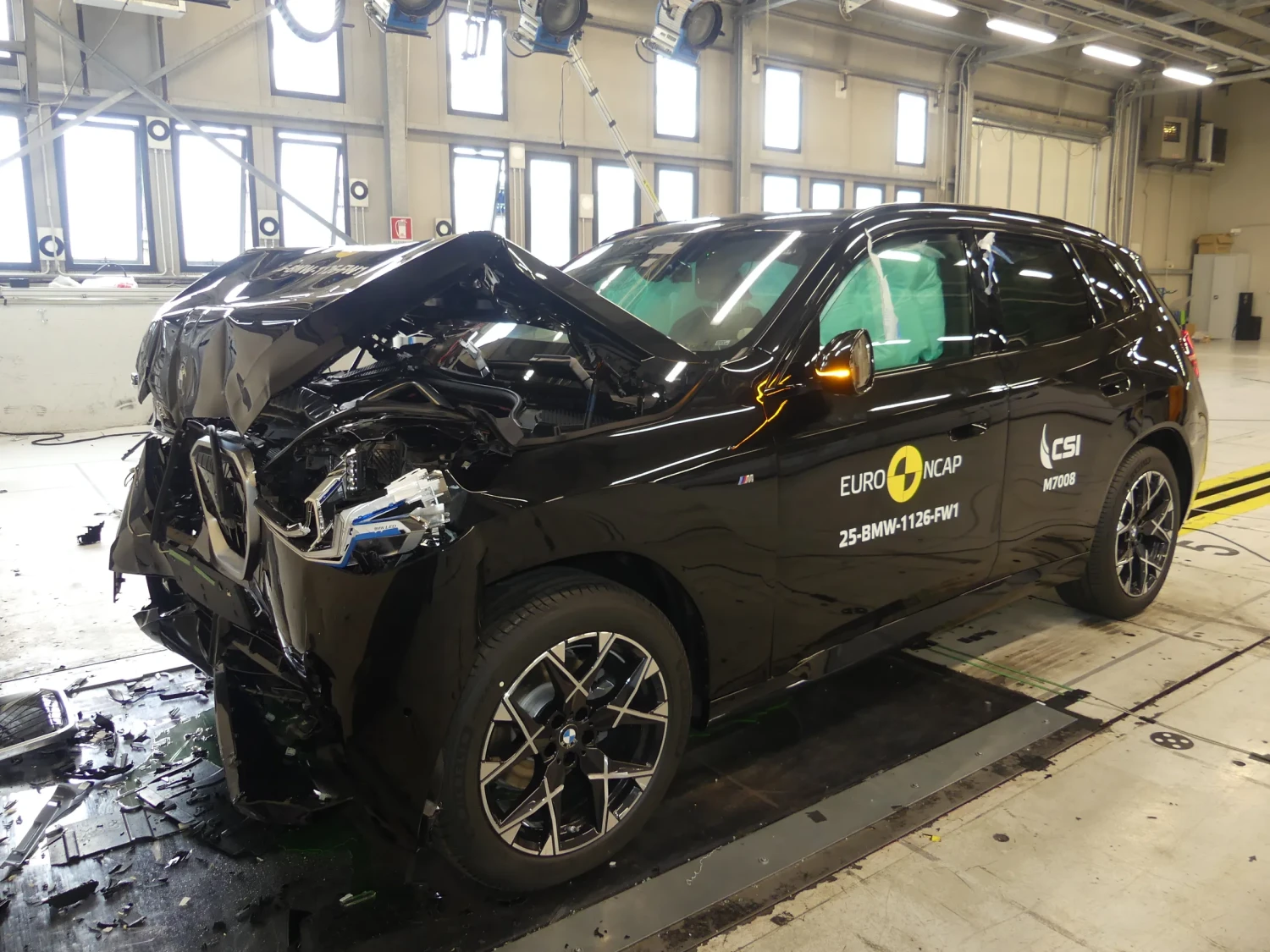
Advanced AI models will be trained on specific engineering and simulation data. Artificial intelligence is allowing BMW to reduce its manpower needs. BMW is also using AI to help with coding and advanced software development. The world’s largest car manufacturers are embracing artificial intelligence with open arms, and BMW is among them, tapping an AI company to improve its crash simulations. Although the partnership won’t directly or immediately impact BMW owners, the automaker says it will help with “value creation.” Moving forward, BMW will work alongside Mistral AI to boost the quality, accuracy, and speed of complex engineering tasks. It will combine its comprehensive engineering datasets with Mistral AI’s model-training capabilities to train an industrial AI model. Read: BMW’s New Humanoid Workers Never Take A Break Or Get Paid BMW runs thousands of virtual crash simulations every week and has accumulated more than a petabyte, or 1,000 terabytes, of crash data in the process. That archive lets engineers analyze how specific vehicle structures and materials behave in an accident and how much each one actually matters to the outcome. The specific target is what BMW calls Large Industry Models, AI systems trained narrowly on engineering and simulation data drawn from safety testing and vehicle development. The pitch is that these models learn from BMW’s own processes rather than the open internet, which in theory should make them useful where general-purpose AI tends to flail. Reducing Manpower Needs “As Industrial AI becomes the new frontier for AI, we are proud to partner with the BMW Group,” said Marjorie Janiewicz, Mistral AI’s chief revenue officer. “This collaboration shows how industry-specific AI models can help solve complex engineering challenges such as crash simulation.” Beyond aiding crash simulations, AI is helping BMW accelerate the development of its future models, particularly in coding and software development. Tasks that once filled an entire day can now be completed in a matter of minutes. As revealed by BMW development director Joachim Post last year, AI also allows BMW to significantly reduce the manpower it needs. “We’ve needed significantly more manpower in the past,” he said. “Now we can leverage much greater efficiency potential. And AI is helping us massively in this regard, for example, with coding. We’re gaining incredible speed in software development, and with it, we’re gaining additional speed in the entire development process.” EuroNCAP