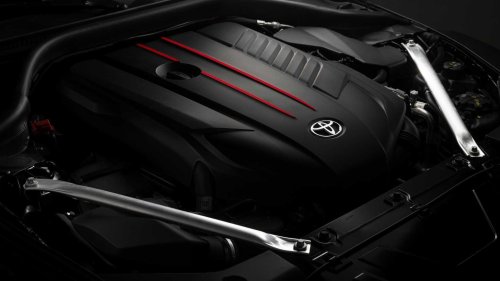
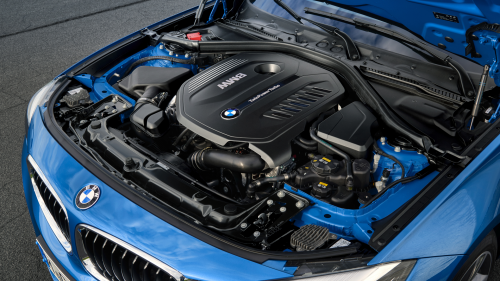
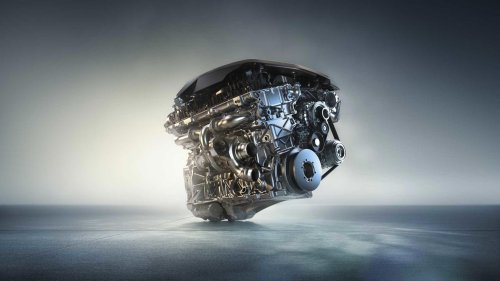
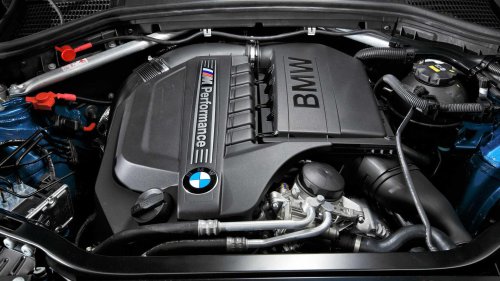
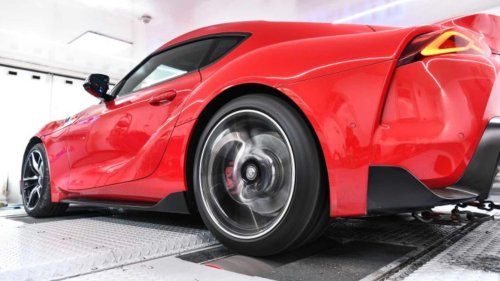
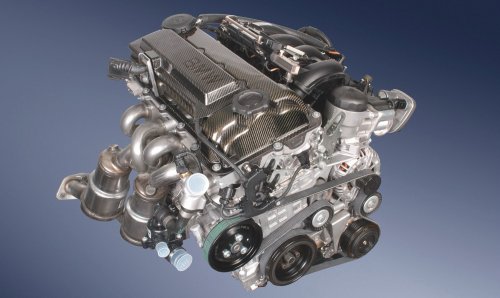
In what many would describe as simpler times, the automotive industry felt fewer constraints. Society in general wasn't as worried about environmental issues as it is today, and American consumers, in particular, didn't really fret too much about the cost of gas. In this type of world, auto manufacturers might feel less constrained when designing their engines and would often add in plenty of capacity or capability for future developments.But slowly and surely, that simpler world has evolved. These days it's neither politically correct nor financially smart to over-engineer any elements of the powertrain at factory level, which means that modern turbocharged engines rarely come out of the factory with massive, untapped reserves. Most operate close to their structural and thermal limits, as manufacturers must carefully optimize them to comply with emission restrictions, to deal with fuel economy expectations, and to comply with punitive warranties.However, there are some exceptions to this rule, and the BMW B58 engine is a case in point. After all, since the company introduced it in 2015, this 3.0-liter turbo inline-six has developed something of a reputation for being capable far beyond its factory horsepower output. It's a particular hit within Toyota's GR Supra and in BMW's own M340i, and due to its success, might just be the most tunable production engine on sale today. The Most Tunable Engine In Production ToyotaBMW's B58 has structural limits that sit a lot higher than its factory output. In current US spec models, it turns out between 335 and 382 hp, depending on the application and the vehicle's generation, but if you recalibrate it by tinkering with the software, you may be able to jump that output into the 400–450 hp range.If you add basic bolt-ons, you can even cross the 500-hp threshold, while upgraded fuel and larger turbochargers push the B58 well beyond its expected output on stock internals. That type of headroom is very rare in the modern era, and to find out why the B58 seems to stand out, we need to look at four different areas.Firstly, the engine has a closed deck aluminum block that is able to resist cylinder distortion under high boost. Secondly, it employs a forged steel crankshaft and forged connecting rods that can deal with extreme torque loads.Then, there’s that integrated cooling and turbo architecture, which allows the engine to manage heat more efficiently than many of its rivals.The fourth, and perhaps most important reason for tuners, is that BMW calibrates this engine conservatively at the outset, to give it a lot of untapped performance potential down the road. A Closed-Deck Block Is The Structural Advantage That Most Rivals Lack BMWMany tuned turbo engines struggle when it comes to cylinder pressures. After all, as the boost levels rise, combustion forces can increase dramatically and that can have adverse effects on the tops of these cylinder walls. Up there, the design of a modern open deck tends to lack full structural support, and under extreme pressure the bores could distort. This can compromise the ring seal and may often lead to head gasket cracking or failure.The B58 avoids that kind of drama as it has a closed-deck block surrounding the top of the cylinders with a reinforced aluminum structure. Engineers have purposefully designed the coolant passages while also rigidly supporting the cylinder walls themselves, so the bore retains its shape even when the boost climbs into ranges that would otherwise cause significant problems.Practically, this is great for tuners as it means they can operate these engines in the mid-20 psi range and sometimes even beyond 30 psi. They avoid the type of structural instability that approach might otherwise cause and the head gasket sealing surface remains stable.This design represents a fundamental shift in BMW's thinking when compared to its previous N55 inline-six. The N55 relied on an open-deck block, but now, the B58 aims to be far more durable under high stress loads. A closed-deck block can certainly cope with the factory output but can also withstand much of what a skilled tuner can throw at it. Forged Internals Allow Massive Torque Without Bottom End Failure Via: BMW The strength of the block may be one thing, but if you really want your engine to be durable, you must make sure that the rotating assembly can deal with immense torque spikes and repeated heat cycles. Here, BMW has introduced a forged steel crankshaft and forged connecting rods, while supporting the bottom end layout of the B58 with cross-bolted main bearing caps and a robust bed plate design. This approach introduces superior grain structure when compared to cast equivalents and helps to improve durability under stress, with greater fatigue resistance.The B58’s bottom end can therefore withstand torque figures that are far higher than basic stock levels. You can often get well over 500 lb-ft of torque out of this setup without requiring any internal upgrades and even 600 lb-ft is possible while still retaining the factory crankshaft and rods. Under load, the inline-six configuration has great primary and secondary balance, cutting down on vibration and mechanical shock. This can limit any specific stress concentration within the rotating assembly and promote further durability.Today, many turbo engines get to their safe mechanical limits quite quickly, because their pistons or rods are relatively weak points. In the B58, the bottom end is rarely the limiting factor as airflow and fueling require the most attention. And in the world of the tuner, that's exactly the type of challenge that you want. Integrated Cooling And Turbo Design Control Heat Under Extreme Boost BMW Short-lived dyno numbers are one thing, but if you want sustainable power out on the road, you've got to carefully manage your heat. Here, BMW has integrated the exhaust manifold into the cylinder head of the B58, which shortens the exhaust gas path to the twin scroll turbocharger. This type of design can reduce lag and improve spool response, but crucially, it also optimizes thermal efficiency and tightly manages any exhaust energy.Meanwhile, over on the intake side, you've got a water-to-air intercooler within the intake plenum. This has a shortened charge path to help reduce heat soak and maintain a more consistent intake air temperature under heavy load. With cooler intake temperatures, you can safely maintain ignition timing to get more power out of the engine without pushing it into dangerous territory.Beyond the intercooler, BMW has engineered sophisticated coolant routing to help keep cylinder temperatures uniform. In turn, this helps to mitigate localized hot spots, while oil systems are also capable of handling extended high-load operations.Whenever you increase levels of boost in an application like this, you can expect combustion temperatures to rise. Some manufacturers aggressively reduce timing to stay on the safe side if they lack any robust thermal strategies. And when they take this approach, they'll tend to sacrifice efficiency, but BMW has an answer for this as well within the B58 integrated cooling system. This system can sustain higher output for far longer without getting close to dangerous temperature thresholds. This level of thermal stability is another important reason why a heavily modified B58-powered vehicle can be dependable while still retaining factory-like drivability. The B58 Surpasses The N55 And Most Modern Turbo Rivals BMW BMW's N55 turbo inline-six may have been generally popular, but it wasn't really a favorite of the tuning community. After all, it had a less robust bottom end architecture than the B58 and its open deck block design didn't give those tuners as much headroom as the newcomer. Now the B58 has improved structural rigidity with increased internal strength. It also has some advanced cooling architecture, and all of this leads to a step change in durability.If you put the B58 alongside many modern turbo four-cylinders, you'll find that it has far lower cylinder stress because of its six-cylinder layout and larger displacement. Against turbo V6 rivals, you've got something that delivers exceptional smoothness and with a potentially stronger bottom-end construction. The B58 Scores Highly Within Modern Tuning Culture Toyota UK magazine Tuners love the B58 because it feels almost old school in its philosophy. Unlike many modern, tightly optimized turbo engines that operate close to their engineering ceilings, this one behaves like a modern interpretation of the much-missed overbuilt performance engines from bygone days. It's an engine that welcomes modification and combines contemporary efficiency with tangible mechanical margins.It's little wonder that the B58 is now the foundation for countless 500- and 600-hp street builds, as the products of tuners across the country. And this makes it arguably the most tunable platform available today among current production engines, as a powerful motor that seems prepared for anything.





























































































![BMW's new iX4 leaks days ahead of its debut [Images]](https://cdn.topcarnews.net/thumb/id/aHR0cHM6Ly9pMC53cC5jb20vZWxlY3Ry-ZWsuY28vd3AtY29udGVudC91cGxvYWRz-L3NpdGVzLzMvMjAyNi8wNy9CTVctaVg0-LUdULVNVVi0yLmpwZWc_dz0xNTAwJmFt-cDtxdWFsaXR5PTgyJmFtcDtzdHJpcD1h-bGwmYW1wO3NzbD0x/44847916d4631457013dfd46d3f7570e.jpeg?t=20261007&post_id=68433)