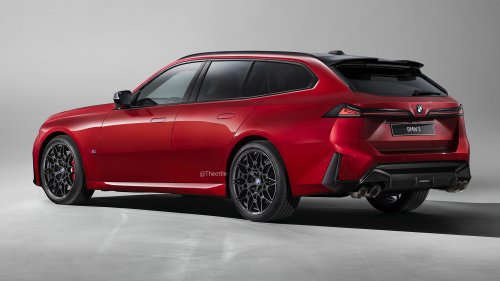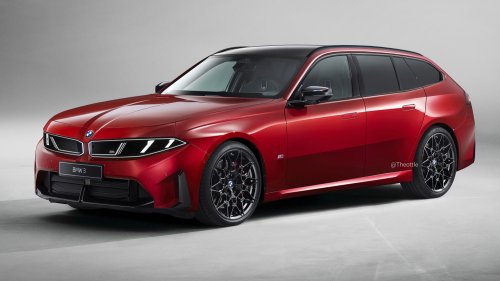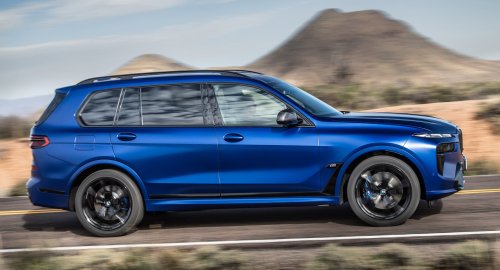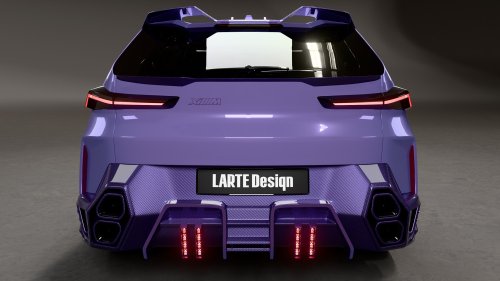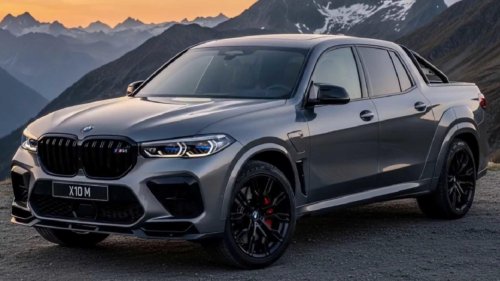
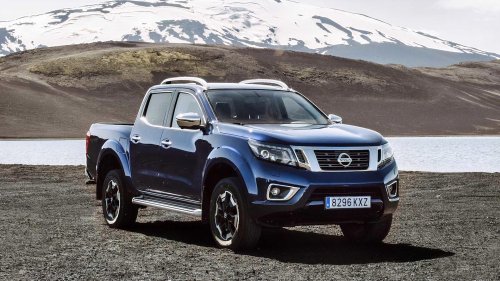
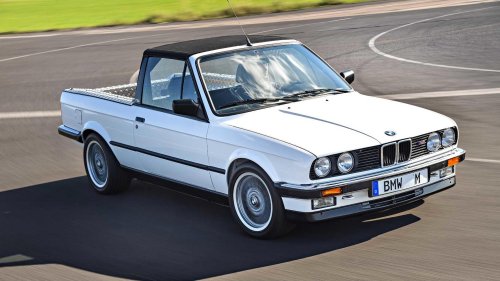
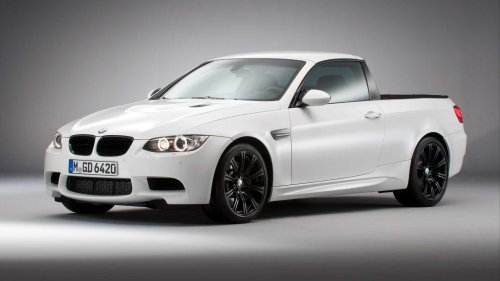
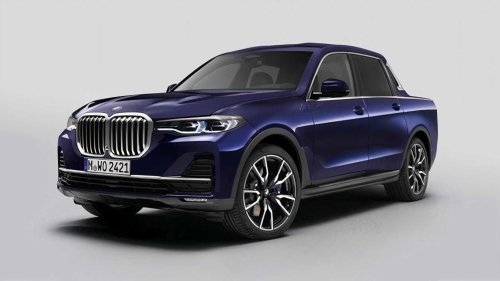



















Jump Links1986: E30 BMW M3 Convertible Pickup2011: E93 BMW M3 Pickup2019: BMW X7 PickupIf you thought the crossover and SUV segments ruled America, think again. Because the US automotive landscape is dominated by the pickup truck, particularly the best-selling Ford F-150. Yet, the very idea of a BMW truck has historically been treated as boardroom heresy in Munich. The Ultimate Driving Machine (Sheer Driving Pleasure, globally) ethos rejects the utilitarian compromises associated with pickup trucks. However, with the premium lifestyle truck segment exploding globally, the demand for a utility vehicle from Bavaria is reaching a fever pitch.If the bigwigs of this German brand ever decided to green-light a high-performance utility vehicle for series production, it would undoubtedly disrupt the traditional hierarchy. A genuine, M-engineered load-lugger wouldn't just shift market shares, it would completely blow America’s mind.This article highlights the BMW pickup truck concepts, as well as a recent fan-made one, the X10; these are not all BMW's own concepts. The BMW X10 Pickup Truck BMW X10 Pickup conceptRumors and highly detailed digital renderings of a radical BMW pickup truck have set the internet ablaze, largely driven by the conceptual buzz surrounding the fan-made X10 M. While far from being confirmed by Munich’s top executives, the internet-speculated specifications for this hypothetical BMW truck 2026 represent a masterclass in aggressive over-engineering. But if you're wondering if the BMW X10 M pickup is real, then the answer is, sadly, no, it’s not. This is a concept dreamt up by aficionados and those who have more digital know-how than many of us in our entire bodies.Positioned as an ultra-luxury performance vehicle that just happens to feature a composite cargo bed, the X10 M concept is idealized to abandon ladder-frame traditions. Instead, it is projected to utilize a carbon-fiber-reinforced plastic (CFRP) and aluminum architecture to maximize torsional rigidity while slashing weight. Power is dreamt to come from the legendary 4.4-liter twin-turbocharged V8, churning out 625 horsepower and 553 lb-feet of torque. Some dreamers even say 700 hp! That translates to a projected 0–60 mph sprint of just 3.8 seconds, which is supercar territory for a vehicle with a tailgate.Expectedly, the X10 M is loaded with technology and features. If this truck were to go into production, its features list would surely include biometric fingerprint door access, gesture-controlled tailgate operation, and adaptive M air suspension integrated with an electronic locking rear differential. Inside, BMW’s M Division will surely be felt and seen in the Merino leather, Alcantara accents, and the massive curved digital display. This Bavarian super-truck fantasy proves that if BMW were to build a pickup, it would prioritize apex-hunting dynamics over maximum payload capacity, which would completely redefine the premium utility segment. The Luxury Pickup Paradox: Why Premium Brands Fail 2020 Nissan Navara front, three-quarterBefore we all march to BMW’s HQ in Germany demanding a blue-and-white badged pickup, we must acknowledge the commercial minefield that is the premium truck market, and the ultimate cautionary tale remains the Mercedes-Benz X-Class (2017–2020). The Three-Pointed Star attempted to capture the luxury lifestyle market, but fell into the fatal trap of badge engineering. There is nothing wrong with it as an idea, but the execution can’t afford to be flawed. By utilizing the utilitarian Nissan Frontier ladder-frame platform, slapping on a premium fascia, and demanding a luxury price tag, Mercedes alienated both hardcore truck buyers and traditional luxury consumers. The X-Class suffered abysmal global sales and was axed after just three years, rendering it a massive mistake.This paradox proves that the market actively rejects utilitarian platforms masquerading as luxury vehicles. Historical failures like the Lincoln Blackwood and the Cadillac EXT reinforce this harsh reality. Buyers spending more-than-usual money on a truck expect either uncompromised towing capability - like an American heavy-duty diesel - or bespoke, ground-up luxury engineering. A premium badge like BMW, with all their know-how, cannot hide a crude, bouncing leaf-spring rear suspension. If BMW ever enters this arena, they cannot borrow a chassis from a partner like Toyota (likely the Tundra’s); they must engineer it with the precision of a sports sedan to avoid the exact disaster that plagued the X-Class. Other BMW Pickup Truck Concepts 1986: E30 BMW M3 Convertible Pickup 1986 BMW E30 M3 Pickup White Front Angled ViewLong before digital renders dominated social media, BMW actually built fully functional utility vehicles for their own operational use. The very first time the M Division experimented with a pickup was in 1986. Engineers at the Munich factory needed a fast, reliable vehicle to haul heavy parts and equipment across the very busy premises. Rather than buying a commercial van, they decided to build their own bespoke solution.Starting with the body of a 3 Series Convertible - chosen specifically because the convertible chassis already featured the heavy-duty structural bracing necessary to maintain rigidity without a roof - they chopped off the rear cabin. In its place, they grafted a heavy-duty diamond-plate metal load bed. Initially powered by a 192-hp 2.0L engine, it was soon upgraded to the legendary 2.3L S14 engine from the standard M3 that produced 200 hp.This was not a PR stunt or a delicate showpiece. The E30 M3 pickup was a legitimate factory workhorse. It hauled parts relentlessly, surviving the daily grind of industrial logistics for an astonishing 26 years, and was only finally retired from active factory service in 2012.What made the E30 M3 Pickup a hit: Reinforced convertible shell improved structural rigidity. Genuine performance from the legendary 2.3L S14 engine. Custom diamond-plate metal load bin. Proven reliability by working relentlessly as an operational parts hauler at the Munich factory for 26 years. 2011: E93 BMW M3 Pickup 2011 E93 BMW M3 Pickup Truck25 years after the original parts hauler entered service, BMW decided to create a modern tribute - this time executed as an elaborate, highly engineered April Fools’ joke. Revealed to the world on April 1, 2011, this second conceptual truck was based on the E93-generation M3 Convertible.Unlike its predecessor, which prioritized function over form, the E93 concept retained the stock M3's aggressive widebody styling, and featured the massive, naturally aspirated 4.0-liter V8 engine under the hood. It pushed out 414 hp, making it the fastest utility vehicle the company had ever constructed.In a “can Germans actually crack a joke?!” moment, BMW went to extraordinary lengths to sell the truck to the automotive press. They issued a completely straight-faced, data-heavy press release detailing its "everyday utility." Munich claimed it possessed a maximum payload capacity of nearly 1,000 lbs and a cargo bed lined with high-grade aluminum sheeting capable of holding 20 standard golf bags. And just to kick the can further down the road, BMW even took the heavily camouflaged prototype to the Nürburgring Nordschleife for high-speed testing and to prove its dynamic competence. Because the rear roof structure was completely removed, the truck was 110 lbs lighter than the convertible it was based on. 2019: BMW X7 Pickup 2019 BMW X7 PickupThe most recent, and arguably the most structurally credible, pickup concept departed from the M3 lineage entirely to test the limits of modern luxury architectures. In 2019, a dedicated team of twelve BMW vocational trainees collaborated with the Concept Vehicle Construction division to build a pickup based on the brand's flagship SUV, the X7.Created specifically for the BMW Motorrad Days event, the donor vehicle was an X7 xDrive40i prototype originally destined for the crusher. The engineering team cut away the third-row seating and the rear cargo enclosure, and extended the vehicle's overall length by 3.9 inches to accommodate a fully functional, handcrafted teak wood truck bed.Despite the extended footprint, the clever use of advanced carbon-fiber-reinforced plastics (CFRP) in the roof, rear doors, and cargo bed meant the pickup actually weighed roughly 440 lbs less than a standard production X7. While the concept showcased the immense flexibility of the X7’s architecture, BMW was quick to reiterate that series production was absolutely not in the cards. Why We Never Got A BMW Pickup Truck BMW Despite the immense mechanical success of these prototypes and the public excitement surrounding them, BMW has steadfastly refused to put a pickup into mass production. The primary reason is brand protection. The core philosophy of the Ultimate Driving Machine demands 50:50 weight distribution, razor-sharp steering feedback, and uncompromised chassis dynamics. Adding a large, open cargo bed would compromise everything, and risk putting the brand in an avoidable crisis. Another thing is that the global pickup market is fiercely polarized.In North America, the segment is dominated by intensely loyal consumers who demand body-on-frame durability, massive towing capacities, and cheap replacement parts - metrics that run entirely counter to bespoke German luxury engineering. Conversely, in the European and Asian markets, trucks are viewed strictly as agricultural or commercial tools, completely lacking the premium prestige necessary to justify a six-figure BMW price tag.Munich's executives recognize that engineering a truck would require diluting the M badge's motorsport heritage to satisfy utilitarian demands. Keeping these vehicles relegated to one-off engineering exercises allows BMW to flex its technical capabilities without risking commercial failure. The concepts prove that BMW can build a high-performance truck, but the boardroom understands that just because you have the engineering talent to do something, doesn't mean you should.Preserving the brand's premium performance integrity is far more valuable than chasing a fraction of the lifestyle truck market. And by restricting these builds to internal projects, BMW feeds the enthusiasts' imagination while avoiding the harsh realities of warranty claims on abused vehicles. If anything, these trucks remain the industry’s mythological unicorns. Platform Realities: Could A BMW Truck Work Today? BMWIf BMW’s boardroom ever reversed its stance, what would a modern Bavarian truck actually look like under the skin? A traditional ladder-frame chassis - like those used by the Toyota Tacoma or Ford Ranger - is out of the question, because it directly contradicts BMW’s dynamic driving standards. Instead, a modern production model would have to leverage an advanced unibody architecture. BMW’s current CLAR (Cluster Architecture) platform could theoretically be modified to support a lifestyle truck, similar in concept to the Honda Ridgeline, but elevated to ultra-luxury standards. However, internal combustion brings payload and packaging limitations.The most viable path forward lies in electrification. If BMW pulls the trigger, it will likely utilize the upcoming Neue Klasse EV platform. An electric architecture inherently solves the weight distribution issues of a truck bed by placing a massive battery pack low in the floor to lower the center of gravity. Independent electric motors would provide the torque vectoring necessary to make a truck handle like a sports sedan - or, at least as best it can.Source: BMW