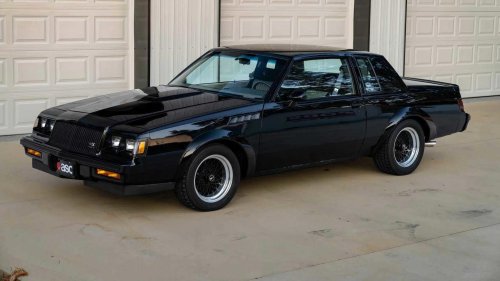
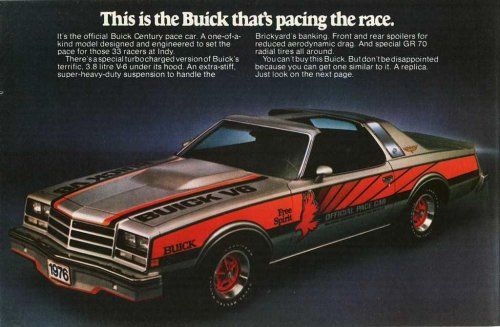
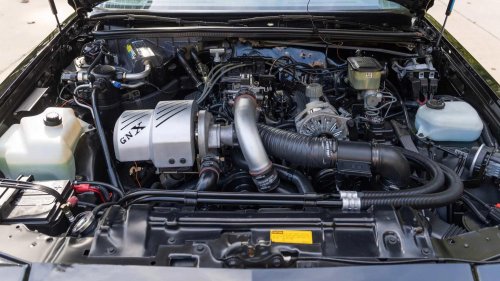
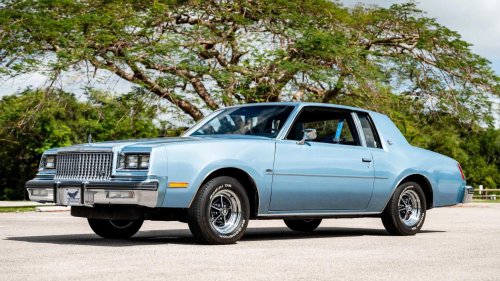
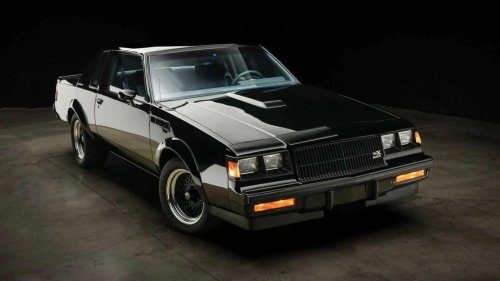
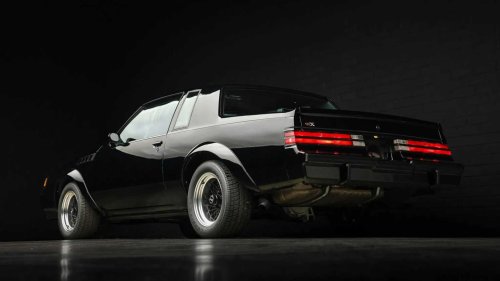
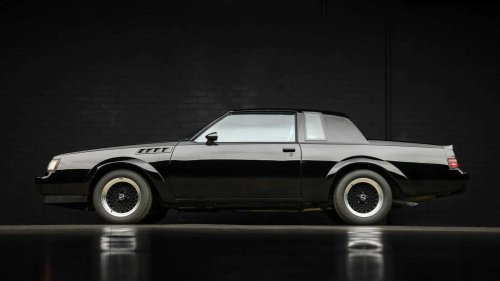
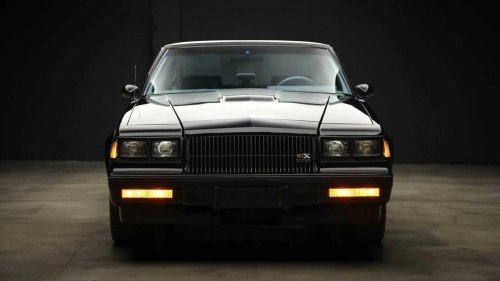
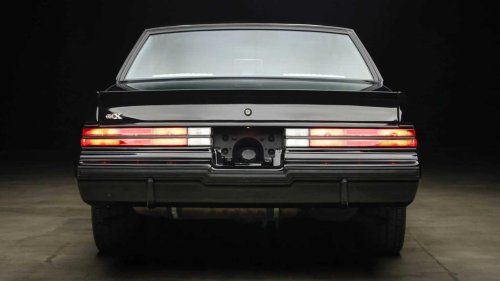
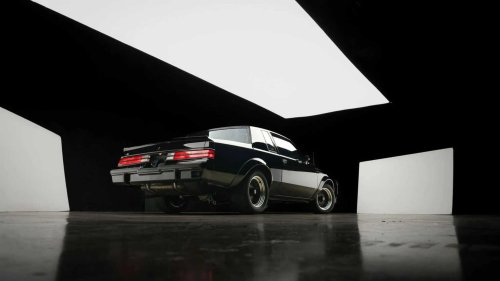
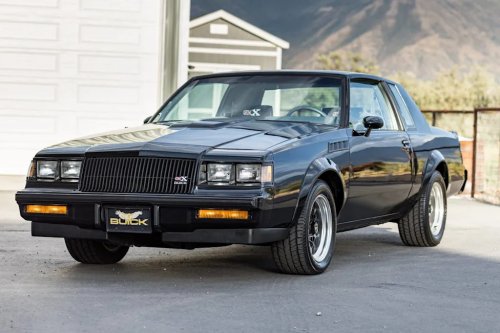
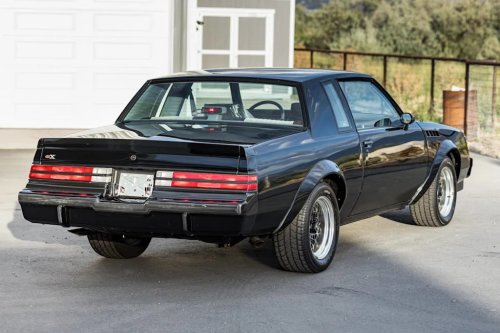
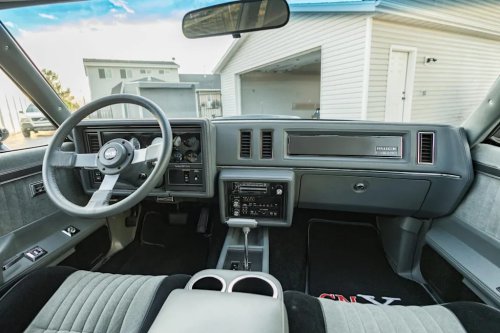
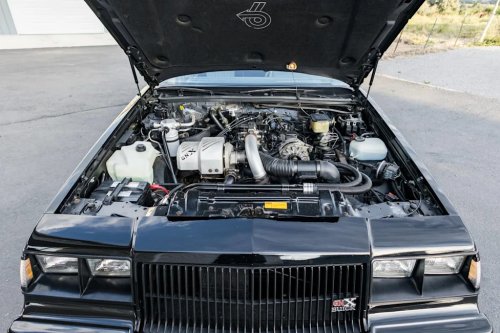
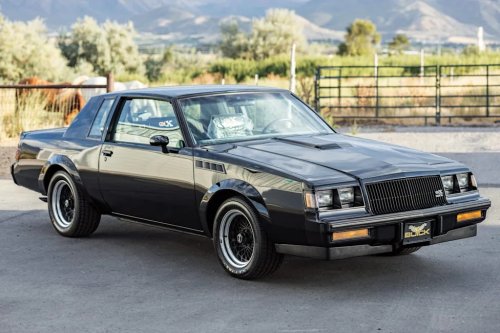
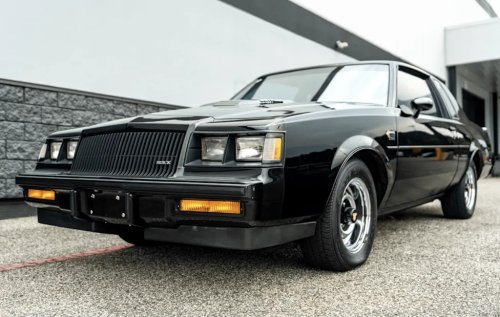
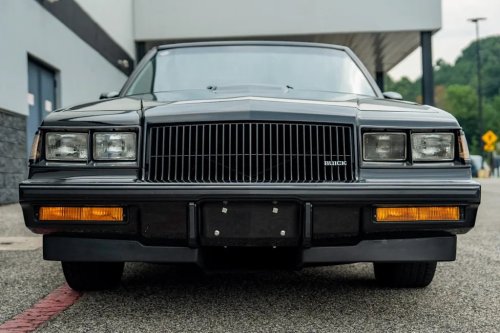
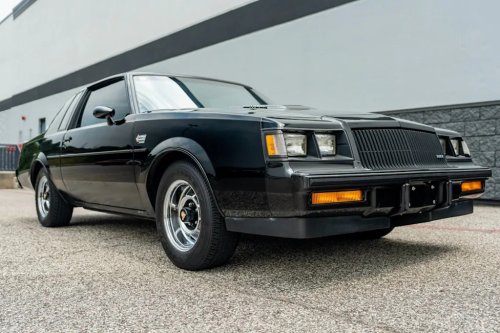
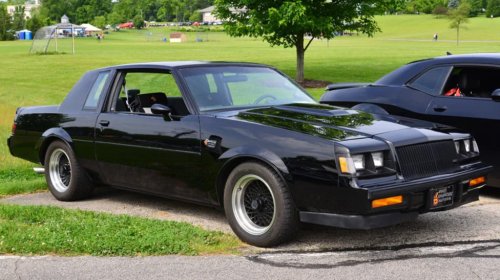
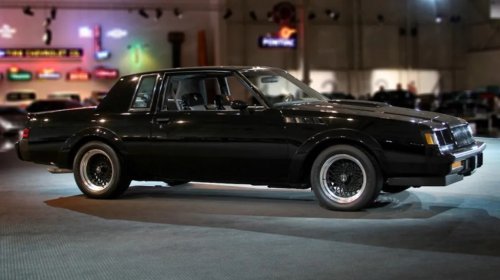
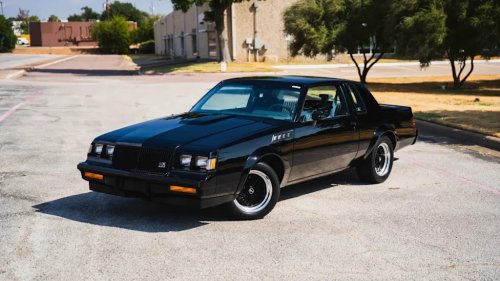
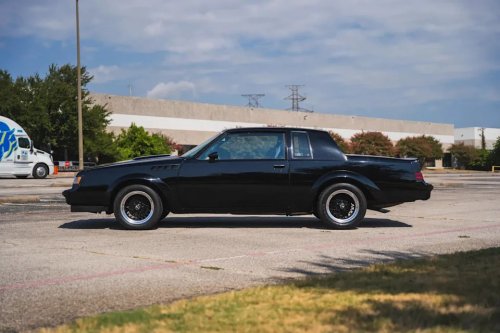
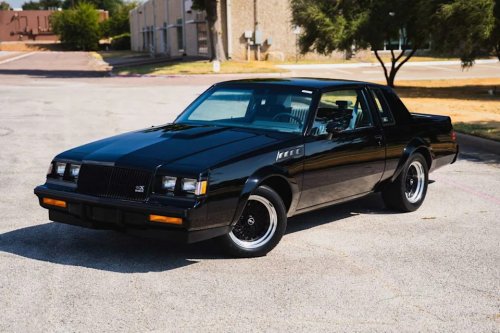
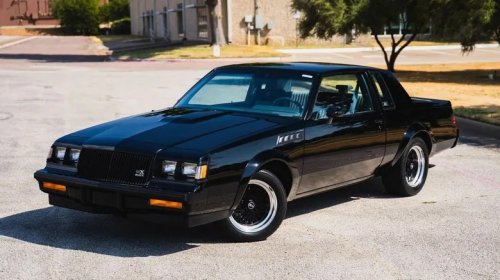
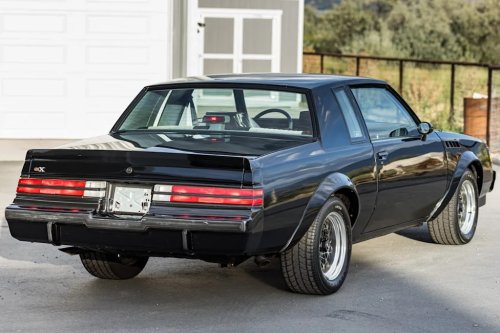
The V8-powered cars of the 1960s and early '70s were awe-inspiring. It's a time when burly big blocks ruled the roads, with manufacturers locking horns in horsepower wars to prove their muscle cars are the best. But turn the dial of time forward a decade and add in the most dramatic emissions regulation changes in history, and the recipe for power became a whole lot more complicated.This is what Buick was dealing with going into the 1980s, when its engineers did everything they could to build one of the rarest and most unique engines in history, the turbocharged 3.8-liter V6. Buick's Turbo-V6 Is Rooted In NASCAR, And Concept Cars Bring A Trailer It's not often thought about, but pace cars have a very demanding job. Typically, they're slightly tuned versions of production vehicles, or in some cases, straight off the factory assembly line with no upgrades other than some decals. And they have to keep up with racecars, albeit at caution or yellow-flag paces - still, a tall order.Additionally, getting your brand's product featured as the pace car in an officially sanctioned NASCAR race is a massive deal, meaning OEMs are always clawing for their shot. And in the mid-70s, Buick got the call, deciding to bring their Century sedan and outfit it with a specially tuned 455 c.i. V8 under the hood.Flickr That Century pace car performed just fine for the 1975 schedule, but Buick's engineers felt that their V8 solution was a tad mainstream and didn't rise to the opportunity of innovation that having an official pace car demanded. The Pace Car Goes Turbo Bring A Trailer So, the following year, they began the journey of what would eventually become one of the most special engines of all time, when they fitted one of their 3.8-liter V6s with a turbocharger and stuffed it into the Century. The V6 was a culmination of several Buick-GM concept cars that featured turbocharged engines, and because of these previous works, Buick had the basics to build a properly functioning turbo-V6 for the pace car.This engine's tech was admittedly primitive – a pushrod V6 with 6.0:1 compression and a four-barrel carburetor worked alongside a draw-through turbocharger. The results, however, were anything but outdated. The turbo pushed an impressive 22 psi through the motor, producing a whopping output of 306 horsepower and 370 pound-feet of torque.This technology, while groundbreaking for an American automaker, still didn't convince GM's higher-ups that it deserved to be in production vehicles, and it would take a few more years before a heavily detuned version of the turbo-V6 would find its way into a road-going model.Bring A Trailer In 1978, Production Is Finally Approved For 1978, Buick offered a 165-horsepower (285 LB-FT) version of the V6 in two models, the Regal and LeSabre Sport Coupes. They didn't light anyone's hair on fire at the time, but all of that torque made them some of the best daily drivers on the road – remember, this was a time when many cars couldn't make it up inclined highways because of their choked outputs.Over the following years, the V6 would get slight bumps in power from miscellaneous updates, but in 1982, everything started to come together with a name you might recognize – Grand National. At the time, NASCAR was also known as "Grand National Racing," and because Darrel Waltrip had just won the 1981 NASCAR Winston Cup in a race-spec Buick Regal, the manufacturer decided to commemorate the occasion with a special edition, dubbed the Regal Grand National.For the 1982 model year, the Grand National didn't amount to much more than an appearance package with marginal performance upgrades; however, two years later, the Grand National would return with a vengeance. The GNX Is Born... With A Little Help From McLaren Bring A Trailer Now, 1984 rolls around, and big changes are happening within the Buick turbo-V6 saga. Gone was the draw-through carburetor turbo system, and in was a new sequential fuel-injection system. The improvements were substantial – instead of a maximum of 6 psi from the old setup, the new system could reliably blow 12 psi. The engine control unit (ECU) was also heavily improved. Even though they had an anti-knock ECU on the earlier turbo-V6 cars, this new unit was capable of more carefully managing air-fuel ratios and ignition timing.When all was said and done, the standard 3.8-liter V6's output rose from 165 horsepower and 285 pound-feet of torque to 200 horsepower and 300 pound-feet. With this new powerplant, the Grand National was properly competitive on American roadways, and by 1986, it was even more potent. With the addition of an intercooler, the car was now making 235 horsepower and 330 pound-feet of torque.Bring A Trailer The Grand National's Job Isn't Quite Over Yet For 1987, the Grand National once again received an increase in power (about 10 horses), and for Buick, this seemed adequate. The Grand National was already a level of magnitude faster than the established Mustang and Camaro lineups, and even approached the best from Europe. The mission was complete... but not for the engineers.Those who put years into the turbo-V6 project wanted to see this through to the very end and push the needle to its absolute limit. Somehow, some way, they were able to convince their bosses to let them collaborate with none other than ASC McLaren, which was a small American subsidiary of McLaren Engines. Funny enough, ASC started out as American Sunroof Company, making t-tops and sunroofs for performance cars, but now, they were in the business of speed.Bring A Trailer The GNX Was The Top-Dog Buick Together with Buick's engineers, they would help build what we now know as the Buick GNX, which stands for "Grand National Experimental." Starting with the engine itself, the GNX received new cylinder heads with better air flow and a new performance exhaust. The turbocharging system was the main focus, however, receiving a new intercooler, an improved Garret T3 turbocharger with upgraded impellers and turbine shafts, and 3 more pounds of boost, bringing the engine's new output up to a Herculean 276 horsepower and 360 pound-feet of torque.To handle the extra power, the team also made some intentional changes to the chassis and body. The most intensive improvement was a stiffening of the entire body, improving rigidity from the regular Grand National.The suspension was upgraded with stiffer springs, a lighter aluminum axle housing and ladder bars for extra traction. Up front, oil coolers, as well as fender vents, kept everything within proper operating temperature. The car's four-speed automatic transmission was also treated with improved coolers. The Buick GNX Was One Of The Five Fastest Cars Of The 1980s Bring A TrailerAs we mentioned earlier, the regular Grand National had already surpassed most, if not all, of the American muscle cars in terms of performance by 1984. But the GNX, on the other hand, absolutely wiped the floor with the Motor City competition, posting an otherworldly 0-60 mph time of 4.7 seconds.The 5.0-liter V8 Mustang of the same year couldn't get below the 6.0-second mark in 0-60 testing, and the IROC-Z Camaro was about the same, cresting the mark in only 6.3 seconds. According to a list of the fastest 1980s cars published by Car and Driver, the only other car available in the U.S. for 1987 that was faster than the GNX was a Porsche 911 Turbo, beating the GNX by just one-tenth to 60 mph. The only other car that could match the GNX's performance was the twin-turbocharged, Callaway-tuned Corvette.Bring A TrailerIf we widen our scope to the entirety of the 1980s, the GNX becomes even more impressive. According to the same Car and Driver article, here are the only cars from the decade that were faster than the GNX: 1989 Pontiac Firebird Trans Am (turbo V-6) - 4.6 Seconds (used the GNX's V6) 1986 Porsche 911 Turbo - 4.6 Seconds 1989 Chevrolet Corvette ZR-1 - 4.5 Seconds 1987 Porsche 959 - 3.6 Seconds We can sort of disregard the Firebird, considering it borrowed the GNX's V6 engine, but let's break down the performance-to-dollar value of the other three in relation to the GNX. The GNX's original MSRP was about $29,300 - the Corvette's price tag? $51,000. The Porsche 911 Turbo? About $50,000. And the Porsche 959 supercar? Try $227,000. Other than the Firebird, there was no car faster than the GNX priced lower than $50,000 - a number that is about 66% percent more than the GNX's MSRP.Bring A Trailer To put this in even more perspective, here are the cars from that article's list that were slower than the GNX: 1985 and 1986 Ferrari Testarossa - 5.0 Seconds 1985 Ferrari 288GTO - 5.0 Seconds 1981 Ferrari 512BB - 5.0 Seconds 1987 Porsche 911 Turbo Cabriolet Slant Nose - 4.9 Seconds 1990 Lotus Esprit Turbo SE - 4.8 Seconds 1989 Porsche 911 Carrera 4 - 4.8 Seconds Any car posting performance numbers better than nearly all of Ferrari's offerings (and several Porsches) is impressive, but when it's a $30,000 Buick? There's not much else to do than appreciate this monumental achievement. What makes the GNX even more enigmatic is its rarity. Because Buick's Regal platform switched to front-wheel drive for 1988, the GNX was only built for the singular 1987 model year, with a total of just 547 units ever leaving the factory.Sources: Buick, Hagerty