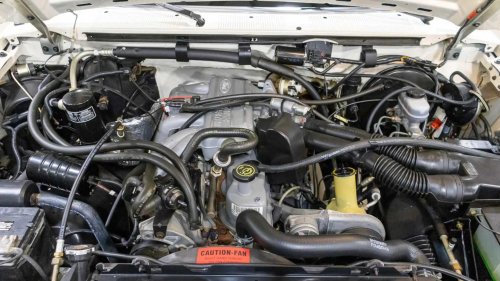
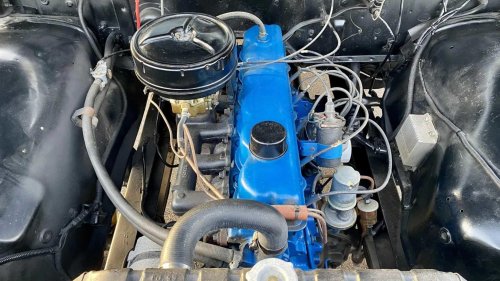
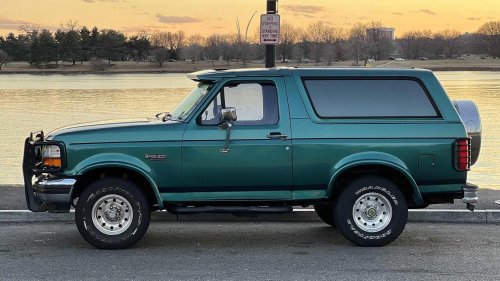
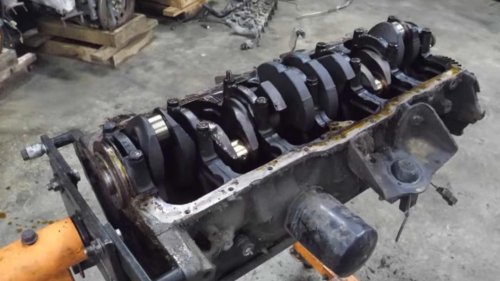
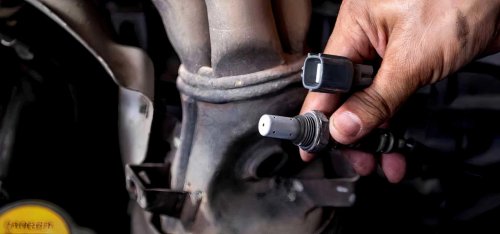
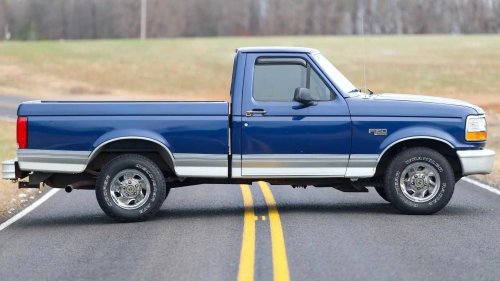
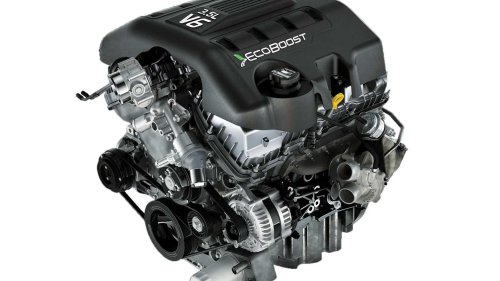



















Jump LinksOrigins Of The Blue Collar BruteAn Earned ReputationThe Recipe For Longevity: 4.9-Liter Inline-6Common ProblemsHow Does It Hold Up?Long before the EcoBoost era and aluminum blocks, Ford built an engine so tough that many examples have outlived the chassis they were bolted to. While modern engines, like the ones in the 2026 Ford F-150, chase horsepower with turbochargers and complicated electronics, the greatest engine Ford ever built did the opposite. It remained simple and refused to die.Quietly over three decades, powering vehicles like the Ford E-Series vans, F-250 and the Ford Bronco, this "Big Six" earned its reputation as one of the toughest, longest-lasting engines to wear the Blue Oval. However, there's more to the story than just high-mileage anecdotes. Explore why the humble 4.9-liter inline-six earns the title of the most reliable Ford engine ever produced.Engine reliability takes into account overall engine simplicity, cost and frequency of repairs, and reports of high mileage milestones. Not every 4.9-liter inline-six will achieve high miles. Proper care and regular maintenance are paramount for any engine to achieve "high miles." Always check your engine oil. What Is Ford's Most Reliable Engine? Origins Of The Blue Collar Brute Bring a TrailerSome of the most reliable Ford engines have eight cylinders. Arguably, the Ford 4.9-liter inline six-cylinder is, without a doubt, Ford's most reliable engine ever produced. The 4.9-liter, or 300 cubic-inch inline-six, was a product of Ford's Truck Engineering division and the Cleveland Engine Plant in Brook Park, OH. Introduced in 1965, the 300 inline-six was a stroked version of the existing 240 cubic-inch inline-six engine. Intended for use in light- and medium-duty trucks like the early Ford F-Series (F-100-F-600), the 300 inline-six was designed specifically as a heavy-duty work engine that prioritized durability, low-end torque, and cost-effective operation. Ford's goal was to offer a robust, overbuilt engine that could compete with Chevrolet's 250 and 292 cubic-inch inline-six engines.Bring A Trailer Beginning in 1968, the 300 inline-six became very popular for use in Ford's E-Series commercial vans. Fast-forward to 1980, the block found another home, nestled neatly in the engine bay of the Ford Bronco. For 1983, the engine went metric and Ford was referring to its stalwart six-cylinder as the 4.9-liter. The 300/4.9-liter inline-six wasn't only relegated to light truck and SUV use. Many manufacturers outside the auto industry chose the engine for reliable power in agriculture, commercial, and industrial applications. The inline-six would live on in some applications, like generators, compressors, fishing vessels and other small water craft, fork lifts, and various pumps. It was even used in airport utility vehicles like the Stewart and Stevenson 660 Mobile Belt Loader. For 31 years, the 4.9-liter would remain as either a base engine or an engine option for the F-Series, E-Series, and Bronco, until Ford discontinued the engine after the 1996 model year, replacing it with the 4.2-liter Essex V6. An Earned Reputation Bring a TrailerOften described as "bulletproof" by mechanics and fleet managers, the 4.9-liter inline-six has earned a reputation for longevity, and hundreds of thousands of trouble-free, low maintenance miles. Judging by the many applications of Ford's Big Six, the engine has proven itself to be nearly indestructible. A glance across many popular Ford enthusiast forums will show how many owners or previous owners of a vehicle with the 4.9-liter logging well over 500,000 miles. Some owners report reaching over one million miles on an original, stock version. Even UPS, the well-known global shipping company, at one time relied on the 4.9-liter in many of its delivery vans, having experienced a reported 400,000–700,000 miles of faithful service. Purpose Built To Outlast Everything The Recipe For Longevity: 4.9-Liter Inline-6 I Do CarsTo put it bluntly, the 4.9-liter is an overbuilt workhorse. The fact that it can achieve as many trouble-free miles as it does is no accident. Starting off with the engine block, the Big Six uses a heavy-duty cast iron unit with seven main crankshaft bearings, with two-bolt main bearing caps. This tough engine has generous amounts of webbing at its lower end to help combat flex and distortion under heavy load. The cylinder walls are extra thick, which bolstered the block's strength, but also allowed for future machining should the engine even require it.With a bore of four inches and a stroke of 3.98 inches, the 4.9-liter was nearly square. The long stroke of the 4.9-liter provided diesel-like torque, coming in at either 1,600 or 2,000 rpm, depending on the version. The engine relies on a forged crankshaft and heavy-duty main bearings to make up its rotating assembly.The 4.9-liter utilized a heavy cast-iron head with a simple overhead valve cylinder head design with two valves per cylinder. One unique feature is its timing set. Unlike a conventional gas engine that uses a timing belt or chain, the 4.9-liter uses a gear set to spin the camshaft. This is a heavy-duty set-up commonly seen in larger diesel engines, but is a great example of the overbuilt nature of the Ford inline-six engine. Common Problems HO2S inspection (Source: car PROblems) Most of the problems associated with the 4.9-liter are more annoyances than actual engine failures. The rear main seal is known to leak oil, which is typically a labor-intensive repair. As vehicles that are powered by the engine are pretty old at this point, cracked or worn vacuum hoses and tubes can cause a rough idle, engine hesitation and turn on the check engine light in the later models. Cracks in the exhaust manifolds are known to form. This happens over time as the manifold is subject to the damage from heat cycles. The Big Six does not tolerate overheating very well. A bad radiator, water pump, or a stuck thermostat may quickly cause overheating. However, not very common, some of the worst-case scenarios will result in a blown head gasket or a cracked or warped cylinder head. The Big Six Today How Does It Hold Up? Bring A TrailerFrom a performance standpoint, the 4.9-liter doesn't stand out when compared to a late-model engine. By the mid-2010s, smaller turbocharged engines began matching, and, in many cases, surpassing the power output of the naturally aspirated V8 engines that had long been the standard in American half-ton trucks. The intersection point came around 2015, when Ford's 2.7-liter EcoBoost V6 engines started delivering horsepower figures that were comparable to, or even better than, the V8s offered just a few years prior.Ford These late model turbocharged engines are complex and, due to the nature of forced induction, they operate under a significantly higher amount of internal stress. Although with proper maintenance, the modern turbocharged engine has been known to achieve high miles, with some owners reporting well over 200,000 on the odometer. The effects of increased cylinder pressures and higher heat often result in shorter engine life. To achieve the higher miles and longer life, these small but powerful engines are "maintenance sensitive" and require a very routine service regimen. Due to the complex nature of their design, repairs are also more expensive. Timing chains and tensioners, turbochargers and components of a high pressure fuel system can easily cost thousands of dollars to repair.The 4.9-liter was designed when engines were still mechanically simple, making repairs less frequent, and far less costly. It can achieve 400,000 miles or more with basic maintenance, it is forgiving and seemingly unbreakable. With its basic but incredibly robust construction, the engine lives a long and relatively stress-free life, requiring very little maintenance. These qualities have cemented the reputation of the 4.9-liter inline six-cylinder as Ford's longest lasting and most reliable engine ever produced."If you take care of the cooling system and change the oil, that 300 six will run forever. I've seen them go past 600,000 miles with the original bottom end."- Anonymous Ford Master Technician, Ford Truck Enthusiast Forums