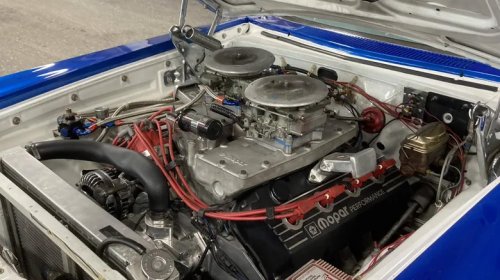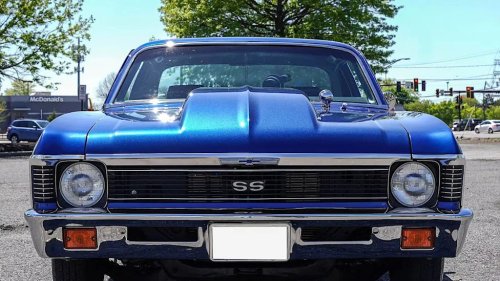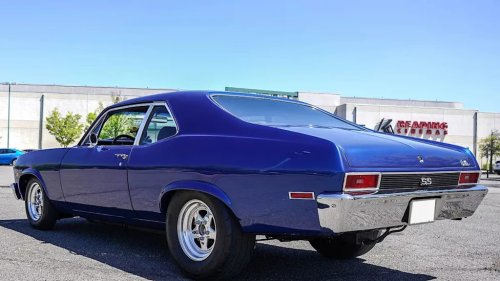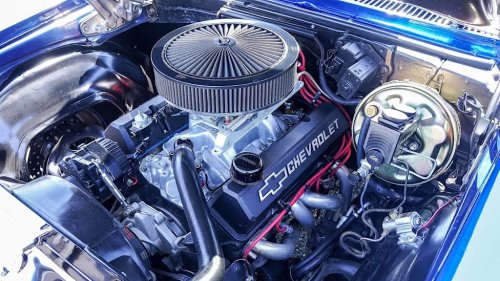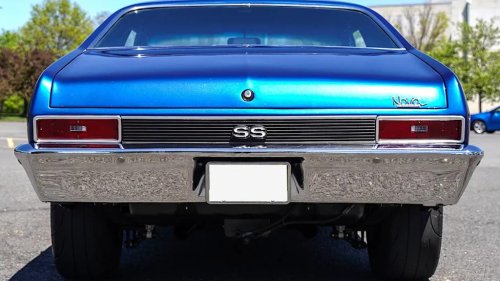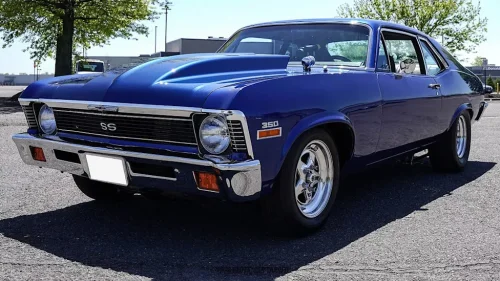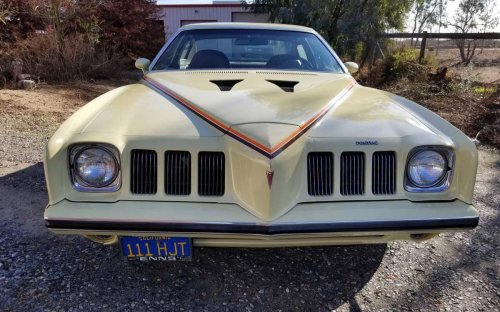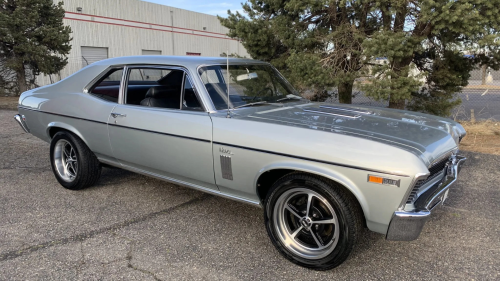
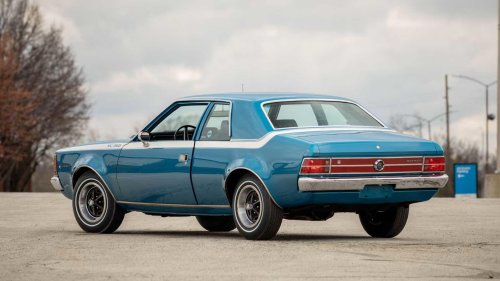
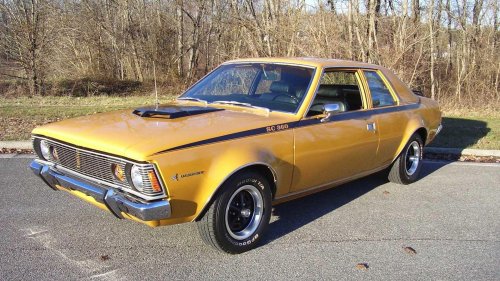
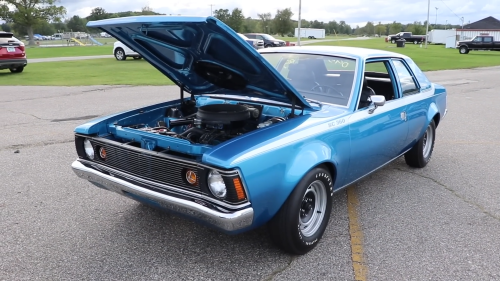
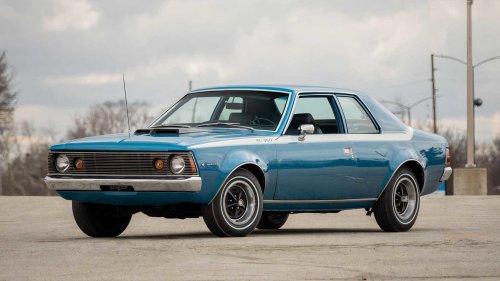



















There's one rare muscle car in particular that shouldn’t be passed up because it doesn’t technically have a big-block engine. It still packs big-block V8 power, but unique engineering decisions were made to avoid higher insurance costs and to make the car factory legal. By finding the perfect weight-to-power ratio, this street racer was able to compete against other iconic rivals such as the 1971 Chevrolet Nova SS 396 and the Plymouth Duster 340.The compact muscle car segment was really starting to take off, leading to the creation of a well-kept secret that's now a massive find for collectors looking to claim a piece of drag racing heritage to show off with pride instead of being just another hyped-up mainstream option. Check out this sleeper model before enthusiasts catch on. Compact Muscle Cars Brought The Heat Without Breaking The Bank Bring a TrailerWhile full-sized cars and bigger engine options defined American muscle car history, the 1970s ushered in a new focus on compact models to save weight and still provide plenty of power to meet increasing emission standards and tighter regulations. As a result, affordable muscle cars kept the racing era alive. For example, the 1971 Chevy Nova had an original MSRP of $2,450. Then, the racing-oriented Chevy Nova SS 396 only added a few hundred bucks to the price. For about an extra $300, you could upgrade the car’s exterior style, performance, and interior. Now upgrading to racing-oriented trims costs thousands!The 1971 Nova SS 396 stands out with its 396 cubic-inch, 6.5-liter V8 engine with 270 horsepower and 360 pound-feet of torque. It can accelerate from 0 to 60 mph in about 6.2 seconds and cover a quarter-mile in roughly 15 seconds, with a top speed of 130 mph. It weighs in at about 3,400 to 3,600 lbs, for a power-to-weight ratio of about 12.6 to 13.3 pounds per horsepower. Another example includes the light 1971 Dodge Plymouth Duster 340 with its original price of $2,703. The 340 cubic-inch, 5.6-liter V8 engine delivers 275 horsepower and 340 pound-feet of torque. It can reach 60 mph in about 6.0 seconds and a quarter-mile in about 14.7 seconds. Its top speed is 130 mph, and it weighs approximately 3,200 pounds for a power-to-weight ratio of about 11.6 pounds per horsepower. The 1971 AMC Hornet SC/360 Hid Power To Skirt Around The Rules MecumIn 1971, insurance companies had it out for traditional muscle cars and targeted them with higher premiums. Plus, increasing emissions standards and regulations were making big-block engines less practical. So many automakers like AMC started experimenting to get around the rules to make street cars not only available but affordable. As a result, the 1971 AMC Hornet SC/360 had big-block V8 power stuffed under the hood, making it much more powerful than it looked. The tall-deck 360 cubic-inch, 5.9-liter V8 engine is a large-displacement V8 engine. It features a 90-degree V, two valves per cylinder, and a compression ratio of 8.5:1.The engine is paired with a four-barrel carburetor and helps the 1971 Hornet churn out 245 horsepower and 365 pound-feet of torque. This muscle car can accelerate from 0 to 60 mph in about 6.7 seconds and cover a quarter-mile in about 15.7 seconds, with a top speed of 120 mph.With a functional Ram Air hood, heavy-duty suspension, dual exhaust, and limited-slip differential, this car only tips the scales at between 3,056 and 3,199 pounds, with a power-to-weight ratio of 10.8 pounds per horsepower. Best of all, it had an original MSRP of $2,663. This price included the available "Go Package" to boost its power and style for $199.Along with being an insurance beater with its unique build, other features were cut to keep its price low. For example, the interior was pretty basic with its bench seats, and it lacked air conditioning. But at least it didn’t skimp on performance upgrades, right? Why Didn’t the 1971 AMC Hornet SC/360 Get More Attention? GAA Classic CarsThe 1971 AMC Hornet is a true sleeper car with unexpected power that flew under the radar. It arrived a little late to the scene. By the time the first Hornet arrived in 1970, high insurance costs and intense pressure were cracking down on muscle car culture. Meanwhile, the Chevrolet Nova came out in 1962, giving it more time to acquire a devoted following. Weak sales are mostly responsible for its early grave. Plus, another compact sibling known as the AMC Gremlin cast a large shadow. It was a much more popular compact model in the lineup. It arrived in 1970 as a super-affordable compact car that started at $1,879. The Gremlin was more aligned with market trends at the time, as drivers wanted more fuel-efficient options instead of high-performance gas guzzlers. While the Hornet got about 10 to 13 miles per gallon, the Gremlin was getting 18 to 25 miles per gallon.On that note, it feels important to share that the AMC Gremlin had a standard 3.8-liter inline-six engine with 135 horsepower and 250 pound-feet of torque. The available 258-cubic-inch, 4.2-liter inline-six engine delivers 150 horsepower and 140 pound-feet of torque. It has a 0 to 60 mph time of about 9.8 seconds. Also, AMC’s brand image didn’t help. It established itself as a practical and efficient automaker and wasn’t associated with building muscle cars like Ford and General Motors. It simply didn't have the same marketing power as the Detroit giants. AMC still tried, though, by placing it in magazine ads and commercials. But it’s worth remembering that the Hornet SC/360 could keep up with them on the track. Just How Rare Is The AMC Hornet SC/360? Cars an Zebra / YouTubeThe 1971 AMC Hornet SC/360 is extremely rare, as only 784 models were built. But over 122,000 regular Hornet models were built. Plus, only 555 units were built with the four-barrel carburetor and four-speed manual transmission. A three-speed automatic transmission was also available. As few as 150 units in this configuration could remain. It quickly became clear that the Hornet SC/360 wasn't going to meet its original sales goal of 4,000 to 10,000 cars. As few as 150 units in this configuration could remain. In 1972, the Hornet SC/360 was replaced by the AMC Hurst SC/Rambler or Scrambler. But the 360 CI engine remained an extremely important engine.The engine replaced the Buick 350 in the Jeep Wagoneer and other trucks as a durable option for towing and off-roading capabilities. It utilizes high-performance dogleg exhaust ports that increase flow by as much as 25 percent over previous variants. Plus, the 10.0:1 compression ratio provided a foundation for later performance and cleaner, lower-compression models.AMC was also using the 401 cubic-inch, 6.6-liter V8 engine, which had more power with 330 horsepower and 430 pound-feet of torque at the time. However, the 360 CI engine was more essential and adaptable, making it more practical for AMC's overall goals. What To Look For In A 1971 AMC Hornet SC/360 Mecum AuctionsThe best way to find a 1971 AMC Hornet SC/360 is to follow online auction sites. Pricing for this rare muscle car varies from about $15,000 to $35,000 based on condition and build. Fully restored models can fetch between $55,000 to $66,000. Value may increase in the future due to how rare these cars are. Of course, some people do stumble upon the holy grail with rare barn finds for under $10,000. But the restoration costs can easily exceed market value. While the 360 V8 engine is durable and easy to work on, its parts are difficult to find and may require specialized skills. To meet emission standards, the engines were choked down with advanced vacuum lockouts and smog pumps. But it shares parts like the Borg-Warner transmission with other vehicles, meaning some components are much easier to find than others. Features such as the Ram Air hood scoop, air cleaner assembly, decals, unique "serape" stripe, and unique trim are much more difficult to track down.Keep an eye out for frame rust. The front strut rods pass through the chassis bracket due to rust, and some buyers report finding rust in the trunk. It doesn’t help that most AMC cars of this era are linked to long-term ownership. This means they were left in harsh environments, leading to significant body rot. Also, drivetrain leaks could be a common issue. The rear end is prone to developing leaks at the front pinion seal and left rear axle seal. Rivals like the Chevy Nova SS 396 and Ford Maverick might be easier to find. But the AMC Hornet SC/360 deserves just as much respect as a rival pocket rocket from the era that sacrificed using a big-block V8 to provide a budget-friendly muscle car that's much harder for collectors to find.Source: Automobile Catalog, Classic, How Stuff Works