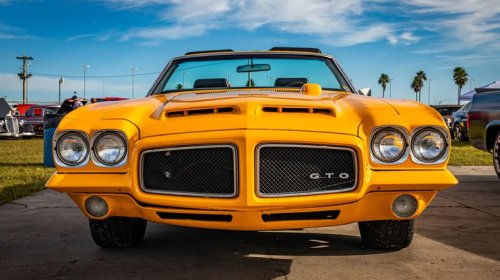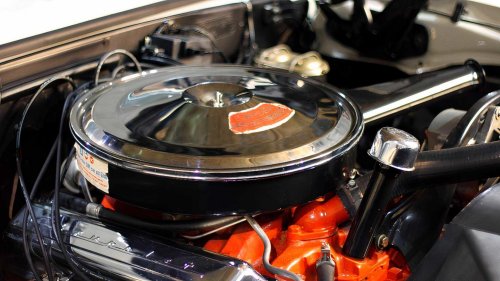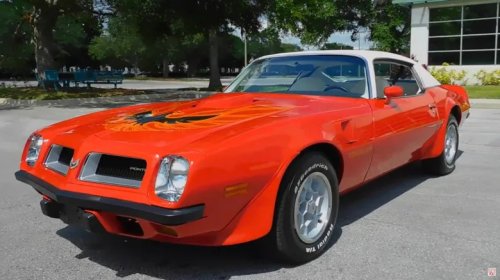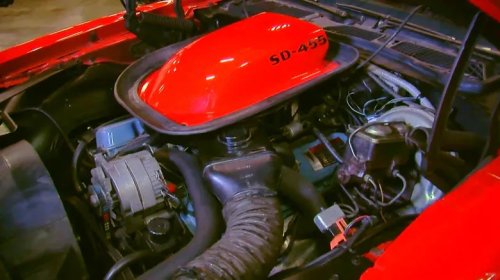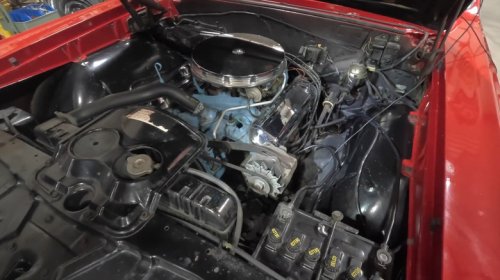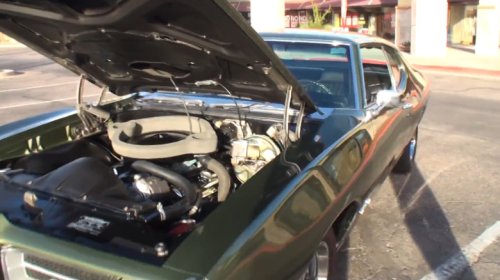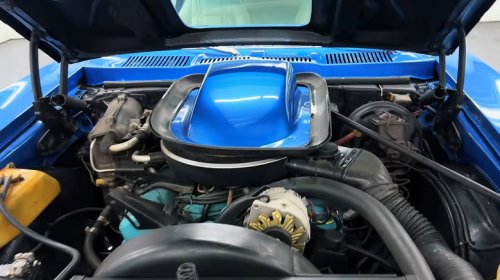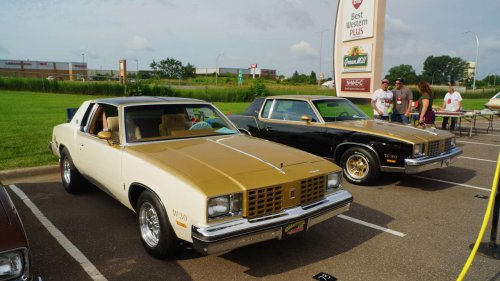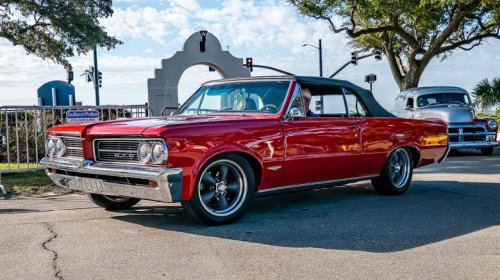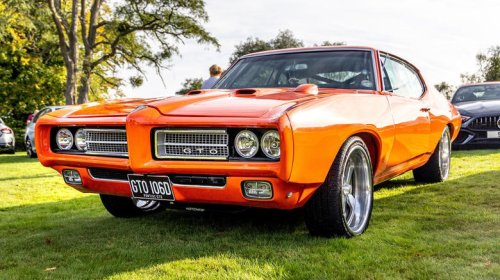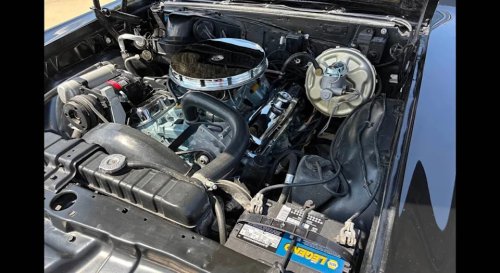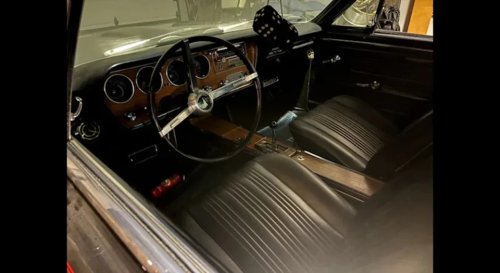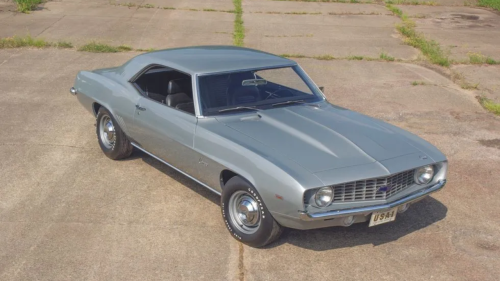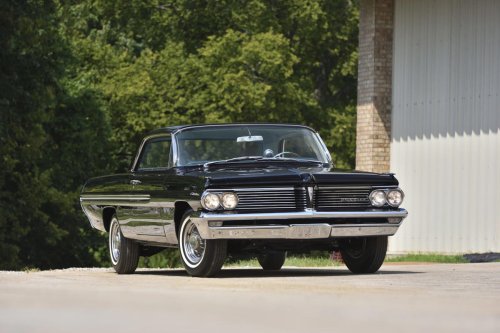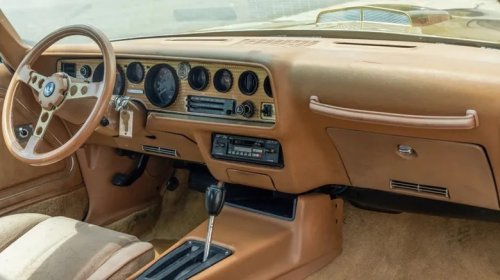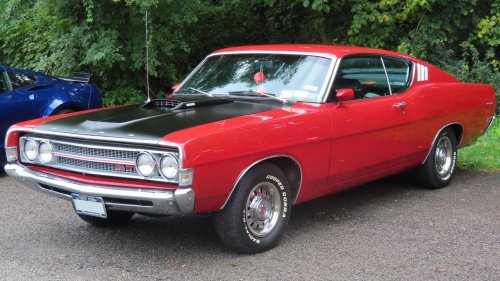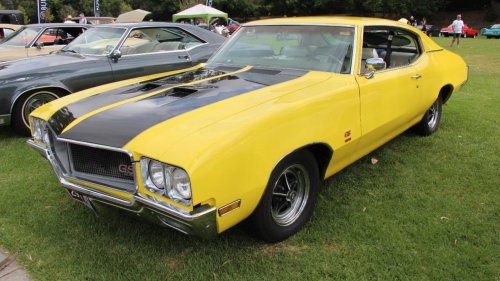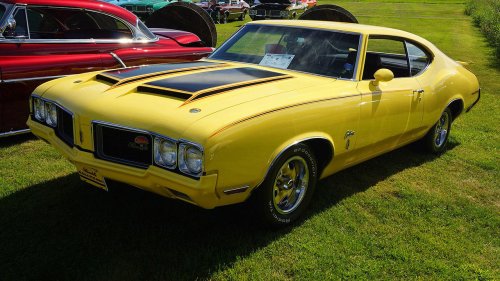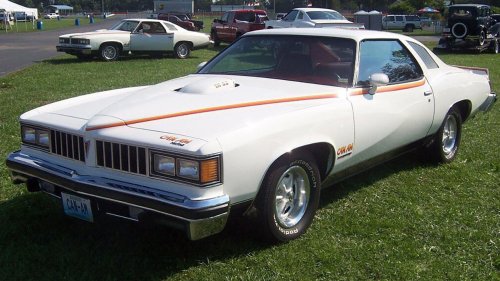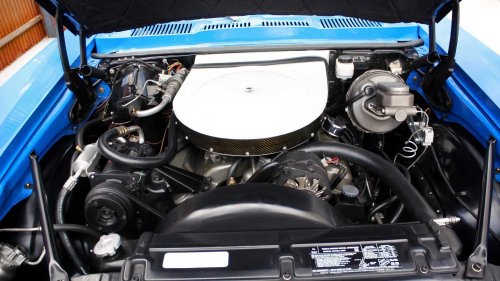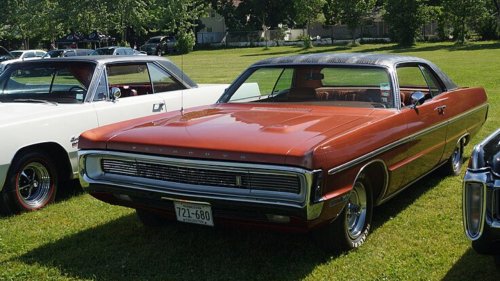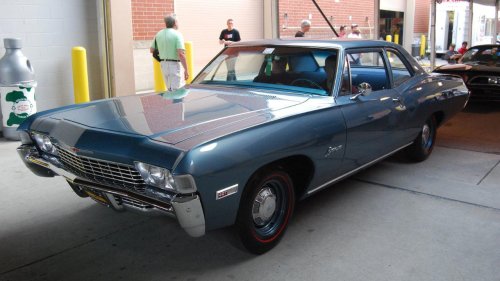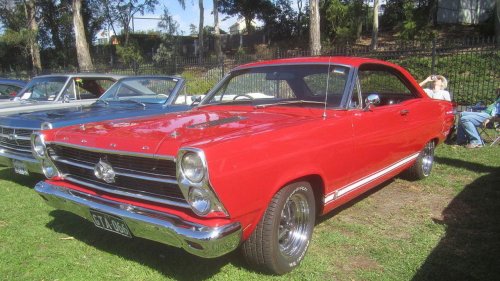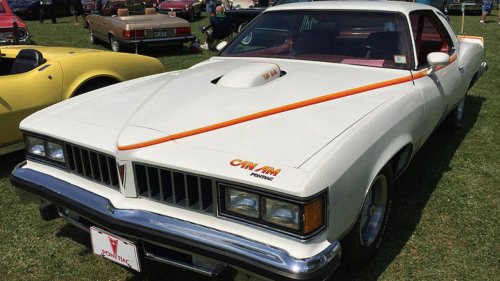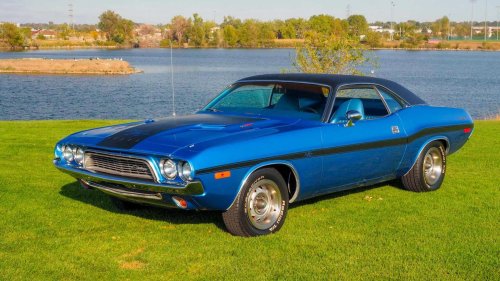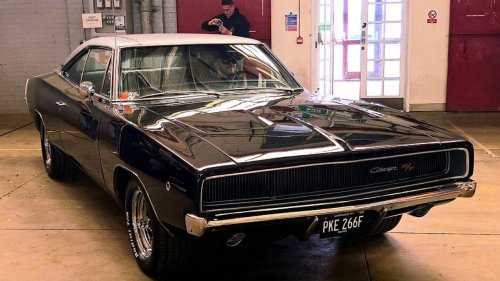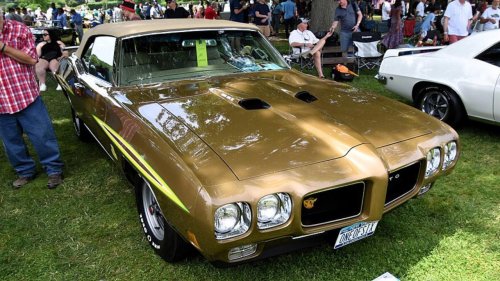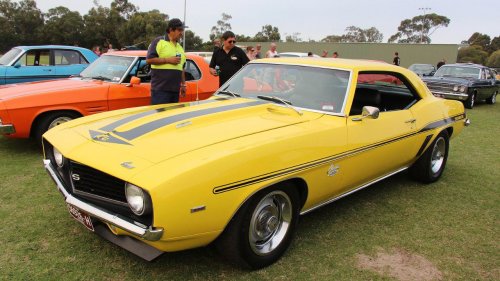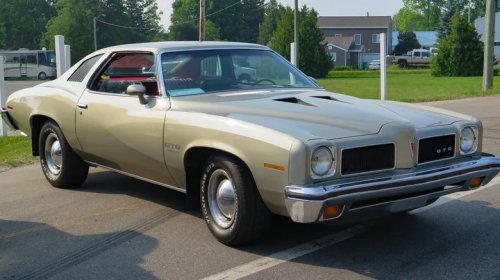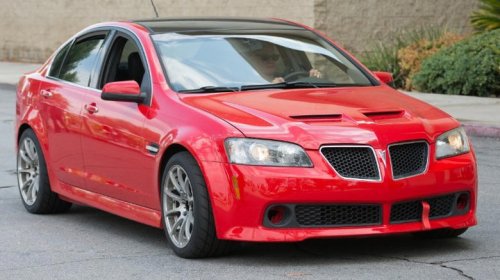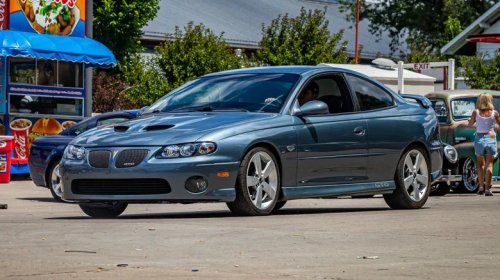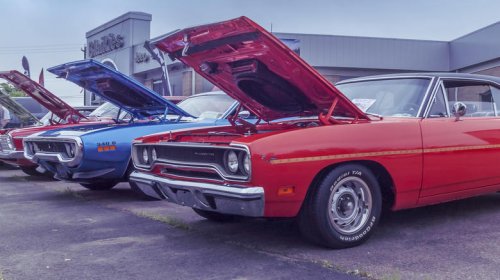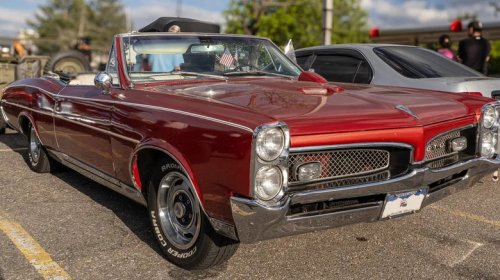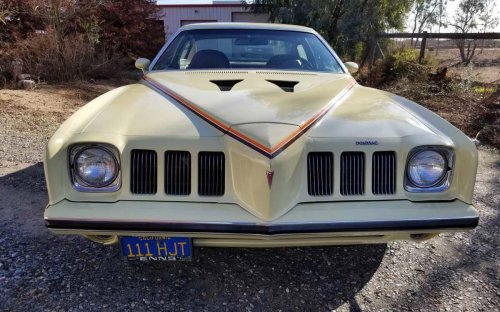
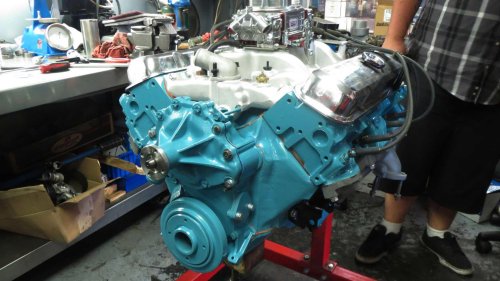
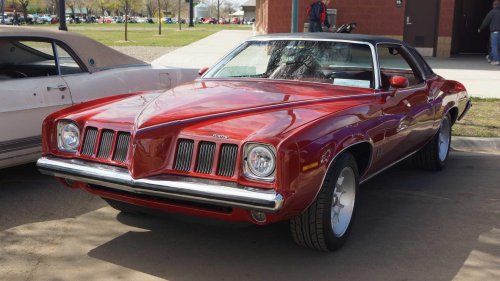
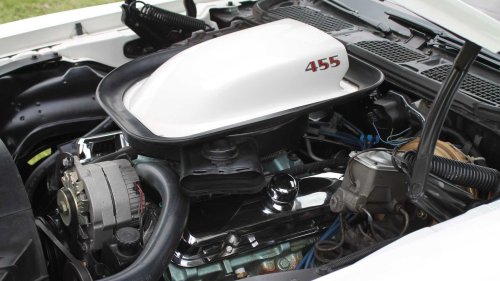
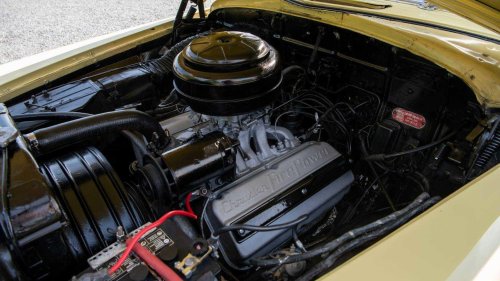
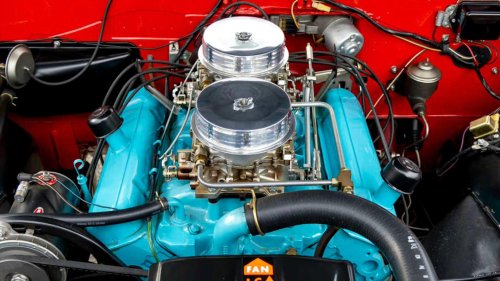























Traditional American muscle cars are truly something special, an overpowered class of fuel-guzzling vehicles we’ll likely never see in mass production again. And for enthusiasts of Detroit iron, there’s a little something for everyone. Hopped-up Chevrolets like SS versions of the Camaro and Chevelle are always crowd-pleasers, the Ford Mustang in all its forms – from bargain-basement, six-cylinder convertibles to thundering Shelby GT 350s and GT 500s – are living legends, and we can’t forget about Chrysler’s contributions to this world. The Dodge Challenger and Charger, to name a couple of Mopar models, are revered for their straight-line speed and handling prowess.Aside from all those well-known nameplates, there are plenty of more obscure offerings, too. AMC made some compelling models; the race-winning, flathead-powered Hudson Hornet could be considered an early muscle car; and of course, Buick and Oldsmobile were in on the game, too. And so was GM’s sporty Pontiac division, which built plenty of pumped-up vehicles during the 1960s and ‘70s, including one high-powered Grand Am that time has forgotten. The 1973 Pontiac Grand Am Super Duty 455 Is As Rare As Pontiac Muscle Cars Get Hagerty During the muscle car heyday, GM’s Native American chieftain-themed automaker was known for performance, sitting above Chevy and below Oldsmobile in the corporation’s hierarchy of brands. The Grand Prix, Bonneville, GTO, and other nameplates delivered plenty of speed when fitted with a powerful V8, but somewhere around 1972, Pontiac built an example – specifically, one copy – of its new-for-’73 Grand Am two-door with a very special engine. A One-Of-A-Kind Engineering Mule According to several sources, engineers fitted a 1973 Grand Am with a “Super Duty” high-performance version of Pontiac’s massive 455 cubic-inch V8, which reportedly features a strengthened block with four-bolt main bearing caps, forged steel connecting rods, and even provisions for dry-sump oiling. In metric terms, that displacement is a staggering 7.5 liters, for huge torque and commensurate fuel consumption.zombieite via Flickr Now, all that lung capacity graced this car with an estimated 310 horsepower, a modest figure in 2025, but a huge amount back in the early ‘70s. With a Turbo-400 automatic transmission handling shifting duties, this grandest of Grand Ams could complete the quarter mile in 14.8 seconds at 96 mph. Not too shabby for a car with a 3.42 rear axle ratio and a curb weight approaching 4,200 pounds. A “Regular” 455 Was Offered To The Public Greg Gjerdingen via Wikimedia Commons Now, what’s interesting here is that Pontiac did offer the 1973 Grand Am with a 455-cubic-inch V8 that was good for around 250 hp, but it seems only one testing mule was built with the strengthened Super Duty version of this engine. And as reported by PontiacV8.com, this very special muscle car was covered in the November 1972 issue of Road Test magazine. Other than that, little is known about this one-off Pontiac. The Action Started In 1955 priceman141 via Flickr Ford absolutely did not invent the V8, but ol’ Henry sure popularized the configuration with his legendary flathead, which was offered in the U.S. from 1932 all the way to ’53. During that time, some 15 million of these smooth and surprisingly powerful (for the time, at least) engines were built. A major advantage of this configuration is that V8s are generally quite compact, providing a lot of displacement in a package that’s relatively easy to fit under the hood. Straight-eights are way too long for most vehicles, and even inline-sixes can be tough to package.But after the Second World War, cars got heavier, gasoline improved (enabling higher compression ratios), and drivers expected more giddy-up. At this time, the venerable side-valve Ford was increasingly outmatched, especially as overhead-valve V8s – like Chrysler’s first-generation Hemi (it arrived in 1951) – started hitting the market. One V8 Family To Rule Them All Mecum Over at GM, Cadillac’s overhead-valve V8 arrived in 1949, as did Oldsmobile’s unrelated engine of similar configuration. The legendary small block Chevy landed in 1955, as did Pontiac’s unique V8 family, which, oddly enough, was apparently delayed for several years because of friction between GM’s various divisions.Either the result of brilliant planning or a happy accident, Pontiac only built a single V8 family, unlike nearly every other automaker. Competitors, including other GM divisions had separate “small block” and “big block” engines, or in the case of Ford, about 927 different V8 families over the years.Via: Mecum Auctions Getting it right the first time, the Pontiac V8 was a hit right out of the gate. Thanks, at least in part, to its long development process, this engine was reportedly largely trouble-free. Providing a solid foundation, the cast-iron block was relatively short and rigid. Up top, the valvetrain was light in weight, actuated by ingenious stamped steel rocker arms that pivoted on ball studs rather than shafts, a clever design that was low in cost, easier to manufacture and borrowed by numerous rival brands.Finally, the Pontiac V8 featured a so-called reverse-flow cooling system, a design that routed coolant from the radiator to the cylinder heads first, rather than going from the block up to the heads. This helps keep combustion chamber temperatures in check for greater longevity and, more importantly, performance. Overall, Pontiac’s V8 was built from 1955 up to about 1981. Providing a huge range of options for different vehicle applications, the engine was available in a dizzying array of displacements from 265 cubic inches all the way up to 455 tire-roasting cubes. A Sporty Offering… For The 1970s, At Least The Old Car Manuals Project But back to the 1973 Grand Am. This car was designed to be a sporty offering that appealed, ostensibly, to youthful motorists. As the brochure proclaimed, drivers got “The feel of a Grand Prix…the response of a GTO…the qualities you’ve admired in the desirable imports.” Unfortunately, this literature makes no mention of what undesirable imports brought to the table.With a lanky wheelbase of 112 inches and an overall length of 208.6 inches for the two-door model and 212.6 for the sedan, this was not a small car. Fortunately, amenities like an independent front suspension, radial tires, front and rear stabilizer bars, power-operated front disc brakes, and “computer-selected springs for precise, controlled handling” helped the new Grand Am drive more like competitors from Europe and Japan.Courtesy Wikiwand Providing a solid foundation, the Grand Am was built on the A-body platform. This architecture supported a wide range of different models from numerous GM divisions, from Buick and Chevrolet to Oldsmobile and Pontiac. Nameplates that rode on the A-body include the Oldsmobile 4-4-2, Pontiac LeMans and Can Am, Chevy Malibu, Buick Century, and many others. Pontiac Was A Staple Of The Muscle Car Era Mustang Joe via Flickr As you may have gathered, Pontiac was a staple muscle car brand back in the 1960s and ‘70s, putting the screws to Ford, Dodge, AMC, and even competing GM divisions. Powering these potent and sporty cars was the brand’s famous V8 engine, even the massive 455-cubic-inch Super Duty monster that was built for just two years, 1973 and ’74. Still, The Brand Had Humble Beginnings Back in the day (you know, before it was unceremoniously discontinued in 2010 as a result of GM’s bankruptcy), Pontiac was a forced to be reckoned with, though the brand had humble beginnings. This division started out in the mid-1920s as a companion make, sort of a sub-brand within another division. In its earliest days, GM had even more brands than most people are generally familiar with, LaSalle, Marquette, Pontiac, Viking, and even Geo were the automaker’s companion makes. Pontiac Outlived Its Parent Brand But what’s really interesting here is that Pontiac actually ended up outliving its parent brand – and by many decades. Oakland completely disappeared in the early 1930s. Viking perished at roughly the same time, LaSalle lasted a little longer, but not much, and Marquette, well, it was discontinued long before the 1930s.zombieite via Flickr But Pontiac had real staying power and built plenty of legendary vehicles along the way. This includes muscle cars like the Bonneville, GTO, and Firebird, as well as the unusual Fiero, Solstice sports car, and even the powerful G8 sedan from the late 2000s. This pantheon of impressive Pontiacs also includes the ’73 Grand Am with that Super Duty V8 engine, though it’s a real shame they only built one copy of this potent machine.