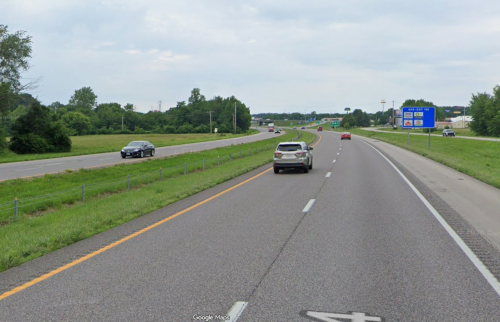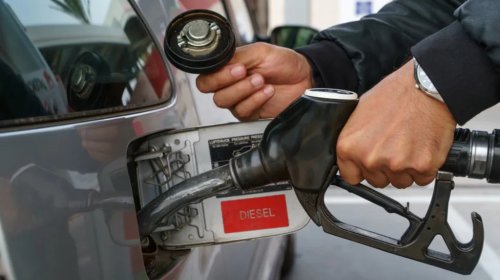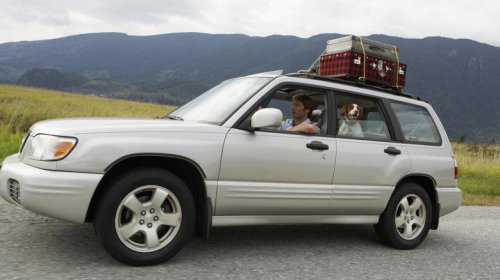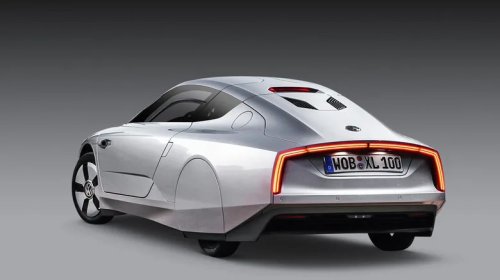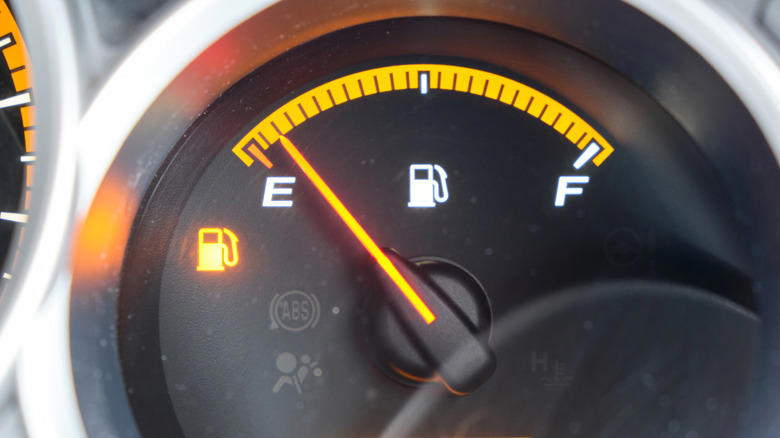
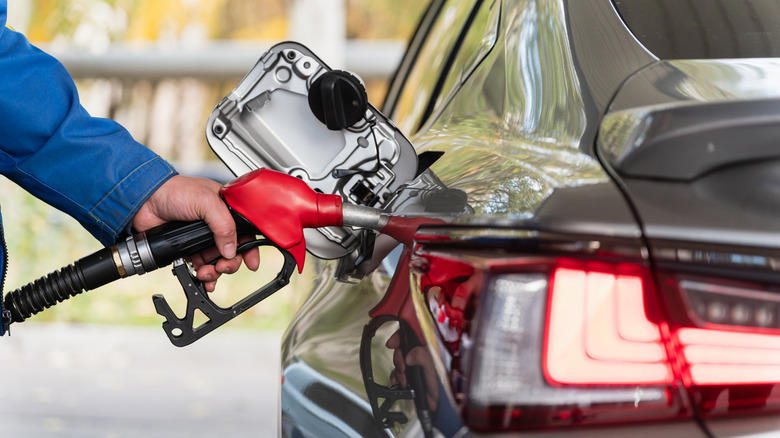




















Close up of a car's fuel gauge with the needle nearly at empty and the warning light on.Gas prices, as we all unfortunately know, are volatile, with prices subject to a host of market and geopolitical pressures. This is important for drivers because, depreciation aside, fuel is the second-biggest car ownership cost, behind financing or leasing payments.While it's unlikely that many of us whistle with joy as we watch the price display shoot up at incredible speeds, gasoline is a necessary expense, and it's something we grin and bear. But there comes a point when the cost of fueling your car rises to such a degree that many Americans need to cut costs anywhere they can. There are plenty of ways to avoid wasting fuel in your car. Just driving fewer miles is one option, but for some, that isn't a possibility, so another option is to cover the same miles using less fuel. One way to do this is to reduce the speed at which you drive. The good news is that if you stay within the speed limit, you're probably okay — according to data from Energy.gov, a mid-sized gasoline-powered car is most efficient at 55 mph. However, the same data shows that by the time the car is traveling at 75 mph, it's burning 25% more fuel than it would if it were traveling at a more sedate 45 mph (32 mpg versus 43 mpg respectively). This is mostly down to aerodynamics and how they're affected by speed. In short, while aerodynamics can affect the top speed of your car, the underpinning science means aerodynamic efficiency lessens at higher speeds. Let's put our lab coats on and take a look at the physics of why speeding cars burn more fuel. The physics of speed and fuel consumptionClose of man filling a car's fuel tank on a gasoline station forecourtOf course, car manufacturers are aware of the effect of aerodynamics in vehicles and how it affects efficiency. However, even with the most streamlined of designs — and we quote from a famous Starfleet engineer of the future here — they "cannae change the laws of physics." More specifically, the effects of aerodynamics and how speed affects fuel economy can be measured using a formula called the drag equation. The details are best left to mathematicians and engineers, but essentially, the equation calculates the resistance or drag force of a vehicle as it moves through the air. It uses variables including a vehicle's velocity, the air density, drag coefficient (a measure of a vehicle's aerodynamic efficiency), and the vehicle's frontal area to work out an overall drag force. While all these factors have a bearing on the output of the equation, the one we're particularly interested in is velocity. In the drag equation, speed is squared, meaning that as velocity increases, aerodynamic resistance increases rapidly. Essentially, this means that even small speed increases require disproportionately more energy — or fuel, if you'd prefer. To understand how this works, we can plug the 45 mph and 75 mph figures into the equation and see what happens. Ignoring the other factors and focusing on speed only, we can work out that a car travelling at 75 mph is travelling 1.7 times faster than the slower car. Remembering that speed is squared in the equation, we can square 1.7 to determine that the car faces roughly 2.8 times as much air resistance. The fuel economy hit comes from the power required to overcome that resistance. Want the latest in tech and auto trends? Subscribe to our free newsletter for the latest headlines, expert guides, and how-to tips, one email at a time. You can also add us as a preferred search source on Google.