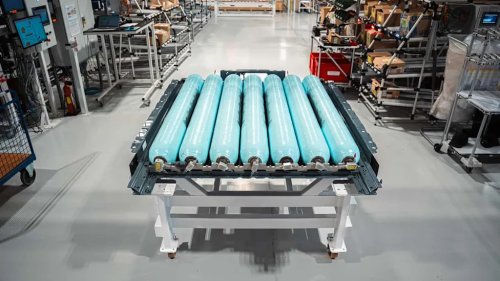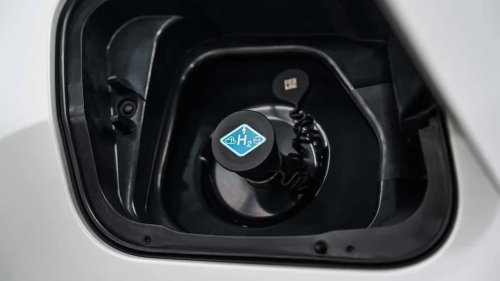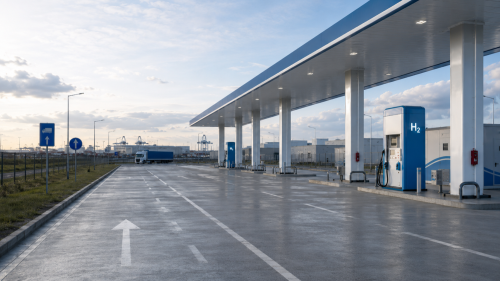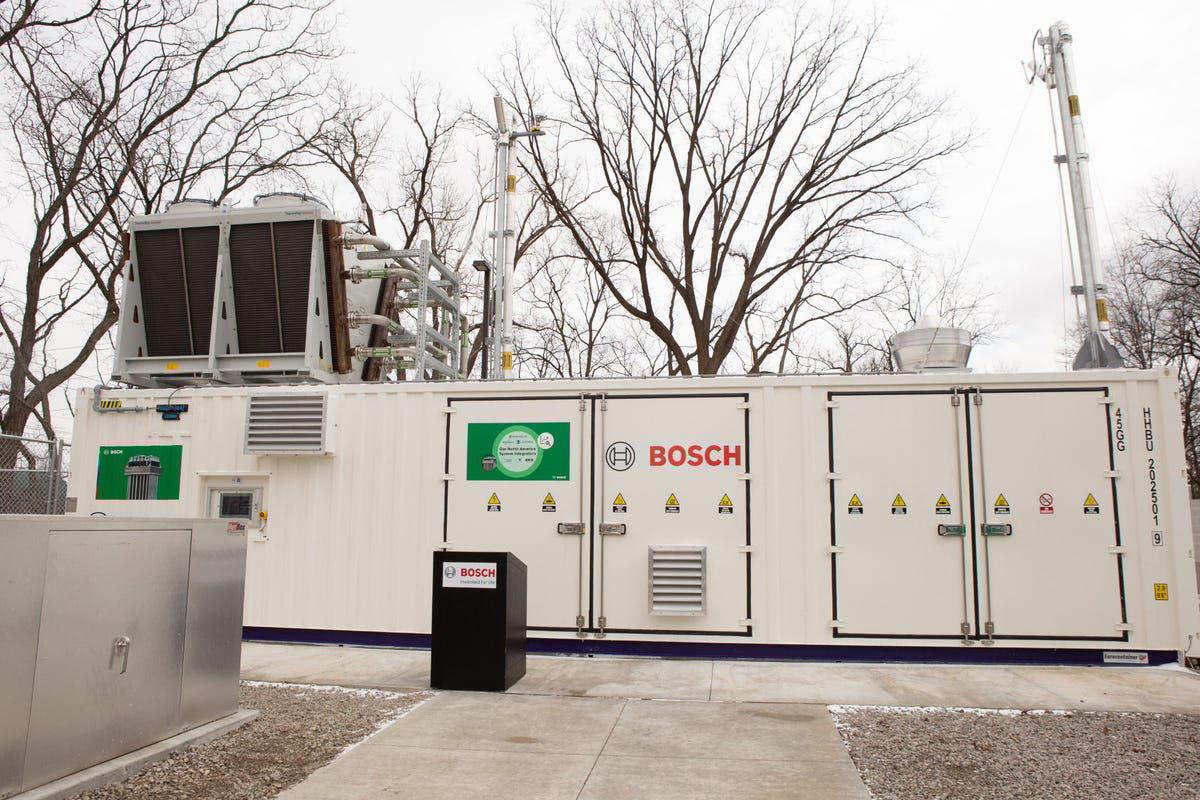
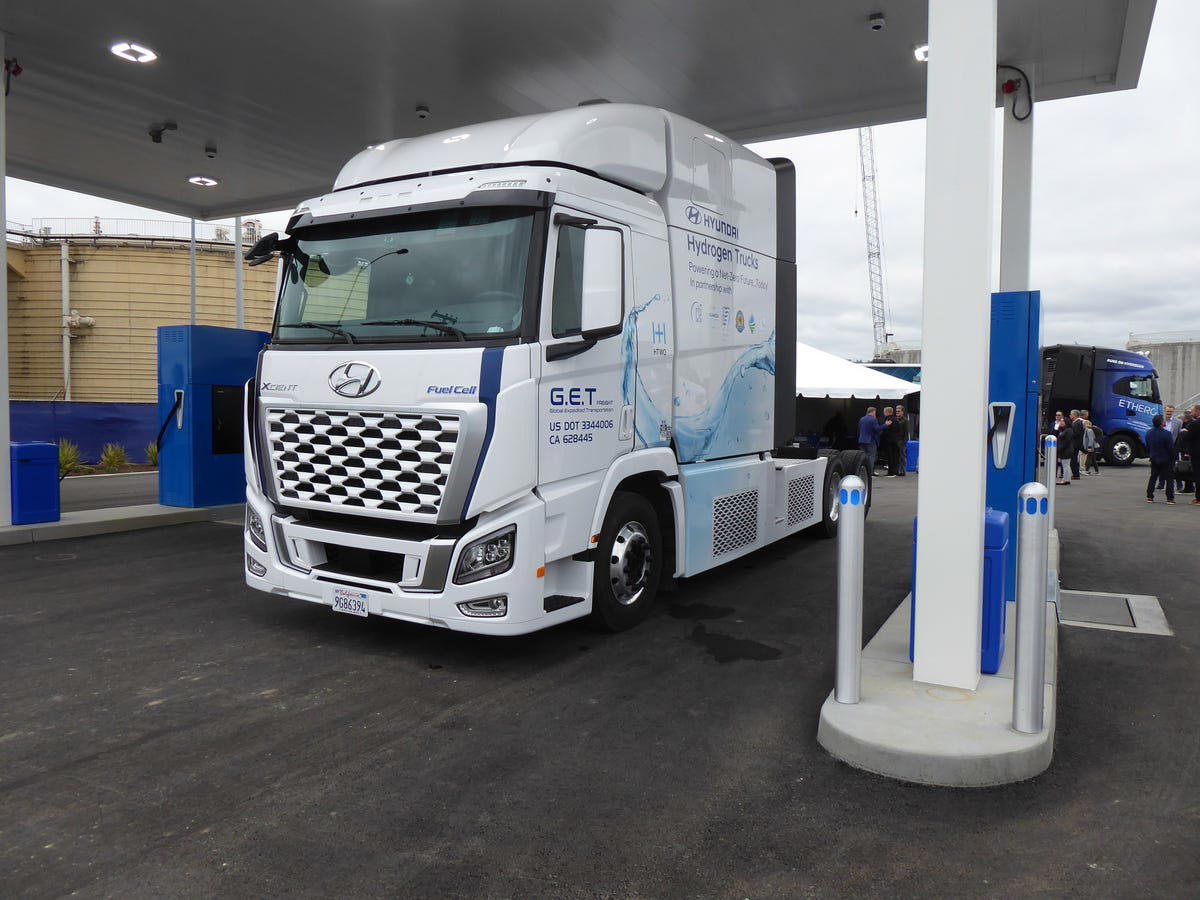
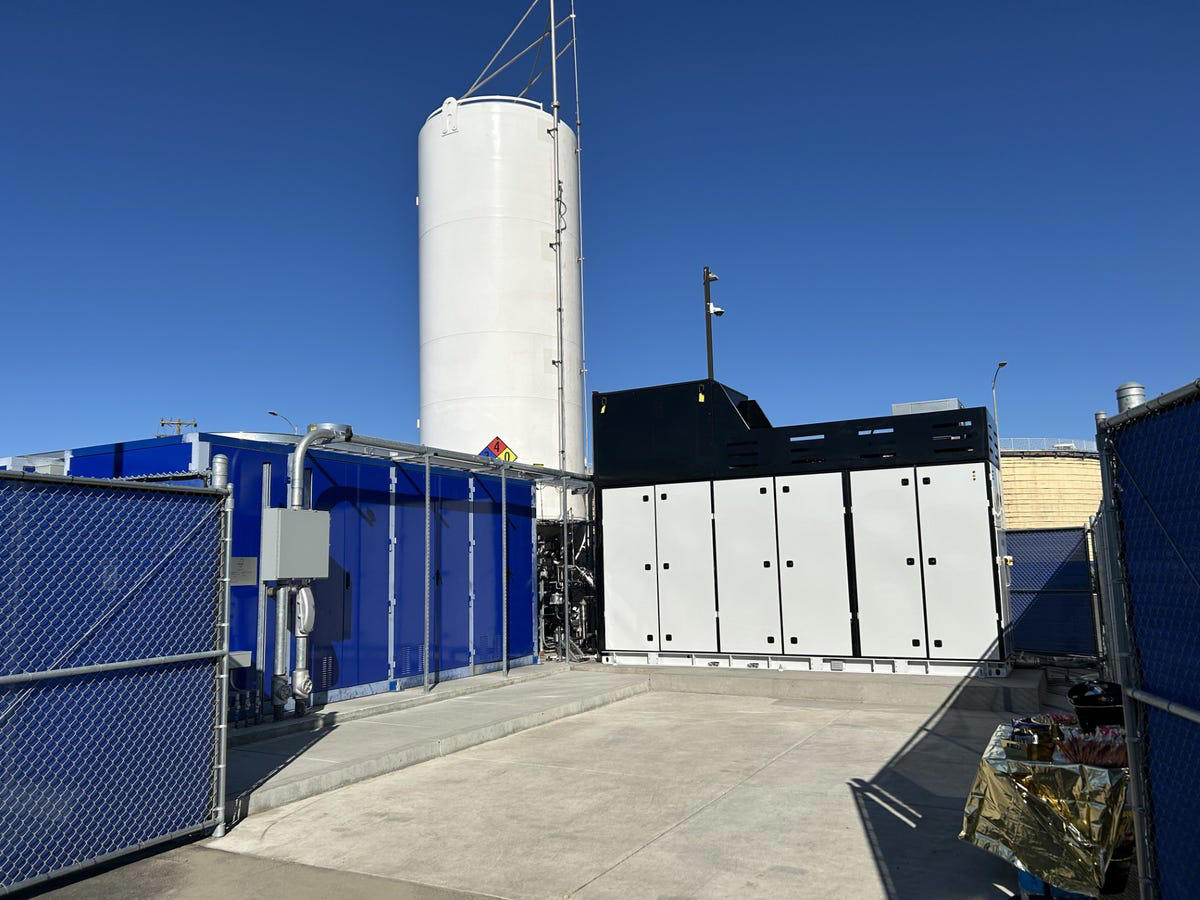




















Hydrogen is expensive to produce, and renewably produced “green” hydrogen even costlier (averaging, at retail, $32 per kilogram, which is roughly the energy equivalent of a gallon of gas). So it was a bit of a shock to learn that, with some of the older mobile hydrogen pumps now in use in the hydrogen hotbed of California, as much as 50 percent of this important energy carrier is currently being lost.Bosch held a Hydrogen Technology Day March 17 at its Farmington Hills, Michigan, US headquarters and announced that it was installing an electrolyzer there using a 1.25-megawatt Hybrion proton exchange membrane-based stack. Peter Tadros, Bosch’s president of power solutions in North America, said the electrolyzer is capable of producing 23 kilograms of hydrogen per hour and has been available to US and Canadian customers since 2025. Although Bosch doesn’t maintain a fleet of fuel-cell cars or trucks in Michigan, it does use hydrogen for dyno testing of hydrogen engines and other engineering purposes. “And it’s a demonstrator to show what we can do,” Tadros said. “We plan to integrate the electrolyzer into the grid to help utilities handle peak loads.”This hydrogen electrolyzer, capable of producing 23 kilograms per hour, was installed at Bosch headquarters in Farmington Hills, Michigan. It will soon be publicly available.Bosch also showed another important innovation—a low-loss cryogenic hydrogen pump capable of transferring super-cold liquid hydrogen (at -420 degrees Fahrenheit) with, at most, a 5% loss. The CryoPump Module was installed at the FirstElement hydrogen station servicing a fleet of 30 Hyundai XCIENT fuel-cell trucks at the Port of Oakland in the fall of 2025. According to Dave Hull of Bosch Rexroth, the direct-fill pump resulted from “clean sheet of paper” research and occupies a much smaller footprint than previous cryopumps, as well as doing away with costly, bulky, and potentially leaky high-pressure storage vessels, chillers ,and valve panels. Hull said the versatile electro-hydraulically driven pump can offer hydrogen compressed to 350 bar (5,000 pounds per square inch) for transit buses, 700 bar (10,000 psi) for fuel-cell cars like Toyota’s Mirai or Hyundai’s Nexo, and up to 900 bar (13,000 psi) for heavy long-haul trucks. The Bosch/FirstElement station has two heavy-duty truck dispensers and four light/medium-duty dispensers. It can handle 18,000 kilograms of hydrogen daily, servicing 200 trucks in that time. A Class 8 truck’s 100-kilogram liquid hydrogen tank can be filled in approximately 10 minutes. Hyundia XCIENT fuel-cell trucks at the Port of Oakland.Jaimie Levin, director of west coast operations at the Atlanta-based Center for Transportation and the Environment (CTE), was a speaker at the Michigan conference, and he said that the boil-off problem can be linked in part to old mobile fillers used by California transit agencies.“When a tanker truck delivers liquid hydrogen to a storage vessel, it can carry 4.5 tons in a single load,” Levin told Autoweek. “That’s the equivalent of 15,000 to 20,000 gallons. To make the transfer, typically you would elevate the pressure in the trailer and reduce it in the storage vessel. And in doing that you typically end up venting usable fuel. When you force fuel by pressure into the tank, you also introduce heat which results in even more vaporization.”Levin said the transfer results in up to 20% of the losses, but there’s more as the liquid pumps operate and have to be primed. That means cooling the pump down, and the gas used to cool it gets vented. When transit buses sit around, the liquid on the surface warms up and begins to turn into more gas that gets vented. “The new Bosch pumps, which are bathed in cold hydrogen, look very promising,” Levin said. “They eliminate high pressure in the tank, and they don’t need to be primed.” Other companies, including long-time player Linde Engineering in partnership with Daimler Truck, also claim to be able to lick the boil-off problem. The Daimler/Linde low-loss approach, announced in 2024, is called sLH2, and it can refuel a 40-ton truck in 10 to 15 minutes, giving the truck 621-mile range. It’s also intended to lower the cost of a hydrogen station “by a factor of two to three,” the company said. Bosch’s low-loss cryogenic hydrogen pump installed in Oakland.At the Farmington Hills event, Paul Thomas, president of Bosch North America, said the company believes “no single energy to be the magic bullet.” And Jordan Choby, vice president for powertrain at Toyota Motor North America, declared that “hydrogen can change the world. We’ve had 30 years of research in hydrogen, whose only emission is water,” Choby said. “Hydrogen is all around us, and it can be produced using wind, solar and bio.” Choby sees a particular application in the long-haul truck market, which produces three to five percent of global emissions. Toyota has built more than 20,000 Toyota Mirai fuel-cell cars since 2014, and Longo Toyota and Roseville Toyota in California have hydrogen installations. Southern California remains the epicenter of U.S. hydrogen passenger car deployment. Choby added that there are around 100,000 hydrogen vehicles on the road now globally, probably not enough yet to change the world.