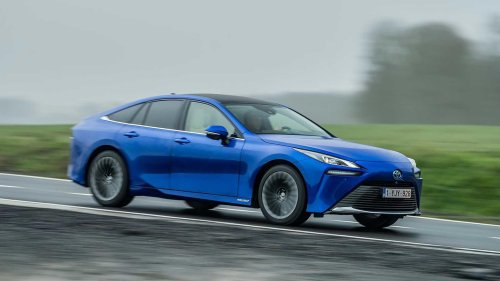
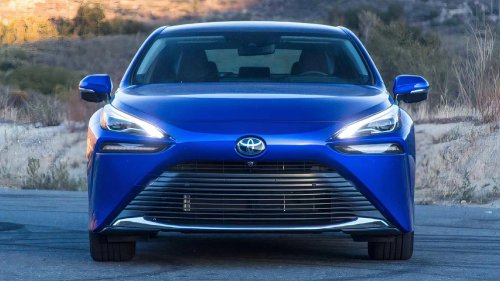
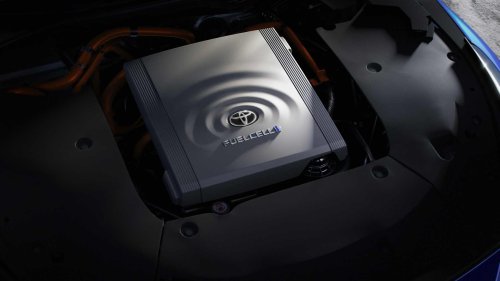
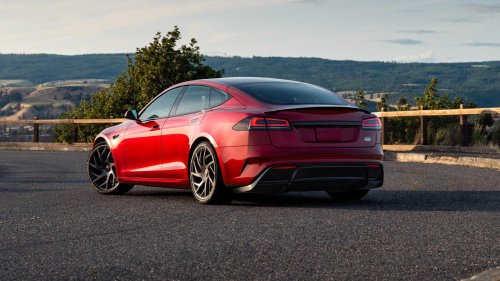
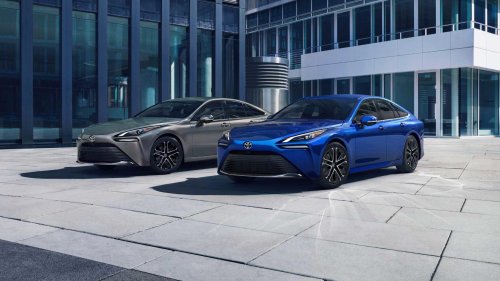
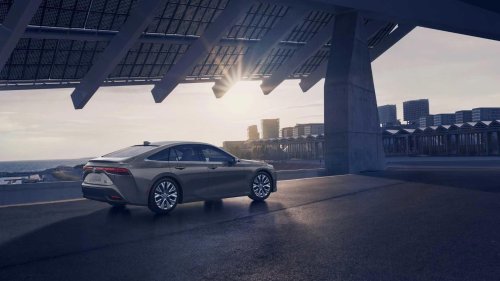
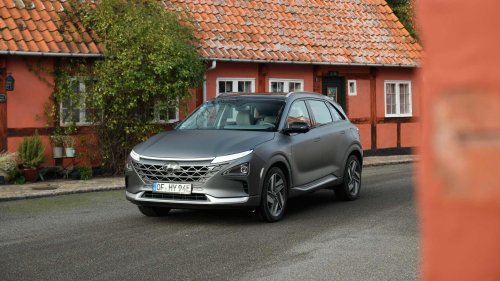
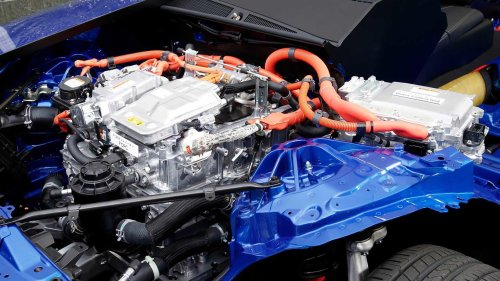
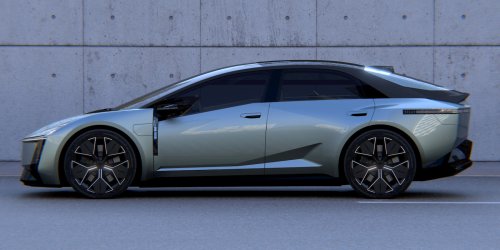
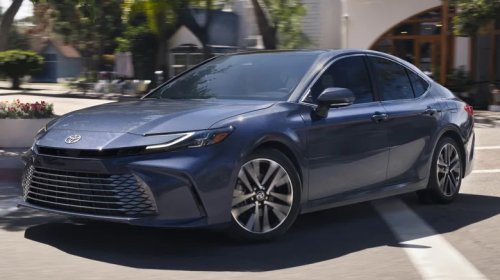
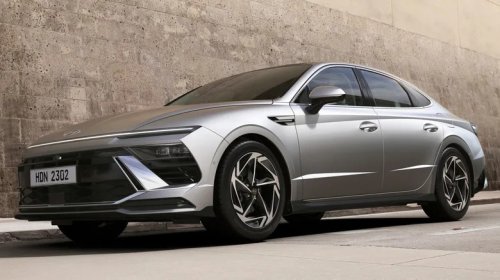
Hydrogen was seen as the fuel of the future for many years. To some people, the fuel type still feels like a far-off mystery. That notion might have contributed to its downfall. Despite Toyota's efforts with the Mirai sedan and heavy investments into hydrogen refueling infrastructure, enough buyers just couldn't bring themselves to pull the trigger on a hydrogen-powered car. That said, Toyota hasn't given up yet. But should it?At this point, most buyers are either happy with or at least content with hybrid powertrains and their efficient fuel economy. While Toyota is pushing forward with its hybrid technology, it still hasn't left hydrogen behind. In this article, we discuss what Toyota is doing to convince buyers to buy its hydrogen car, and the many pitfalls of this once-futuristic fuel source. Toyota Will Pay You To Drive On Hydrogen ToyotaToyota is so confident that buyers will love its hydrogen cars, that it'll put its money where its mouth is. Sure, the Mirai is fairly expensive (we'll talk about that later), but anyone who buys a brand-new Mirai will be granted $15,000 worth of fuel credit. That's not news, though, since the brand has offered massive incentives on the Mirai for years.You might think there's a catch — there really isn't. Anyone who buys a new model will get $15k worth of refueling credit that lasts for six years; those who choose to lease one (which may not be possible depending on the dealer and Toyota's own current lease deals) will get the same $15k credit that lasts for three years. Unless you plan on constantly driving the length of California, there's no reasonable way to burn through that much hydrogen in that amount of time, meaning you'll basically drive for free for the duration of the lease or most of your purchase. Refueling Stations Are Shutting Down There aren't many hydrogen refueling stations to begin with, and almost all of them are in California. On that note, the hydrogen stations that do exist are dwindling. Starting a couple of years ago in 2024, Shell announced that it would be closing a handful of its hydrogen stations. It doesn't end there, though. Toyota is one of the only automakers to currently offer a new hydrogen-powered car for sale — Hyundai might be next, but hasn't provided a release date at the time of this writing. Buyers were supposedly about to receive good news about an American-made hydrogen car before General Motors shut down its hydrogen fuel cell program for good last year. Only Californians Can Reasonably Own One ToyotaPerhaps one of the largest reasons why hydrogen-powered cars are not the future is the fact that support infrastructure hasn't extended beyond California yet. In fact, Toyota won't even sell you a Mirai unless you live in the state. Let's say you buy one while living in the Golden State, then decide to move — your best bet would be to sell the Mirai because you won't be able to refuel it.According to the United States Department of Energy, there are only 50 public hydrogen refueling stations in California, which accounts for the vast majority of stations in the country. That said, other states may have private stations; the complete list of states with private hydrogen fuel stations includes Texas (1 station), New York (1 station), New Jersey (1 station), Washington (2 stations), Colorado (2 stations), Virginia (2 stations), and Ohio (3 stations). Some of those stations are only permitted for commercial vehicles, like semi-trucks, so you won't be allowed to drag a Mirai there, anyway. They're Not As Efficient As Electric Cars ToyotaHydrogen-powered cars are far more efficient than virtually any gas-only model, but about on-par with some plug-in hybrid vehicles. The Toyota Mirai, for example, currently averages about 72 combined MPGe, according to the EPA. That's pretty great when you consider it's coming from a single fuel source, rather than combining the efficiencies of gas and electricity. That said, though, it's nowhere near as efficient as most pure electric cars on sale today. There are plenty of all-electric cars that offer the same or more range than the Mirai and cost about the same up-front. Even though the Mirai can drive as far as some EVs, the hydrogen it takes to refuel costs more than charging with pure electricity. Maybe you won't care if you're still using the $15,000 worth of fuel credit, though. Toyota Mirai Vs Tesla Model S Cost Per Mile TeslaLet's say you've owned a Mirai for long enough that Toyota's generous fuel credit has either run dry or ran out of time. Hydrogen might be the most abundant element in the universe, but the process to collect and purify hydrogen until it's fit for use in your Mirai is a bit more expensive than most ways humans generate electricity.That all works together to make sense of why it technically costs less to run a 2026 Tesla Model S with its 410 miles of range than it is to run a 2026 Toyota Mirai. According to a relevant report from Recharged, it costs about $1.09 per mile to drive a new Model S when accounting for charging costs, maintenance/repairs, insurance, taxes, depreciation, and more. Buying a used model could avoid the depreciation, though, reducing the cost per mile to almost half that.While we don't have a cost-per-mile figure for the Mirai, it costs about $200 to refuel its 11.9-gallon tank, from which it can hand out an EPA-rated range of 402 miles. In contrast, charging a Tesla Model S from empty to a full charge at home only costs about $20 or so, depending on your location and current prices. Their ranges might be give-or-take the same, but the cost to fill certainly is not, and that's before you factor in the Mirai's hideous depreciation rates. Buyers Have A Limited Selection To Choose From ToyotaThe severe lack, and dwindling supply, of refueling stations, the sheer cost of refueling, and the fact that they're not as efficient as all-electric models are probably enough reasons to turn buyers away from this fuel source. If you're still considering a hydrogen-powered car, then know that your options are limited. At the time of writing, buyers can buy the Toyota Mirai and nothing else. Hyundai may reveal a release date for the new Nexo soon, but it might be limited to California drivers as well. 2026 Toyota Mirai Overview ToyotaWe've used the Mirai as an example for this whole article, so it's time to get to know it a bit better. It uses hydrogen fuel cells to generate electricity that powers two motors which then turn the wheels. It's a complicated process that we don't have time to get into today, but it results in about 402 miles of range and great fuel economy when compared to gas cars.Power outputs are nothing to write home about, but 182 horsepower and 300 lb-ft of torque is plenty to get around town comfortably. One of the best parts about the Mirai, though, is its lack of emissions. It's a shame there's very little infrastructure to support a car that emits water as its only byproduct. 2023 Hyundai Nexo Overview HyundaiHyundai is on the verge of releasing an all-new Nexo with updated styling, more power, and more range, but the brand hasn't announced a release date just yet. You can, however, find a used model from the previous generation for dirt cheap. Hydrogen-powered cars seem to depreciate as quickly — if not more so — as electric cars.According to our Price Trends tool, the average market price of a 2023 Nexo is barely north of $9,500. It uses a hydrogen fuel cell and a lithium-ion battery to turn the wheels with 161 horsepower. Its front-wheel drive configuration helps keep adequate fuel efficiency and up to 380 miles of range. Should Toyota Finally Hand Over Its Keys? ToyotaToyota invested a lot of money into the Mirai and the infrastructure to keep it alive, but we fear it wasn't enough. Without other automakers joining the cause, or the government stepping in with as large subsidies as they give coal and oil industries, hydrogen-powered cars simply don't have enough going for them to survive. At this point, we can't help but wonder if it's time for Toyota (and Hyundai, for that matter) to call it a day.



















 +66 others





![Toyota, Toyota's $15,000 Chinese EV spotted overseas in RHD [Images]](https://cdn.topcarnews.net/thumb/id/aHR0cHM6Ly9pMC53cC5jb20vZWxlY3Ry-ZWsuY28vd3AtY29udGVudC91cGxvYWRz-L3NpdGVzLzMvMjAyNi8wOS9Ub3lvdGEt-YlozWC1FVi1SSEQuanBlZz93PTE1MDAm-YW1wO3F1YWxpdHk9ODImYW1wO3N0cmlw-PWFsbCZhbXA7c3NsPTE/3fdd3b5d03bdc27308f0c99caa99667e.jpeg?t=20260926&post_id=64756)
![Toyota, Toyota's $15,000 Chinese EV spotted overseas in RHD [Images]](https://cdn.topcarnews.net/thumb/id/aHR0cHM6Ly9lbGVjdHJlay5jby93cC1j-b250ZW50L3VwbG9hZHMvc2l0ZXMvMy8y-MDI1LzEyL1RveW90YS0xNTAwMC1lbGVj-dHJpYy1TVVYtMi5qcGVn/8219e8e9bd18568eaf6e5271753403d8.jpeg?t=20260926&post_id=64756)
![Toyota, Toyota's $15,000 Chinese EV spotted overseas in RHD [Images]](https://cdn.topcarnews.net/thumb/id/aHR0cHM6Ly9lbGVjdHJlay5jby93cC1j-b250ZW50L3VwbG9hZHMvc2l0ZXMvMy8y-MDI2LzAzL1RveW90YS1iWjNYLUVWLWlu-dGVyaW9yLTcuanBnP3N0cmlwPWluZm8m-YW1wO3c9MTkyMA/e40c0b720b4826f1bf2a5f18a1e13212.jpg?t=20260926&post_id=64756)
![Toyota, Toyota's $15,000 Chinese EV spotted overseas in RHD [Images]](https://cdn.topcarnews.net/thumb/id/aHR0cHM6Ly9lbGVjdHJlay5jby93cC1j-b250ZW50L3VwbG9hZHMvc2l0ZXMvMy8y-MDI2LzAzL1RveW90YS1iWjNYLUVWLWlu-dGVyaW9yLTUuanBnP3N0cmlwPWluZm8m-YW1wO3c9MTkyMA/dc60262a877c7e2cef1e74da54ca75ab.jpg?t=20260926&post_id=64756)
![Toyota, Toyota's $15,000 Chinese EV spotted overseas in RHD [Images]](https://cdn.topcarnews.net/thumb/id/aHR0cHM6Ly9lbGVjdHJlay5jby93cC1j-b250ZW50L3VwbG9hZHMvc2l0ZXMvMy8y-MDI2LzAzL1RveW90YS1iWjNYLUVWLWlu-dGVyaW9yLTYuanBnP3N0cmlwPWluZm8m-YW1wO3c9MTkyMA/ad5c9fdfd72ede2f92d0ae9b095b9e83.jpg?t=20260926&post_id=64756)