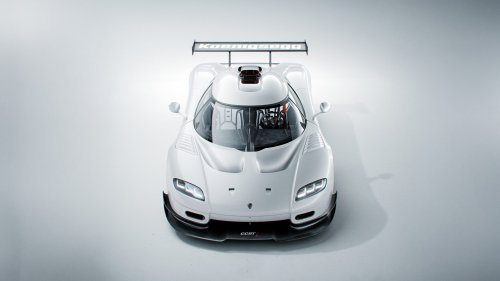
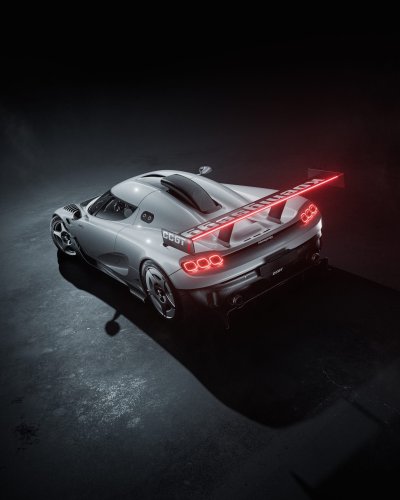
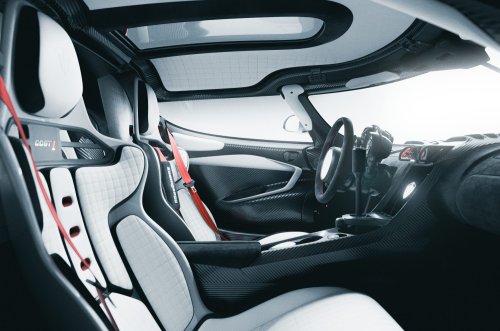
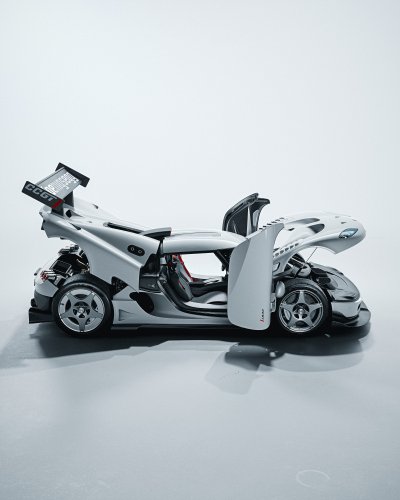
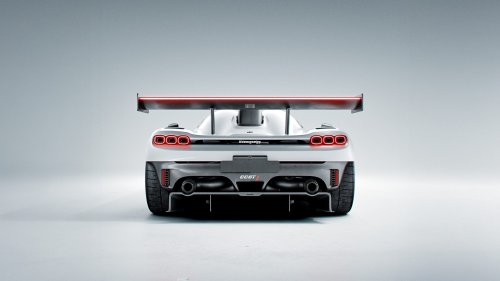
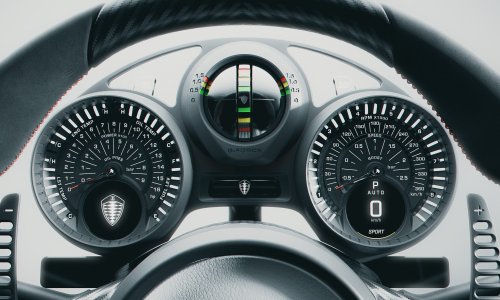
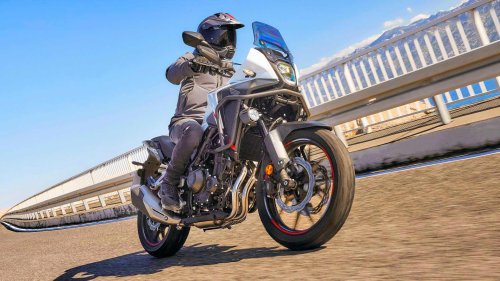
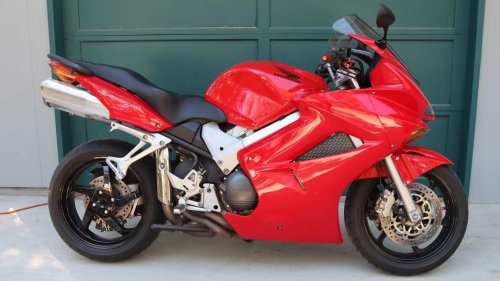
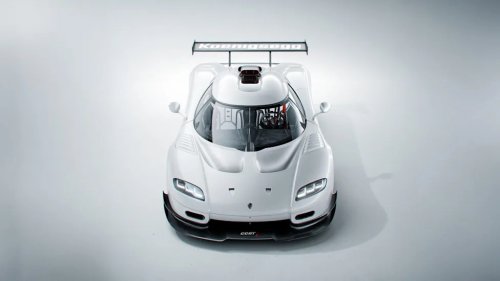
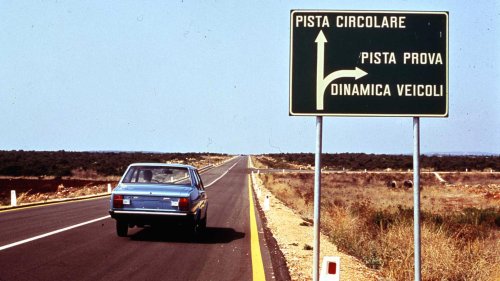
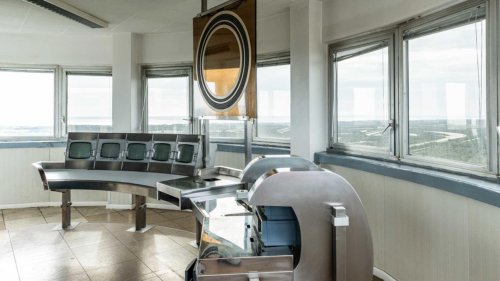
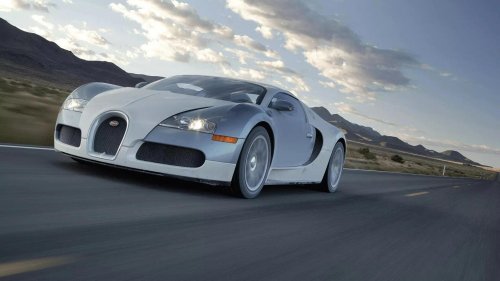
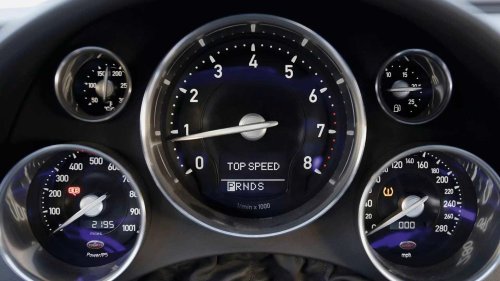
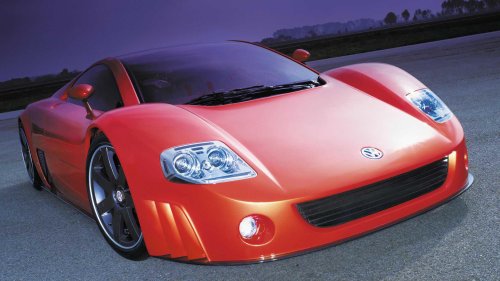
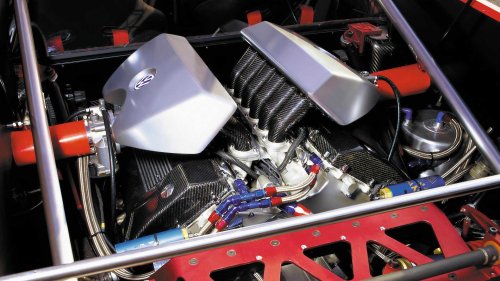
Testing on the track has been a core part of the process of designing a new vehicle for almost as long as cars have existed. Automakers use on-track testing as an extremely valuable tool that helps them get a complete picture of a car’s performance capabilities, in a variety of areas from acceleration to cornering to speed.One of the most well-known test tracks in the world is the Nardo Ring, located in southern Italy. Having changed hands a few times over the course of its history, which stretches back over 50 years, the Nardo Ring (and the Technical Center connected to it) is now owned by Porsche, and is still in use as a modern, high-tech testing facility. We are taking a look back at the history of the track, the records, thrills and spills that have taken place there, and the time an automaker decided to name one of its cars after it. The Nardò Ring: A Track With Half A Century Of History Porsche The facility now known as the Nardo Technical Center was originally built by Fiat, and opened on July 1, 1975. While the complex includes several different tracks today, back then only the famous large banked ring was present, along with a few support buildings and a control tower.Fiat owned and operated the Nardo Ring for over two decades, eventually selling it in 1999 to an Italian firm called Gruppo Prototipo (Prototype Group). During Gruppo Prototipo’s period of ownership, the track underwent some of the major improvements that brought it closer to what it looks like today. These include the addition of the modern Technical Center, an emissions measurement facility, a handling course, new workshops, a noise track, and a Special Pavements Track to test out vehicle performance on different surfaces.In 2012, Gruppo Prototipo sold the facility to Porsche, which still owns it today. Porsche completed even more renovation works, including major resurfacing in 2019 and the addition of a battery testing center two years later.Porsche Many of the original buildings from the mid-70s are still in use today. The control tower, for example, has been upgraded with more sophisticated equipment and is used to detect wildfires in the surrounding area. Some of its original equipment is on display for visitors to see.Although Porsche (along with other brands from the Volkswagen Group) does a lot of its own testing on site, the track is also available for hire every day of the year, and is frequently hired by other companies for their own vehicle testing. The Most Recent Development: Porsche's Interrupted Plans For Expansion Porsche The Nardo Ring has been run by Porsche for nearly a decade and a half now, having been acquired by the German brand in 2012. More specifically, the track became a part of a division called Porsche Engineering, a subset of the Porsche Group which handles engineering services (both in the automotive sector and in other areas of industry).Some renovation and modernization works have been carried out since Porsche acquired the track. These include the re-asphalting of the Noise Track surface in 2017, the renovation of the High-Speed Ring and Dynamic Platform A in 2019, and the establishment of a new software division of the Technical Center in 2023.PorscheDue to the forest’s age and the fragility of the local ecosystem, Porsche has been prohibited from destroying it to facilitate the expansion of the Technical Center, despite the German automaker having promised to “re-naturalize” 500 hectares of land elsewhere to offset the damage.As a result, it looks like any further renovation works will have to be limited to the Center’s existing facilities, rather than expanding it further. The Veyron And Others: Spills, Thrills, And Achievements On The Nardò Ring Through The Years 2005 - 2008 Bugatti Veyron 16.4The Nardo Ring has seen plenty of cars breaking records (or attempting to do so) over the course of its history. The first record set on the track came about in 1979, just four years after the track was built: a Honda with an engine just 125 cc in size set the 24-hour average speed world record, achieving a speed of 85.6 mph. That same record would later be beaten by several other cars, including one named after the track itself (more on that later).In 1979, the Nardo Ring also saw a car break the 400 km/h (249 mph) barrier for the first time. The car in question was a Mercedes-Benz, the experimental C111-IV. In the years that followed, the Nardo Ring became the location for countless car and motorcycle records. Here are a few of them:1983: Three Mercedes-Benz cars set endurance records for 25,000 km (15,534 mi), 40,234 km (25,000 miles), and 50,000 km (31,069 mi).1994: An electric motorcycle, the “Violent Violet: set five different speed records for electric bikes, which were virtually unheard of at the time.2005: The Koenigsegg CCR set a short-lived speed record, gaining the crown of fastest production car with a speed of 241.01 mph (388 km/h).However, the Nardo Ring is also famous for an attempt at setting a record that resulted not in success, but in a major incident. In 2003, test driver Louis Bicocchi was driving a Bugatti Veyron prototype on the track, attempting to reach the 400 km/h (249 mph) mark. However, due to the uneven forces being exerted on the tires, the Veyron had a blowout at around 398 km/h. The resulting crash damaged 1,969 yards’ worth of guardrail. Thankfully, the driver escaped with minor injuries. This accident helped prove that banked ovals are not the best choice of track for high-speed testing, due to the variation in temperature and wear between tires.Bugatti The Veyron later did achieve its goal, hitting a speed of 407 km/h (253.81 mph) and becoming the fastest production car in the world. However, this record was not achieved at the Nardo Ring, but at the Ehra-Lessien test track in Germany. When A Car Was Named After The Legendary Circuit: The Volkswagen W12 Nardò VolkswagenAround the turn of the millennium, the Nardo Ring became a source of inspiration for a unique concept car that borrowed its name. The Volkswagen W12 Nardo was the last in a series of three concept cars, collectively known under the “Volkswagen W12” name. These concepts came about as a result of Volkswagen’s intent to prove it didn’t just build practical, sensible cars, but could also create something exciting and performance-oriented.The first car in the series was called the W12 Syncro, also known as the W12 Syncro Coupe. The second was an open-top version called the W12 Roadster. The third and last, however, was the W12 Nardo, named after the track. This version of the car was more powerful than its siblings; it produced 591 hp, against the Syncro and the Roadster’s 414 hp. 0-60 happened in as little as 3.5 seconds; the W12 Nardo could reach a top speed of 221.8 mph.Volkswagen Power came from the Volkswagen W12 engine that gave the concept car part of its name, paired with a six-speed manual transmission. This engine is the only mass-production powerplant of its kind; it was created by joining two VR6 engines, and has four rows of three cylinders.After being introduced in the concept car series, it made its way into some production models from the Volkswagen Group. These include the Audi A8, the Volkswagen Phaeton and Touareg, and the Bentley Flying Spur and Continental GT. In the latter two models, two turbochargers were added. The engine was also used in a one-off concept version of the Golf GTI, which never became a production model.In 2002, a year after its introduction, the W12 Nardo was able to set a record at the track it was named after. The car bagged the record for average speed over 24 hours, covering a distance of 4,809.8 miles at an average speed of 200.6 mph.Sources: Volkswagen, Porsche


















 +20 others