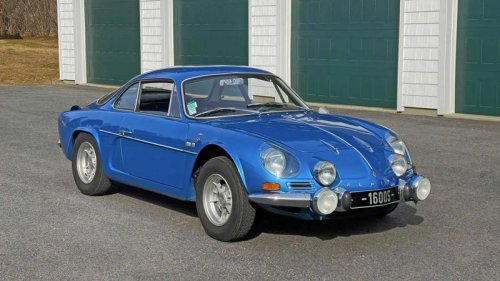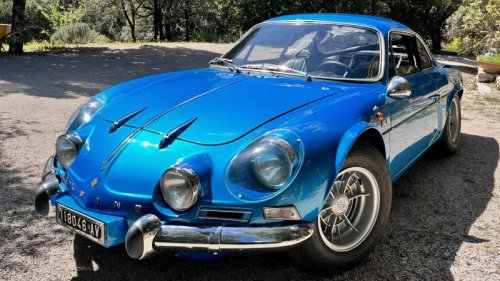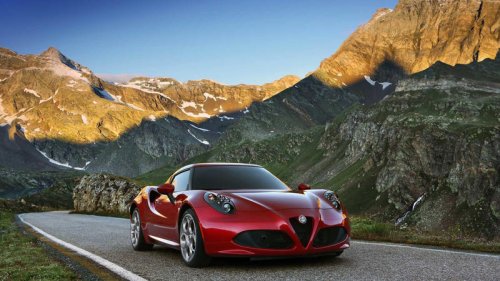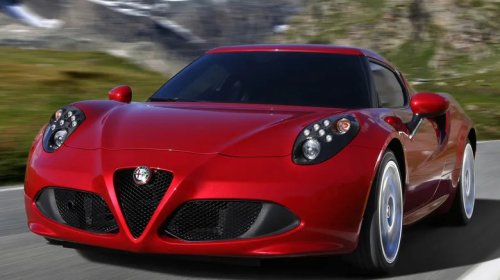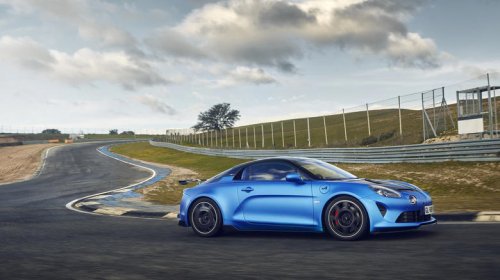
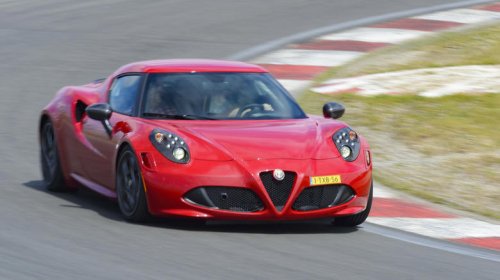
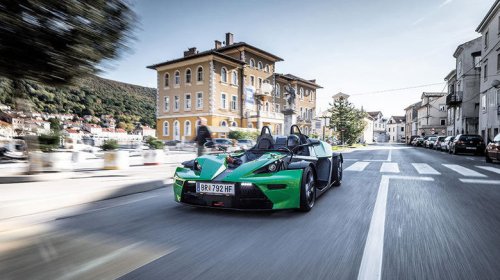
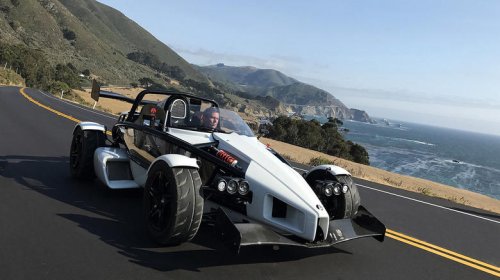
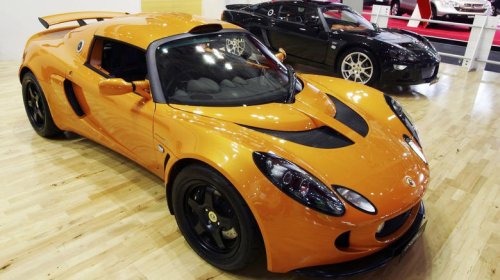
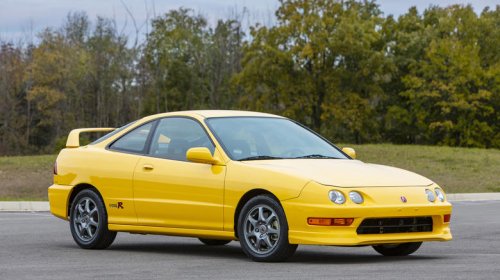



















Alpine A110Europeans have always understood what sports cars are all about. Maybe it's because of the tighter winding roads or the higher gas prices of the Old World, but European sports cars have always been smaller, lighter, and sporting fewer cylinders. And one of the best-ever super-light sports cars the continent has ever produced is the Alpine A110.This tiny and super-fun French machine packs a relatively small 1.8-liter four-cylinder turbo, which produces 252 hp in the entry-level version or up to 300 hp in the S and R versions. The A110 R is the highest-performing variant thanks to Alpine's weight-saving measures, which results in a curb weight of just 2,385 pounds. The result is a stunning 0-62 mph acceleration run of just 3.9 seconds and a top speed of 177 mph, which are supercar-beating numbers. Meanwhile, the A110 S launches to 62 mph in 4.2 seconds, and the regular A110 in 4.5 seconds.All Alpine A110 models sadly come with a seven-speed dual-clutch gearbox, which is blazingly fast but not as engaging as a stick shift. Otherwise, the A110 has all the ingredients to be a great driver's car, with an engine that sits in the middle and drives only the rear wheels. Alpine did a great job with the suspension and steering, resulting in a very balanced and enjoyable sports car. Not surprising, as the Renault performance division competes at the pinnacle of motorsport, Formula 1!Alfa Romeo 4CBefore Alpine resurrected itself with the A110, European and North American buyers could already buy a featherlight exotic four-cylinder sports car: the Alfa Romeo 4C. Alfa's designers did a tremendous job with the proportions and perfectly sculpted body panels here. The 4C looks like an exotic supercar — it's really a sight to behold.Fortunately, the 4C also drives like an exotic car. The 1.75-liter four-cylinder turbo might lack the character of engines with more cylinders, but it makes up for that with ferocity and power. It produces 238 hp and 258 lb-ft of torque, enough for a 0-62 mph sprint of just 4.5 seconds. That is mainly thanks to the 1,973-pound curb weight of the European-spec coupe model, which is frankly ridiculously low. Sadly, the 4C weighs 220 pounds more in the U.S. because of crash safety standards, but even then, it's still very light.The reason for the absurdly low weight is the carbon-tub chassis. Yup, apart from looking like an Italian exotic supercar, the 4C is also built like one. With a mid-engine RWD layout, the 4C is light, balanced, and very stiff, resulting in go-kart handling and telepathic steering response — great for enjoying a twisty road. The dual-clutch transmission is equally sharp and responsive, making a case for itself against a manual. Oh, and you can also choose between a coupe and a spider variant, both gratifying in their own way.KTM X-Bow RAll the cars up until now were fun to drive. However, with the KTM X-Bow R, we enter "serious driving tool" territory. Sure, it's fun, but the X-Bow R is also about going supersonic on a track. An open-top carbon-fiber sports car, the four-cylinder X-Bow has the means to beat even the fastest supercars on a track. Designed to provide an uncompromised driving experience, it is as visceral as a race car, demanding full attention when driven at 100%.Like with most track-focused sports cars, lightness is the name of the game here. Weighing just 1,742 pounds, the X-Bow R is also very rigid thanks to its carbon-fiber chassis. Furthermore, it's designed with an underbody F1-like diffusor, providing higher downforce for high-speed cornering. According to KTM, it is enough for a useful 425 pounds of downforce at 124 mph.Unlike many track-focused sports cars today, the X-Bow R even comes with a six-speed manual gearbox, truly connecting the driver to the mechanical bits. The 2.0-liter VW-sourced turbo is also quite powerful, producing 300 hp and 310 lb-ft of torque. Use the engine and gearbox to the full potential, and a 0-62 mph sprint will only take 3.9 seconds. Impressive numbers considering the rear-wheel-drive layout and manual gearbox.Unfortunately, in the U.S. the X-Bow R isn't street-legal, though it is in Europe. Regardless, you'll need a track either way to really explore its full potential!Ariel Atom 3SDid you think the KTM X-Bow R was bonkers? Well, the Ariel Atom 3S is much, much more so. It weighs just 1,450 pounds, packing a 2.4-liter Honda-sourced turbocharged four-cylinder that produces 365 hp and 310 lb-ft of torque. That means the Atom 3S is even lighter than an F1 car — imagine how responsive it is.Ariel achieved the weight by deleting almost all creature comforts. The Atom 3S is a pure driver's car, with minimum body panels, an extra-stiff steel spaceframe, lightweight Alcon brakes, motorsport wheels, super-sticky Toyo R888R tires, and a pushrod suspension. It's the car a teenager would imagine when thinking about a Formula 1 racer for the road.As you can imagine, the Ariel Atom 3S is a furious car. Despite packing a six-speed manual and driving only the rear wheels, this open-top race car accelerates to 60 mph in just 2.8 seconds. In-gear, it must be much faster, as the impressive 0-100 mph sprint of 6.7 seconds suggests. It would probably be like engaging warp speed. However, the way the Atom 3S gets around corners and stops might be even more impressive: The low weight and stiff chassis allow for some physics-bending grip. All of that in a four-cylinder sports car. Whacky, right?Well, that is until you learn about the Ariel Atom 500 — a truly mad version with a 3.0-liter V8 that produces 507 hp in an even lighter 1,213-pound package.Lotus Exige Series 2You can't talk about lightness without Lotus. After all, its founder, Colin Chapman, once famously said, "Simplify, then add lightness." It's a moto that has been associated with almost every Lotus car throughout the brand's history, including its Formula 1 racecars. Thanks to that, the company has always been able to get away with smaller engines in its sports cars while providing similar performance to Italian supercars.A prime example is the Lotus Exige Series 2, which packed the famous high-revving 2ZZ-GE Toyota powerplant paired with a six-speed manual. The 1.8-liter naturally-aspirated unit provides 192 hp @7,800 rpm in the entry-level model, enough for a 0-62 mph time of 5.2 seconds, thanks to the low 1,929-pound curb weight. However, the same engine in the "S" versions is supercharged, producing up to 257 hp in the Exige S 260 Sport. That particular model needs 4.4 seconds to reach 62 mph, thanks to stickier tires and an 84-pound weight reduction. However, things get better once you turn the steering wheel. Apart from producing exceptionally light cars, Lotus is known for its chassis and suspension know-how, and that shows in the Exige Series 2. It's a very balanced sports car that, in the right hands, could be faster on a track than supercars from its era (2004-2011). Thus, while small and hard to live with, the Exige Series 2 certainly has its merit among driving purists.Honda/Acura Integra Type R DC2Okay, we cheated a little. We said that this list would only feature RWD sports cars, but who in their right mind wouldn't include the Honda Integra Type R DC2 in a list of the best four-cylinder sports cars? The B18C naturally-aspirated 1.8-liter VTEC unit is the centerpiece of the Integra Type R. Even without turbocharging, it produces 190 hp at a stratospheric 7,900 rpm, but even more impressive is the way this unit revs and sounds: It feels exactly like a racecar engine, which makes sense, given all the racing components it has. Those components also make it super-reliable in the long run.That kind of power may seem low — particularly for automotive enthusiasts who weren't born when the car launched. Still, you have to remember that this front-wheel-drive sports car weighs only 2,469 pounds. As a result, the Integra Type R shoots off to 60 mph in just 6.3 seconds and reaches 145 mph. More importantly, you get to play with one of the best stick-shift transmissions in history. The five-speed manual is simply a joy to use.If you're thinking that accelerating is where the fun ends because of the front-wheel-drive platform, you'd be wrong. Many consider the Integra Type R DC2 the best FWD sports car in history. It handles beautifully in the corners, with impeccable chassis balance and precise steering. You will always want to take the long, twisty road with the Integra Type R — it's just that good!