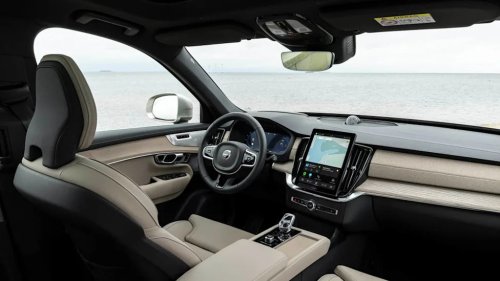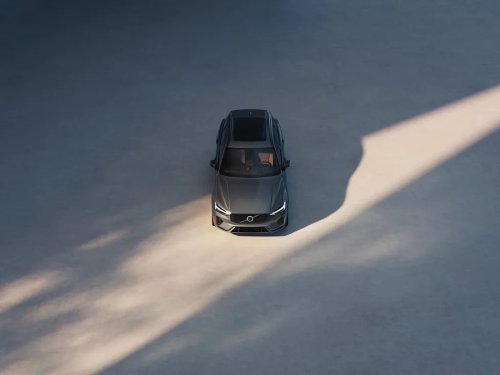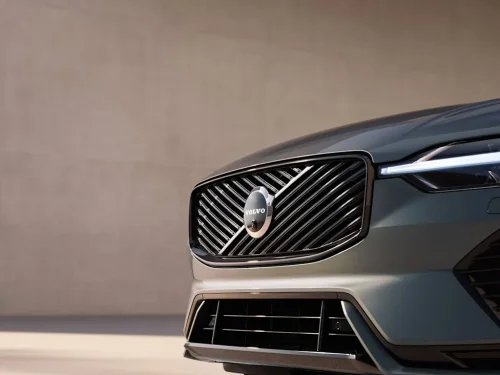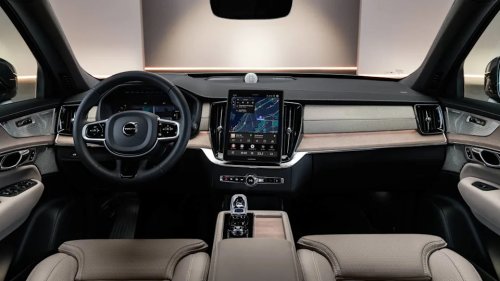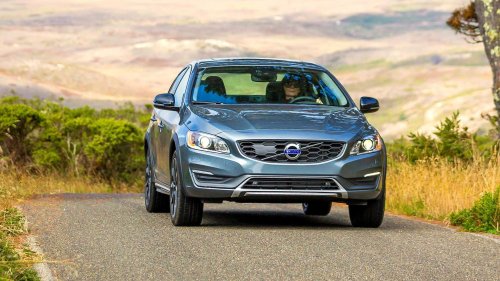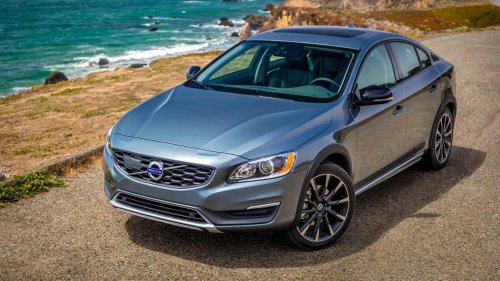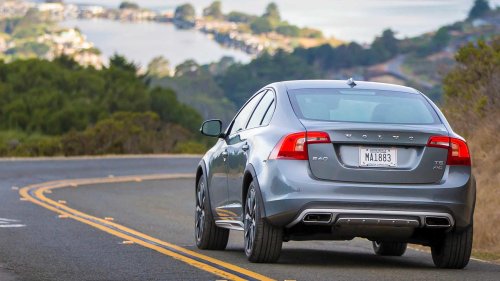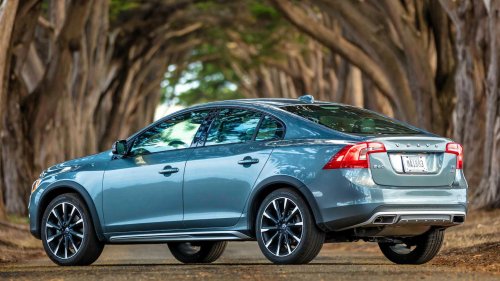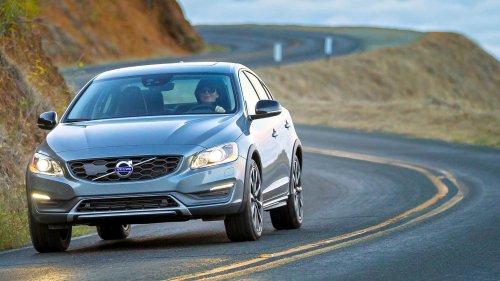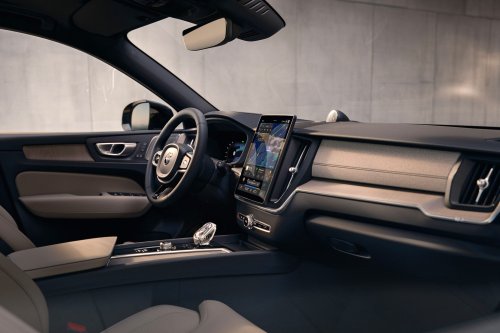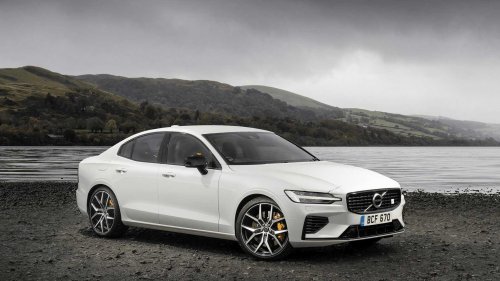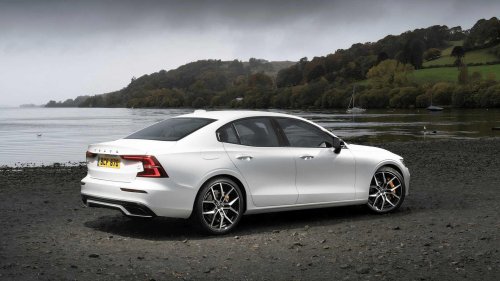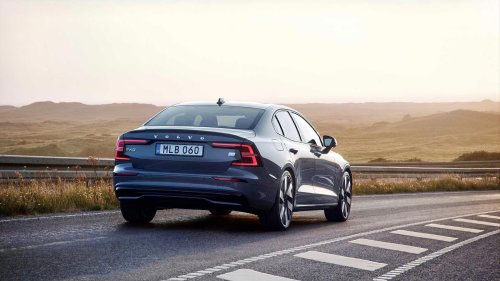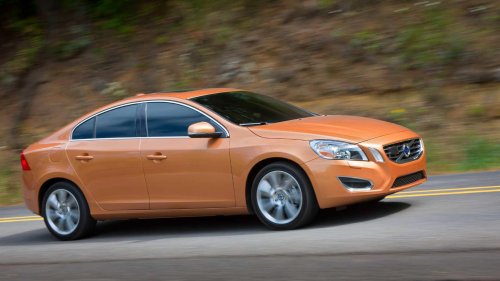
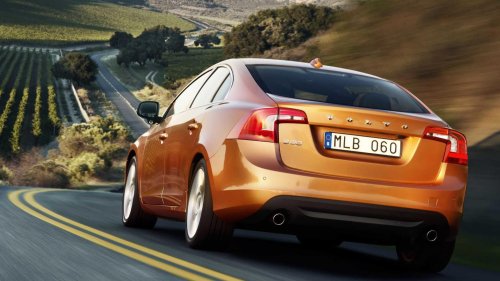
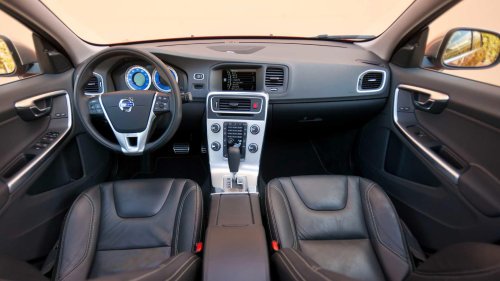
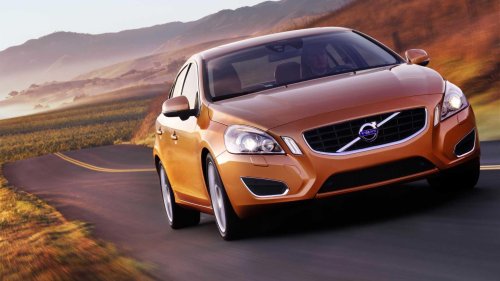
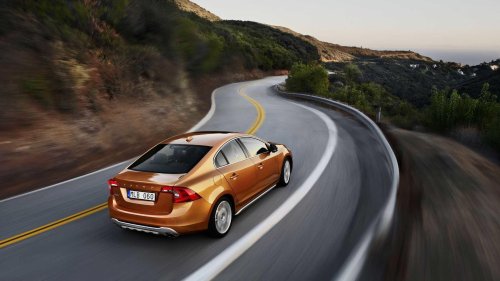
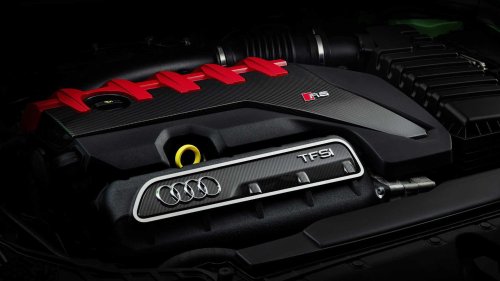
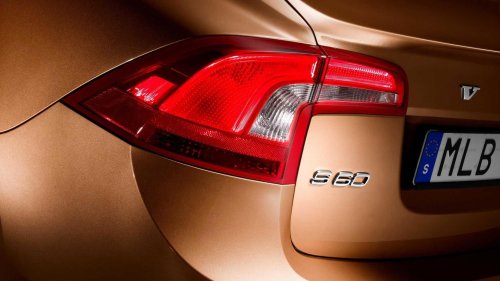



















Compact sedans today, especially in the luxury segment, have largely morphed into a single, homogenized template: similar overall dimensions, a turbocharged four-cylinder under the hood, and an interior defined by a couple of digital screens. Across brands, the cars often feel interchangeable, their personalities dialed down in favor of efficiency, tech, and broad appeal. It’s a far cry from an era when automakers occasionally took chances to make their entries stand out.A prime example is the second of the generation Volvo S60, which reached the US for the 2011 model year. It abandoned the boxy, upright shapes that had long defined Volvo design and from 2012 offered a turbocharged five-cylinder, an engine more commonly associated with Audi’s rally heritage. For buyers seeking a compact executive sedan with a touch of personality, the five-cylinder S60 presents a compelling alternative to today's conventional choices, and it's a bargain to boot.Pricing and market details were accurate at the time of writing, but are subject to change. Not Your Everyday Sports Sedan Volvo Key Facts To Know Previewed by a concept at the 2009 Detroit Auto Show The first model year skipped the five-cylinder T5 Introduced automatic emergency braking with pedestrian detection After the original Volvo S60’s decade-long run, during which the T5 variant and its turbocharged 2.5-liter inline-five served as the performance flagship, Volvo was ready for a reset and the second-generation S60 would be the avenue. The automaker moved to shed its stodgy image, aiming instead for a more luxurious, expressive identity to take on Germany’s elite. That shift began with the 2009 Detroit Auto Show debut of the Volvo S60 Concept, which introduced a fluid new design language and sleek, almost coupe-like proportions that carried over largely intact to production.Volvo That striking concept evolved into the second-generation Volvo S60, unveiled at the 2010 Geneva Motor Show and launched in the US for the 2011 model year. Early cars came exclusively with a turbocharged 3.0-liter inline-six making a stout 300 horsepower and 325 pound-feet of torque in a new T6 flagship. The T5 returned for 2012 with its characterful turbocharged inline-five, this time as the entry point, undercutting the T6 by roughly $7,000 with a $30,975 starting price. It gave up some standard features, and all-wheel drive didn’t arrive on the T5 until 2013, leaving 2012 models front-drive only.Regardless of variant, the second-generation Volvo S60 distinguishes itself with genuinely engaging handling. It rides on the same basic architecture as the Volvo S80, Volvo V70, Volvo XC60, and Volvo XC70 of the era, but in the S60 the platform features the sharpest, most aggressive suspension tuning of the group. A quicker steering ratio than on those other Volvos, combined with firmer column bushings, helps channel more of the road’s texture back to the driver’s hands. When equipped, the Haldex all-wheel-drive system defaults to a front-biased setup but can seamlessly vary torque distribution, sending up to an even 50:50 split between the axles when extra traction is required.The engine is the real star. The turbocharged inline-five feels eager at low revs and pulls strongly up to 60 mph, though there’s a slight pause when you first bury the pedal. While there’s plenty of passing power further up, the engine seems to lose a bit of steam beyond 75 mph. Making up for this is a distinctive five-cylinder growl that's sure to delight enthusiasts. It's more Group B rally car than buttoned-down executive sedan, but never becomes loud or intrusive. The engine is paired with a six-speed automatic that delivers smooth, easygoing shifts but doesn't feel as sharp as in rival models.Volvo Cars The second-generation S60 boasts a solid, well-built interior that represented a notable step up in refinement for Volvo at the time, introducing the floating center stack that quickly became a defining feature of the brand’s cabins. The layout includes plenty of analog controls, including those for the infotainment system, as there is no large touchscreen like in modern vehicles. Up back, even taller passengers will find the rear seats comfortable thanks to clever packaging. The rear seats are positioned low to preserve headroom, even with the rakish, coupe-like roofline.The second-generation S60 received a facelift for 2014, and for 2015 Volvo overhauled the powertrains, replacing the five- and six-cylinder engines with a turbocharged four-cylinder in the T5 and a turbo‑and‑supercharged four in the T6. Before that transition, Volvo released the first S60 Polestar, which used the outgoing T6’s inline-six boosted to 344 hp and 368 lb-ft, serving as a final hurrah for the older engine architecture. Production was limited but that initial S60 Polestar's popularity led to a new version with increased volumes for the facelifted S60. How Much To Pay Today Volvo The good news for bargain hunters is that used second-generation Volvo S60 T5 models are surprisingly cheap, with clean examples starting around $4,000. Most come with all-wheel drive, which is a smart choice for extra confidence in poor weather and for putting power down during spirited drives. Mileage is naturally high given the car’s age, but bumping the budget to about $6,000 opens up options with fewer than 100,000 miles. T6 models of the same vintage cost more, starting near $8,000. You gain extra performance, but miss out on the T5’s distinctive inline-five engine.The S60 T5 is generally regarded as a durable daily driver, but like any older European sedan, it has a few areas you’ll want to check before buying, especially if regular maintenance hasn’t been done. According to CarComplaints, common issues reported by owners include electrical quirks, suspension wear, and occasional oil leaks from the turbo system, though the inline-five has generally proven to be a robust engine. With the automatic transmission, rough shifting or delayed engagement could be a sign of internal wear. RepairPal gives the S60 an above-average reliability rating and estimates annual repair bills to be around $750. Farewell To The Five Volvo Not that long ago, five-cylinder engines were a familiar sight across the industry, with brands like Volkswagen, Ford, Fiat, Audi, and even Acura offering them in various forms. Volkswagen even went a step further, engineering a narrow-angle V5 for a brief moment in the early 2000s, though the inline-five remained the dominant configuration. Sitting neatly between a four- and six-cylinder, the inline-five was smoother than an inline-four and gave automakers a cost-effective way to add power in transverse-engine cars without reworking the engine bay for a V6.The inline-five's heyday was in rallying, most famously during the wild Group B era of the 1980s, where Audi’s turbocharged machines rewrote the rulebook. Beyond the rally stages, it powered a diverse lineup of memorable road cars, from the diesel durability of the Mercedes-Benz W123 300D to the quirky performance of the Fiat Coupe and the snarling second-generation Ford Focus RS, the latter borrowing a design derived from Volvo’s own inline-five.Audi Today, though, inline-fives have all but disappeared, and soon it effectively will. The engine’s last stand lives on in the Audi RS3, where that model's turbocharged 2.5-liter mill continues to deliver its signature offbeat punch. The engine occasionally appears in special Volkswagen Group offshoots like the Cupra Formentor VZ5 and is rumored for an extra-hardcore Volkswagen Golf R. But tightening regulations, specifically Europe’s incoming Euro 7 emissions standards, combined with the industry’s shift toward electrification, mean the engine is increasingly difficult to justify. According to Audi CEO Gernot Döllner, those pressures are likely to bring the curtain down on Audi’s five-cylinder by around 2027. Understated Pace, Enduring Appeal Volvo So, is the second-generation S60 T5 a top-tier sports sedan? Not quite. If your weekends revolve around apexes and lap times, something like an Audi S4 or BMW 335i of the same vintage will feel sharper and more purpose-built. But the Volvo counters with real mechanical soul wrapped in comfort and style. It’s a reminder that speed doesn’t have to shout to be satisfying.