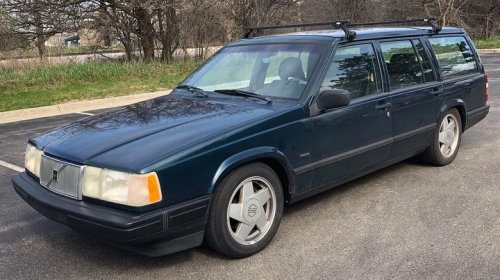
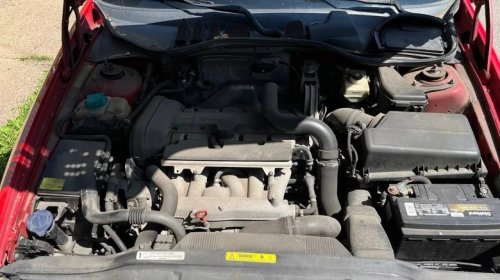
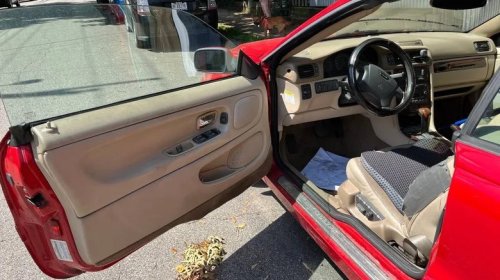
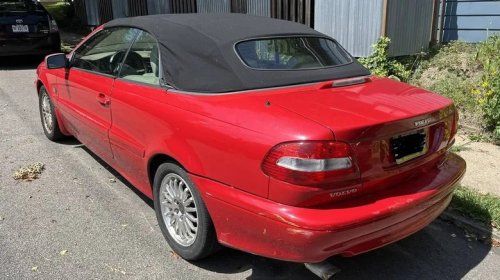
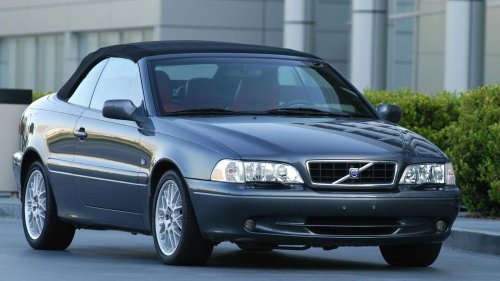
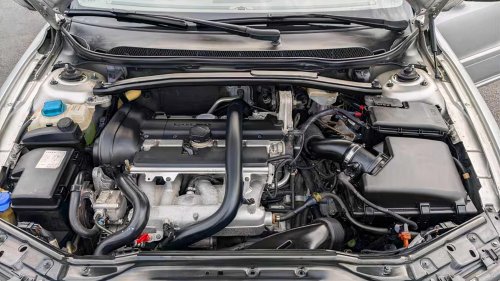
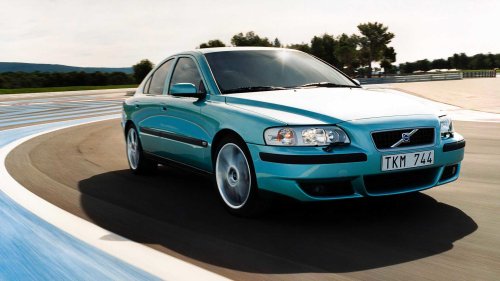
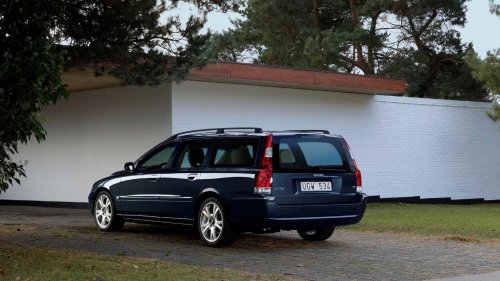
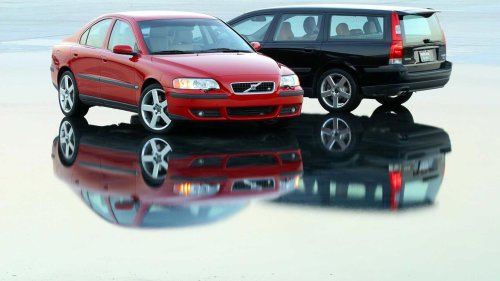
Not every legendary turbo engine came from Toyota or Honda. Long before modern performance cars became overloaded with fragile electronics and complicated hybrid systems, one automaker quietly built a turbocharged powerhouse that could survive massive boost, endless abuse, and mileage numbers that should have killed it years earlier. Even today, enthusiasts swear by it for one simple reason: no matter how hard you push it, this engine just refuses to die. Volvo in the 2000s: A Tale of Two Very Different Automakers VolvoWhat can be said about Volvo at the turn of the 21st century that hasn’t already been said? In two words, the dilemma that befell Sweden’s most prominent global automaker could best be summed up as “identity crisis.” At one end of a crossroads in Volvo engineering, brute strength and a relentless commitment to safety sufficed for supreme reliability.On the other Volvo sought to rebrand itself as a happy compromise between old-school durability and clever technology.Now joined at the hip to Ford in America not too dissimilar to what Daimler and Chrysler had done the year prior, 1999 marked a pivotal year where sensible Swedish design principles started clashing with American penny pinching. Volvo may have internally sought to ditch its "big steel sarcophagus" gimmick for smoother styling lines before Ford came around, but the process was put into overdrive the minute Detroit came knocking.Certainly, it was a far cry from what Volvo was used to manufacturing, and it led to some fairly interesting workarounds to turn these Swedish road tractors into cars Ford thought modern Americans wanted to buy. In the era of crossover SUV supremacy, that sounds easy. In practice, well, proceedings were hit and miss. Ford and Volvo’s Mismatch Leads to Some Reliability Duds Volvo This fundamental disconnect between what Volvo was best known for and what Ford wanted of them resulted in some truly groan-worthy powertrains, especially in the early 2000s. Take the 2.9-liter twin-turbo “Whiteblock” Modular straight-six, developed before the Americans showed up.It was the polar opposite of the bulletproof 4.6-liter Modular V8 that Volvo's bosses at Ford used in the iconic Crown Victoria. It was high-strung, high in boost, and it turned the GM-sourced four-speed transmission it was paired with to shreds with staggering certainty.A great SUV the original XC90 may have been, but this little bug was quite the hurdle for later generations to overcome. Then, there was the technically brilliant 4.4-liter V8. Designed by Volvo and built to a high technical standard by Yamaha, these engines were tune-friendly enough to sport twin-turbos, and wind up under the rear hatch of the Noble M600 supercar.But that didn’t account for a counterbalance shaft bearing mounted in a way that let water pool on its surface when driven through puddles. Suffice it to say, this bricked engines at a rate that would make Volvos of old cough black smoke in disgust. Tales of naturally-aspirated tank motors lasting half a million miles on just basic oil changes seemed pretty distant when warranty backlogs were that notorious. In the Middle of Falling Apart, a Real Gem of an Engine Credit: EdmundsPremier Automotive Group, the consortium that owned Volvo under Ford’s leadership from 1999 to 2010, performed a perpetual act of falling apart almost as soon as it started. They even took famous names like Lincoln, Jaguar, Land Rover, and even Aston Martin along with them. But so far as Volvo was concerned, the partnership did at least yield one decisive positive, forcing Volvo to upgrade a mainstay for the new millenium.Well, more like, Ford was there to reap the spoils of what Volvo had already been developing for a decade to that point. Enter the revised Whiteblock architecture, a whole lineup of four, five, and six-cylinder engines made to address the issues found in Whiteblocks of old. The revised Whiteblocks were the primary selling points of Volvos we now consider future classics, like the then-upcoming S60 and V70. They served as the spiritual successors to the beloved 850s of old that ran like clockwork for decades.Across a range of four, five, and six-cylinder variants, these new motors featured lighter, stronger internals, improved ECU tuning, continuous variable valve timing (CVVT), and solid lifters instead of the hydraulic units. All these things, though small in isolation, combined to compensate for the higher compression demands and thermal load patterns Ford demanded upcoming Volvo’s should adhere to. The Beauty Of Volvo's Five-Cylinder Engine VolvoTransversely-mounted and with front crumple zones for days, the new Whiteblock catered perfectly to the kind of compact, front-wheel drive, safety-forward approach Ford so clearly desired out of Volvo. By themselves, the four and six-cylinder variants of this new engine were serviceable enough, and certainly more reliable than what came before them.But the real meat and taters about why the new Whiteblock was so brilliant could be summed up by looking at the 2.4 and 2.5-liter five-cylinder variants. Low-pressure turbochargers that added enough boost to be peppy but not enough to grenade the engine prematurely gave these new Whiteblock engines a durability that higher strung engines its size simply lacked.Under the hoods of the first-generation S60 and the nearly universally-adored, practically-bulletproof V70 station wagon, the new turbo Whiteblock straight-five jetted 208 horsepower at the crank, and 236 lb-ft of twist to go with it. The subtle turbo boost allowed for a higher peak torque figure than peak horsepower, almost reminiscent of an American engine in that regard. Compared to equivalent four and six-cylinder engines from competitors like Honda and Toyota, the happy medium Volvo five-cylinder Whiteblock seemed like a nice change of pace.An All-Time Great Volvo Engine From Its Darkest HourVolvoGranted, these power figures aren’t exactly mind-bending. But what Volvo sacrificed in not pursuing a maximalist attitude towards raw horsepower, they gained in reclaiming some of that trademark reliability that'd once eluded them. With low-pressure turbochargers, added for right-lane pep instead of left-lane hooning, these contemporary Whiteblocks were so under stressed, you could almost forget they were turbocharged at all. Add traditional port fuel injection, and these five-cylinder Whiteblocks avoided the catastrophic complications associated with later GDI-equipped Volvos. That allowed these quirky five-pots to do what Volvos of old did with ease, and that was last.Tales of S60s and V70s from the late 2000s running for 200,000 or even 300,000 miles trouble-free, needing little more than oil changes, coolant flushes, and the occasional transmission service all the while, are downright commonplace. Without boost pressures that wouldn't look out of place at NASA, these engines could carry on; their valves, perpetually coated in a thin mist of gasoline, didn't have carbon buildup thick enough to look like the inside of a steam train's coal box. Thanks to Aisin transmissions, they didn’t grenade themselves at 80,000 miles like old GM gearboxes did. Real Reliability, Real Value for Money VolvoFord and PAG sold off Volvo to Geely of China not long after the ‘2000’s Whiteblocks hit the scene. Over 15 years post-mortem, there’s a stark divide between Volvo platforms that used these engines and those that used Ford-derived powertrains. This shows in the value-for-money that cars like the 2000s S60 and V70 carry on the used market.With mileage varying anywhere from 70,000 to 150,000 miles, you can pick up these2000s Whiteblock Volvos for $4,500 to $9,000 all day long.With 15-odd years of reliability snafus since then sullying Volvo’s reputation, these diamonds in the rough might occasionally be better values than equivalent Accords, Camrys, and Legacys around the same age.Avoiding the name tax commonly associated with reliable Japanese brands while driving something as unique and unusual as a mid-2000s Volvo holds real weight with enthusiasts. It also offers everyday commuters something slightly more interesting to drive. For what it’s worth, that holds a fair amount of virtue.Sources: Classic.com



















 +42 others