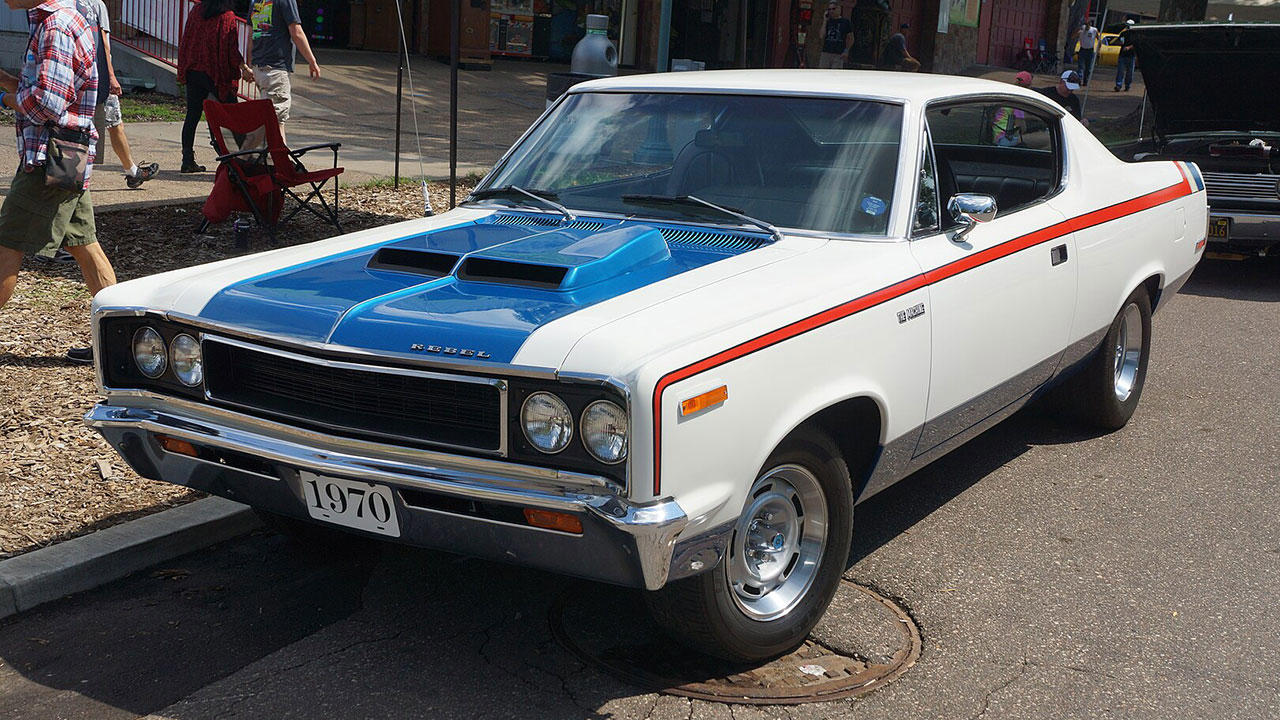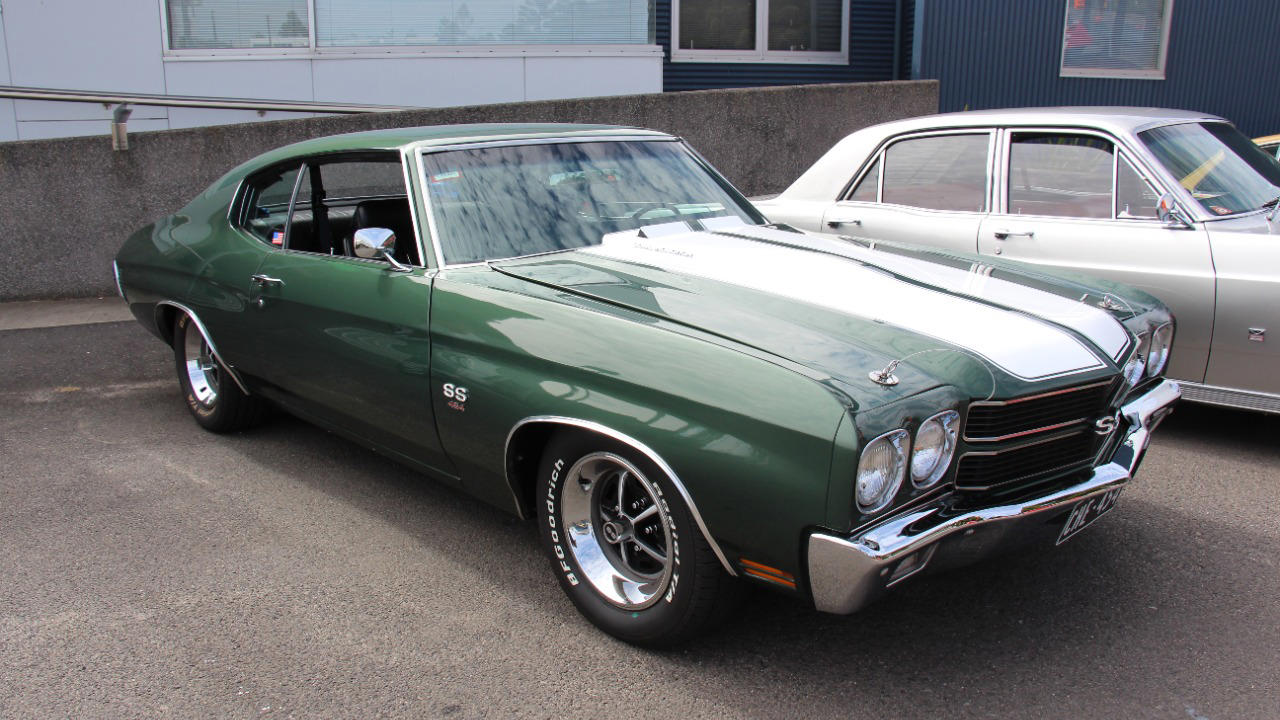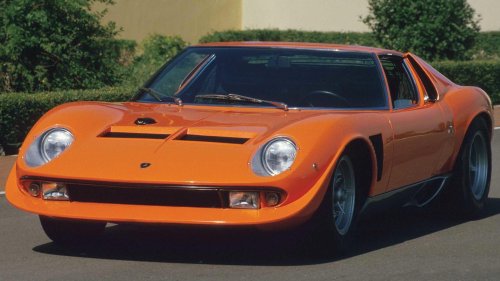
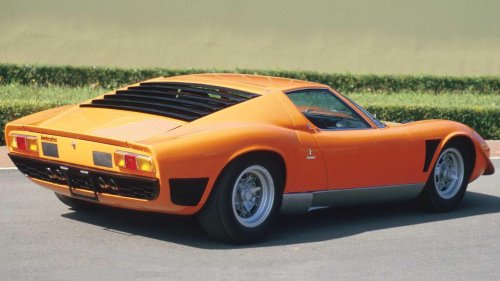
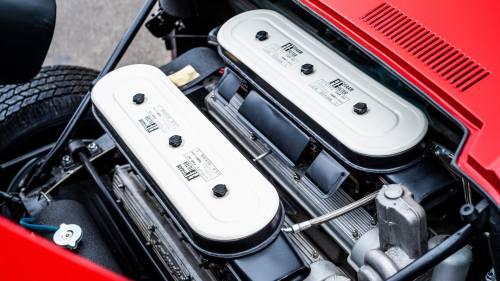
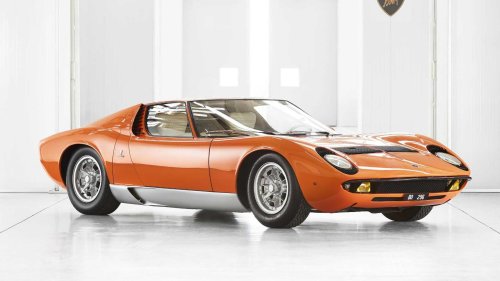
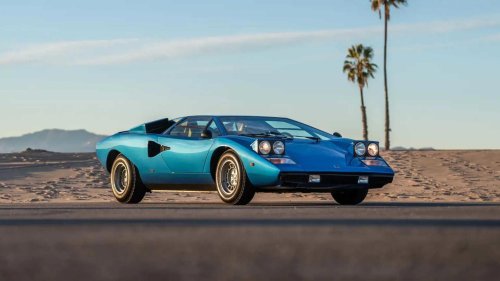
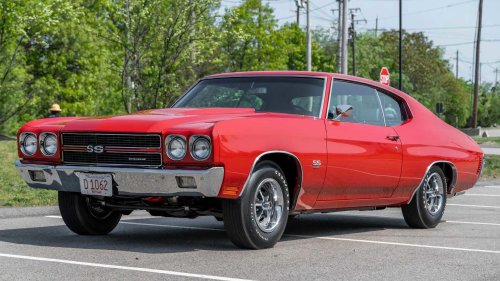



















By the end of the 1960s, the automotive world was pushing the boundaries in terms of the amount of power that series-production cars could make straight out of the factory. One of the best examples of this period of time was seen in America with the golden age of classic muscle cars. The 1960s started with most cars struggling to make more than 300 horsepower. All of a sudden, several muscle cars could make 400 horsepower, and some produced even more, such as the Ford Mustang Shelby GT500 in its most powerful 650-hp Super Snake iteration of the '60s, of which only one was made, and the 450-hp Chevrolet Yenko Camaro.That sort of power was incredible at the time, and the phenomenon wasn't just seen in the States. The rest of the western world was also experiencing its own sort of power renaissance. One such company, Lamborghini, was hard at work creating something that would end up being one of the most powerful production cars on the market. However, more importantly, the model in question would end up being the fastest production car ever created up to the 1970s. It was called the Lamborghini Miura P400 Jota, a special, one-off version of the Miura.Lamborghini The Best Of The Best 1970 Lamborghini Miura P400 Jota Quick Facts Reached a top speed of 199 mph Built to conform to the FIA'a J-Class racing regulations Boasted a power-to-weight ratio of 5.26 horsepower per pound Only a single example was produced 1970 Lamborghini Miura P400 Jota Orange Rear Angled ViewUpon the Lamborghini Miura's unveiling and subsequent release in 1966, its looks, power, and construction caused such a stir in the automotive community that it founded an entirely new segment of cars: the supercar. Of course, there were fast, low-slung cars before the Miura debuted, but the Miura's mid-engined, rear-wheel-drive layout featuring a V12 engine spurred on the creation of the new supercar vehicle segment, as no automaker had built something quite like it before.Four years into the Miura's production, a man called Bob Wallace, who also happened to be a prominent Lamborghini development driver, began tinkering with the Miura's aerodynamics and mechanical parts. This wasn't unusual, as special-edition Miuras, such as the P400S, had already been built and featured modified components in order to make them faster, or allow them to handle better.However, Wallace's tinkering was for a slightly different purpose. His creation, dubbed the "Jota" - or how the letter J is pronounced in the Spanish language - was meant to conform with the Fédération Internationale de l'Automobile's (FIA) J-Class racing segment. The Miura Jota boasted a litany of weight-saving measures that shaved a whopping 800 pounds off of its curb weight. Not to mention, its engine was heavily tuned, as well. How Wallace's Tuning Made A Difference 1966-1973 Lamborghini Miura 3.9L NA L406 V12 EngineWe'll focus on the Miura Jota's engine first. At its core, it boasted the usual 3.9-liter displacement and was made up of 12 cylinders arranged in a 60-degree V angle. However, things begin to differ from there. The Jota's compression ratio was raised from 10.4:1 to 11.5:1, a rather large increase. Electronic ignition was added, and its camshafts received a complete revision, allowing for slightly longer valve opening durations. Its exhaust system was different, allowing for a higher flow rate, and a race-ready dry-sump oiling system was installed in lieu of the usual wet-sump configuration.The Jota's suspension and other components received an overhaul, as well. Its normally all-steel frame was butchered, with several pieces being replaced with strengthened aluminum. Many of its steel body panels were replaced with aluminum ones, as well. Even its windows weren't safe from the weight-loss regime, as the glass was replaced with plastic. In total, a reported 800 pounds were shed from the Miura to create the Miura Jota. Its suspension was made much stiffer, and the Jota received wider wheels and tires for better grip. An aerodynamically optimized body kit was fitted as well.Wallace's one-off Jota suffered an unfortunate fate. After Lamborghini had completed its extensive test run of the Jota, the model was sold to an unnamed private buyer, who ended up crashing it on a then-unfinished ring road outside of Brescia, Italy. The Jota crashed, caught fire, and burned to the ground, ending the Jota's brief life. The Miura Just Celebrated Its 60th Birthday 1966-1973 Lamborghini Miura P400 Orange Front Angled ViewThe Miura is widely considered the world's first supercar, and this past month, it officially celebrated its 60th anniversary. March 10 was the day the Miura celebrated its unveiling at the Geneva Motor Show in 1966, when it became the world's first mid-engined production car. This was a year after its chassis had been unveiled for the first time at the Turin Motor Show, which was something no one had done before.The Miura was a revelation, not just because of its engine layout, but because the team behind it were incredibly young, and they became legends of the industry revered to this day. Engineers like Gian Paolo Dallara and Paolo Stanzani led the development charge, while the design - still one of the most beautiful ever penned - was the work of Marcello Gandini. The car that came together in seemingly record time was a showcase of what passionate young enthusiasts could do when given the chance, and it forged a new segment the likes of Ferrari and De Tomaso were quick to pursue.Suddenly, we saw supercars like the 1968 Ferrari 365 GT4 BB, which sent Ferrari down an entirely new path as an automaker, and marked the end of the era of Ferraris with the round headlights and wooden steering wheels. Other supercars like the De Tomaso Pantera also followed, itself debuting in 1971. The Miura's Replacement Was Nowhere Near As Beautiful 1976 Lamborghini Countach LP400 Periscopio Blue Front Angled ViewFollowing the success of the Miura, Lamborghini began to design its next supercar hit: the Countach. The Countach would end up being released in 1974, eight years after the Miura set the automotive world on fire. Those who thought the Miura was outlandish in its styling probably suffered a minor heart attack upon seeing the wild Countach for the first time, as its severe wedge shape, strikingly angular looks, and outrageous scissor doors sent people walking into lampposts in disbelief. The Most Powerful Production Car Of The 1970s Came From The US 1970 Chevrolet Chevelle SS Red Front Angled ViewWhile the Italians had the fastest car up until the 1970s firmly within their grasp, the Americans were able to boast about producing the most powerful production car ever produced up to the 1970s. It was the 1970 Chevrolet Chevelle SS, specifically ones equipped with the LS6 454 CID engine option, that could make the claim. These Chevelles produced up to 450 horsepower from its gigantic big-block, along with 500 lb-ft of torque. That's if we discount that special one-off non-OEM Super Snake rendition of the Mustang by Shelby we talked about earlier, of course.In total, approximately 4,475 LS6-equipped 1970 Chevelle SSs were produced. It's widely considered to be the Holy Grail Chevrolet Chevelle due to its huge power output and relatively small production total. These days, a numbers-matching 1970 Chevelle SS LS6 can set potential buyers back up to $300,000 for an example in concours condition. Even unremarkable ones fetch close to $90,000, so they're sought-after collector's classics today.Sources: Lamborghini, GM Heritage