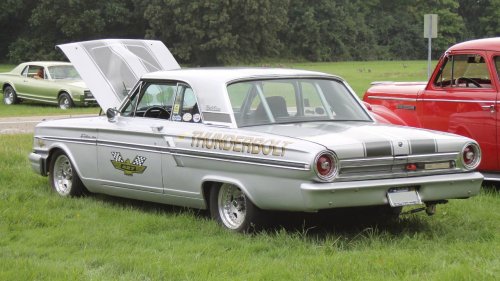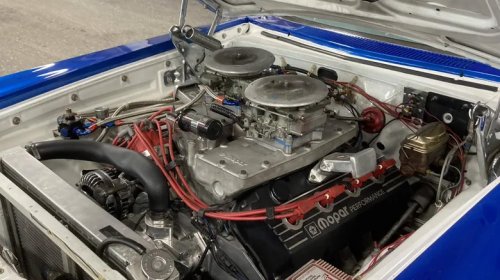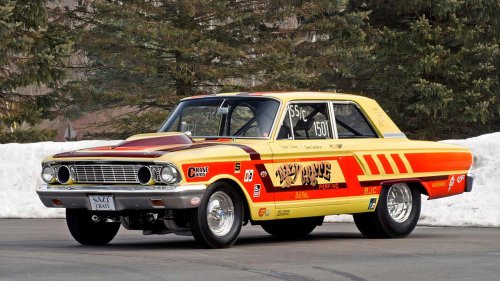
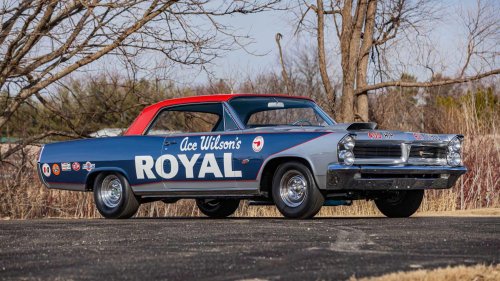
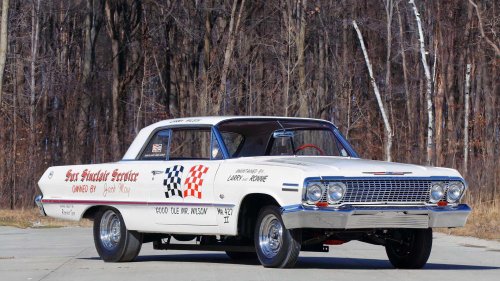
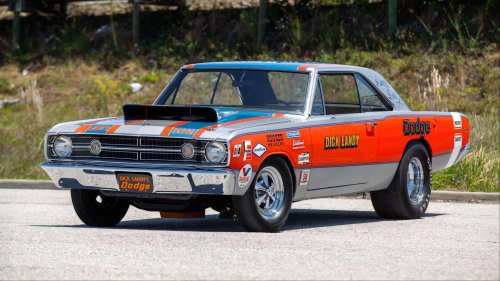
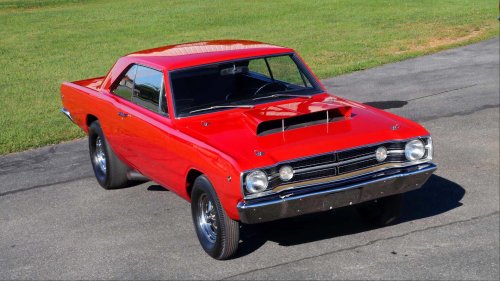
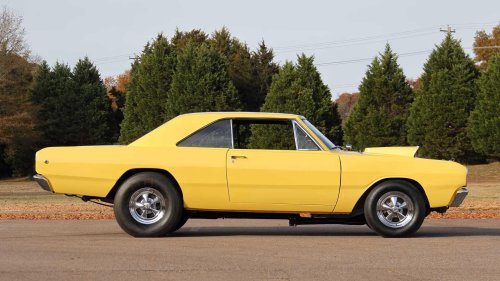
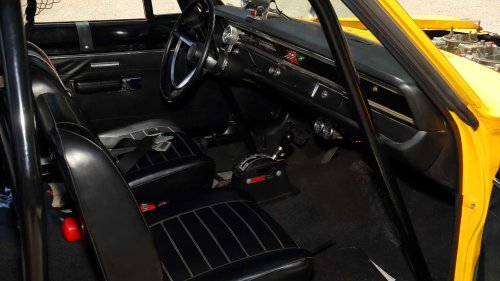
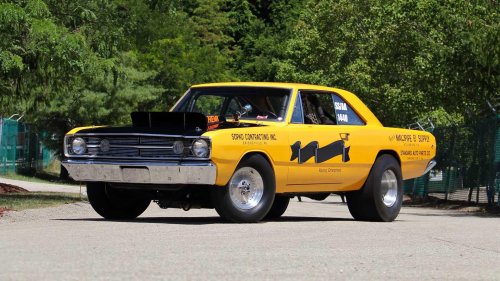
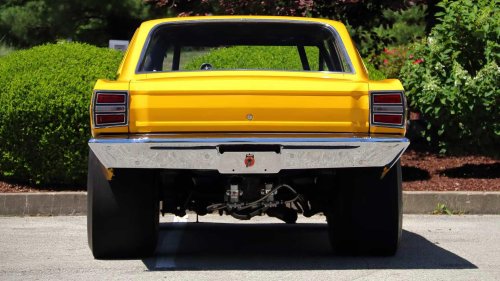
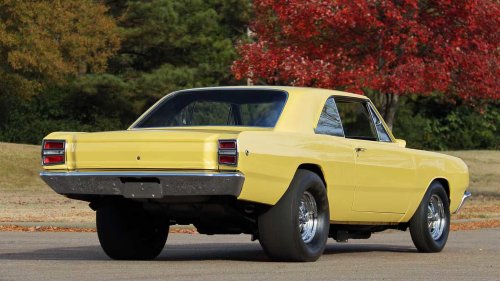
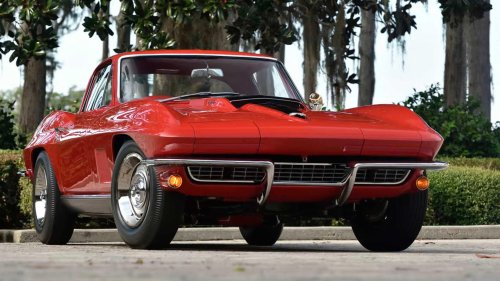
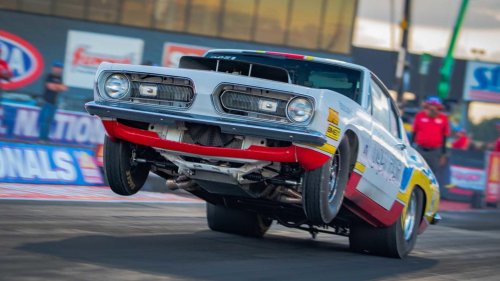
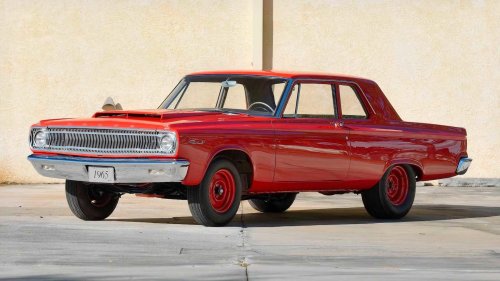
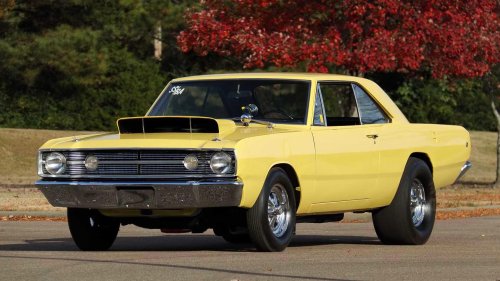


















In the late 1960s, at the height of the horsepower wars in Detroit, when drag strips became the ultimate proving ground, a partnership between two legendary names in the muscle car world quietly created something outrageous. A proper factory 10-second car, this muscle car's quarter-mile passes were so impressive that many modern supercars would struggle to beat it. It wasn't necessarily the most powerful car of the era on paper, either, but its extremely lightweight body allowed it to leave most of its drag strip rivals in the rearview. The best part? Anyone could technically walk into a dealership and buy one. Only 80 examples were ever made, and most people today aren't even aware they exist. Why Power-To-Weight Ratios Ruled The Muscle Car Era Mecum By the mid-'60s, NHRA and drag racing had already been a thing for over a decade. The Big Three smelled blood—and sales—so they started selling purpose-built drag cars to buyers and race teams. The strategy was "Win on Sunday, sell on Monday," and the success of the race cars they built was crucial for moving more muscle cars off the lots, constantly feeding the rivalry. Everyone wanted to have the absolute fastest car on the track, but early hot-rodders already showed that raw power alone wasn’t enough to win. So, in an effort to dominate the Super Stock division, factories turned to serious weight-saving tricks: acid-dipping bodies, bolting on fiberglass panels, gutting interiors, and replacing windows.Via Mecum Auctions Pontiac famously punched 120 holes in the frame rails of its 1963 Catalina Super Duty "Swiss Cheese" cars. Ford equipped the lightweight Fairlane Thunderbolt with a 427 High-Riser V8, Chevrolet unleashed the ultra-rare Z11 Impala, and Mopar rolled out the A990 Super Stock package on Dodge Coronets and Plymouth Belvederes. These cars were wild, purpose-built drag weapons that were still technically factory cars. Most competed in Super Stock, though as the factory mods became wilder, NHRA was forced to expand the Factory Experimental (FX) classes that eventually evolved into funny cars.Among the top dogs, eleven-second quarter-mile runs became the new norm, and the best part? Buyers could order most of them straight from the dealer. Fast-forward about 60 years, and these rare factory lightweights are now some of the most coveted classics in any serious collector’s garage.MecumHowever, one brand in particular pushed the idea to the absolute extreme in the late '60s, building and selling a street-legal factory muscle car that combined featherlight weight with massive power. It was not only one of the lightest officially sold muscle cars of the era, but it's now widely considered to be the fastest muscle car of the '60s over the quarter-mile, period. The 1968 Dodge Dart LO23 Was Never Supposed To Exist MecumThe story of the Dodge Dart LO23 starts with the 426 Hemi V8 under its hood. Facing rising competition from Ford and Chevy, Chrysler created the Hemi 426 in 1964 strictly as a racing engine. Inspired by the FirePower V8 with hemispherical chambers that put Chrysler at the top of the horsepower food chain in the late '50s, the new 426 Hemi carried a 425-horsepower/490-pound-feet rating (which was comically underrated, by the way). It became so dominant in NASCAR that competitors (including Ford) protested against it, arguing it was a full-blown race engine. In response, NASCAR banned it until Chrysler homologated the Hemi for street use.MecumIt turns out Ford played itself, as Chrysler now offered the same engine the Blue Oval complained about as a factory option for every mid-size Mopar model on the streets. The Dodge Dart did not make that cut.Back then, Chrysler's corporate policy didn't allow Dodge to offer their top-dog engine in budget compacts, which unfortunately included the Dart. However, Dodge really wanted to sell a Hemi Dart, and where there's a will, there's a way. They soon found a loophole that changed everything. How The Dart LO23 Became A 3,000-LB Factory Super Stock Monster Mecum Dodge realized they could have someone else put the Hemi into a Dart instead. In 1968, the brand partnered with Hurst Performance and had them do the final assembly of the special Dart, which included dropping in a 426 Hemi.These Darts started life as partially assembled 383 GTS Dart hardtops built on the regular Dodge Hamtramck assembly line. However, Dodge shipped the bodies without the engines, transmissions, and exhausts straight to Madison Heights, Michigan, where Hurst Performance installed the mighty race-spec 426 Hemi.Mecum But Hurst didn't stop there. The guys at Michigan also had the Dart's steel doors dipped in acid, replaced the front fenders with fiberglass units, and swapped in ultra-thin .08-inch Corning glass for the windows. The cabin was not spared either; everything from the rear seats to the radio and even the carpet and heating was thrown out, and the front seats were replaced with special lightweight versions. The result was a (mostly) factory-looking Dart with a massive hood scoop and a curb weight of just about 3,020 lbs. They shipped it back to Dodge with only the primer. The '60s Power-To-Weight King Mecum Carrying the code "LO23," these Hemi Darts were the lightest cars Dodge ever put a Hemi in, and if you take the Hemi's 425-horsepower rating at face value, they featured a power-to-weight ratio of about 7.1 lb/hp. In the real world, the Hemi is commonly considered to produce at least 500 horsepower. This output would bring this number down to an incredible 6.1 lb/hp, which is what NHRA rated the LO23 at when they classified them under the SS/B and SS/BA classes.Mecum They were considered fully street-legal cars, too, with mirrors, turn signals, and bumpers all factory-installed. Buyers could also pick them up straight from Dodge dealers. If you did that, the MSRP was a steep $5,146 plus destination. Since that was more expensive than a base Corvette that year ($4,663), you could also save a few bucks by picking your Hemi Dart up straight from Hurst for $4,295.Transmission options included a four-speed manual with a heavy-duty 10.5-inch clutch and a TorqueFlite automatic. Dodge went as far as putting a disclaimer on the invoice saying that the vehicle was "not manufactured for use on public streets." But adding a disclaimer like that on a street-legal 426 Hemi muscle car is like telling your kid "No more video games" before you go to bed early. Still, not many people got their hands on them, with only 80 being made. How The '68 Dodge Dart LO23 Stacked Up To The Meanest '60s Muscle Cars MecumTo put the LO23's 3020-lb weight into some perspective, it means the Hemi Dart was lighter than a Ford Fairlane Thunderbolt (3,203 lbs) and a 1963 Chevrolet Impala Z11 (roughly 3,400 lbs). Even the famously light 1963 Pontiac Catalina "Swiss Cheese" Super Duty was heavier, tipping the scales at over 3,300 lbs. Other extremely powerful factory muscle cars were also much heavier than the LO23 Dart. For example, the special 430-horsepower Corvette with the race-spec L88 V8 tipped the scales at 3,200 lbs, while the 430-horsepower 1959 Camaro ZL1 weighed roughly 3,300 lbs.Via: Mecum AuctionsIf you're wondering what this power-to-weight ratio meant for the Dart LO23's 1/4 mile times, the answer is repeated mid-10-second runs. In fact, the fastest recorded time for an LO23 was 10.33 seconds (Dodge Garage). That's two-tenths quicker than a brand-new 670-horsepower Corvette C8 Z06.When it comes to other Big Three brands, the LO23's closest match was the '63 Chevy Impala Z11, which was Chevy's fastest factory muscle car of the decade, famously running a quarter-mile in as little as 10.8 seconds. The Ford Thunderbolt also came pretty close, with an 11.61 quarter-mile record, while the Corvette L88 fell in the 11-second range, and the Swiss Cheese Pontiac Catalina usually clocked high-11-second runs in period tests. Mind you, these cars all packed a lot more power than they advertised, but so did the Dart, which still put it ahead of the competition when pointed down the 1,320-foot straight. The Barracuda Got Its Own Hemi In 1968 Dodge The Dart wasn't the only lightweight Mopar to get a Hemi treatment thanks to Hurst that year. Bearing the internal code B029, the 1968 Hemi Barracuda was slightly rarer at just 72 units produced, but it actually recorded even quicker quarter-mile times than the Hemi Dart. In its best run, the Barracuda covered the distance in 10.22 seconds, but it wasn't necessarily any lighter. At best, the two Mopars evened out on the scale.Now, some enthusiasts may be crying foul since the LO23 wasn't really a factory muscle car assembled and marketed fully by Dodge. Fair enough. But there was another overpowered lightweight before the Dart got its Hemi in 1968, and that one did check every "factory muscle car box." 1965 A990 Super Stock Mopars Came First Mecum Way before the Dart and Barracuda got their own Hemis, a pair of featherlight Mopars were already destroying the competition in Super Stock. The 1965 Dodge Coronet A990 and Plymouth Belvedere A990 were factory-built drag weapons engineered from the ground up to maximize NHRA success, including a 426 Hemi under the hood. In fact, the A990 Belvedere "Hurst Tornado IV" is widely regarded as one of the first true factory cars to clock a 10-second quarter-mile time.Both the Belvedere and the Coronet shared the exact same A990 lightweight package: acid-dipped body panels for thinner steel, ultra-light Corning glass, aluminum hinges, stripped interiors, van-style bucket seats on drilled frames, and a host of other weight-saving tricks. They weighed in at roughly 3,200 lbs race-ready – dramatically lighter than a standard mid-size Belvedere or Coronet.Only about 101 examples were built for each brand (roughly 202 total) to meet homologation rules. With a power-to-weight ratio of around 7.5 lb/hp, they set the benchmark that the later compact Hemi Dart and Barracuda would take even further. How Much A 1968 Dodge Dart LO23 Is Worth Today MecumYou'd think that a Hemi 426 packing muscle car produced in just 80 units would be a seven-figure car in 2026, and many Hemi Mopars are. However, rules are a bit different for factory race cars such as the LO23. First, almost all of them have been heavily raced, with the names of the drivers and sponsors still plastered over the bodywork. Second, all LO23s come bearing the "999" paint code, indicating primer, so there's no way to check how many times it has been repainted, either. Most buyers looking to splurge that kind of money on a muscle car look for something clean and in pristine condition. We haven't found any LO23s that haven't been raced, and the likelihood of any such examples existing is low.Based on LO23s auctioned off in the last five years, values average out at around $150k, varying wildly depending on history and condition. The cleanest and most expensive Dart LO23 we could find is this yellow example that fetched $302,000 at a 2022 Mecum auction with just 3,799 miles on the clock. Meanwhile, easily the most famous LO23 Darts out there are the two examples that were owned and raced by Dick Landy in California – one an automatic and one a 4-speed manual. The 4-speed version recorded a 10.46-second 1/4 mile pass at 131.19 mph in 1968. It went under the hammer for $220,000 in 2019 (pictured above).The Dart's Plymouth Barracuda B029 sibling is worth about the same, despite the difference in rarity. Lower-end models fetch around $100k. The most expensive one we found was an example owned by legendary driver Ronnie Cox, which sold for a whopping $258,000.Sources: Dodge, DodgeGarage, Classic.com, Mecum, Hemmings, Ford Racing, Silodrome.