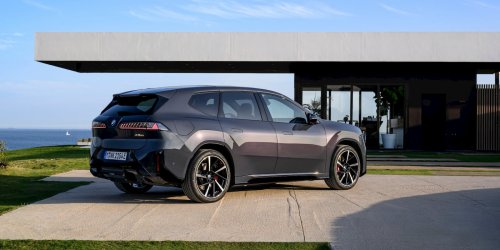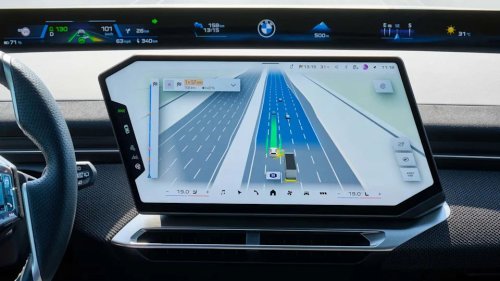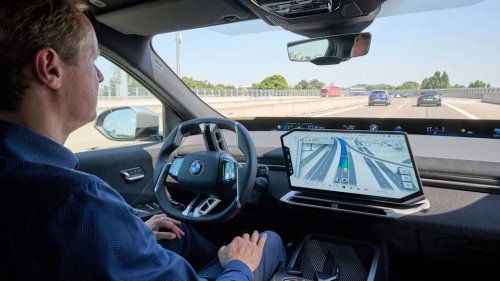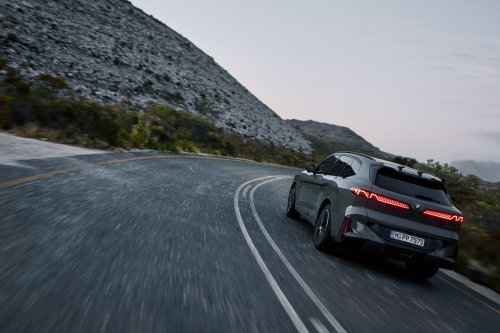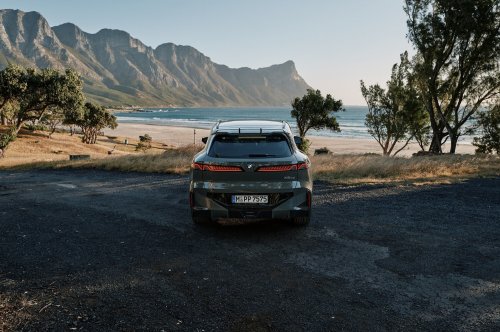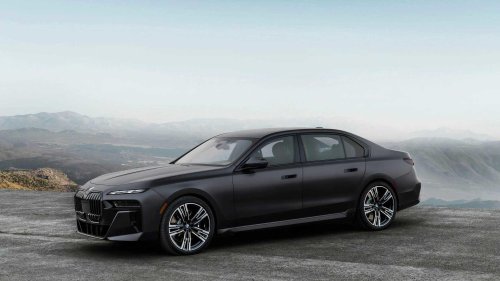
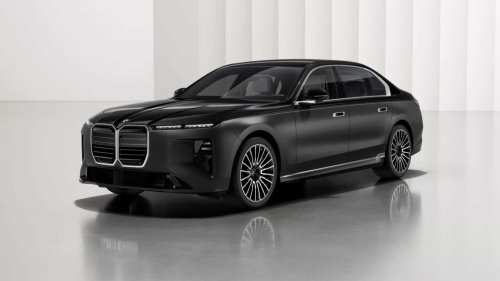
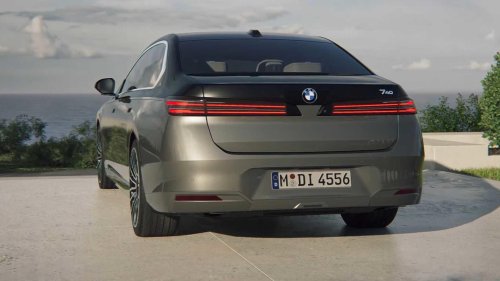
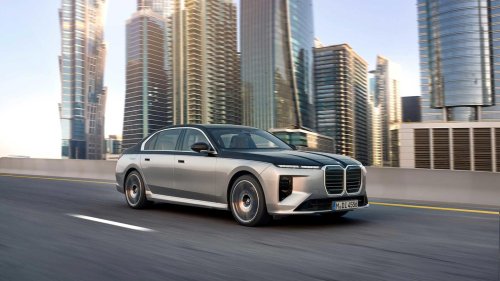
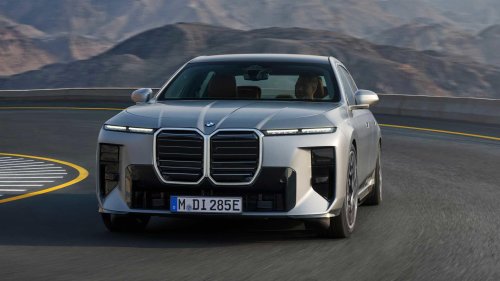



















Jump LinksLuxury manufacturers often seem to be falling over themselves to create a new marketing gimmick, as they strive to make their vehicles stand out in a highly competitive segment. In this rarefied world, a certain flourish of flagship excess can sometimes persuade a hesitant buyer to act, and some companies like BMW are now using paint as their own particular luxury flex.Buyers who opt for the new 2027 BMW 7 Series can choose an individual Dual-Finish paint option that combines matte paint on the lower body with metallic paint on the upper body, separated by a hand-drawn coach line. BMW says that this process takes more than 75 hours in the paint shop, involving more than 20 specially trained employees, and the scheme is certainly one of the most elaborate factory finishes that the company has ever offered. But as dramatic as this finish may sound, it does come with a caveat, and prospective buyers need to read the fine print carefully. The 7 Series Has Always Been BMW's Place For Big Ideas BMWBMW first introduced the 7 Series in 1977 as its latest large sedan offering. It had a heady combination of luxury and technology and was meant to portray the dynamic character that people had come to expect from the storied German brand. Since then, BMW has treated the 7 Series as a kind of test chamber for some of its more progressive ideas.For example, it first introduced vehicle navigation in Europe in 1994 aboard the 7 Series, and then used the 2001 version to launch iDrive, with its central controller and display. And while iDrive may have been controversial on that 7 Series model, it morphed into the screen-and-controller logic that's now commonplace in premium cars.In 2027, BMW continues to use the 7 Series as a mobile test bed for introducing technologies from its Neue Klasse, with Panoramic iDrive, BMW Operating System X, a standard front passenger screen, and an updated theater screen for rear passengers. Alongside those more technical solutions comes its latest non-digital trick, with a Dual-Finish paint option designed to write the headlines. Dual-Finish Is Special Because It's Difficult BMW BMW is very proud of the bespoke craftsmanship that epitomizes its Dual-Finish process. The matte paint on the lower section is entirely separate from the manually applied metallic finish above it. And even though the two paint types differ significantly in composition, the company insists that you cannot tell them apart, with no noticeable transition point where they meet.BMW spent two and a half years developing the technique and only applies it to the 7 Series at one specific location, the BMW Group plant in Dingolfing. Twenty specially trained employees must hand-tape and sand each car during a 12-step application process, and preparation tasks account for nearly half of the work time. Each Dual-Finish car spends more than 75 hours in the paint shop, about six times as long as for other finishes.Incredibly, independent reports suggest that the option might cost more than $16,000, which is more than the price of many used luxury sedans. But the even crazier part of the storyline involves maintenance. It's really bad to drive this car through a regular automatic car wash.BMW is at pains to point out that owners should use specific soaps, waxes, and polishes to look after their vehicles. And it remains to be seen how well that goes over in the actual marketplace, as the company appears to be asking owners to treat their car's exterior with meticulous care. Matte Paint Turns Cleaning Into A Risk Calculation BMW The challenge for those who might turn to an automatic car wash involves the vehicle's matte paint. Here, the paint’s appearance depends on a controlled surface texture, and its subdued look mostly comes from the way that it scatters light. While gloss paint reflects light from a smooth surface and can often be polished, corrected, or brought back from minor swirl marks, that's definitely not the case with matte paint.These complications mean that if you were to take the vehicle into a conventional automatic car wash, it might not come out the other end in the best shape. Typical wash tunnels are built for speed and repeatability, not the needs of a hand-finished matte and metallic flagship. And while those brushes, harsh cleaners, and generic waxes could be okay for an ordinary daily driver, they’re not likely to work so well on a finish that took more than three days to perfect in BMW's paint shop.The factory finish on one of these 7 Series vehicles depends on how the two different paint characteristics meet across the same body. There's a clean, almost invisible, transition between the matte lower paint and the metallic upper paint when the vehicle first appears in a showroom. Subsequent damage can make a repair much more intimidating, which means that the Dual-Finish option represents more than just a nice color choice. The challenge tends to turn BMW's fancy new paint into more of a long-term commitment. BMW Is Borrowing From Coach-Built Luxury BMW The whole concept of “BMW Individual” seems to point to a world of coach-built luxury, and the Dual-Finish option represents far more than a new shade in the configurator. Here, BMW may hope that its buyers will be drawn into the process, including hand-taping, sanding, manual application, a drawn coach line, and those 75 hours in the shop. The manufacturer may also be signaling where this part of the market is going, in a world where access, rarity, and personalization may become just as important as horsepower or acceleration.BMW will offer a wide range of "Individual" color combinations, with evocative names like Frozen Space Silver Metallic with Frozen Tanzanite Blue III Metallic. But the company may also be adding accessibility to this special paint story, as US buyers cannot choose these particular paint combinations until the end of 2026. With this delayed-satisfaction approach, BMW may hope that prospective buyers would like its snazzy new paint idea, thereby adding desire, patience, access, and complexity to the overall theatrical production. The Flagship Underneath The Paint Is Still Doing Serious Work BMW While the Dual-Finish paint may be making headlines of its own, the car underneath isn't too shabby either. In fact, BMW says that the 2027 7 Series represents the most extensive model update that it has ever undertaken for this car. Buyers can choose from the combustion-powered 740 and 740 xDrive, or the all-electric i7 50 xDrive or i7 60 xDrive. A plug-in hybrid 750e xDrive is on track for the first quarter of 2027, with the promise of a V8-powered M Performance model, as well.The gas 740 xDrive features BMW's latest modular inline-six with a new turbocharger, delivering 394 hp and 398 lb-ft of torque. You can get to 60 mph in less than five seconds, with an electronically limited top speed of 155 mph. Prices start at $102,800 for the 740 xDrive, which puts the $16,000 paint option into context. If correct, it surely represents a huge premium over an already six-figure sedan.This means that BMW may be banking on a buyer who doesn't view ownership impracticality as a weakness. That type of buyer might believe that their upmarket 7 Series shouldn't look like every other 7 Series. They may not mind using specialist products and washing their vehicle more carefully, since they've chosen this very different version on purpose. The Right Kind Of Absurdity For A 7 Series BMW In a boringly sensible world, a company's flagship would feature normal luxury items like quieter cabins, softer seats, or more efficient powertrains. And the 2027 7 Series covers those themes well, with features like the panoramic iDrive operating system, advanced Level 2+ drive assistance, and plug-in hybrid variants. But the Dual-Finish paint option falls outside that logic altogether by starting to tell a story of presence.You could argue that the paint is visually distinctive, exclusive, and expensive enough to stand out on a car that's already north of $100,000 in value. But the part of the story that makes the paint more fragile in conventional daily use may also fit with the 7 Series’ positioning as BMW’s test bed.The company has always blurred the line between leadership and overcomplication when designing and producing its 7 Series vehicles, and not all its ideas survive past the experimental stage. So, whether the Dual-Finish paint idea ends up on the automotive cutting room floor or not, the feature gives us a glimpse of how BMW tries to push factory personalization into a more theatrical space.Sources: BMW