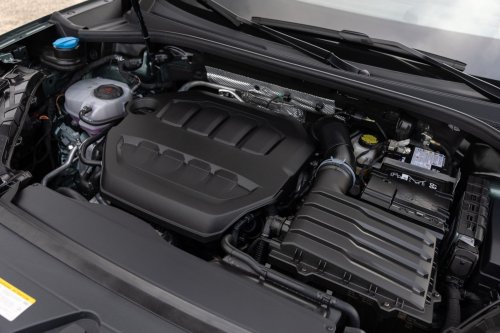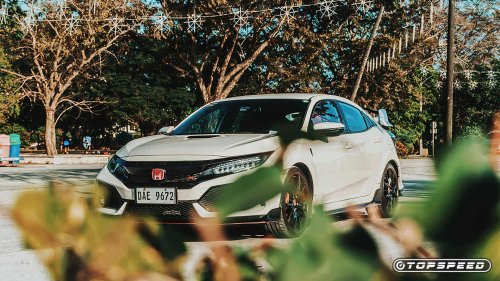
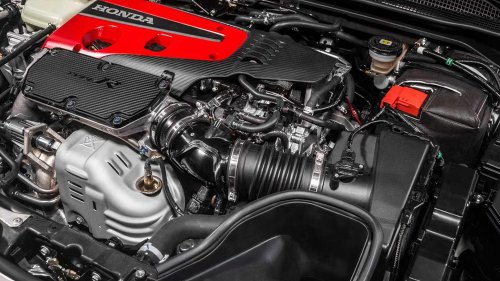

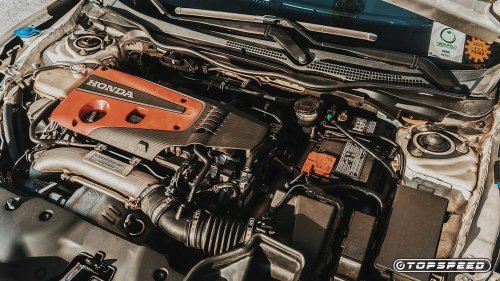
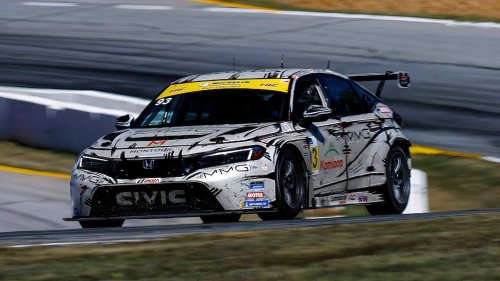
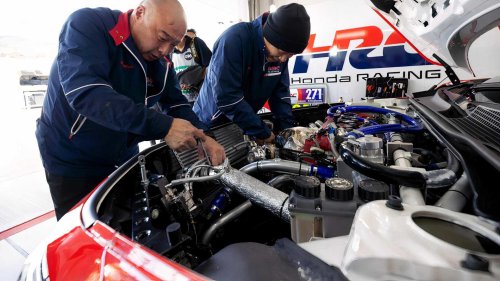
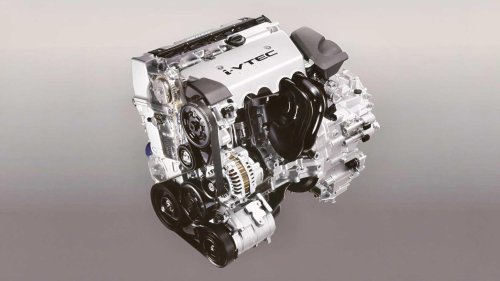

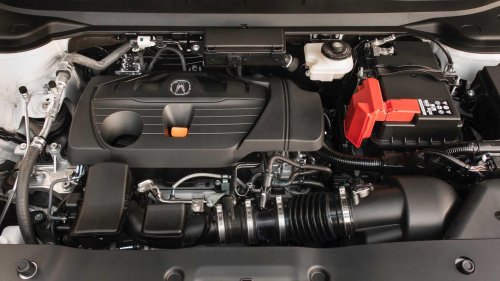






















The Honda K series engine is arguably the most renowned drivetrain in the Japanese automotive community, and for good reason. Honda's compact four-cylinder engine has consistently managed to balance performance, reliability, and efficiency, making it a popular option among many enthusiasts, especially those in the tuning world. Beyond its street appeal, Honda prioritizes this engine for multiple applications across its ICE and HEV lines.Most brands have committed to phasing the ICE out in favor of electrification, but Honda remains committed to its gasoline-driven powertrains, with the K-Series being the star of its future strategy. It's a well-rounded and balanced configuration that the Japanese brand has built with longevity in mind, which is why it's still going strong after almost 25 years. How The K-Series Came To Be HondaHonda created the first-generation K series engine in 2001 as an official replacement for the aging but highly successful B and H series families in a bid to meet tighter emissions rules while increasing thermal efficiency and real-world flexibility. Honda engineers focused on a clean sheet aluminum block with a deep skirt layout that increased rigidity and supported higher operating speeds without unwanted vibration. They also applied a forged crankshaft and lightweight pistons to cut reciprocating mass and improve throttle response.Replacing the old belt-driven system is a modern chain-driven dual overhead camshaft setup that allows for a more accurate timing control under high load conditions. The advanced i-VTEC system is the cornerstone of the K-Series, blending variable valve timing, with variable lift control, and variable cam phasing. This system gives the engine a wide torque spread at low and mid-RPM and allows strong breathing at higher RPM without the sharp changeover, compared to how the older VTEC systems operate.Honda Honda also rotated the engine orientation compared to the B series family, allowing the configuration to pack the intake and exhaust layout more efficiently. This results in improved airflow and easier service access. The engineers designed a tall intake plenum with long runners that improved cylinder filling during everyday driving, and paired it with a free-flowing exhaust manifold that supported consistent scavenging.The K series also introduced coil-on-plug ignition and a modern electronic throttle, helping the engine management system fine-tune spark and airflow for better drivability and fuel control. Honda debuted the first K-Series K20A in the JDM-exclusive 2001 Honda Stream. This was an ideal compact platform to showcase the new engine architecture before rolling it out to performance models like the Integra Type R and mainstream options like the Civic and Accord. Edmunds consumer reviews of these models consistently award K-Series-powered models with high ratings for maintenance and reliability. Setting A New Standard With The K20C Honda The K20C is Honda's current-generation of the K-Series range, upgraded to deliver strong real-world efficiency and long-term reliability across the Honda and Acura catalogs. It's also a redesign that meets stricter global emissions rules and tighter thermal demands that come with modern turbocharging.Key design elements include a reinforced aluminum block that features a closed deck layout, improving cylinder stability under higher combustion pressure, and keeps distortion under control during long and high load cycles. The system also adopts a low-friction rotating assembly with coated pistons and well-balanced rods that reduce heat buildup and wear. The direct injection system used precise multi-hole injectors that improved atomization and allowed cleaner combustion, raising efficiency, and reducing soot formation inside the chambers.Honda The engineers shape the cylinder head ports through extensive fluid modeling, creating fast and consistent airflow at lower boost pressures. The turbo layout is also intentional, consisting of a compact low-inertia unit that produces quick spooling without heavy thermal strain. The cooling circuit routes coolant through critical areas to stabilize temperature during demanding driving. Honda uses a high-flow intercooling unit to keep intake temperatures low, improve knock resistance, and protect the engine during long climbs or sustained highway use.The K20C design also incorporates integrated exhaust passages within the head, shortening the distance from the valves to the turbine and reducing unnecessary heat loss. This improves turbo response and emissions control. Honda tunes the valve timing system to prioritize mid-range torque and real-world drivability, instead of chasing peak numbers. In doing so, the powertrain benefits from reduced stress on internal components. The company validates the design through endurance testing that included extended full load sessions and wide temperature swings. Honda and Acura models that use the K20C benefit from predictable behavior, low maintenance demands, and consistent efficiency because the engine handles high-pressure turbo operation without unusual wear, and it keeps its performance stable over long ownership cycles. Proven Potential On Track Honda Honda pushed the first-generation K series engine into manufacturer-backed racing as soon as it proved its durability on the road. The Japanese company's racing division applied the unit as a core part of its return to high-level touring car competition. The engineers developed racing versions of the K20 that kept the production block and head architecture but used reinforced internals, stronger valve springs, revised cam profiles, and higher flow intake and exhaust systems to withstand extended high RPM use.Honda built these engines for series such as the Japanese Super Taikyu Championship, the British Touring Car Championship, and various regional touring car categories where regulations encouraged production-based units. The K20-powered Civic race cars delivered strong pace because the engine breathed well at sustained RPM and held peak output without overheating or losing consistency during long stints.Honda Teams appreciated the stable thermal behavior because Honda used a rigid block design and efficient water and oil channels that kept temperatures predictable under heavy load. Drivers reported sharp throttle response, which helped them control rotation mid-corner and fire out of slow bends with confidence. The wide operating range that came from the advanced i-VTEC system let engineers tailor cam timing for specific tracks, which improved flexibility during setup and reduced the need for constant gear changes.The engine also proved extremely reliable during endurance events where many rivals needed mid-season rebuilds, while K-series units often completed full campaigns with only scheduled maintenance. Honda leveraged this record to promote the K series as a modern performance base, and the company used racing feedback to refine production variants for later models. The engine delivered a strong mix of durability, rev capability, and tuning headroom, establishing it as a respected package in manufacturer-supported racing programs, and independent teams quickly adopted it for club-level and regional championships. Why The K-Series Is Here To Stay Guillaume Fournier | TopSpeed Honda continues to use the K series engine family because the architecture supports modern efficiency targets, strong durability expectations, and flexible integration with hybrid systems, which gives the company a stable foundation for future models across global segments. Honda engineers designed the K layout with a rigid aluminum block, efficient cooling circuits, and low-friction internals, which gives them room to meet tougher emissions rules without redesigning the core structure.The engine handles high compression ratios, turbocharging, and extended thermal loads with consistent reliability, which helps Honda control warranty exposure and maintain brand trust. The K platform also scales well because Honda can adjust bore and stroke dimensions of intake and exhaust routing, and combustion chamber design to match everything from compact cars to performance-oriented Acura models without creating incompatible parts.AcuraHonda doesn't currently apply its K Series engine to its hybrid portfolio, but this is a factor that can easily change as the brand takes a more aggressive approach to hybridization. Although unconfirmed, it has already expressed a desire to electrify the likes of future Civic Type R and Integra Type S models. The engine supports efficient Atkinson cycle tuning for hybrid configurations, which boosts fuel economy without harming long-term durability. Honda also values the deep supply chain that supports K series production because it reduces cost and improves manufacturing consistency across multiple regions.The engine responds well to continuous improvement, so Honda updates injectors, turbo hardware, valve timing control, and cooling strategies without major structural changes. This approach helps Honda limit development time while raising efficiency and performance for each new generation. Engineers also appreciate the serviceability of the layout because it simplifies maintenance for dealers and . Ultimately, the L-Series will be the cornerstone of its future strategies, as it has proven to be a better fit for both hybridization and turbocharging, but the K range's impressive performance abilities, resilience, and market appeal makes it too good an engine for the brand to just ignore.