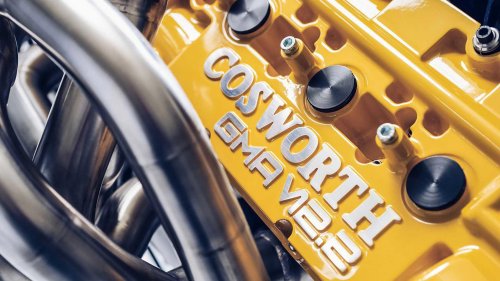
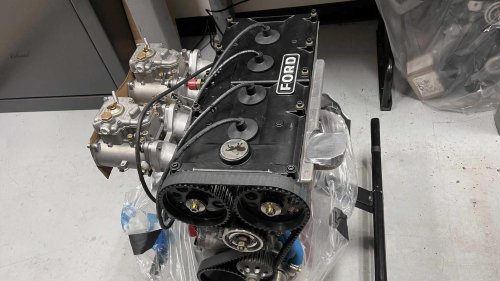
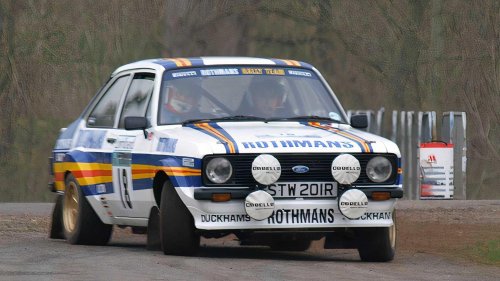
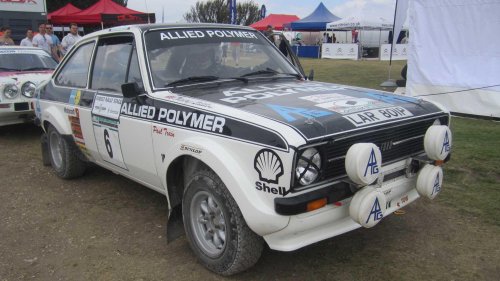
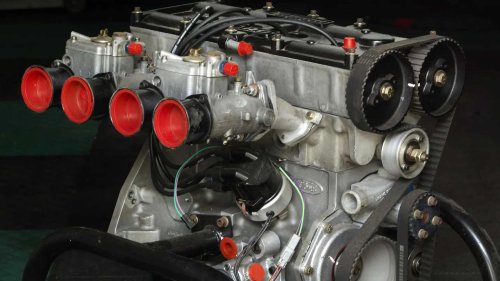

















Before the sound fully registers, you feel it – a high-frequency vibration in the air, growing rapidly into a raw, mechanical scream that seems to tear at the very fabric of the atmosphere. It is the unmistakable sound of a Ford Escort rally car at full chat, powered by the legendary Cosworth BDA engine. For decades, this four-cylinder engine has captivated motorsport fans, revered not just for its success but for its intense, aggressive character. It is often described simply as "angry." But how does a collection of precisely machined metal components earn such an emotional label?Gordon Murray AutomotiveThe story of the BDA, born in the late 1960s from a partnership between Ford and Cosworth Engineering, is one of focused intent and groundbreaking design. It was created not merely as an engine, but as a weapon, designed to propel Ford's nimble Escort to victory on the world's rally stages and race circuits. Its impact was immediate, rewriting performance benchmarks and etching its name into motorsport history. Cosworth, Ford, And The Birth Of The BDA Motorsports Market The BDA engine could not have existed without the fertile ground created by the collaboration between Ford Motor Company and Cosworth Engineering. Founded in 1958 by ex-Lotus engineers Mike Costin and Keith Duckworth, Cosworth quickly became synonymous with racing engine innovation. Ford, seeking motorsport glory to enhance its brand image, provided vital funding, enabling Cosworth to develop landmark engines, including the dominant DFV Formula 1 V8. A Need For Speed Darren Tee/Flickr By the late 1960s, Ford required a new, high-performance engine for its recently launched Escort platform. The goal was clear: create a powerplant for Group 2 and Group 4 competition (categories encompassing touring cars and modified sports cars) that would outperform the aging Lotus-Ford Twin Cam used in the previous Cortina and Escort models. Ford aimed for class dominance in rallying and circuit racing. With Duckworth heavily involved in the F1 engine program, the design responsibility for this new four-cylinder fell to Cosworth engineer Mike Hall. BDA: Belt Drive, Type A Hall and his team did not start from a blank sheet. They drew heavily on the principles of Cosworth’s highly successful FVA (Four Valve Type A) 1.6-liter Formula 2 engine. The FVA had pioneered the use of four valves per cylinder with narrow included valve angles (40 degrees in the BDA's case) and a pent-roof combustion chamber, which were core tenets of Duckworth's philosophy for achieving high efficiency and power. The BDA adopted this advanced 16-valve, dual overhead camshaft (DOHC) cylinder head design.However, unlike the bespoke FVA, the BDA utilized the common Ford Kent cast-iron cylinder block (initially 116E, later 711M) as its foundation. This decision, driven by homologation requirements and cost-effectiveness, provided a robust base but ultimately limited potential bore sizes compared to a custom block. A key innovation, differentiating the BDA from the gear-driven FVA and most contemporary British engines, was its use of a toothed belt to drive the camshafts. This simpler, lighter design gave the engine its name: Belt Drive, A type.Cars Down Under/Flickr Designed For Victory The BDA was conceived with motorsport victory as its sole purpose. Its initial displacement of 1601 cubic centimeters was strategically chosen to place it just above the 1600cc class limit, making BDA-powered cars eligible for overall wins in competition, not just class victories. This also provided room for future displacement increases up to the common 2.0-liter limit used in many racing formulas. The first car to receive this engine was the Ford Escort RS1600, launched in 1970 as a homologation special – a road car built in sufficient numbers to make the engine legal for competition. The BDA was never intended for smooth commuting; its purpose was competitive domination from day one. Inside The BDA Engine Family The BDA established a performance blueprint: DOHC, 16 valves, pent-roof chambers, and initially, a Kent iron block foundation. Recognizing the demands of racing, dry sump lubrication systems were common to ensure oil delivery during high G-forces and reduce power loss. The "Meccano Set" Evolves Cosworth's engineers designed the BD series with remarkable adaptability, leading to numerous variants. This modularity allowed continuous development throughout the 1970s and beyond. Key variants illustrate this evolution:The information provided below on displacement is primarily in cubic centimeters or CC. 1,000 CC is equal to 1.0 L.BDA (1969): The original 1601cc engine for the Escort RS1600 road car, producing around 120 horsepower with twin Weber or Dellorto carburetors. BDB (1970): A 1700cc version for rally Escorts, boosting power significantly to around 200 horsepower, sold mainly as kits. BDC (1970): Evolved from the BDB, retaining 1700cc but adding Kugelfischer mechanical fuel injection, pushing output towards 230 horsepower for Group 2 rally cars. BDD (1971): The definitive 1600cc Formula Atlantic engine, highly tuned to produce 200 to 225+ horsepower, achieving impressive specific outputs around 125 horsepower per liter. BDE/BDF (1972): Larger displacement versions for 2.0-liter Formula 2 rules. The BDE (1790cc, ~245 hp) and BDF (1927cc, ~270 hp) required specialized techniques like brazed liners in the iron block to achieve the size. Powered Mike Hailwood's 1972 F2 championship winner. BDG (1973): The ultimate naturally aspirated variant. Reaching 1975cc (nearly 2.0 liters), often using a bespoke aluminum alloy block developed initially by Brian Hart and later by Cosworth to handle the large bore. Power climbed to 275 to 280 horsepower at engine speeds exceeding 9,000 rpm. This engine powered dominant F2 cars and the legendary Escort RS1800 rally cars, achieving world-class specific outputs near 140 horsepower per liter. Other Variants: Included smaller displacement BDH (1300cc) and BDJ (1100cc) versions, the BDR for Caterhams, the BDP for methanol sprint cars, and eventually the turbocharged BDT and BDT-E (developed by Hart) for Group B rally cars like the RS1700T and RS200, reaching monstrous power levels (500-650+ hp). Engineering for High Revs The BDA's aggressive nature stems from engineering choices focused on high-RPM power: large valves and ports for maximum airflow; aggressive camshaft profiles with significant overlap sacrificing low-speed smoothness for top-end breathing; lightweight forged pistons and robust forged connecting rods and steel crankshafts to withstand high revs; high-flow induction via large twin carburetors or fuel injection; and high-energy ignition systems. These components worked together to create an engine designed to scream. The BDA's Competition Pedigree The BDA family did not just compete; it dominated. Its primary battlefield was rallying, where its high-revving power proved ideal for the lightweight, agile Ford Escort Mk1 and Mk2.Swiftmotoring /Bring a Trailer Rally Royalty: The Escort's Heart BDA-powered Escorts (RS1600 and later the BDG-equipped RS1800) became rallying legends. They conquered notoriously difficult events like Great Britain's RAC Rally multiple times, the demanding Safari Rally, and Finland's 1000 Lakes Rally. The Escort RS1800, typically with around 240-270 horsepower in rally tune, was the definitive Group 4 car of the mid-to-late 1970s. This success delivered Ford the World Rally Championship for Manufacturers title in 1979. That same year, Björn Waldegård secured the first official WRC Driver's title in an RS1800, followed by Ari Vatanen achieving the same feat in 1981 driving for the Rothmans Rally Team. The BDA-powered Escort remained a potent force long after its introduction. Circuit Success: Formula Victories The BDA also excelled on pavement. The BDD variant became the engine to beat in Formula Atlantic racing for many years. In European Formula 2, the BDE, BDF, and particularly the BDG powered numerous competitive cars, securing Mike Hailwood the 1972 championship. Even in sports car racing, BDG engines found homes in chassis like Chevrons. Forged by Competition This extensive competition history directly shaped the BDA's character. The need to win pushed development towards maximizing power and durability at extreme engine speeds. Refinement and driveability were secondary. The engine had to be aggressive, high-strung, and operate at its limits to succeed. Its "angry" nature was a product of its environment. The Sound And Fury The BDA sound is iconic. A lumpy, uneven idle gives way to a hard-edged mechanical noise as revs climb, often accompanied by a deep induction roar from twin Weber or Dellorto carburetors. At high RPM, this transforms into a piercing, high-pitched mechanical shriek or buzz – raw, intense, metallic, and utterly distinctive. It is the sound of a highly stressed machine working at its absolute limit, conveying urgency and power. This raw acoustic signature, amplified in minimally silenced competition cars, is easily interpreted as mechanical fury. High-Revving Heart Power delivery is concentrated high in the rev range. Peak horsepower figures arrive well above 7000 rpm, often exceeding 9000 rpm in race tune (BDG). Torque peaks are similarly high. Below this threshold, typically around 6000-6500 rpm, the engine can feel lethargic. It demands frequent gear changes via its precise, mechanical-feeling gearbox to stay in the narrow powerband where it truly comes alive. It does not offer effortless acceleration; the driver must actively work the engine. Punching Above Its Weight Despite its Ford Kent block origins and relatively small displacement (1.6 to 2.0 liters in its most common naturally aspirated forms), the BDA achieved remarkable specific outputs for its era, reaching up to 140 horsepower per liter in BDG race trim without forced induction. This efficiency demonstrated Cosworth’s mastery of 16-valve DOHC technology. Legacy of the Angry Four: Why It Still Resonates Driving a BDA-powered car is an exercise in engagement. Unassisted steering provides raw feedback. The chassis communicates limits clearly. The engine demands constant attention – keeping the revs high, working the gearbox. The noise and vibration are ever-present. It is an intense, physical, rewarding dialogue between driver and machine, vastly different from the insulated experience of many modern performance cars. This demanding interaction, feeling like one is mastering a potent force rather than simply directing it, is key to its "angry" persona. BDA vs. The World (Briefly) In its prime, the BDA, especially the BDG, competed head-to-head with the best racing four-cylinders globally, such as BMW's M12/7 in Formula 2. Its ability to extract such high performance from a relatively accessible base architecture, pushed to its engineering limits, underscored its highly stressed, high-intensity character. Enduring Influence The BDA proved the viability of the 16-valve DOHC layout for mass-market performance applications, influencing generations of engines that followed. It remains a highly sought-after engine in historic motorsport, its distinctive scream still echoing on rally stages and racetracks today, a testament to its enduring performance and character.The "angry" label fits the Cosworth BDA perfectly. It reflects its motorsport-driven design, its high-strung mechanical nature demanding high revs, its raw and piercing sound, and the intense, engaging driving experience it provides. It represents an era where performance was measured by visceral connection and mechanical limits, not electronic buffers. The BDA was, and remains, a masterpiece of focused, aggressive, analogue engineering – truly one of the most characterful and potent four-cylinder engines ever made.