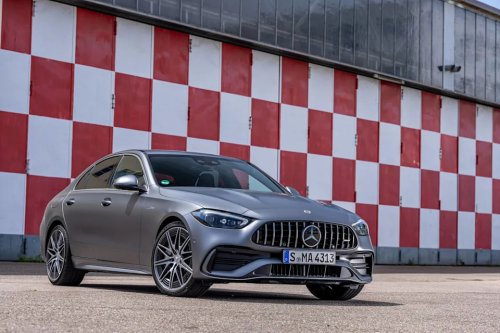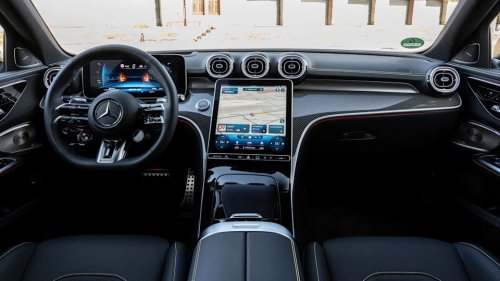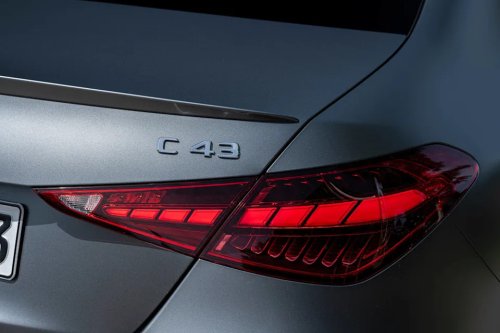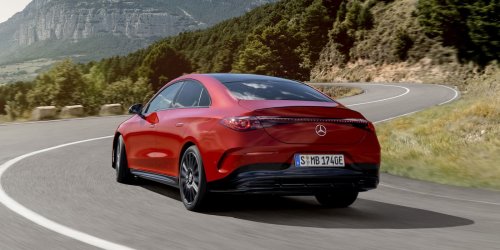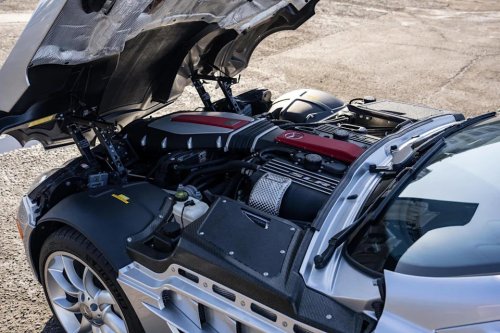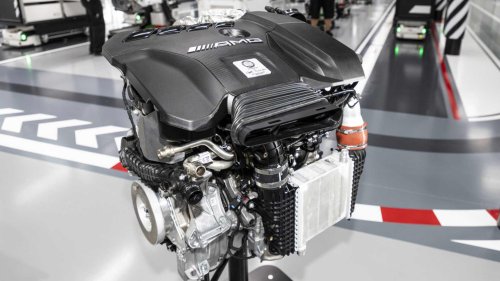
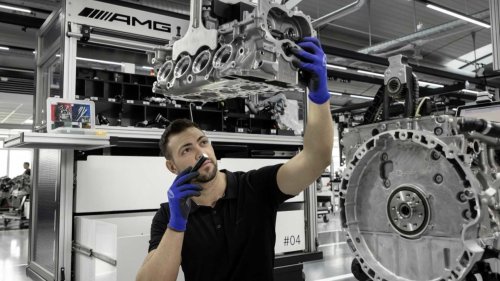
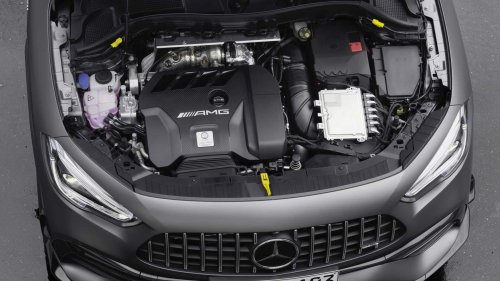
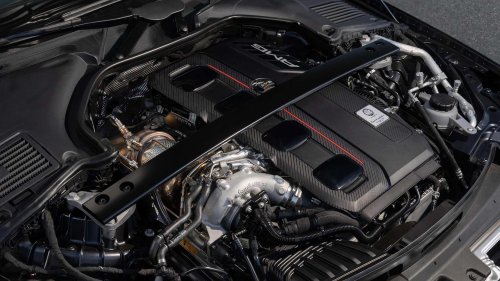
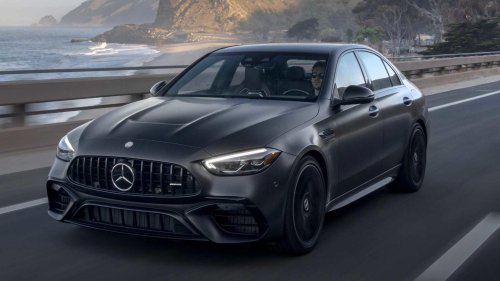
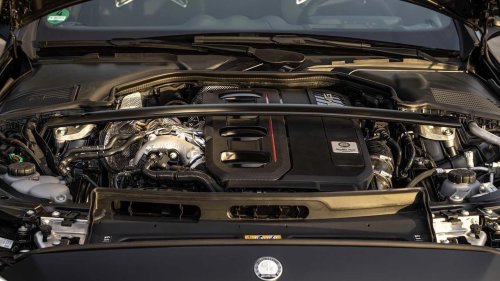
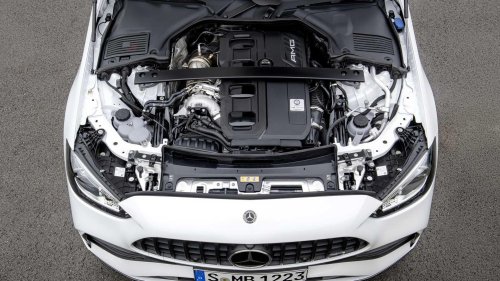
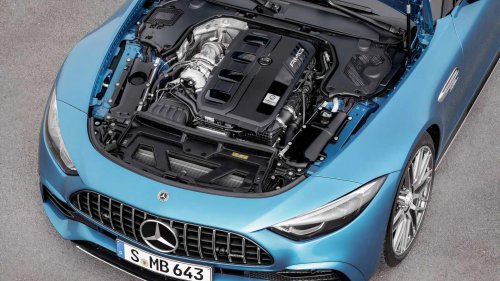
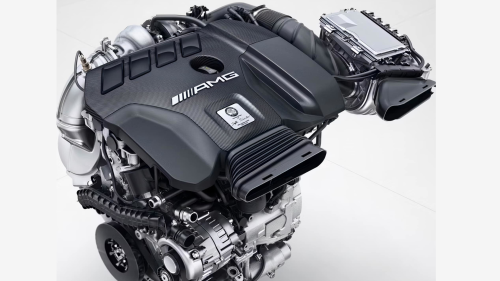



















In the wake of widespread downsizing in the automotive industry, which has led to the discontinuation of some of our favorite engines, we've heard the age-old adage "there's no replacement for displacement" repeated almost ad nauseam. The Mercedes-Benz M139 was one of the engines designed to replace Mercedes-Benz's beloved naturally aspirated AMG V8.However, despite producing more power in models like the Mercedes-AMG C63 than in previous generations, the M139 didn't find favor with Mercedes-AMG's customers, despite being an objectively amazing engine. The Greatest Modern Four-Cylinder Engine Mercedes-BenzMercedes-Benz has produced the world's most power-dense four-cylinder engine for over a decade. That trend started in 2013, when Mercedes introduced the M133 2.0-liter turbocharged inline four-cylinder engine used in the AMG GLA 45, AMG CLA 45, and A45 AMG. It was a revolutionary powerplant, featuring unique engine internals compared to the M270 engine it was based on, and helped redefine performance standards in the compact car segment.The M133 engine remained in service until 2019, and by then Mercedes had introduced a replacement, the M139. Beyond a complete revision of the way and means through which the engine was built, the M139 represented a radical change compared to the M133 engine."We already set the benchmark in the segment with the preceding engine. With the M139, we have once again impressively demonstrated the engine expertise of Mercedes-AMG."Not only is the output per liter unrivaled for a turbocharged engine, the high level of efficiency also demonstrates that the internal combustion engine still has further potential." – Tobias Moers, chairman of Mercedes-AMG GmbH.Mercedes-AMG Few production four-cylinder engines have produced more than 400 hp naturally, including the 4B11T used in the Mitsubishi Lancer Evolution X and the M139 engine that debuted in the A 45 4Matic+ and CLA 45 4Matic+. The latter is based on the M260 engine, which is found in lower-ranking A-Class, C-Class, CLA-Class, and GLE trim levels. However, the M139 employs beefier engine hardware to achieve its lofty output, with an aluminum cylinder head paired with an all-aluminum crankcase.The cylinder head, while based on the M133 cylinder head, features several revisions to accommodate the higher power demand, including the addition of port injection alongside direct injection and variable valve duration. Mercedes also relied on a closed-deck design for the engine's bottom end that not only offered greater rigidity than open-deck designs, but it was also lighter and capable of withstanding higher peak combustion pressure.Mercedes-AMG The M139 also uses forged engine internals, such as a forged steel crankshaft and forged aluminum pistons. Mercedes-AMG also employed its patented Nanoslide technology, which resulted in a mirror-like finish on the cylinder liner that reduced friction.Compared to the M133 engine and the M260, whose predecessor was based on, the M139 engine was rotated 180 degrees on its vertical axis, repositioning the turbocharger and exhaust manifold to the rear of the engine, while the intake system was located at the front. The benefit of rotating the M139, compared to the M133 engine, was that it has shorter pathways and fewer diversions, resulting in greater responsiveness and fewer restrictions.Mercedes-AMG's turbocharger technology also improved considerably between the M133 and the M139, with the latter being the first engine from the German automaker to feature roller bearings on the turbocharger compressor and turbine, reducing mechanical friction and allowing it to respond more quickly and spin up to its maximum speed more quickly.Mercedes-Benz Aside from adding roller bearings to the turbocharger's internals, Mercedes-AMG also improved performance by using an electronically controlled wastegate to precisely control the turbo's charge pressure. The result of Mercedes' efforts to improve the M133 engine's performance was arguably the greatest four-cylinder engine of the modern age, yet it was barely appreciated as much as it deserved. Why is that? Emotion Over Everything Mercedes The problem that the M139 faced was not that it was not a great engine; it was. Its problem was that it didn't inspire the same emotion in Mercedes-AMG's customers as the V6- and V8-powered models that came before it. Typically, we derive emotion from vehicles from the sound that accompanies them, and generally, the sound of a four-cylinder engine doesn't compare to that of a V6 or V8 engine.In models like the Mercedes-AMG C63 S E Performance, despite the fact that it offered a greater level of performance than the most potent C63 trim level from the W205 generation, it lacked the growl and bark we've come to associate with the C63; a performance model inseparable from the idea of a V8 engine at its core.Mercedes-Benz In the case of the C43, its V6 engine – which powered it during the W205 generation – offered a seemingly more pleasant soundtrack than the potent four-cylinder. An engine's soundtrack is integral to the emotions it inspires in the driver behind the wheel, and for many cars, the sound of the engine has been their most defining feature. Think Lexus LFA, Lamborghini Aventador SVJ, and BMW E92 M3.While its sound – compared to the V8 engines we love – was the biggest and most common criticism of the M139, to an extent, it also failed to find favor with AMG's enthusiasts because of the models it was used in, sometimes failing to impress because of the ineptitude of other components in the powertrain. Our Experiences Mercedes-Benz As of the time of writing, we've reviewed nearly every model in which Mercedes-AMG – and Lotus – have employed the M139 engine. In some applications, we've favored the M139 engine, such as in the Mercedes-AMG GLA 45, where the bark and bite of the turbo four-pot were welcomed, while elsewhere in the range, the opposite was true. When we drove the Mercedes-AMG C43 in 2023, the M139 engine was a responsive and eager power unit, culminating in a thrilling driving experience when the transmission wasn't left to its own devices. Still, while we conservatively sang its praises, ultimately, the Mercedes-AMG C43 lagged behind its closest competitors.Then there was the Mercedes-AMG SL 43. When we reviewed it, the M139 engine was an unwelcome sight. This was not because of any fault of the M139 engine, but rather because Mercedes-AMG had shoehorned a four-cylinder into a sports car we expected more from, given that the SL-Class was originally built to bring the thrill of racing to the public, and the SL 43 we got instead left us wanting more.Mercedes-AMG As for the most potent application of the M139, found in the Mercedes-AMG C63 S E Performance, despite offering a level of performance that made our testers feel ill, we still had to mention the lack of a soundtrack to match it. However, we'd like to point out that, beyond its sound, the animosity toward the M139 engine is partly a result of its application, with its use in the Mercedes-AMG C63 being a poignant example of the engine receiving criticism simply for replacing the much-beloved V8.CarBuzz Managing Editor Roger Biermann has plenty of experience in the driver's seat when it comes to speaking about different engines. "I've driven AMG's M139 engine in a range of applications," he said, "from the CLA 45 and SL 43 to the plug-in hybrid C63. The engine itself is good, really good. It's got loads of punch and delivers punchy performance that rectified the poor performance of its M133 predecessor. It's been much maligned, but in my experience, the hate aimed at the ferocious four-pot has been misdirected."The engine itself was never a problem, and in the CLA 45 and even AMG C43, it was superb. The problem is Mercedes tried to use it in everything, even when it didn't belong." – Roger Biermann, CarBuzz managing editor"Models like the C63 and a ground-up AMG SL need more than four-cylinders. Engineers could proclaim technical perfection all they liked, but the disdain for the M139 proves that hero cars need hero engines, and a four-cylinder won't suffice for a brand built on V8 fury." What's Next For AMG? Mercedes-Benz Mercedes-AMG was acutely aware of what its customers and fans thought of the M139 engine, particularly in popular models like the C63. Since Mercedes-AMG introduced a four-cylinder in place of the V8 we'd expect, the German automaker has reported that it's sold fewer examples of the W206-generation C63 than the W250-generation C63.Beyond that, the constant pressure from fans and customers has led Mercedes-AMG to replace the M139 four-cylinder engine with larger engines. The GLC 43 will be replaced by the GLC 53, which is powered by an inline six-cylinder engine, with the C43 reportedly receiving the same treatment later this year."We’ve seen that this engine in the CLE and the E-Class really excites our fans. For the new models, we’ve made the engine even more responsive and also increased the range between the individual driving modes – in other words, more comfort on the one hand, more emotional appeal on the other" – Michael Schiebe, Mercedes-AMG CEO.The M139 engine is also coming to an end in the C63, as the model will be replaced by the C53, which will be powered by the same inline-six-cylinder engine used in the Mercedes-AMG CLE 53. At the start of 2026, Mercedes announced its near-term product plan for the coming months, which included the premiere of seven new vehicles debuting in the first quarter of 2026 and information regarding its "high-tech electrified" combustion engines.From that announcement, we learned that Mercedes-AMG will keep its various four-cylinder, V6, and V engines alive. It also alluded to the possibility of an AMG catalog powered exclusively by V6 and V8 engines, as indicated by the AMG logo appearing next to the V6 and V8 engine graphics. Ultimately, it seems that the M139 engine's time might be coming to an end.