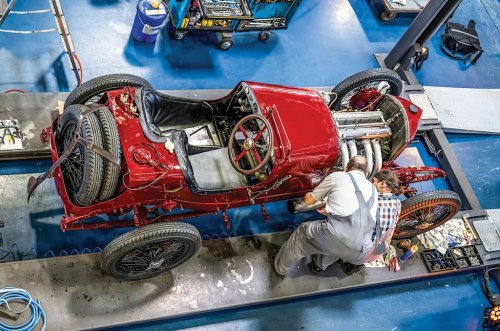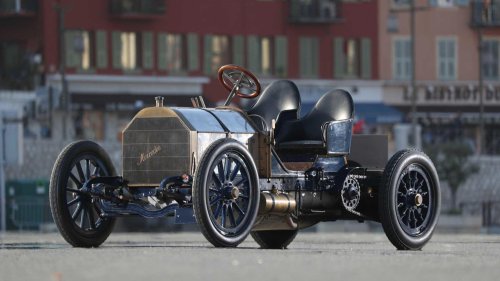
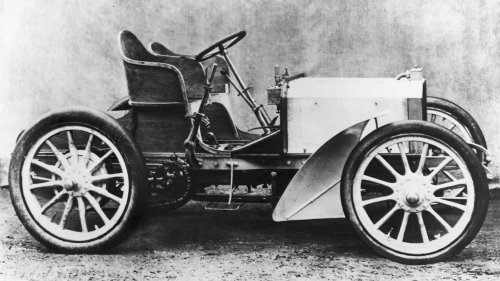
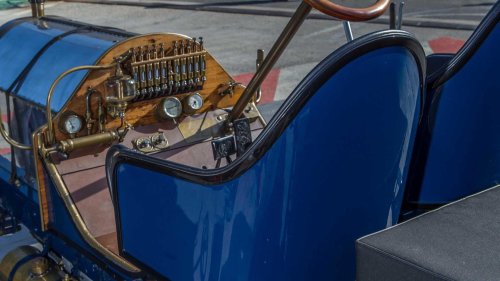
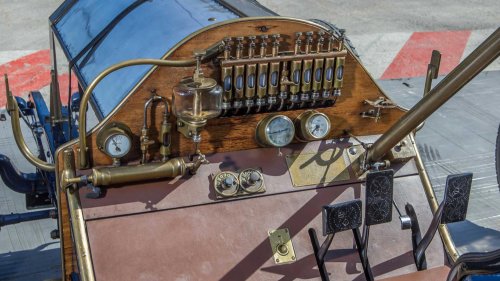
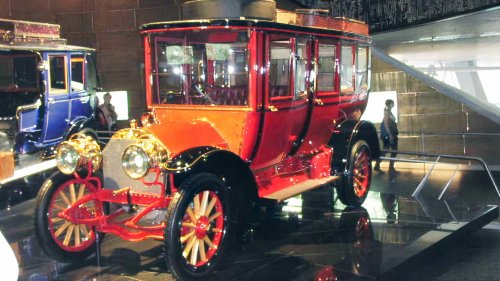
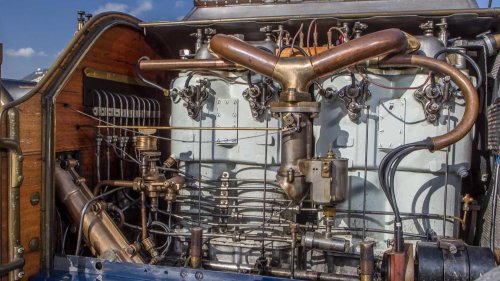


















Jump LinksQuick Facts About The Mercedes Simplex 60hpIt can be argued that the sports car as a whole is one of, if not the most popular automotive segment in existence. When we think of what a sports car actually is, we conjure up images of models like the Chevrolet Corvette, the Mazda MX-5, and the Toyota GR Supra. There were several classic examples that paved the way for the modern sports car, as well, such as the Jaguar XK120 and the Triumph TR6.As with any old thing ever produced, there had to be a first. The sports car is no exception to this rule, of course, because there was a model built well over 100 years ago that was the first to truly fit the "sports car" attitude. While the question of the world’s first sports car remains hotly debated among enthusiasts, in our eyes the title best fits a model called the Mercedes Simplex 60hp, which debuted right after the turn of the 20th century. So, while the Wright Brothers were busying themselves with the business of flight, Mercedes was preoccupied with shaping the motoring world into what we know it as today. It Wasn't Merc's First Revolutionary Car Mercedes-Benz Quick Facts About The Mercedes Simplex 60hp Produced in 1903 Boasted a low-slung chassis Could reach speeds up to 81 mph Utilized a gigantic four-cylinder engine Widely regarded as the first true sports car Many of the initiated, and probably many of the non-initiated, are aware that Benz was the first to produce a standalone car. It was called the Benz Patent-Motorwagen, and it first hit the cobblestone streets of Europe in 1886. By 1888, the Patent-Motorwagen was put on sale to the masses for an extremely high price, meaning the vast majority of commoners could never dream of affording one. Steep cost aside, the Motorwagen is considered the first true practical automobile.Cars that came before were modified versions of things like bicycles, quadricycles, or horse-drawn carriages, or they utilized steam power instead of burning gasoline. It's also important to note that back then, Mercedes and Benz were two different companies. The iconic Mercedes-Benz company as we know today wouldn't be formed until 1926, when the two companies merged.15 years after the first true car was born, Mercedes, then still a company separate from Benz, introduced its first model: the Mercedes 35 hp. Immediately upon its release, the 35hp was widely regarded as the fastest car in the world thanks to its reported maximum top speed of 47 mph in its road-going configuration. Of course, we think of that sort of speed as a casual cruise down a regular road. But, back then, 47 mph was blistering.Wikimedia Commons: Mercedes-Benz-Werkphoto The Mercedes 35 hp was also a formidable opponent on the track. One of the highlights of its racing career was its near-total domination of the 1901 Nice Race Week. It took home first place in the hill climb and long-distance events, decidedly cementing itself as one of the most influential race cars of the era, alongside being what many consider the first 'modern' automobile. One of the hallmarks of the race-bred Mercedes 35 hp was its increased top speed, which reportedly clocked in at 53 mph.However, Mercedes was keen to make a new car. One that was even faster, as well as sportier, just a couple of years later. A New King Of The Road Mercedes-BenzIn 1903, Mercedes was ready to one-up itself. The previous 35 hp model had been a massive success, both on the racing circuit and on the road. It was universally loved, especially for its sporting nature and powerful 5.9-liter inline-four engine, which pumped out 35 horsepower like it was nothing. Using what they'd learned from the 35 hp, Mercedes released the Simplex 60 hp. It was longer, lower, and more powerful than the outgoing model, although with a more targeted approach to sportiness.Mercedes-Benz However, the sporty approach was tempered by smatterings of luxury, as well. It was meant to take its place as Merc's top-of-the-range model, and featured luxuries such as beautiful brass-coated interior trim paired with a wooden dashboard and steering wheel. Its 9.3-liter inline-four engine took up much of the car's front end. The decision to drop in a large engine was made because, back then, there really was no replacement for displacement. You couldn't go order a supercharger kit or an ECU tune online, of course.Wikimedia Commons: MartinHansV Prospective buyers were given a choice between two or four-door body styles. As you can imagine, the two-door is the one you'd want. The model went onto be a successful racer, much like its predecessor, with several wins under its belt. Some of the 60 hp's more notable victories took place in Nice, where Hermann Braun set a course record. Also, racing driver Camille Jenatzy won the Gordon Bennett Cup in 1903, and Willy Pöge won the Frankfurt Circuit Race in 1904. Understanding The 60 HP's Sporting Nature Mercedes-BenzLooking at the picture above, it sure doesn't resemble any sort of engine made today, more like some kind of steam pump sculpture. However, you're staring at the 9.3-liter inline-four that powers the Mercedes 60 hp. it sports an "F-Head" cylinder head design, which means one set of valves. In this case, the ones handling the intake are mounted over the combustion chamber, and exhaust valves are off to the side. A honeycomb grille up front protected the radiator from stones and other debris that would regularly hinder many an early racer's success, while also allowing cool air to flow through and keep temps at optimum levels. A simple idea, but an important innovation at the time.The Mercedes Simplex 60 hp sported a four-speed manual transmission. However, unlike modern manuals that use synchronized gears for smooth shifts, the 60 hp made do with an unsynchronized unit. This meant that double-clutching was necessary to change gear. To double-clutch, the driver needs to push the clutch in, move the gear lever out of gear and into neutral, release the clutch, reengage the clutch, and slide the lever into the next gear. Executing a shift in any other way in the Mercedes 60 hp, such as trying to go directly between gears, would result in a maelstrom of gear grinding and, potentially, damage to the transmission.Despite its huge engine and four-speed gearbox, the Mercedes Simplex 60 hp's real call to fame regarding its level of sportiness was its chassis. It was designed to be as long-slung as possible. Even back then, it was understood that the lower you could get the center of gravity in a car, the better it would handle. Because of the Mercedes 35 hp and the lessons learned from it on the track, Mercedes expounded on that knowledge and produced the 60 hp with an even lower frame. Tip Your Hat To The 60 HP Mercedes-BenzAs we touched on near the beginning of this write-up, there very well could be a lack of sports cars in today's world had it not been for the Mercedes Simplex 60 hp. Just after the thing was introduced, a host of other brands began building sporting models of their own. Back then, the term "sports car" hadn't even been thought-up yet, and the Mercedes 60 hp was already beating everyone else to the punch.According to numerous anecdotal reports, about 102 Mercedes Simplex 60 hps were produced. Today, only four remain. One example was recently sold at auction for over $12 million, making it the most expensive antique car in the world, a price well justified by the immense significance of this mighty Mercedes.