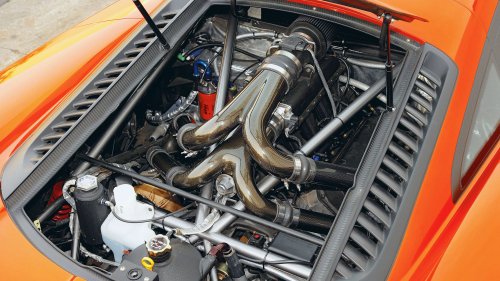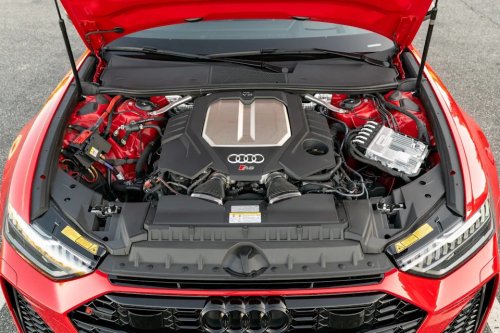




















Audi revealed a new 16-cylinder supercar this week, and the headline number is impressive enough on its own — sixteen cylinders, in 2026, in an era when most performance brands are either downsizing or electrifying. But the more interesting story isn't the cylinder count. It's the engine's age.The powerplant at the heart of Audi's new machine isn't a clean-sheet design built for this car. It traces back to an earlier chapter in VW Group history — a program that, for reasons that weren't made public at the time, never reached production. The engine waited. And now, apparently, it has found its moment. A 16-Cylinder Architecture That Predates The Car Wearing It AudiThe details of exactly which VW Group program originally developed this engine — and how long it spent on the shelf before Audi revived it — have not yet been fully disclosed in available reporting. What the coverage does confirm is the core premise: this is not a new engine in the traditional sense. It is a legacy architecture, resurrected and presumably updated to meet modern emissions and performance standards, now serving as the centerpiece of a 2026 supercar.AudiThat framing alone is worth sitting with. Sixteen-cylinder engines are extraordinarily rare in production cars. The most famous example in VW Group history is the W16 that powered the Bugatti Veyron and its successor, the Chiron — a quad-turbocharged unit that defined a generation of hypercar engineering. Whether Audi's new engine shares lineage with that program, or represents a separate shelved concept, is a question the available reporting leaves open. Additional technical details — displacement, output figures, and the specific program history — are expected to emerge as full coverage of the reveal develops. Why Reviving An Old Engine For A New Supercar Is Harder Than It Sounds AudiBringing a dormant engine program back to life is not simply a matter of dusting off old drawings. Emissions regulations, fuel system requirements, materials science, and electronic integration all evolve — sometimes dramatically — over the span of years or decades. An engine designed in one regulatory era needs significant re-engineering to pass certification in another, which means any revival involves genuine development work even if the fundamental architecture is preserved.The fact that Audi chose to do that work, rather than develop a new unit from scratch or lean on an existing platform, suggests the original design had qualities worth preserving — whether that's a specific power density, a packaging advantage, or simply an engineering character that a clean-sheet motor couldn't replicate.Full technical specifications and a complete account of the engine's program history are expected to follow as Audi's reveal coverage matures. When those details land, the biography of this 16-cylinder will likely be one of the more unusual engineering stories in recent supercar history.