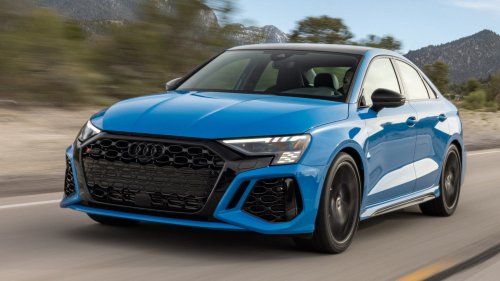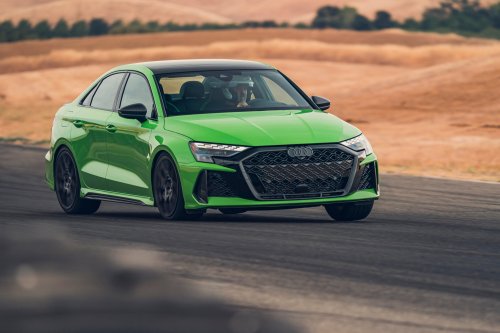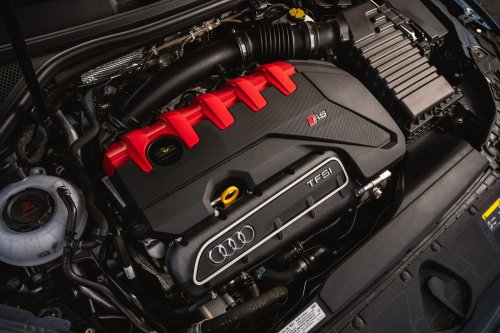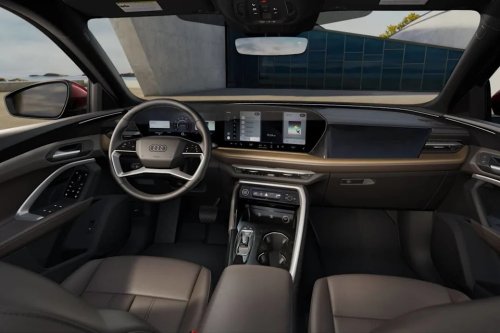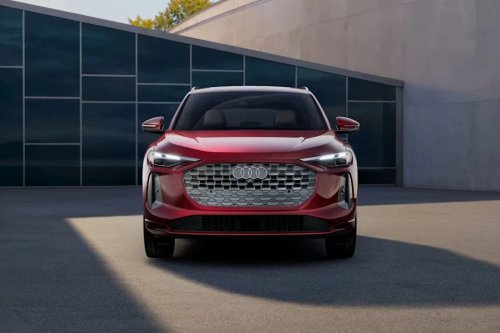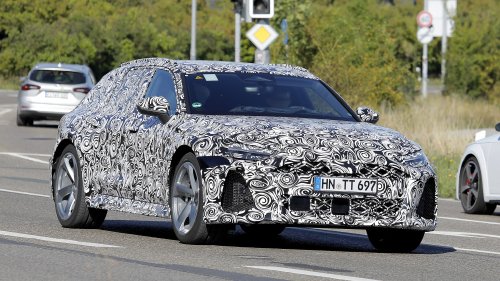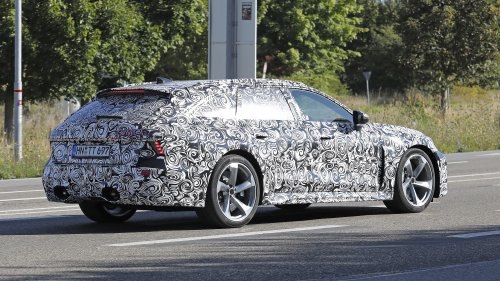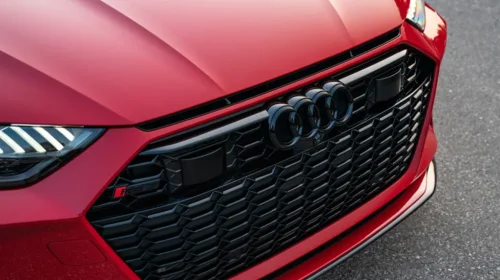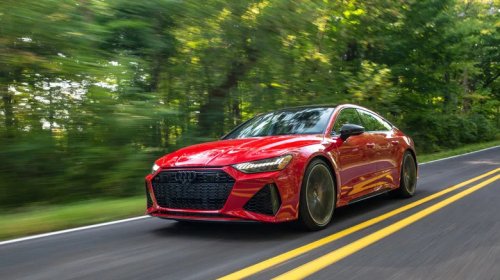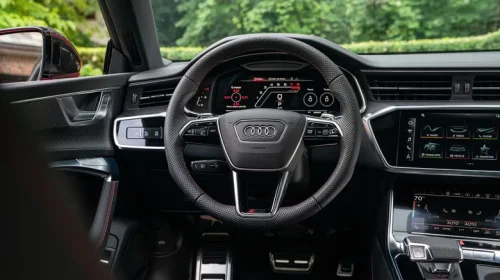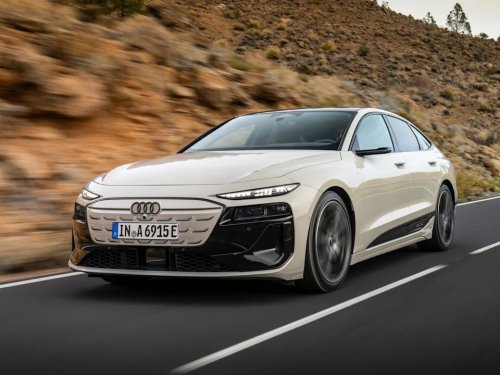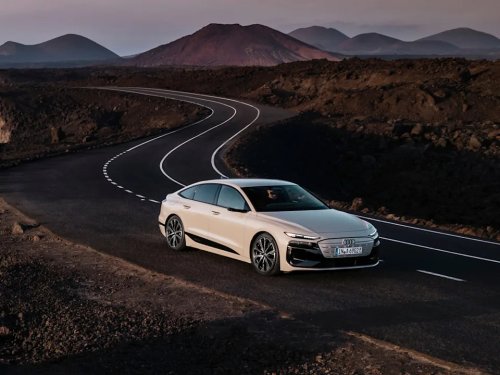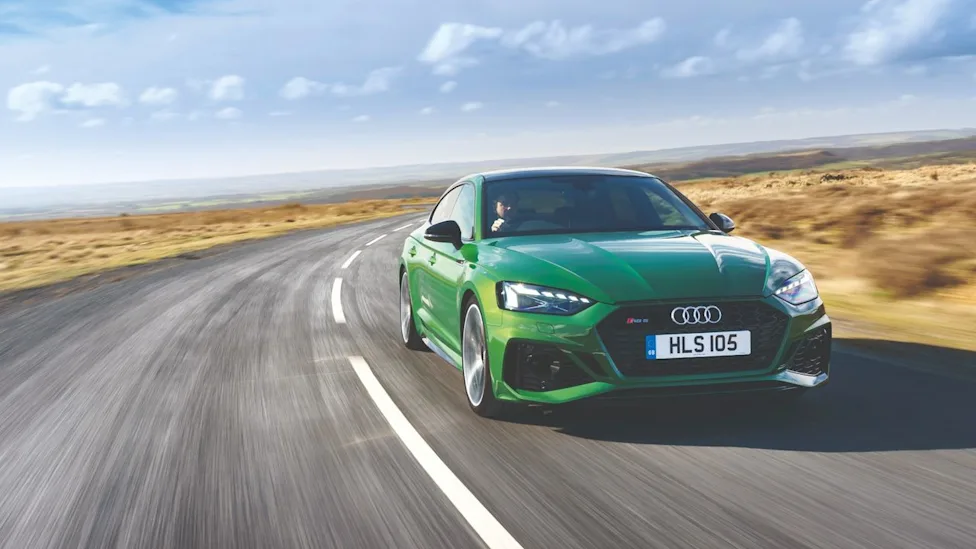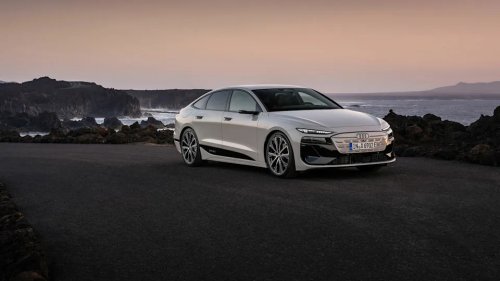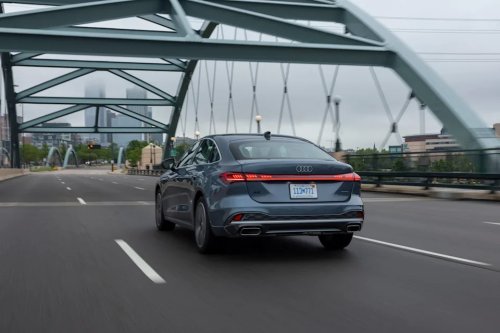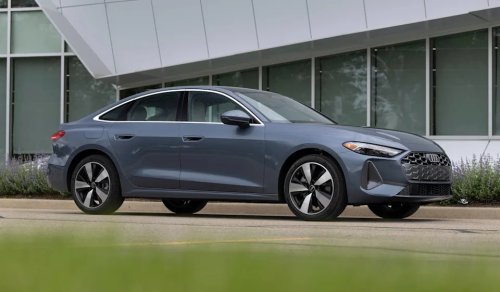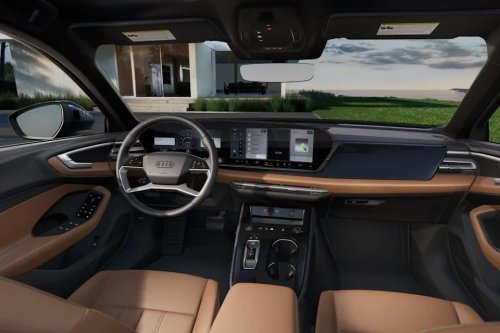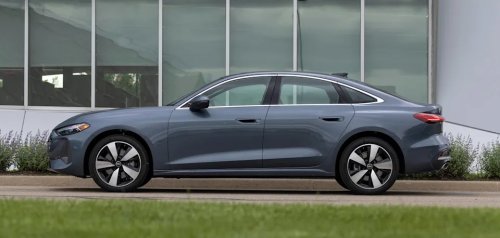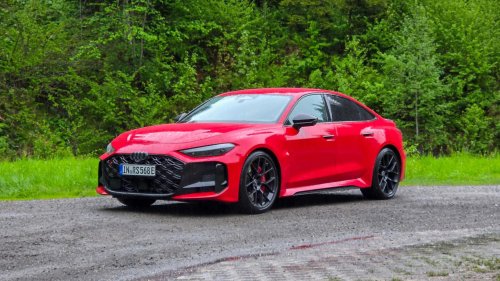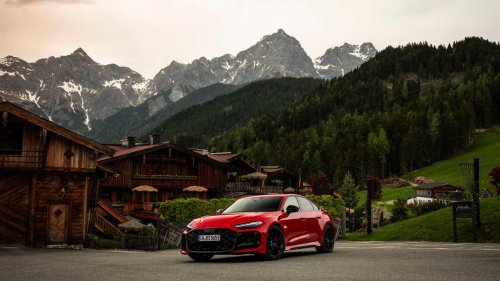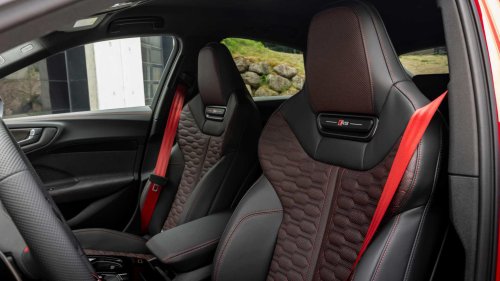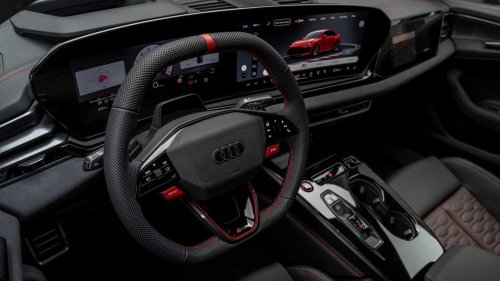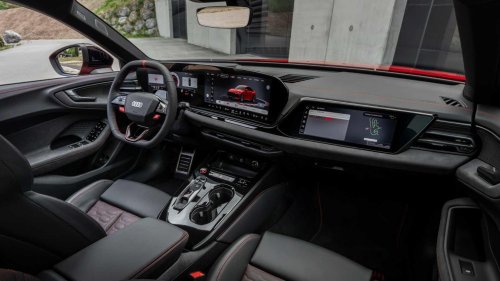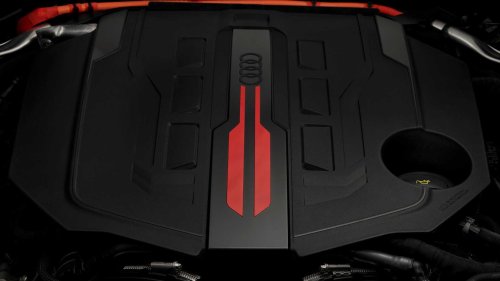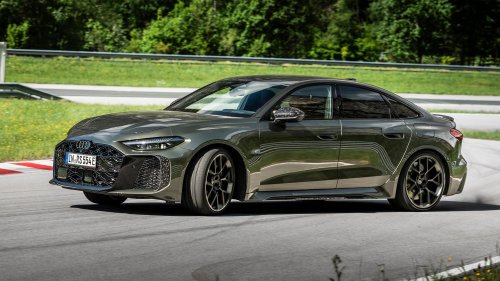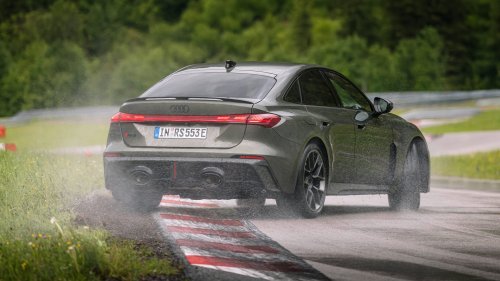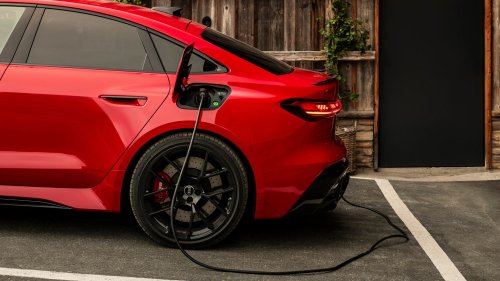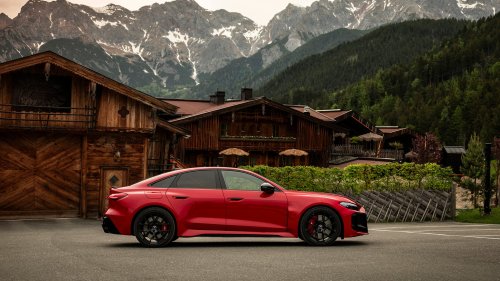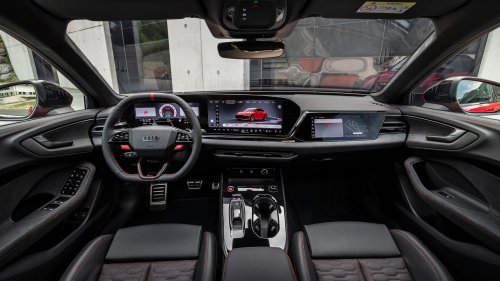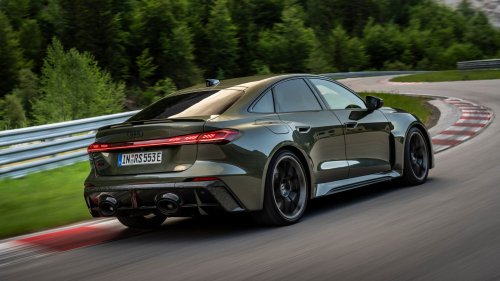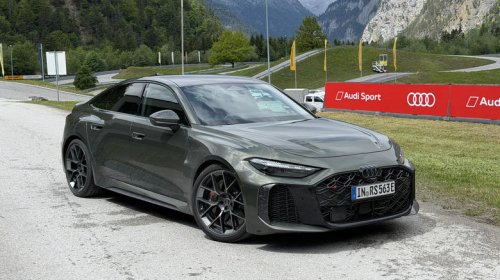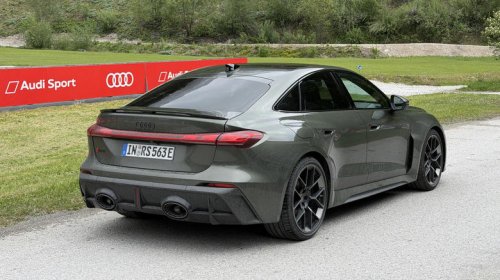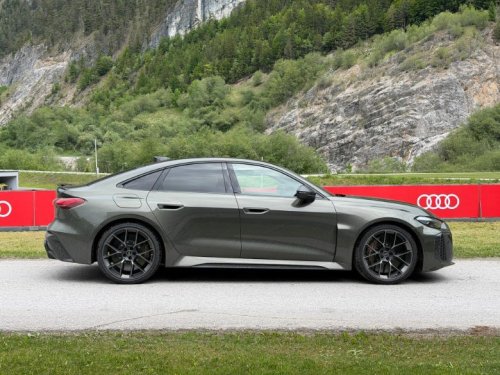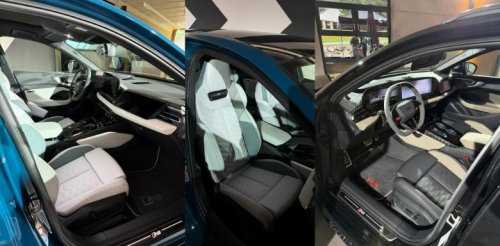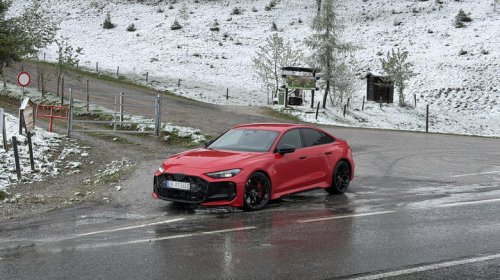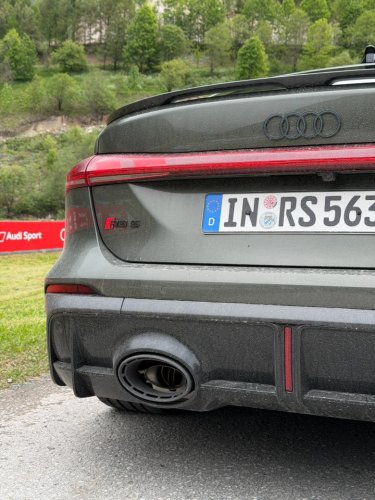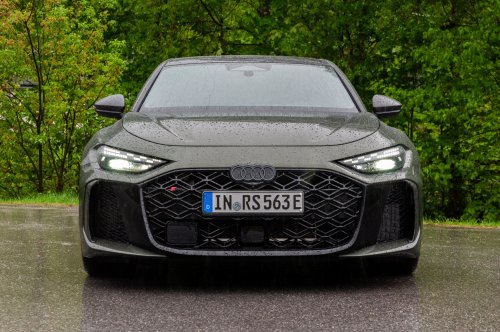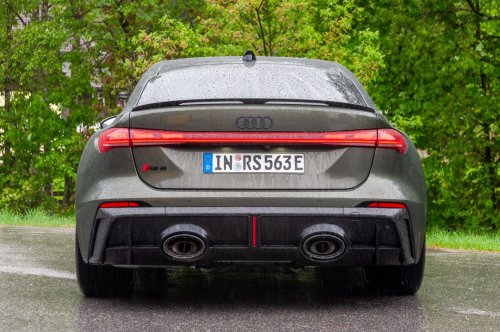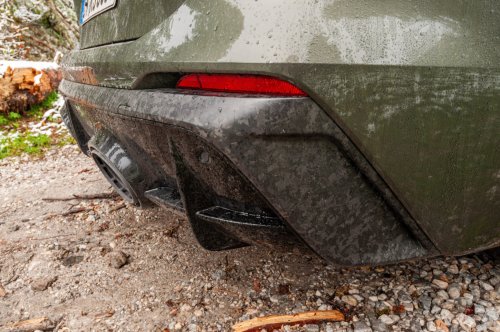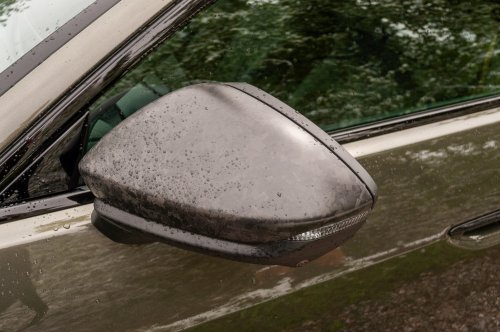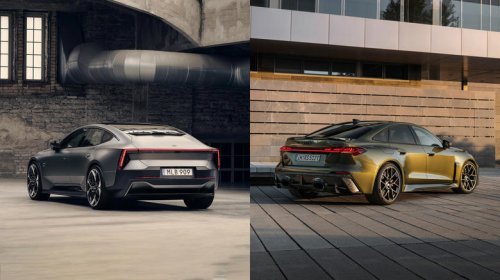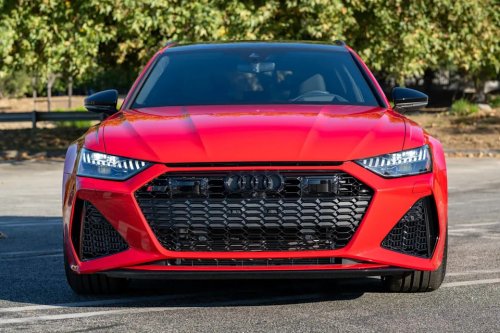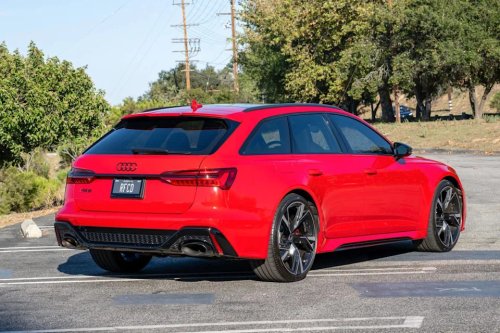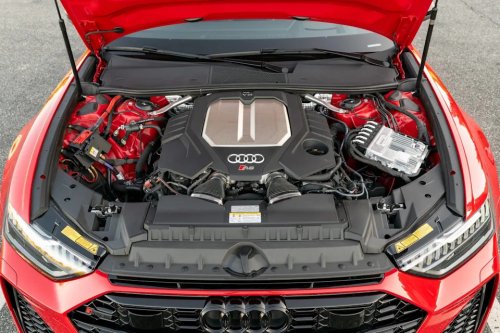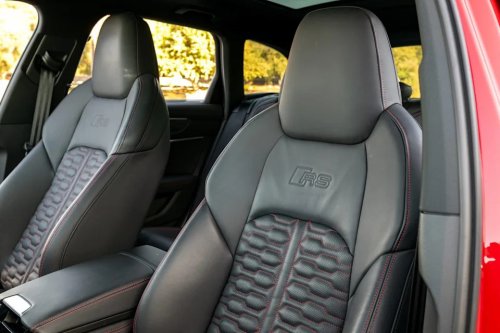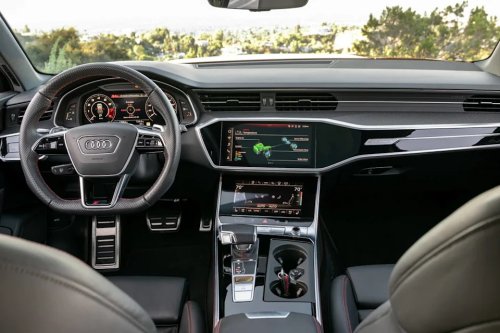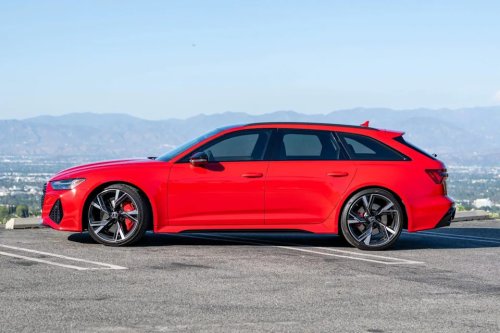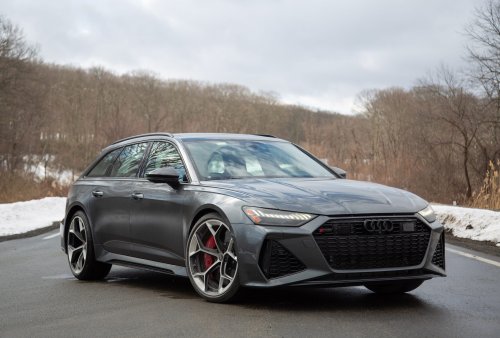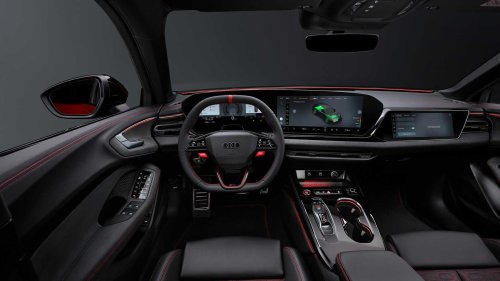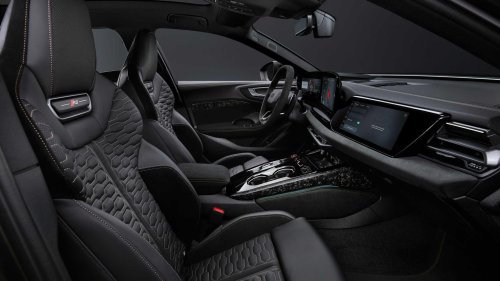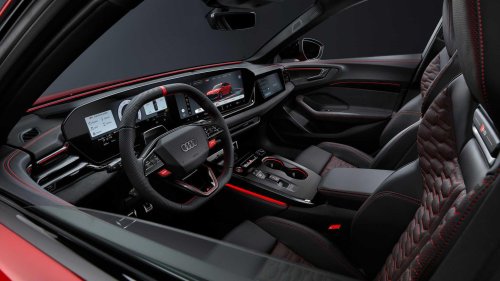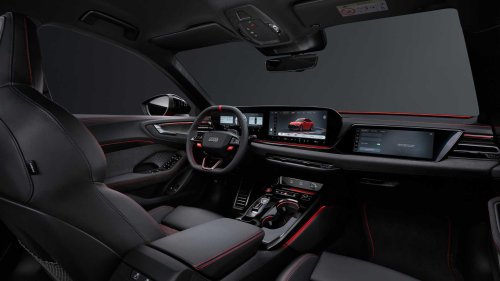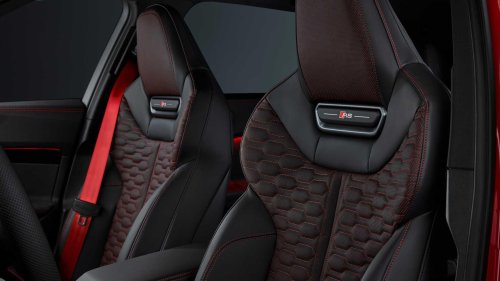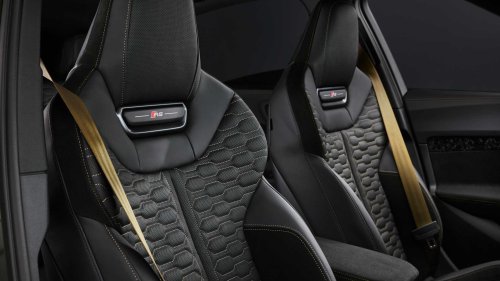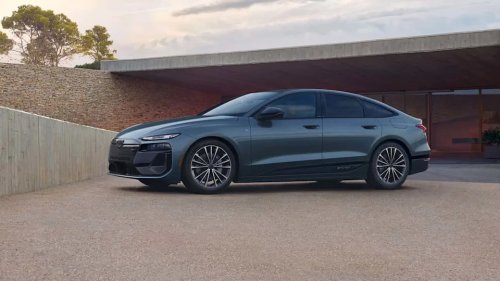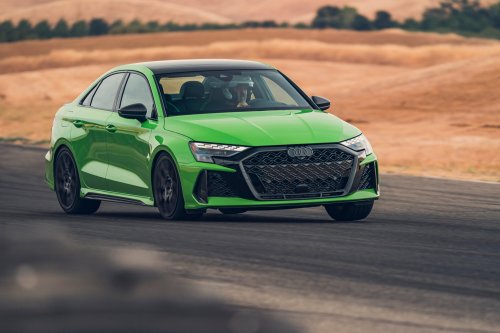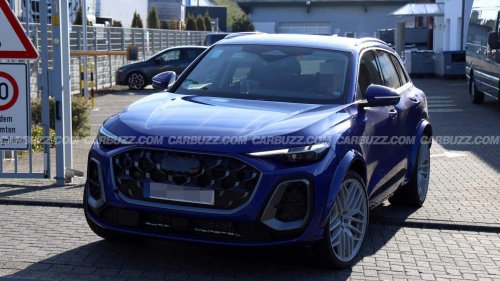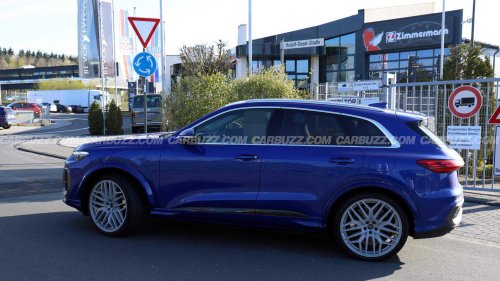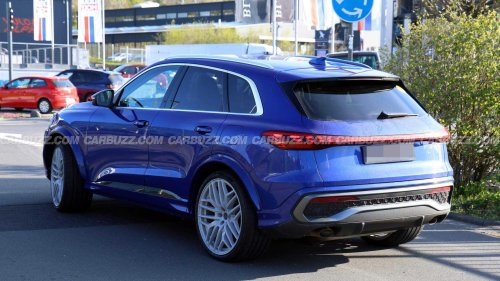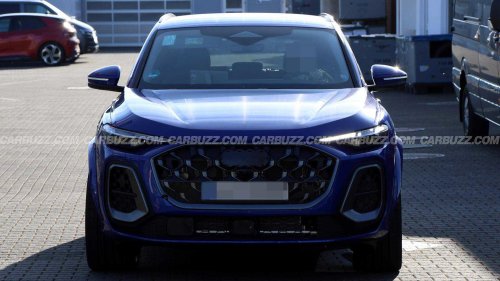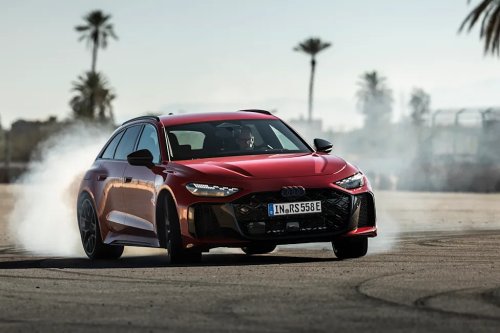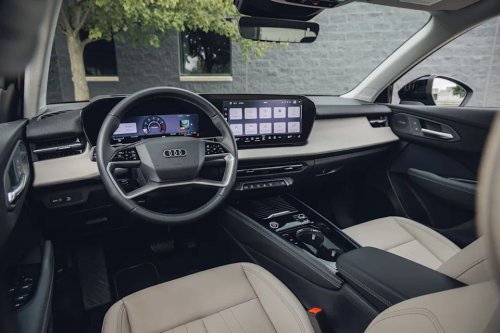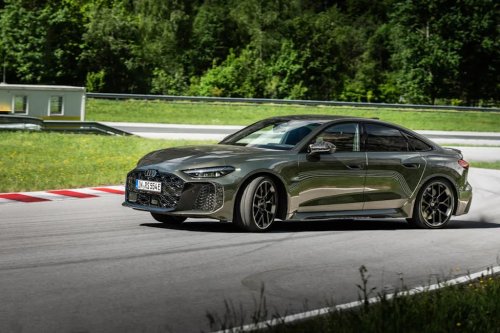
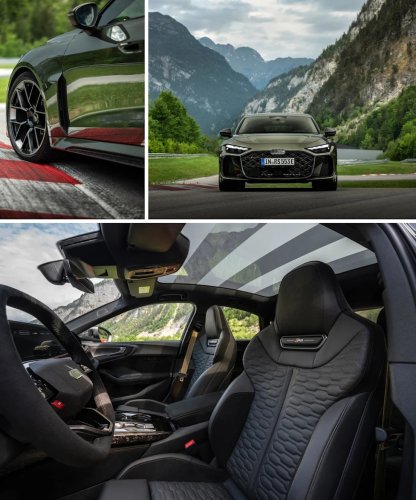
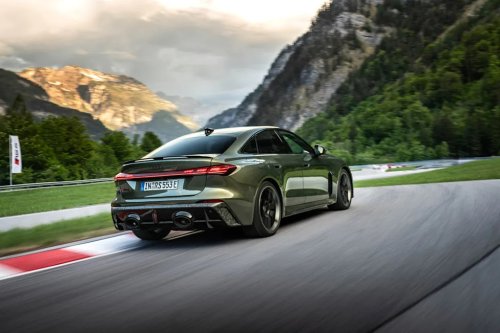
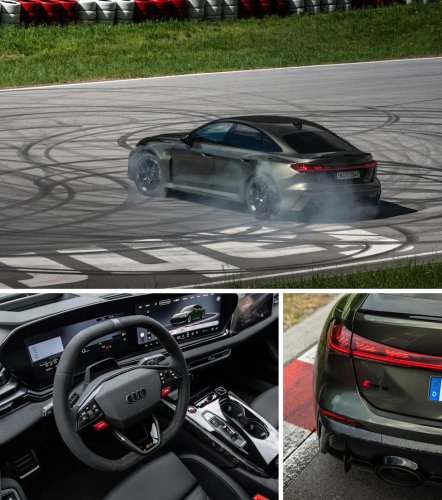
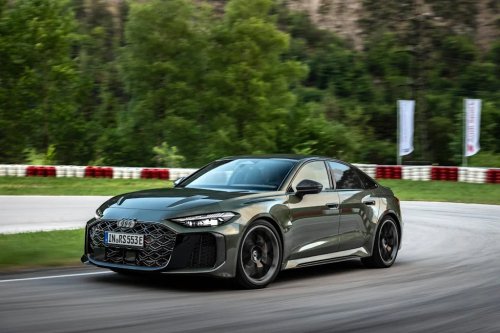
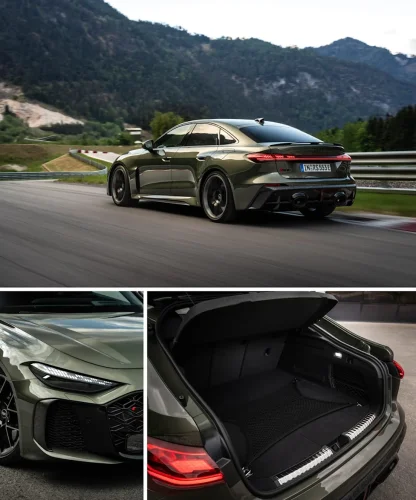
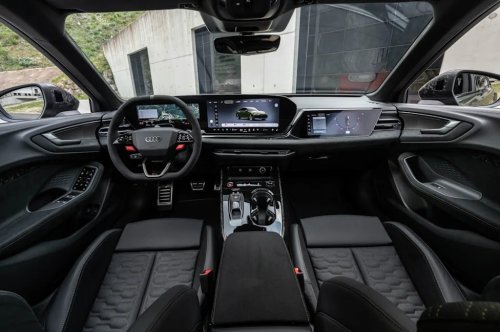
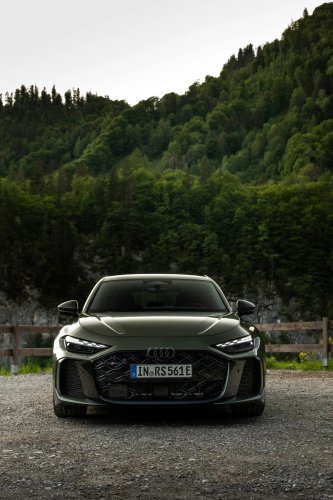



















The New Audi RS5 Is a Slide RulerAudi (Audi)I did not see this coming. I'm standing next to a tiny track tucked into a narrow valley in the Austrian Alps about an hour outside of Salzburg. Hemmed in by transparent rock walls and snow-dusted peaks the shape of bent arrowheads, this track probably has the best view of any in the world. It looks like an AI render, but everyone in attendance seems to have the correct number of fingers, so apparently the scene is real. It's only because Austria is absolutely filthy with such beauty that a track could ever be situated here. There is a fleet of four new Audi RS5 sedans parked at the side of the track. They are painted a shade of green that Audi calls Bedford and that I would describe as either tasteful or somber, depending on my mood.As I soak in the view and wait my turn to take the 630-hp plug-in hybrid RS5 out on the track, my mood is decidedly positive. If the location is difficult to believe, so is the action on the track. You see, out there on this hilly little circuit (with the deeply unsexy name ÖAMTC Driving Technique and Experience Center) are a couple of Audis drifting around, squawking as they hang their tails out. Audis are nose-heavy, though, right? Everyone knows they understeer when pushed, right?Audi (Audi)This display wouldn't be such a surprise if it were a pro driving instructor or an Audi dynamics engineer making the heavy sports sedan dance. But it's also journalists out there. Journalists who have essentially had no previous exposure to the car, have never seen the track, and have only three short laps each before their time is up.AdvertisementAdvertisementWhat is going on? Well, the RS5 is . . . weird. First, it looks a long way from Audis of yore, with their transparent, sparsely adorned body panels. This sports sedan (or five-door hatchback, or, as Audi calls it, Sportback) bulges and flares in a most immodest and complicated way. It aims to look angry. Also, this RS5 is a plug-in hybrid, the first in the performance subbrand's history. It carries a hefty lithium-ion battery back with 22 kWh of usable capacity over the rear axle, stealing some of the cargo area's depth. Because the RS5 won't make it to dealers in North America until at least 2027, there is no EPA estimated EV range, but based on the WLTP European testing standard, the car should have about 35 miles of pure electric range, maybe more. Whatever the number, it will be more than the nominal EV range of early luxury plug-ins.Audi (Audi)But the one element that most defines the RS5's strangeness is mounted under that high-voltage battery. It is the thing that allowed those green sedans to drift around the track with such apparent ease. It is the part of the car that the company seems most proud of. And it is what prevents the very heavy RS5 from feeling ponderous and inert. It is the Dynamic Torque Control unit, otherwise known as a torque-vectoring differential.This large box of complexity mounted between the rear wheels is different than your typical e-diff. Developed jointly by Audi and Borg Warner, this electromechanical arrangement does more than provide stability or prevent the inside wheel from spinning during cornering by apportioning torque across the rear axle. Composed of an open differential, a couple of planetary gear sets, and a water-cooled electric motor that can produce 11 hp and 30 lb-ft, Dynamic Torque Control is a much brawnier system than those which operate exclusively with engine-derived power. It can transfer torque left or right in just 15 milliseconds and, thanks to the multiplication effect provided by gearing, up to 1475 lb-ft can move across the rear axle to overspeed an outside wheel momentarily and dramatically impact handling balance, Audi says.Audi (Audi)And unlike most torque-vectoring solutions, Audi's system can perform its magic even while the powertrain is contributing no real power, as when the car is coasting or braking. It is, in effect, a rear-wheel steering system, one that Audi says is quicker reacting than turning the wheels ever could be.AdvertisementAdvertisementAudi has set up a smorgasbord of drive modes, six in all. These are Comfort, Balanced, Dynamic, RS Sport, RS Torque Rear, and RS Individual. The smart differential responds differently in each. In the sedate Comfort and Balance, in which EV mode can be chosen, the diff prioritizes stability.Audi (Audi)Dynamic, the mode in which I spent most of my time on track, sends more torque to the outside rear wheel in turns and allows for super-easy sliding. In essence, this is similar to the torque-split systems we've seen before in cars such as the Audi RS3, the Ford Focus RS, and the Aston Martin Vantage. But it works on a much grander scale and makes oversteer so accessible I would caution against using it on public roads. But once the RS5 started to slide, I found it easy to gather it up and to play with the slip angles. To complete the set, RS Sport is less about playing around and prioritizes lap times—less drama equals more speed. And RS Individual allows the driver to order à la carte responses from various systems.The change in character was shocking. In Dynamic mode, the RS5 felt like it weighed maybe two-thirds of its estimated 5350 pounds. That's right, 5350 pounds: almost two Mazda Miatas. But the RS5's peak output of 603 hp means the mass is little impediment to vigorous acceleration—vigorous as in a claimed 0-to-60-mph time of 3.6 seconds. It's fleet and agile in its way, but it's a lot of car. So it doesn't have the liveliness or raw-boned purity of a BMW M3 or a Cadillac CT4-V. Nor does Audi offer a manual transmission.Audi (Audi)Those two rivals are the RS5's nominal six-cylinder competitors, even if the new car has a more mediated comportment, more similar to that of the current M5, another plug-in hybrid with a sizable battery pack. The Audi's engine and transmission are familiar, if updated. The twin-turbocharged 2.9-liter V-6 makes 59 more horsepower than it did in the last RS5 thanks in large part to new variable geometry turbos. The transmission is the familiar ZF eight-speed automatic. A 174-hp electric drive motor mounts at the front of the transmission, and a Torsen center differential that can vary the front-to-rear torque split sits at its tail.AdvertisementAdvertisementI was thankful for decent weather during my brief time on track, because the rest of my drive through the Alps was below 40 degrees, with snow in the higher altitudes. Not the optimal conditions for a sports sedan wearing summer tires, even an all-wheel-drive one.Audi (Audi)A few notes: The ride quality was quite good even on the 21-inch optional wheels. The carbon-ceramic brakes, another option, were touchy, as Audi brakes tend to be, but powerful. In EV mode, the throttle response is deadened to an absurd degree but one that reveals just how much effort it takes to move 5350 pounds. Predictably, the interior is well constructed and comfortable if screen-heavy in the current fashion.The RS5 is a fascinating car in that it evidences a couple of distinct personalities: serious and stable on the highway and in the drive modes most people will use most often but surprisingly wild when the leash comes off. It's a very un-Audi Audi, and that's a good thing.Audi (Audi)The car goes on sale in the U.S. sometime between eight and 20 months from now for an unspecified amount of money. (I'm estimating a starting price around $125K). Anybody who does buy one owes it to themselves to do at least one track day where they can safely unlock and experience the RS5's hidden puppy energy.AdvertisementAdvertisementOh, and don't bother asking Audi to bring the handsome, if not that much more practical, wagon version to the U.S. They're not going to do it, no matter how hard we beg.You Might Also LikeIf You Can Only Own One Car, Make It One of TheseThese Are the Most Popular Cars by State