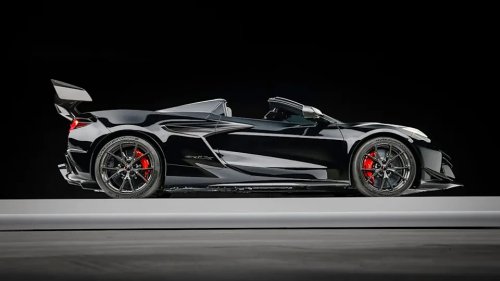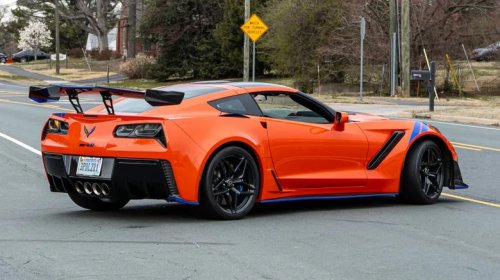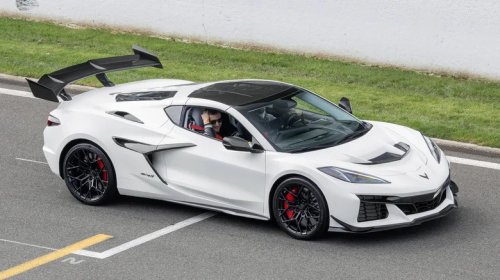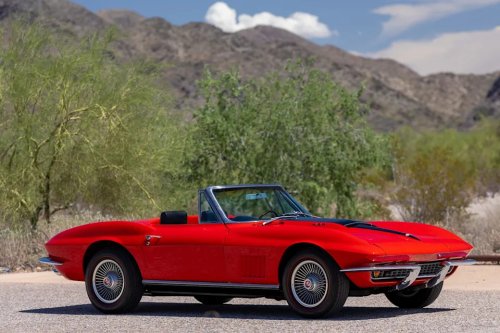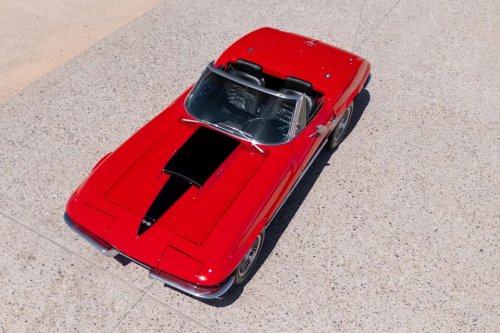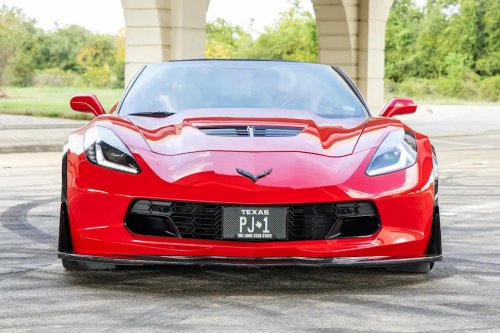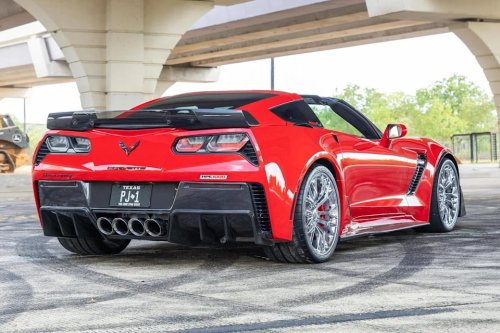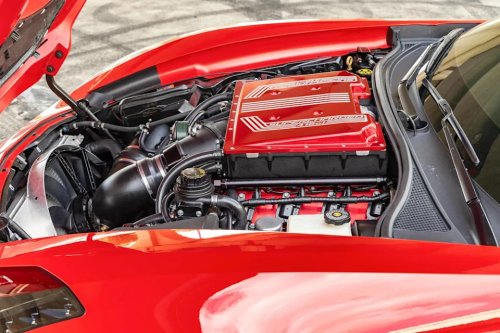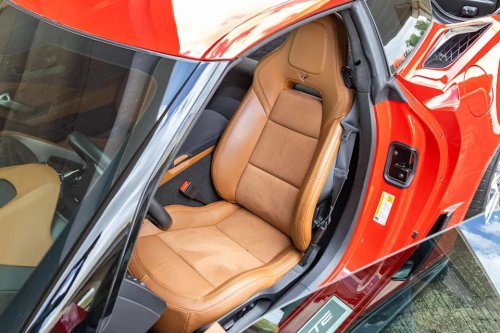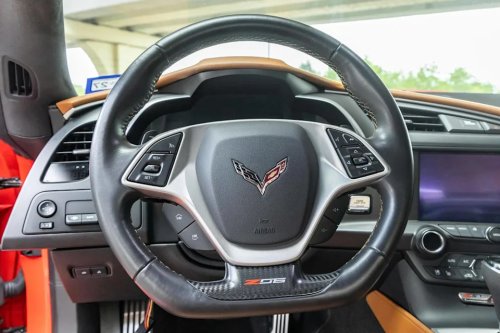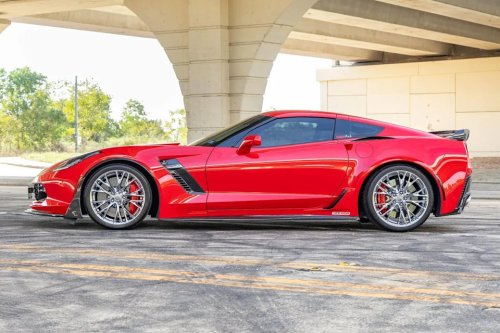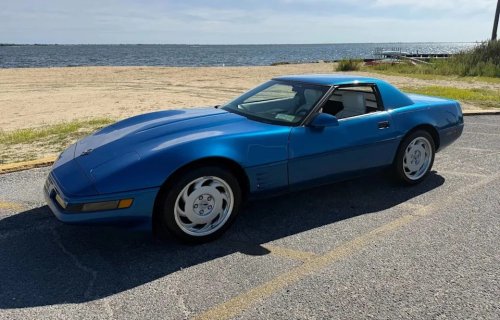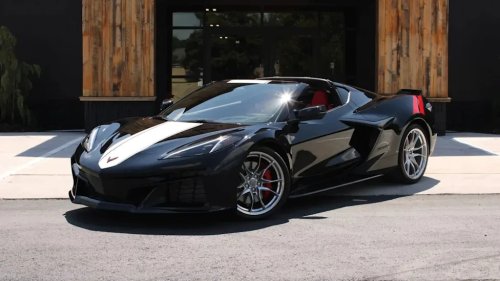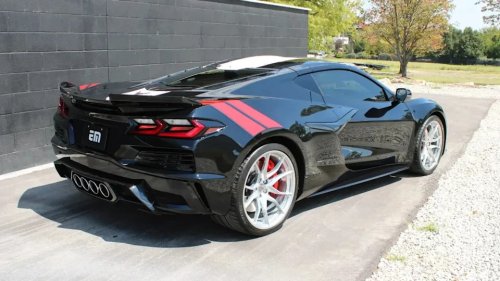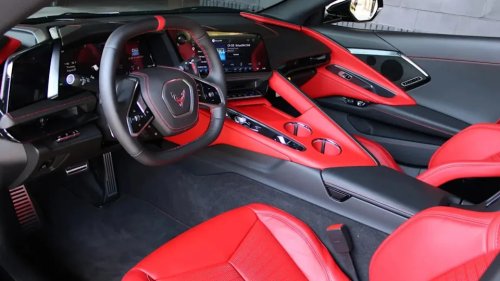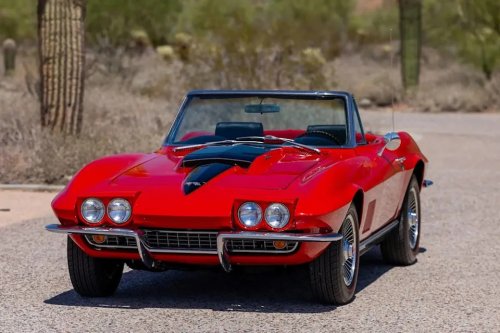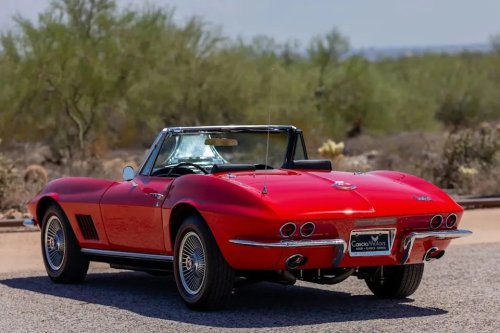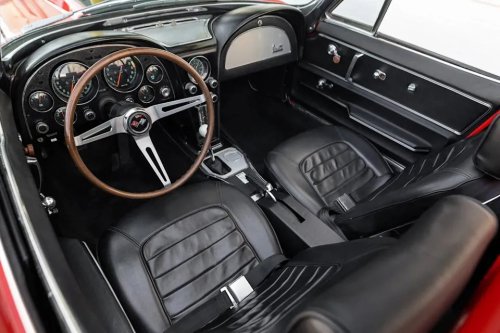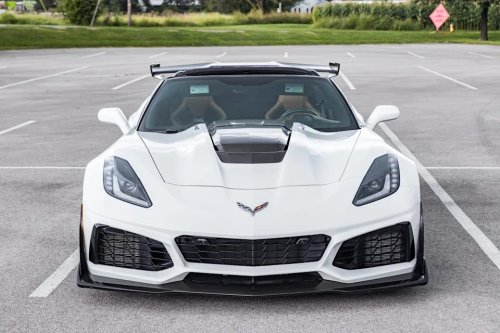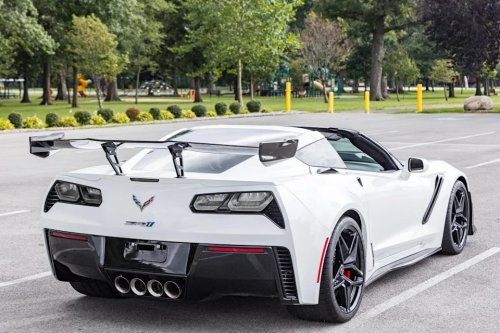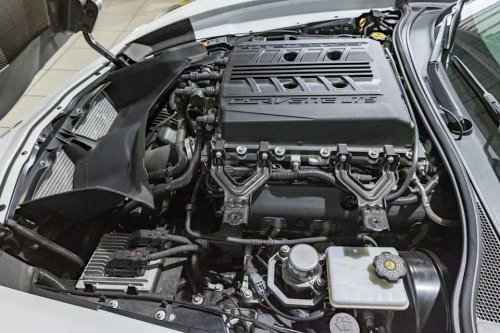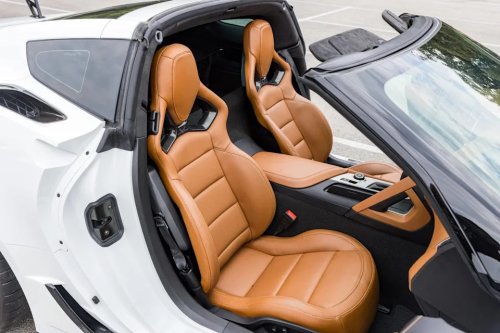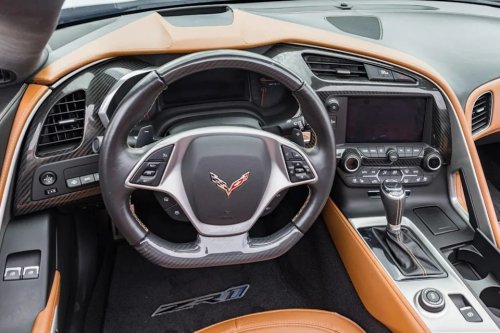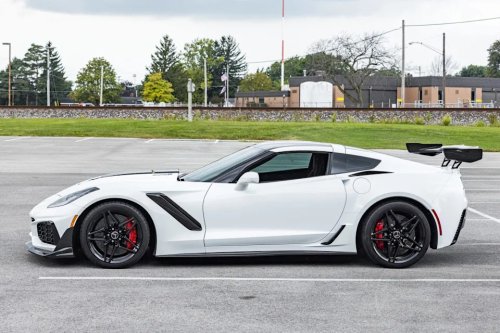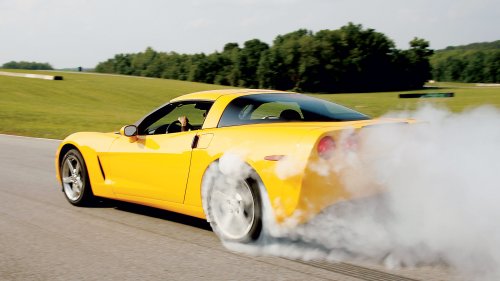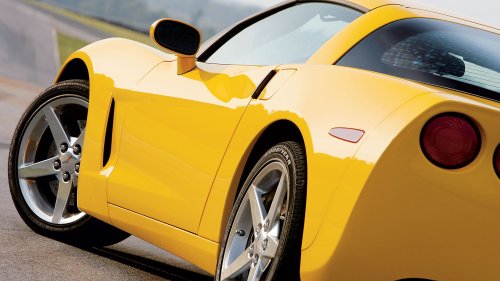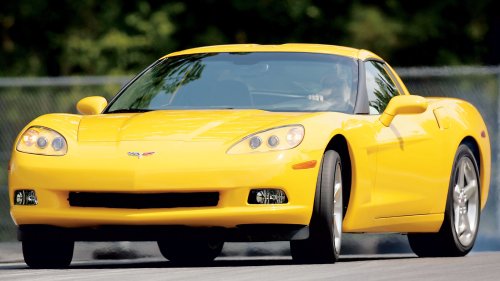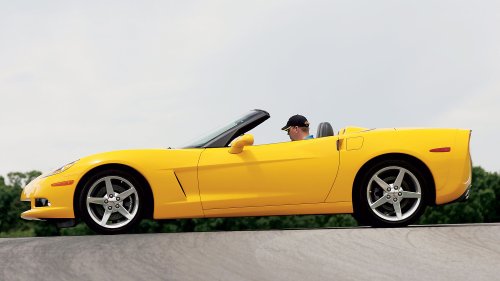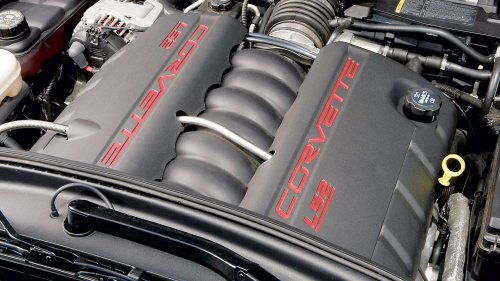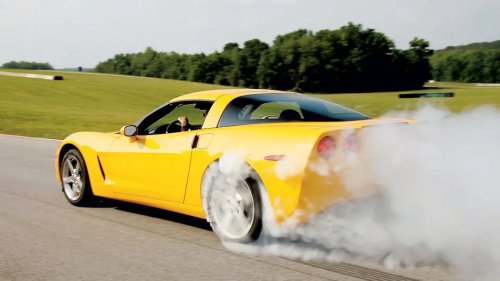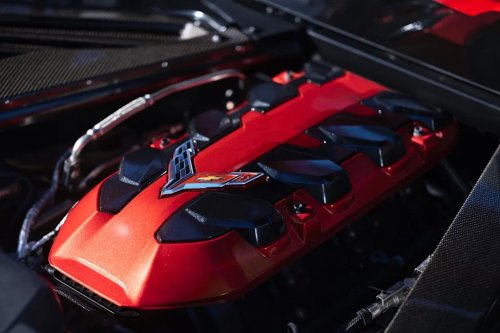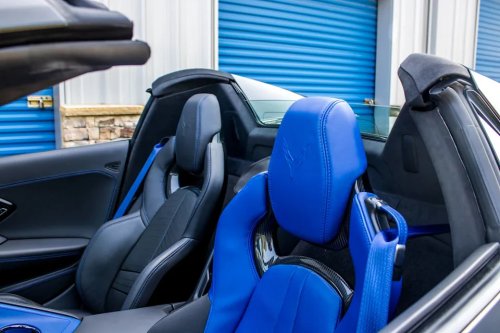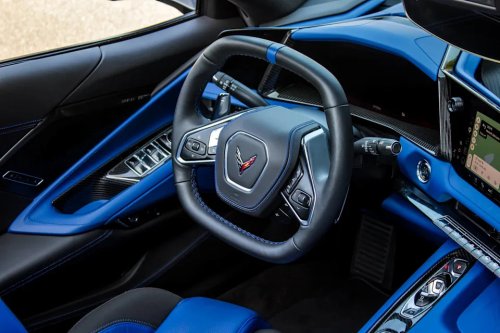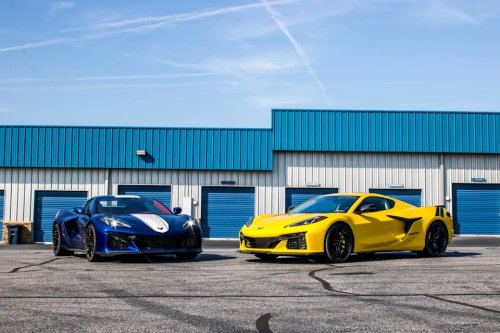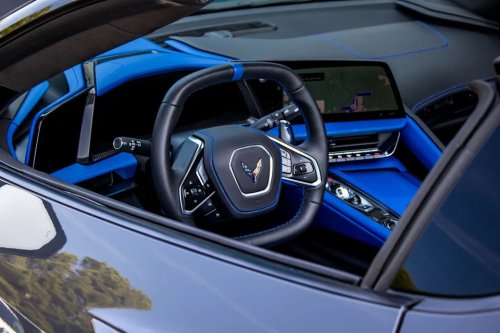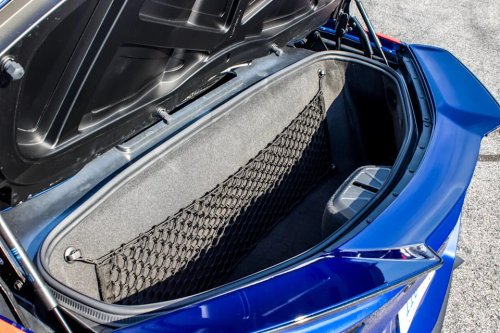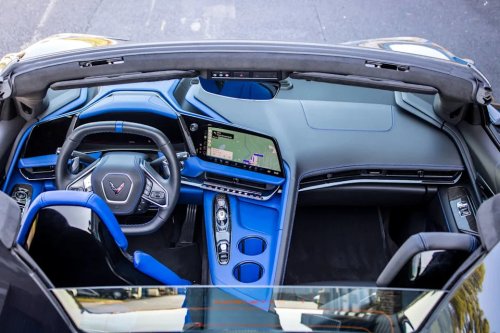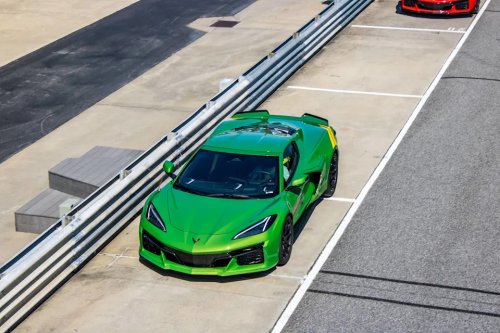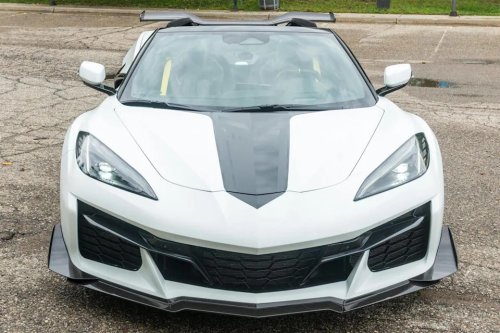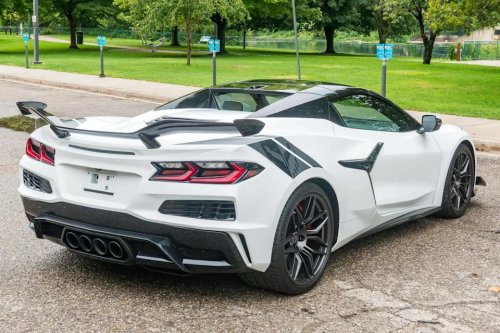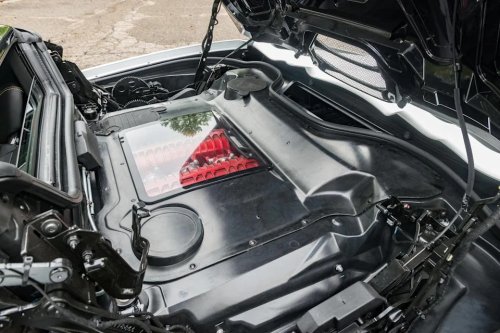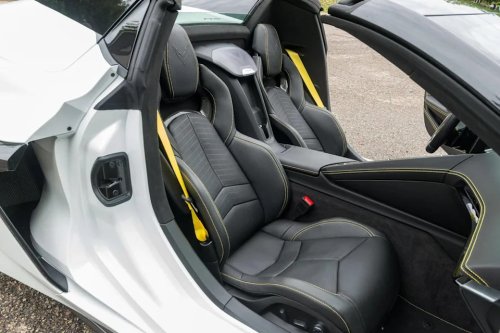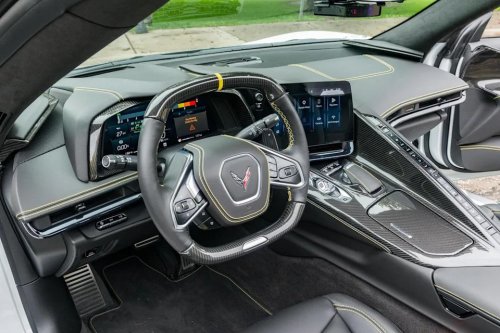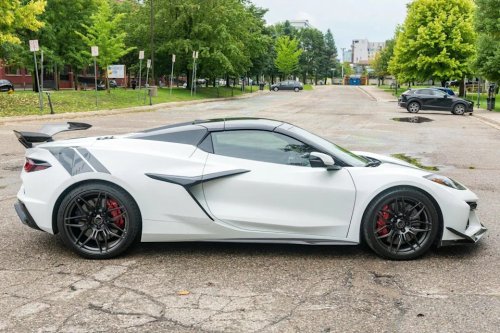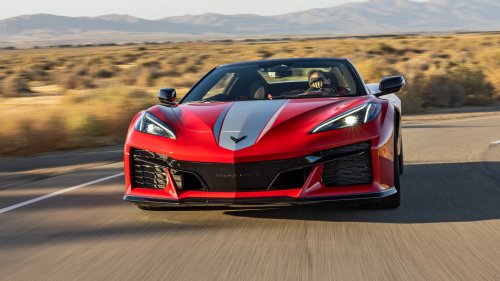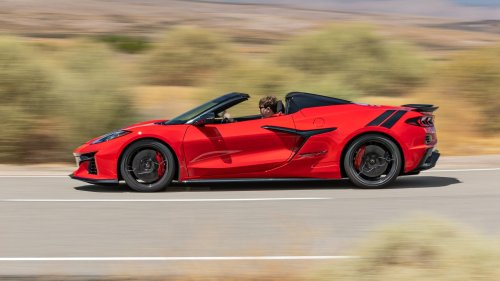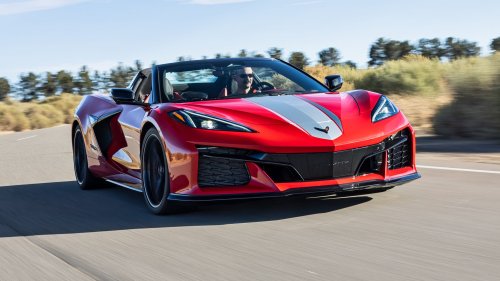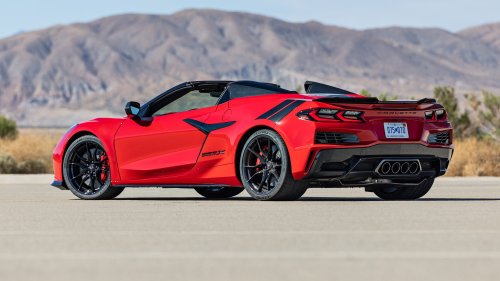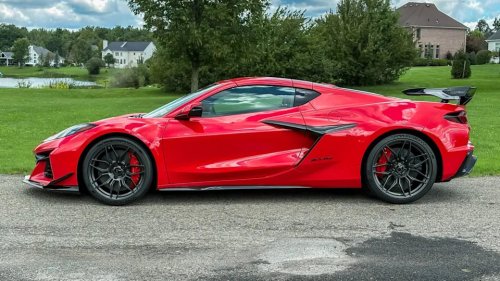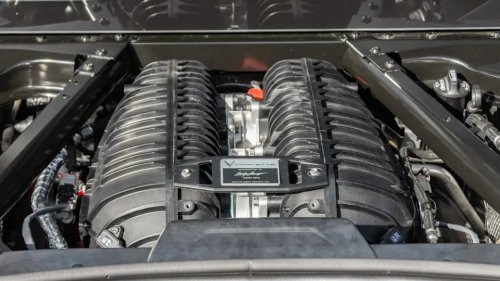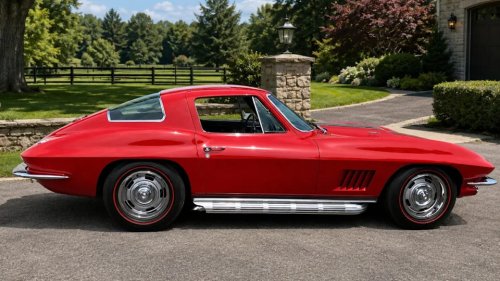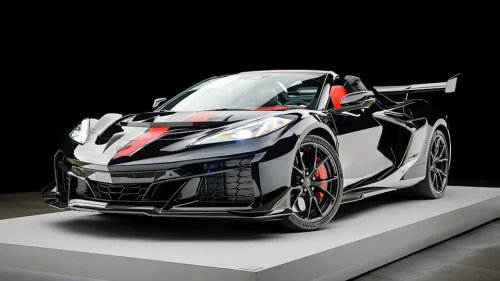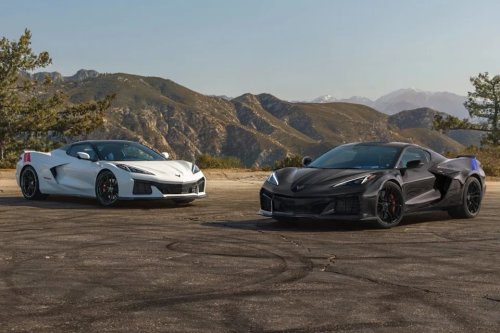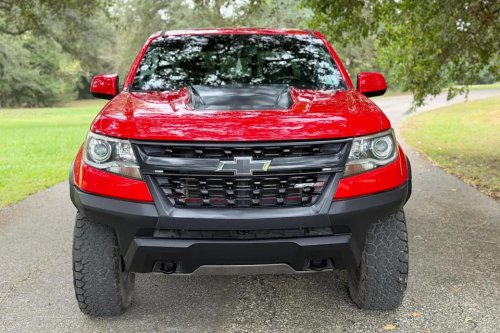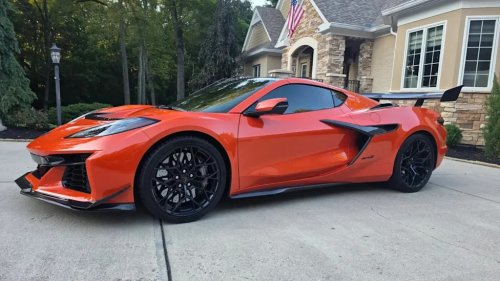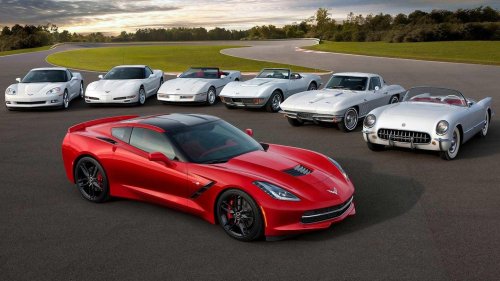
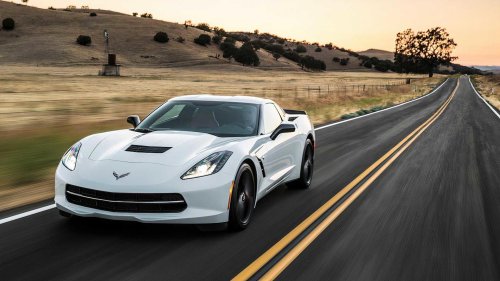
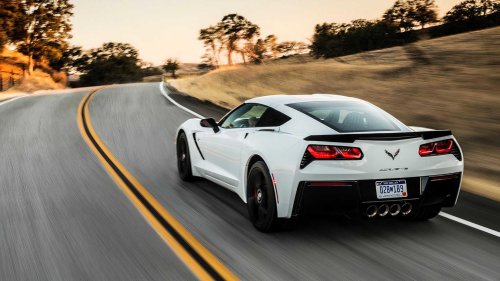
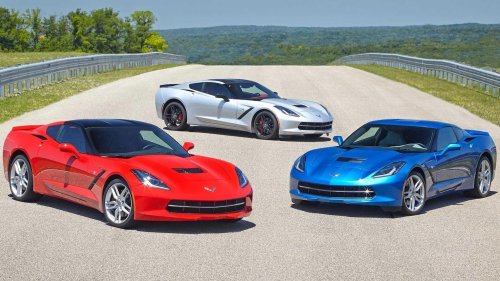
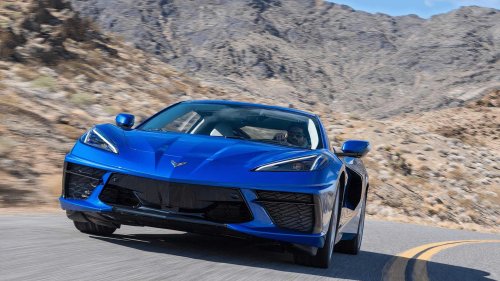



















From its introduction up until 2019, Chevrolet's Corvette has always had its engines positioned above the front axle. That all changed with the debut of the C8 generation, when the all-new Stingray was introduced with its V8 engine positioned over the rear axle. This wasn't just a design change, but a revision that completely transformed the driving experience and capabilities of the model.The final generation, which had its engine positioned in front of the cabin, was the C7 generation. Certain iterations of that generation, such as the supercharged Z06, iconic Grand Sport, and tarmac-melting ZR1 command big bucks still, but the C7 generation's Stingray is a different case. It's the model from that generation that today stands out as a bargain on the used market, and well worth investing in if you're still not convinced about Chevy's mid-engine move. Less Than $40k For The Previous Generation's Curtain-Raiser Chevrolet When it debuted in 2014, the Stingray name returned following a hiatus spanning four generations, and it commanded a price of roughly $53,000. Fast-forward to 2026, and average examples of the Chevrolet C7 Corvette Stingray now regularly change hands for around $35,000, which is notably less than what you'd pay for a brand-new Stingray, and less than half the price of a fully loaded example.Now, the C6 still holds the title of the most affordable modern Corvette you can buy today, but that's a model fast-approaching modern-classic status, having recently celebrated its 20th birthday. The C7, on the other hand, is certainly more up to date, both technologically and from a design standpoint too, plus it has the benefit of being the very last of its kind.Higher mileage examples of the C7 Stingray are even starting to slip south of the $30,000 border, whereas really cherished, low mileage examples are still commanding well into the $40,000s, or even more in certain circumstances. Truthfully, the sweet spot probably sits around $37,000 to $40,000, which is where you'll find modest-mile examples with immaculate service histories, and just one or two previous owners. These cars represent a huge saving when compared to a new Corvette Stingray, and they still retain that traditional 'Vette recipe some will certainly still be longing for."Stingray is one of the hallowed names in automotive history. We knew we couldn't use the Stingray name unless the new car truly lived up to the legacy. The result is a new Corvette Stingray that breaks from tradition, while remaining instantly recognizable as a Corvette the world over." - Ed Wellburn, former GM Vice President of global design. The Chevrolet C7 Corvette Stingray ChevroletJust under $40,000 is still a considerable amount of money to ask for a decade-old car, and we would agree with that statement if we weren't talking about the Chevrolet Corvette. In this guise, the C7 Corvette is powered by a potent 6.2-liter LT1 V8 engine, which was introduced at the start of the C7 generation. This LT1 engine made the 2014 Chevrolet Corvette Stingray the most powerful base model in the Corvette's history up until that point, and output could be boosted ever-so-slightly if buyers opted for the optional performance exhaust system, which brought with itself an extra five horses.Chevrolet Paired with that naturally aspirated V8 was a six-speed automatic transmission, or a seven-speed TREMEC manual transmission, neither of which was offered by any of the Corvette's competitors in their cars. Managing the rampant all-American horses directed to its rear was an electronic limited-slip differential that was included in the Z51 Performance Package, allowing for continuously variable torque distribution between its rear wheels.That hulking power unit exclusively powers the rear axle and is housed in an all-aluminum chassis that is 57% stiffer and 99 pounds lighter than the chassis that underpinned the C6 generation. Its aggressively styled physique is supported by hollow-cast aluminum front and rear suspension cradles that work alongside hollow lower control arms, new aluminum rear toe links, and hidden behind forged aluminum wheels. Its chassis and suspension systems were lighter than the previous Corvette generation, while being structurally stronger. All in all, a recipe that's tough to disagree with at any price."We believe the Corvette represents the future of modern performance cars because it delivers more power, more driving excitement and better fuel efficiency," said Tadge Juechter, Corvette chief engineer. "The result is better performance by every measure. The 2014 Corvette delivers the fastest acceleration, the most cornering grip, the most track capability, the best braking performance, and what we expect to be the best fuel economy ever for a standard Corvette." A Significant Generational Gap Chevrolet Whenever a new generation of a sports car comes out, we always expect the newcomer to be better than the outgoing model, and in the case of the C7 Corvette Stingray and the C8 Corvette Stingray, the difference between the two is dramatic, to say the least. The biggest difference was the placement of the engine. The C7, as we mentioned, had its engine mounted above the front axle. In contrast, the C8 generation's Stingray debuted with its naturally aspirated V8 engine positioned over the rear axle and right behind the driver's and passengers' heads.Chevrolet This was a significant change for the Corvette, as every Corvette before that had its engine up front. This change was necessitated by the fact that Chevrolet, in the pursuit of greater performance, could do no more to this layout to improve its performance, regardless of how much power the automaker opted to fire at the rear axle. The repositioning of its engine improved handling, although this wasn't a magical fix, considering that Chevrolet first trialed this configuration on a hardcore and souped-up ute.The mid-engine configuration allows for easier transition of a car's body weight, making it ideal for track driving. However, this can also be an issue for inexperienced drivers who may struggle with it. In terms of pure performance, the current Corvette Stingray is far removed from the model it succeeded. The engine's movement rearward, alongside its capability, allows for quicker sprints from a standstill because the added weight over the rear axle improves traction. Still, although it can't stand shoulder to shoulder with the current Corvette Stingray, the C7 Corvette Stingray is an impressive machine and one that is now more attainable thanks to its steadily declining market value.Sources: Chevrolet.