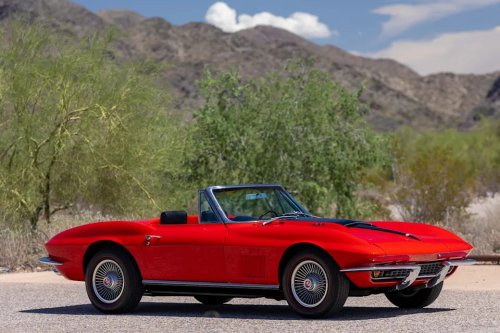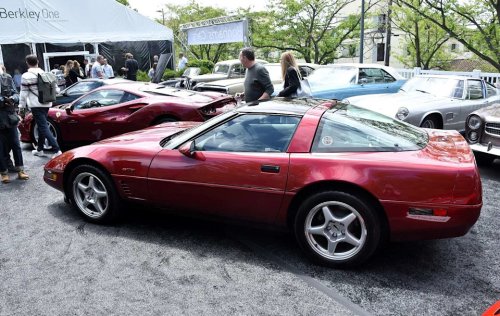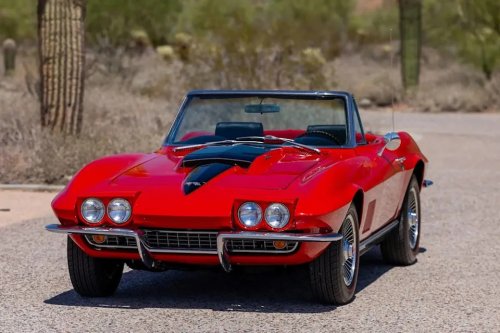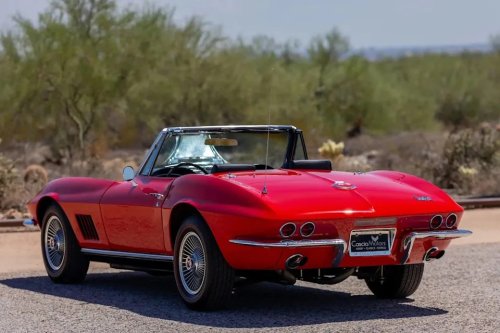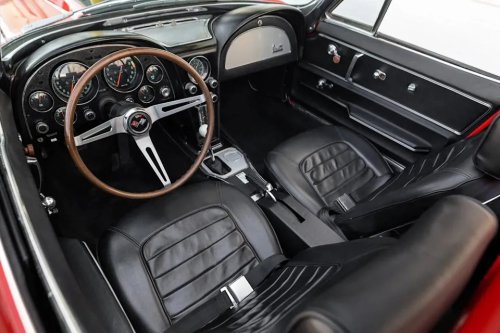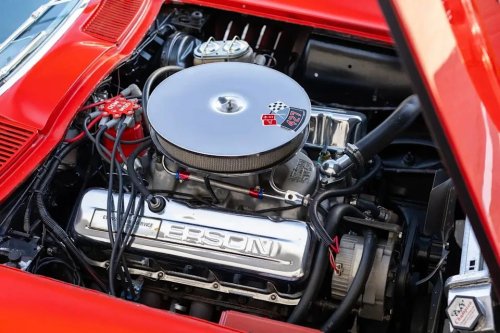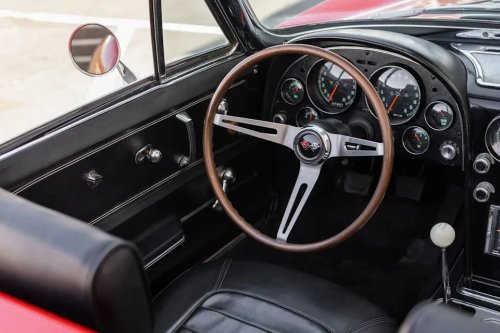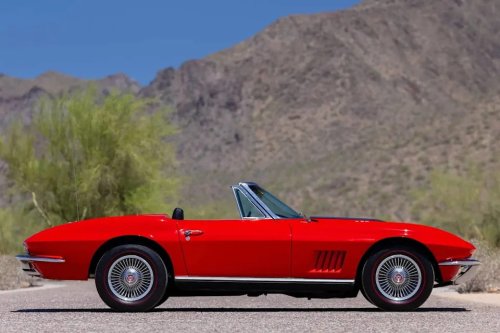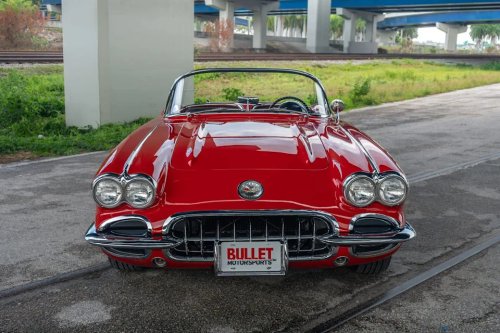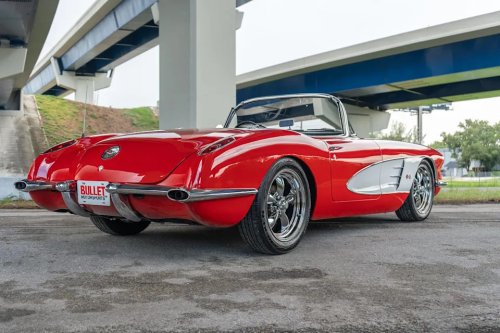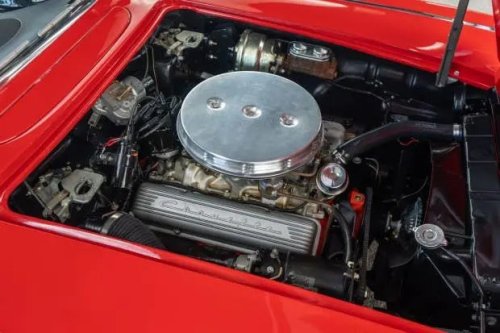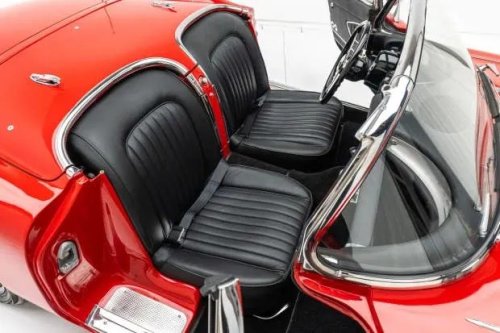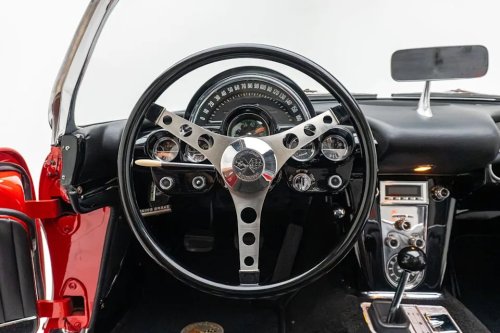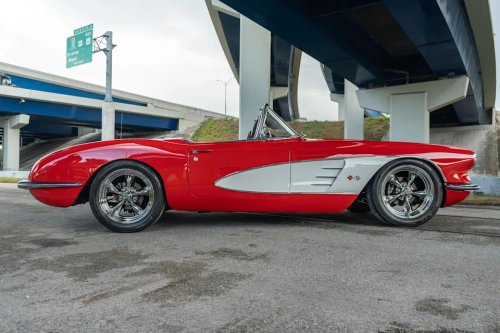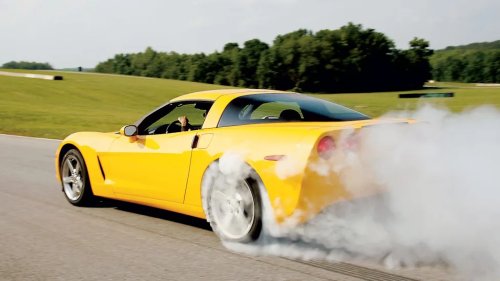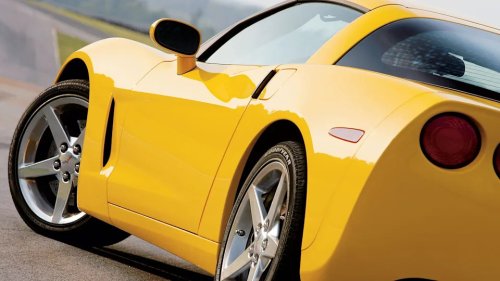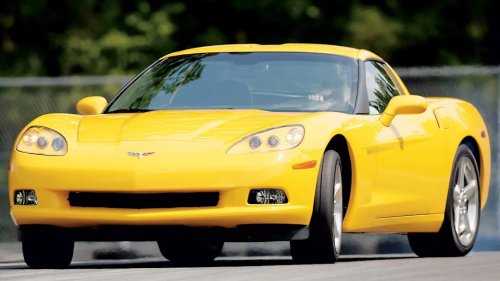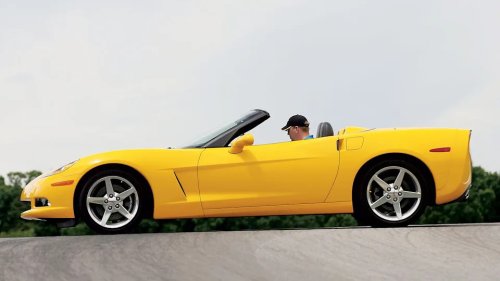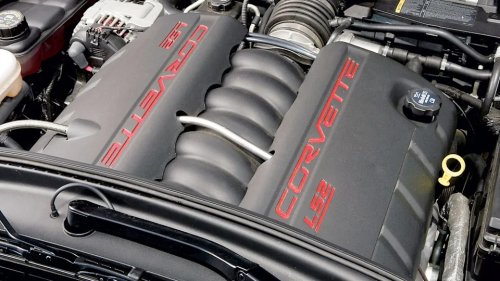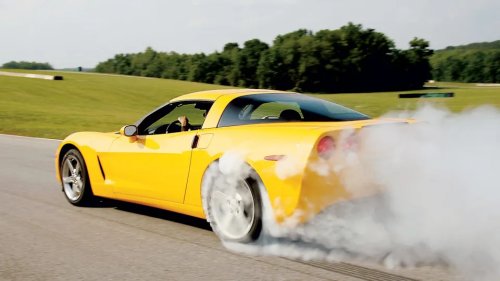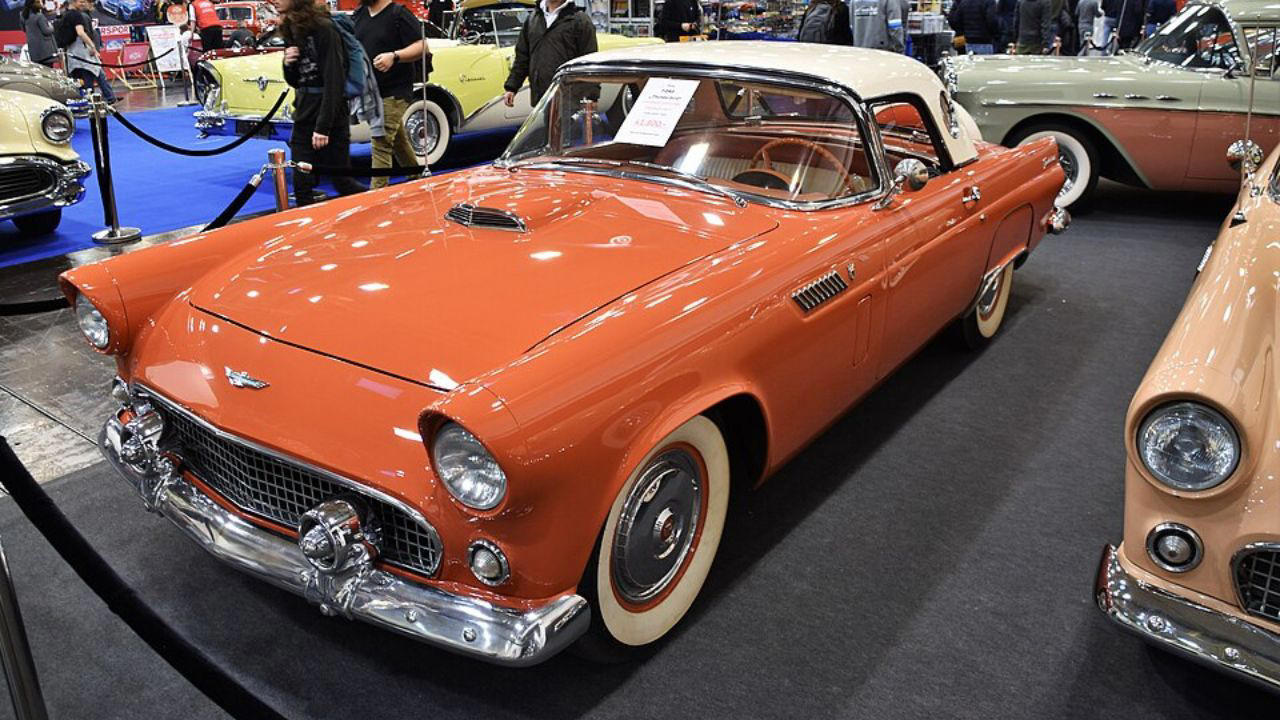



















1956 Ford Thunderbird vs 1956 Chevrolet Corvette one became a legend the other stayed complicatedThe 1956 Ford Thunderbird and the 1956 Chevrolet Corvette arrived in showrooms chasing the same dream: an American two‑seat coupe that mixed glamour with genuine speed. One evolved into a broad cultural legend, shorthand for personal luxury and mid‑century style. The other fought through early missteps, stayed complicated for buyers and executives alike, and only later secured its reputation as a pure sports car icon. Set side by side, the 1956 Thunderbird and 1956 Corvette reveal two Detroit strategies for the same problem: how to sell excitement to postwar drivers. Their contrasting sales numbers, engineering choices, and legacies explain why one became the default image of 1950s cool while the other spent years proving it deserved to survive at all. The personal luxury gamble that paid off Ford did not set out to build a track weapon. The Thunderbird was conceived as a “personal car,” a two‑seat machine that borrowed the look of bespoke 1930s roadsters but relied on existing Ford components to keep costs in check. Enthusiasts have pointed out that the car built upon the heritage of those custom roadsters, yet was constructed largely from the corporate parts bin, which made it both aspirational and attainable for middle‑class buyers who wanted style more than lap times. One discussion of the model highlights that this strategy helped push early production to 16,155 Thunderbirds against only 674 Corvettes in 1955. That sales gap was no fluke. Contemporary coverage of the Thunderbird’s launch describes the car as an instant hit with buyers who saw it as a glamorous daily driver rather than a weekend toy. One account notes that online car news sites such as Carscoops pointed to the way the Thunderbird sold exceptionally well in its first full year, with those 16,155 Thunderbirds sold versus 700 Corvettes, and framed the model as a key part of Ford’s image building in the 1950s. The Thunderbird name quickly became shorthand for a new American idea: a compact luxury coupe that felt exclusive without being exotic. This positioning would echo through later generations. Commentators have described the Thunderbird as a car that constantly tried to redefine what a personal luxury car meant, from its early two‑seat form to later four‑seat cruisers. A modern video profile of the model, for instance, frames the Ford Thunderbird as a recurring rival to the Corvette but with a focus on comfort, technology, and image rather than outright performance. That split in mission is already visible in 1956. Corvette’s near‑death season Chevrolet’s Corvette entered 1956 in a very different mood. Early Corvettes had struggled badly in the showroom, and internal voices at General Motors reportedly argued that poor units for 1955 Chevrolet would have cancelled the Corvette at the end of the 1955 model year if not for a rapid turnaround in the mid‑1950s. Later analysis of the program notes that the success of the 1956 and 1957 versions effectively saved the Corvette from being dropped altogether. The 1956 redesign was therefore a rescue mission. Engineers and marketers pushed the car toward a more focused sports identity, with fiberglass bodywork, a lower stance, and a stronger V8. Yet even as the Corvette moved closer to European‑style performance, it remained a complicated proposition for buyers. It was more expensive, less practical, and less comfortable than the Thunderbird, and its early reputation for quality issues lingered. One restoration‑focused overview notes that sales numbers for both the 1956 and 1957 models were around 3,500 each year, well below those of the Ford Motor Company Thunderbird. That relative weakness in volume did not mean the Corvette lacked strengths. Contemporary and modern comparisons consistently credit the Chevrolet with sharper reflexes and a more aggressive character. A social media debate that asked readers to choose between the two cars summarized the Corvette’s edge in simple terms: performance. The Corvette was equipped with a powerful V8 engine that delivered impressive acceleration and top speed, and it was designed with handling in mind rather than plush ride quality. That same discussion framed the Thunderbird as a more relaxed cruiser, which already hints at how the two cars would be remembered. Powertrains, ride, and the meaning of “sporty” On paper, the 1956 Thunderbird could match the Corvette in raw power. Buyers could order Ford’s Y‑block V8 in several states of tune. One detailed comparison lists choices of the 292 or 312 cubic inch engines, with 202, 215 or 225 horsepower versions. That analysis notes that these figures equaled the 1956 Corvette’s much smaller but also high‑revving V8, at least in headline numbers. The same source explains that the Ford’s broader torque curve and heavier curb weight gave it a different personality. It was quick, but it did not egg drivers on in quite the same way. Road testers of the era picked up on that contrast. In a later retrospective, writer Woron described how the T‑Bird’s ride “is definitely softer” than the Corvette’s, with a tendency to “float” over dips and bumps. He added that this made the car comfortable at moderate speeds but less confidence inspiring as the pace rose, where the Corvette felt more tied down and communicative. That evaluation of the Corvette and Thunderbird dynamic behavior has shaped how enthusiasts describe the pair ever since. Modern owners echo similar themes. In one enthusiast comparison focused on styling and driving feel, contributors describe the Chevrolet Corvette as having a more aggressive design language, with sharp lines and a low stance that signals its sports car intent. The Thunderbird, by contrast, is praised for its elegant proportions, chrome details, and integrated hardtop, which align more closely with luxury coupes of the era than with European racers. That split in visual messaging reinforced the different expectations buyers brought to each test drive. Even in drag races, context mattered. A video piece that revisits the rivalry argues that while the Corvette may have been winning on racetracks, it was the Ford Thunderbird that was winning where it counted for Detroit: on the sales charts and in suburban driveways. The presenter in that segment goes so far as to say that this Thunderbird “ran circles around the 1955 Corvette” in the marketplace, even if the lap times told a different story. The clip positions the Ford Thunderbird as the car that best translated 1950s performance fantasies into everyday ownership. Marketing, image, and the “legend” factor Marketing departments leaned into these differences. Ford’s messaging wrapped the Thunderbird in images of sunbelt leisure, golf courses, and stylish couples. Later commentary on the model’s history emphasizes how the Thunderbird became an icon, a sports car with a 55-year storyline that served as a rolling emblem of Ford’s brand. One enthusiast post goes so far as to introduce the “1957 Ford Thunderbird to the casual observer” as simply “the Thunderbird,” a name that carries meaning even without the Ford badge attached. Chevrolet’s approach was more conflicted. The company wanted the Corvette to be America’s sports car, but it also had to justify the program to executives who watched the sales charts. A historical overview of the early years notes that the 1956 and 1957 cars were rare and highly prized among collectors precisely because they sold in such modest numbers at the time. That scarcity adds to their allure today, but it also reflects how uncertain the car’s future looked in the mid‑1950s. Public perception followed the advertising. In a modern social media poll that asked, “Corvette or Thunderbird? Which classic coupe is your favorite?”, the comments quickly split along familiar lines. Fans of the Chevrolet pointed to performance, highlighting how the Corvette was equipped with a powerful V8 engine that delivered impressive acceleration and top speed, and how its chassis rewarded spirited driving. Supporters of the Thunderbird emphasized comfort, style, and the ability to use the car as a daily driver without feeling punished by stiff springs or cramped interiors. That divide mirrors the original market positioning of both cars. Cultural exposure also played a role. The Thunderbird appeared in movies, television, and music as a symbol of aspirational American life. A feature on the car’s history notes how the name Thunderbird became shorthand for a certain kind of 1950s and 1960s cool, to the point where casual observers sometimes misremember the model years or body styles but still know the badge. The Corvette would eventually achieve similar pop‑culture saturation, but in the mid‑1950s it was still fighting against its own reputation and limited production. Inside the 1956 Thunderbird and Corvette today Modern walk‑around videos and owner interviews reveal how these cars feel to contemporary enthusiasts. A detailed presentation of a 1956 Ford Thunderbird by the Collector Car Network shows host Luke highlighting the car’s removable hardtop, porthole windows, and intricate dashboard. He frames the car as a significant milestone in the history of American automobiles, and the comments echo that sentiment, with fans praising the Ford Thunderbird as a uniquely American blend of style and usability. One enthusiast group post even punctuates a photo set of a restored example with “1956 Ford Thunderbird” followed by strings of celebratory symbols, underscoring the affection the car still inspires. On the Corvette side, a video interview with an owner named Michael Michael captures the more personal, sometimes obsessive connection people form with these early fiberglass cars. The host, identified as chris here with the driving fix, thanks the owner with phrases like Absolutely Thank and Yeah as they discuss the car’s history and restoration. The conversation emphasizes how the 1956 Corvette’s rarity and performance focus make it especially meaningful for collectors who want a direct link to the origins of America’s sports car. That sense of intimacy with the machine is a recurring theme in Corvette circles. Another enthusiast‑oriented comparison of 1956 models points out that while the Thunderbird might have felt more polished in period, the Corvette’s rawness is precisely what makes it appealing today. Owners talk about the heavy steering, the engine’s bark, and the way the car demands attention on a winding road. They contrast that with the Thunderbird’s smoother manners and quieter cabin, which some now interpret as less “authentic” in a sports car sense, even though those traits were central to the Ford’s original appeal. These modern impressions feed back into values and collecting trends. Guides that track restoration projects for both models stress that early Thunderbirds are widely recognized as blue‑chip collectibles, but they also note that 1956 and 1957 Corvettes, with sales around 3,500 each year, are rare and highly prized among collectors. The market effectively rewards the Corvette’s complicated early history, turning what was once a commercial weakness into a badge of exclusivity. Why one felt simple and the other stayed complicated Looking back, the Thunderbird’s path to legend seems almost straightforward. Ford identified a growing appetite for personal luxury, built a car that looked exotic but behaved like a well‑sorted Ford sedan, and priced it within reach of upwardly mobile buyers. The company then expanded the formula, turning the Thunderbird into a line of increasingly plush coupes and convertibles that kept the badge visible for decades. The result is that, for many people, the word Thunderbird instantly conjures a mental image of a pastel two‑seater gliding past palm trees. More from Fast Lane Only Unboxing the WWII Jeep in a Crate 15 rare Chevys collectors are quietly buying 10 underrated V8s still worth hunting down Police notice this before you even roll window down The post 1956 Ford Thunderbird vs 1956 Chevrolet Corvette one became a legend the other stayed complicated appeared first on FAST LANE ONLY.