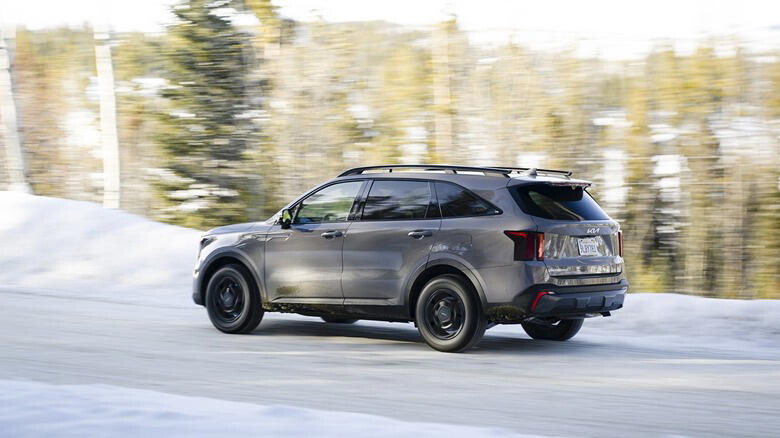
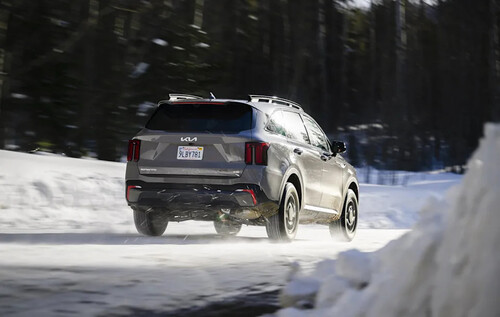
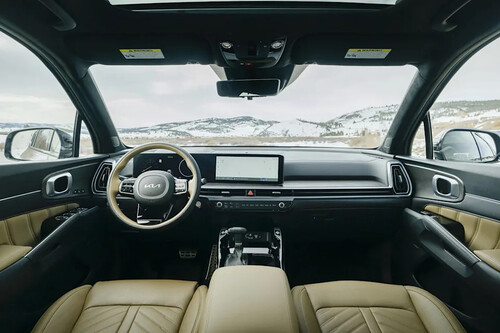
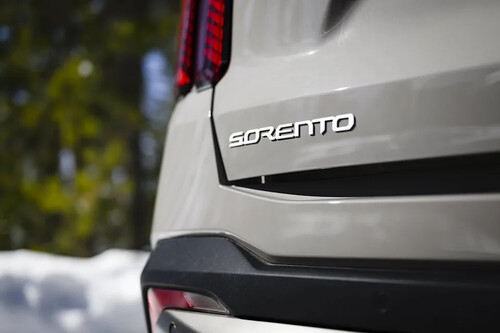
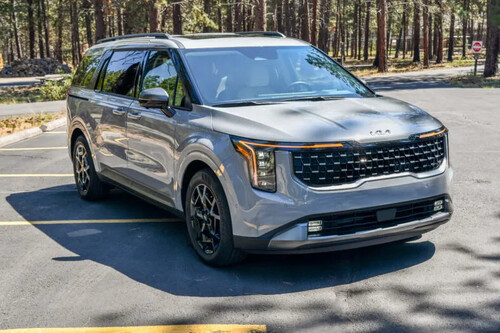
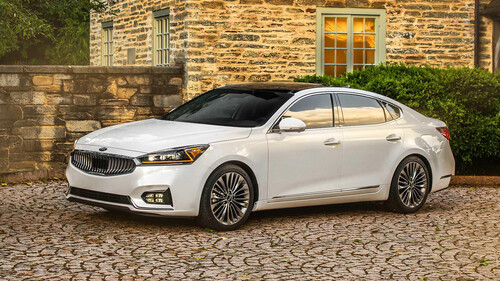
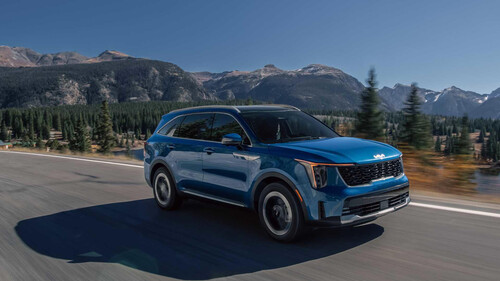
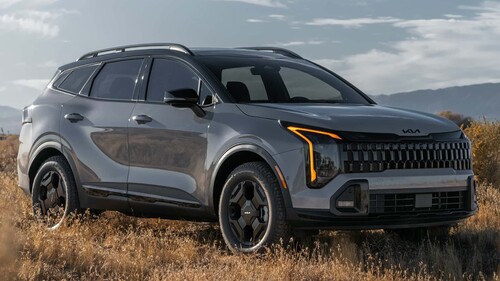
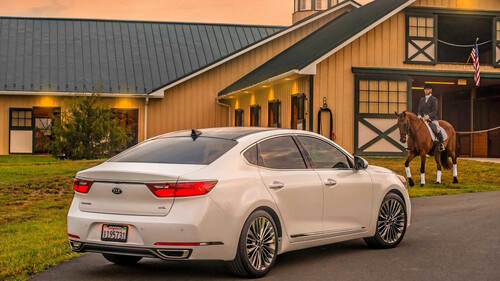
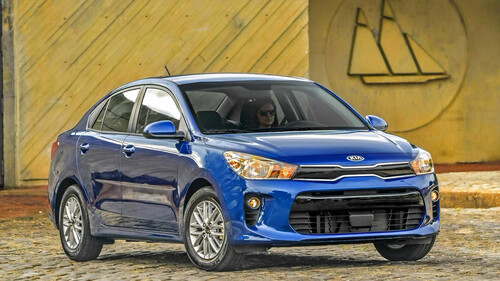
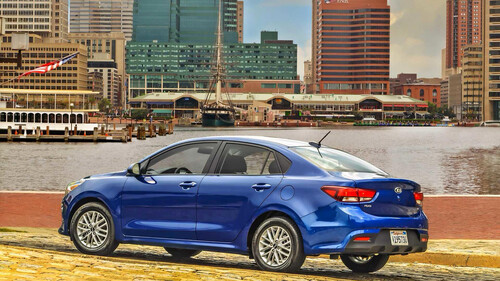
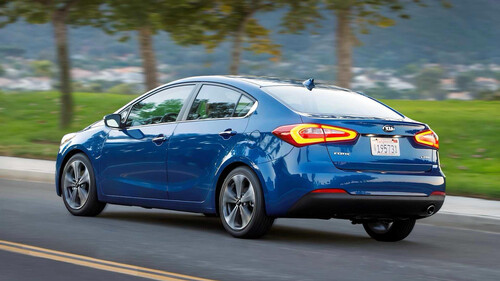
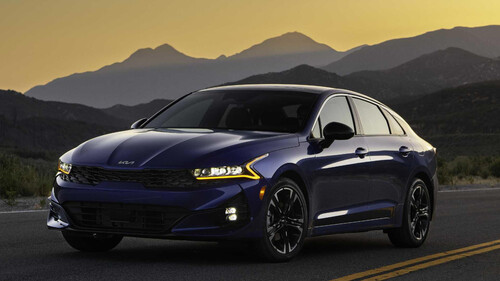
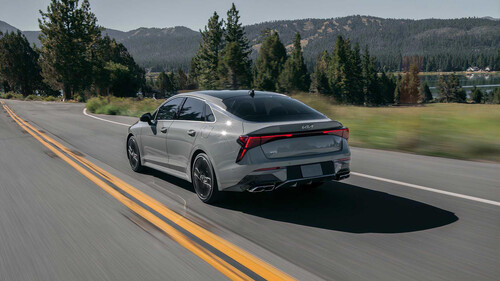
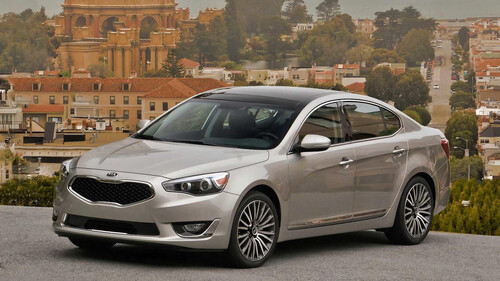
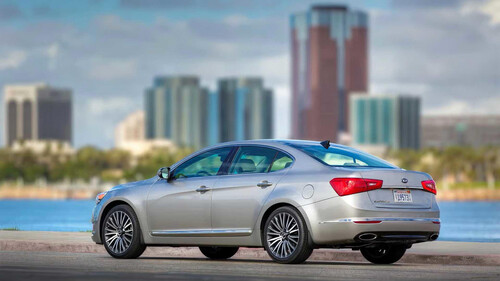
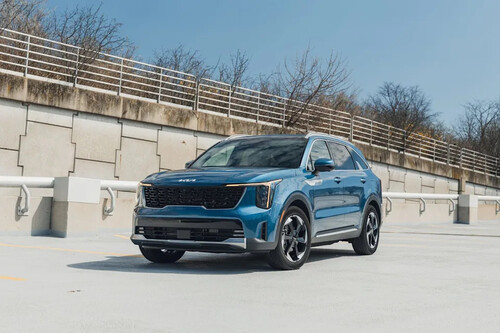
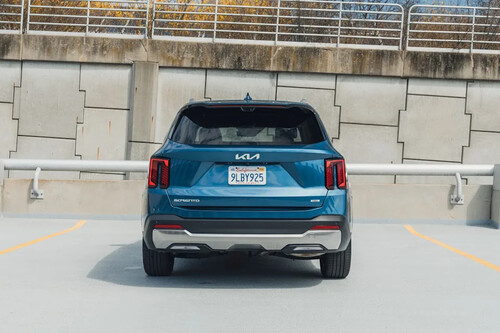
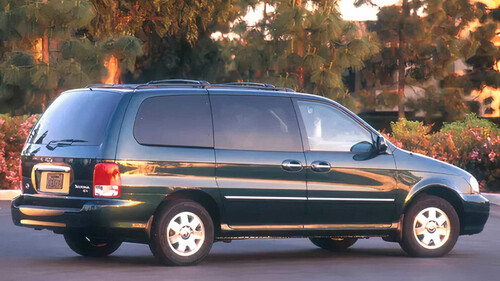
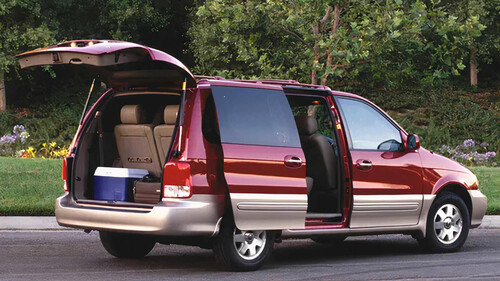
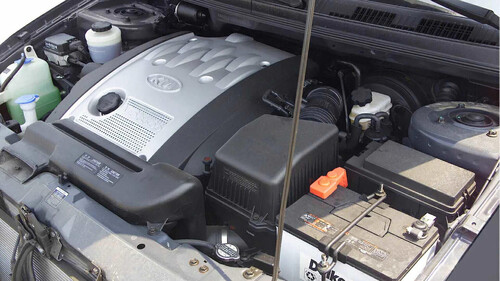
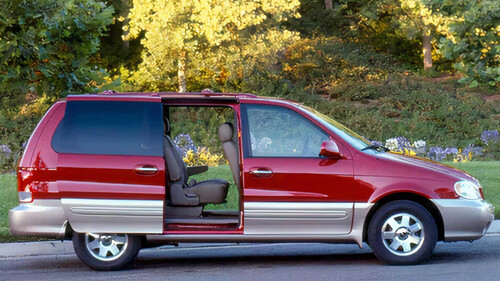
Kia SpectraThe Spectra was introduced as the replacement for the Kia Sephia in 2000, at the turn of the century. Kia intended for it to compete in the segment of the Toyota Corolla and the Honda Civic. Production of the Spectra ran from 2000 through 2009, when it too was replaced by the Kia Forte. During that production run, the Spectra had two generational refreshes and sold 589,883 units across the U.S. of the hatchback, four-door, and five-door variants. The first generation of the Kia Spectra that ran from 2000 to 2004 came with a 1.8-liter inline-four that pumped out a grand total of 124 horsepower. It could be had with either an automatic or manual transmission, and was essentially just a modernized upgrade of the Sephia that it replaced. It then went through a major overhaul in 2004, with a better interior, better engine, and better safety features. The second-generation Spectra had the same inline-four engine, but this time, the displacement was 2.0-liters, and it produced 138 horsepower.The first generation was priced quite affordably at $11,245, while 2004 range started at $13,590. This made the Spectra a pretty good bang for your buck, with decent gas mileage of 29 mpg in the city and 36 on the freeways, and room for five passengers. The only real pain point was the cargo space, but if you got the hatchback version, you had yourself a very nice, affordable, reliable all-in one package. Kia SedonaThe Sedona, once Kia's flagship people carrier, sold 610,411 units before it was replaced by the Carnival in 2021. The last model year that you could get new was the 2021, which had three trim levels: LX, EX, and SX. The LX started at $30,400, the EX cost $3,300 more at a base MSRP of $33,700, and the SX that started at $41,500.All trims came with the now-mature V-6 engine with a displacement of 3.3-liters. The engine was mated to an eight-speed automatic transmission and the powertrain put out 248 lb-ft of torque with 276 horsepower. All three trims have an EPA-estimated economy of 18 miles in the city, 24 miles on the highway, and 21 miles combined. The LX and EX trims both got a seven-inch color touchscreen display, although only the SX got the eight-inch version. You also got powered sliding doors as standard on all trims, a conversation mirror, and a rearview camera.Today, you should be able to get a very decent spec 2021 Kia Sedona for about $19,000 on the used market, making it practically a steal. After all, it's basically a Kia Carnival for half the money.Kia RioThe Kia Rio was introduced in 1999, and was sold in the States until as recently as 2024. In 2024 it was discontinued, presumably so that it would not compete with sales of the Kia K4 and K5.When you could buy one new, you had two trim options, the LX and the Rio S. The Kia Rio LX was $16,750, and the S trim was $17,390. Both got the same 1.6-liter MPI (Multi Point Injection) engine mated to an automatic gearbox producing 112 lb-ft of torque and 120 horsepower. Given that powertrain, the Kia Rio was a very fuel-efficient vehicle, with a gas mileage of 41 mpg on the highway,32 mpg in the city, and 36 mpg combined.In total, the Rio has sold 752,233 units since its U.S. debut and came with a load of options as standard. For instance, you got solar control glass at the front and rear, electric heated mirrors, a 12-volt socket in the center console, wireless Android Auto or Apple Carplay, and a rear-backup camera as standard options — all of which was available on the lower LX trim. Kia ForteThe Kia Forte was another relatively new addition to Kia's U.S. lineup, having only launched in 2009 as a sedan, but it's already been discontinued as of 2024 in the U.S. The Forte has since been replaced by the Kia K4, which starts at about $21,990 and goes all the way up to $28,090 for the top-end GT-Line Turbo model. The base model came with a 2.0-liter multi-port injection (MPI) four-cylinder engine that made 147 horsepower, while the GT and GT MT trims came with a 1.6-liter four-cylinder engine that was turbocharged, and made 201 hp. The turbocharged engine could push the Forte from zero to sixty in 6.7 seconds, putting it in Golf GTI and Civic Si territory. The Forte of recent years had styling cues taken subtly from the Kia Stinger, and could be had with an eight-speed automatic DCT (Dual Clutch Transmission) or a six-speed manual one.Throughout its lifetime, the Kia Forte logged a total sales volume of 1,432,662 units — the first to cross the one million sales mark on this list.Kia SorentoThe best-selling Kia model in the United States of all time is the Kia Sorento. It makes sense that one of Kia's longest-running nameplates would be among the highest-selling ones as well. The long-running Sorento was introduced to the stateside market way back in February of 2003, where it instantly caught on. If you want to pick one up for yourself, the Kia Sorento has five trim options, which are the LX, S, EX, SX, and SX-Prestige. The base MSRP on the entry-level LX is $31,990, and the most expensive SX-Prestige costs $47,390 to start. The LX and S have the same 2.5-liter inline-four engine that has gasoline direct injection making 195 lb-ft of torque and 191 horsepower. The EX, SX, and SX-Prestige trim levels add a turbocharger, pushing the output up to 281 horsepower and 312 lb-ft of torque. All engines are paired with an eight-speed automatic transmission, but the EX trim and higher get a DCT version of the gearbox.Since being introduced in the early 2000s, the Kia Sorento has sold 1,844,069 total units and is still available for purchase today. That's average of about 230 units per day every day since the day it was released. If you didn't know, now you can proudly tell people at dinner that you know what the most successful Kia model of all time is.