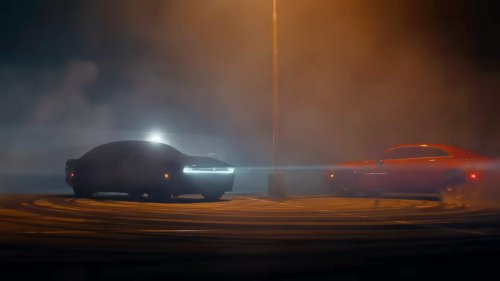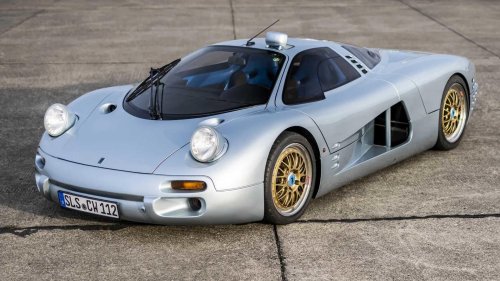
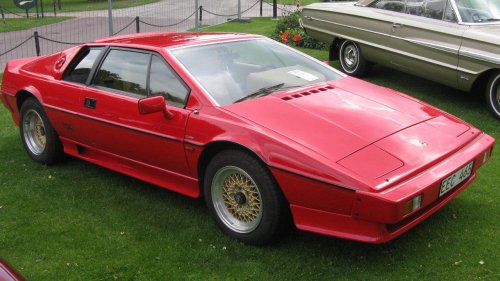
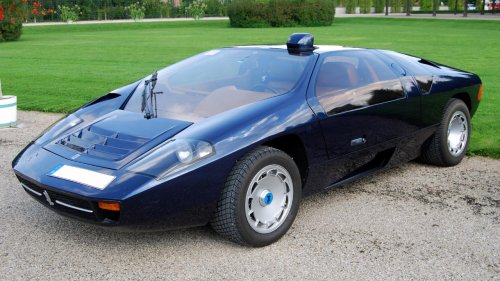
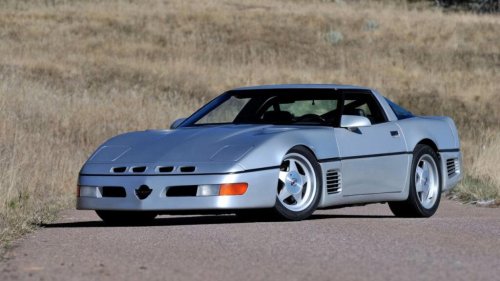
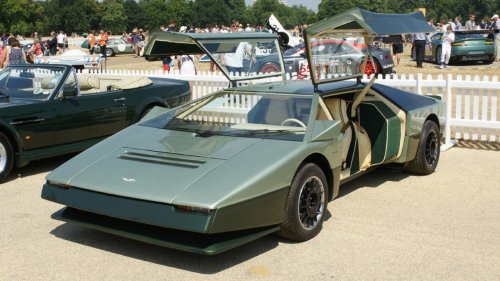
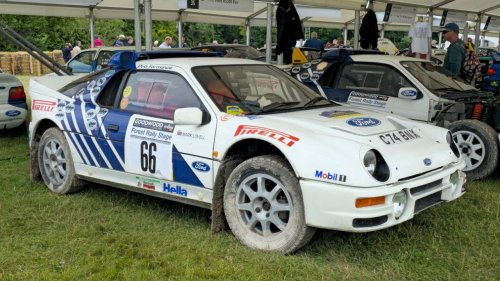
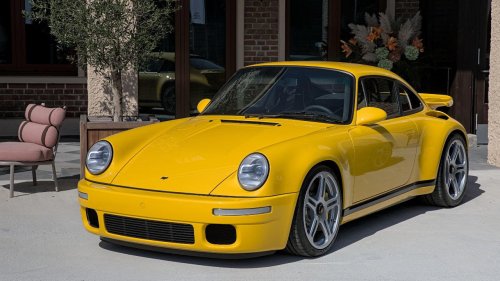
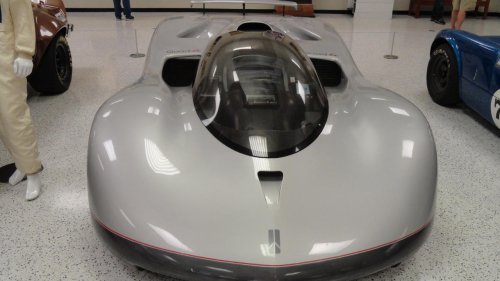
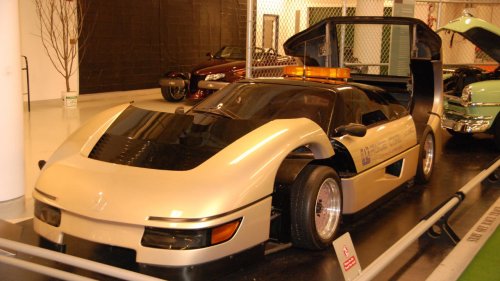
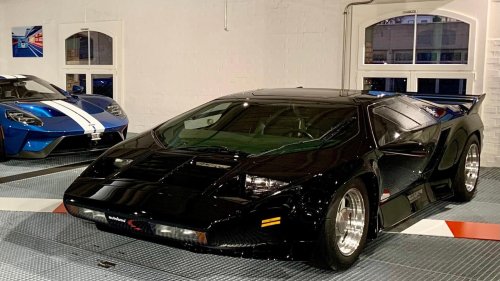
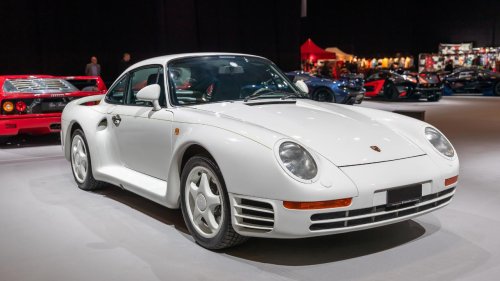


















10 Wildest ’80s Supercars That Pushed the Limits of Speed and StyleThe ’80s were a wild time for supercars. It was an era when engineers pushed limits, designers went all-in on wedge shapes, and carmakers weren’t afraid to experiment—sometimes with results that were downright insane. These weren’t just fast cars; they were rolling statements, packed with big power, futuristic tech, and designs that looked straight out of a sci-fi movie. Some of these machines shattered speed records, while others barely made it past the prototype stage. A few were so ahead of their time that modern supercars are still borrowing ideas from them. Whether it was turbocharged insanity, crazy aerodynamics, or just sheer excess, these ’80s supercars proved that more was always better.Lotus Esprit TurboThe Lotus Esprit Turbo was all about lightweight speed. With a turbocharged 2.2-liter engine putting out 215 horsepower and 220 lb-ft of torque, this thing could move. Weighing just under 2,600 pounds, it handled like a dream, and its wedge-shaped design—penned by Giugiaro—sliced through the air with ease. By 1987, Peter Stevens, the guy behind the McLaren F1’s design, gave it a refresh, making it even more aerodynamic. By the time the Esprit SE arrived, it had 264 horsepower, a 160 mph top speed, and a 0-60 time of 4.7 seconds. Bond even drove one in The Spy Who Loved Me and For Your Eyes Only, proving it had the looks and the speed to back it up.Isdera Imperator 108iThe Isdera Imperator 108i is what happens when a designer refuses to let a concept die. Originally a Mercedes-Benz project, the CW311 was shelved in the late ‘70s. But Eberhard Schulz, the man behind the design, wasn’t ready to let it go. He secured the rights, tweaked it, and in 1984, the Imperator 108i was born. It kept the futuristic look, complete with periscope mirrors and gullwing doors. Underneath, it had a Mercedes-Benz V8 pumping out up to 390 horsepower. Only 30 were ever made, making it one of the rarest and most interesting supercars of the ‘80s.Callaway Corvette SledgehammerThe Callaway Corvette Sledgehammer was a one-off monster that took the C4 Corvette to insane levels. Callaway started by adding twin turbos to the 5.7-liter V8, taking the standard Corvette from 345 horsepower to 403 horsepower. But that wasn’t enough. The Sledgehammer cranked things up to a ridiculous 898 horsepower, breaking the 250 mph barrier and setting a speed record that no production Corvette has beaten to this day. It was built to prove a point, and it did just that—becoming a legend in the process.Aston Martin BulldogThe Aston Martin Bulldog looks like something out of a sci-fi movie. Built in 1980, it had a low, wedge-shaped design, gullwing doors, and a goal: to break the 200 mph barrier. Powered by a twin-turbo 5.3-liter V8 pushing 600 horsepower, it came close, reaching 191 mph in early tests. Financial troubles meant Aston Martin never put it into production, and it ended up in the hands of a Saudi prince. But in 2023, after a full restoration, the Bulldog finally hit its target—clocking 205 mph and proving that some legends just need a second chance.Ford RS200 EvoThe Ford RS200 Evo was a Group B rally weapon disguised as a street car. With all-wheel drive and a turbocharged four-cylinder, it was blisteringly quick—hitting 60 mph in just three seconds. That was unheard of for a road car in the ‘80s and still impressive today. To meet homologation rules, Ford had to build street-legal versions, and while the standard RS200 made around 250 horsepower, the Evo turned things up to 600. Group B rallying was eventually banned for being too dangerous, but the RS200’s legacy as one of the wildest rally machines ever built remains intact.Ruf CTR YellowbirdThe Ruf CTR Yellowbird may look like a regular Porsche 911 Carrera, but don’t let that fool you. Ruf took everything great about the 911 and turned it up to eleven. With a twin-turbo 3.4-liter flat-six making 463 horsepower—though some say it’s even more—this thing was an absolute missile. What really cemented the Yellowbird’s status was its legendary Nürburgring lap, where it danced around the track in a way that even modern supercars struggle to match. It was raw, rear-wheel drive, and had no electronic assists—just pure driver skill and brute force.Oldsmobile AerotechThe Oldsmobile Aerotech wasn’t just a car—it was a rolling experiment. Designed to test the limits of Oldsmobile’s Quad 4 engine, it started with a turbocharged 2.3-liter four-cylinder making an absurd 900 horsepower. But Oldsmobile didn’t stop there. They added another turbo, pushing it past 1,000 hp, and even built a V8-powered version that borrowed tech from the future Aurora. Aerodynamics played a huge role in its insane top speeds. With adjustable belly pans for downforce and a long-tail body for stability, the Aerotech hit over 275 mph. It may have never hit the streets, but it made sure the world paid attention.Dodge M4S Turbo InterceptorIf you’ve ever seen The Wraith, you know the Dodge M4S Turbo Interceptor. It wasn’t just a movie car—it was a real, functioning supercar built by Dodge and PPG as a pace car. Underneath that sleek body was a turbocharged 2.2-liter four-cylinder making 440 horsepower, which was enough to push it close to 200 mph. The design was ahead of its time, looking more like something out of Cyberpunk 2077 than a car from the ‘80s. Dodge never mass-produced it, but its legacy as a cult classic and one of the most striking concepts of the decade still stands strong.Vector W8The Vector W8 was America’s wild attempt at building a supercar that could take on Ferrari and Lamborghini. The wedge-shaped body looked straight out of a fighter jet, and under the hood was a twin-turbo 6.0-liter V8 cranking out 625 horsepower and a monstrous 649 lb-ft of torque. Vector claimed it could hit 242 mph, though real-world tests suggest it was closer to 220 mph—which was still ridiculous for the time. With only about 20 ever built, it never got the recognition it deserved, but it remains one of the most outrageous and ambitious supercars to ever come out of the U.S.Porsche 959The Porsche 959 was the forbidden fruit of the ‘80s for American car fans. Designed for Group B rallying, it was way ahead of its time, featuring an advanced all-wheel-drive system, a Kevlar body, and a twin-turbo 2.8-liter flat-six making up to 508 horsepower in later versions. It wasn’t just about numbers—it was about technology. The 959 was packed with innovations that would shape Porsche’s future cars, and it was one of the first true everyday supercars. Unfortunately, Porsche never officially sold it in the U.S., making it even more desirable.