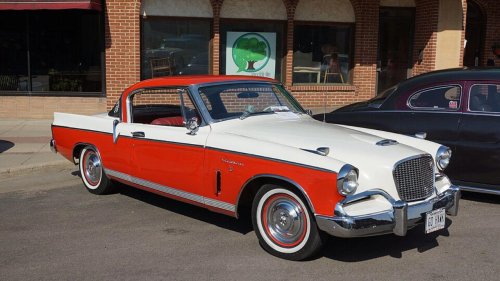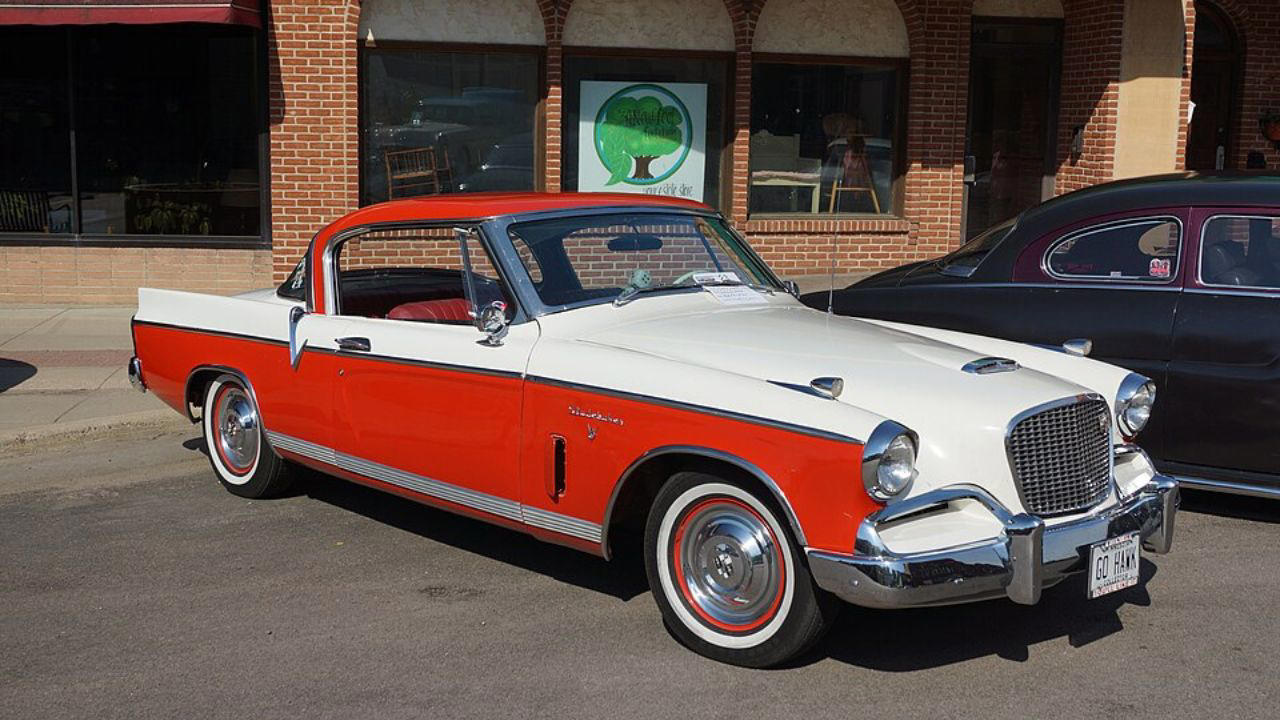



















How the 1956 Studebaker Golden Hawk mixed style and speedThe 1956 Studebaker Golden Hawk arrived just as American cars were becoming heavier and more ornate, yet it managed to combine dramatic styling with high speed. With a light body, a large V8 and flamboyant details such as tail fins, it stood apart from Detroit rivals that often favored bulk over balance. Seven decades later, enthusiasts still regard it as one of the clearest early attempts to mix show-car glamour with near muscle-car performance. A flagship built for attention Studebaker positioned the Golden Hawk as its flagship in 1956, a halo coupe intended to pull buyers into showrooms and signal that the company still had technical ambition. Contemporary descriptions from The Studebaker National Museum describe the Golden Hawk as the company’s top model and highlight its role in showcasing advanced styling ideas such as prominent tail fins. Those fins, unusual for a mid-priced car at the time, helped the coupe stand out in traffic and on dealer lots. The car’s basic body shell came from Studebaker’s earlier low-slung coupes, giving designers a sleek starting point. A raised hood and bold upright grille created a more assertive face, while chrome side spears and a contrasting roof color emphasized length. The Studebaker National Museum notes that the Golden Hawk was among the first American production cars to feature tail fins in this dramatic way, turning the rear view into as strong a statement as the front. Jet-age lines and fighter inspiration Observers often connect the Golden Hawk’s styling to aviation, and period analysis ties the coupe’s fins and nose treatment to fighter aircraft. One account explains that, in the Hawk’s case, designers drew inspiration from the North American F-86 Sabre, a jet that had become an icon of speed and modernity. A later review describes how, in the Hawk, the long hood, short rear deck, and sharply defined fins created a profile that echoed a fighter jet more than a family sedan. The jet-age influence extended to the interior, where a full-width dashboard and round gauges tried to evoke an aircraft cockpit. Chrome trim, two-tone upholstery, and a sweeping steering wheel horn ring reinforced the sense that this was not a modest economy car. Even so, the underlying body remained relatively compact by mid-1950s American standards, which helped distinguish the Golden Hawk from bulkier luxury coupes. Light body, big engine Underneath the styling, Studebaker engineers made an uncommonly aggressive powertrain choice. The Golden Hawk used a Packard V8 that displaced 352 cubic inches and produced a quoted 275 horsepower. A detailed enthusiast summary credits the 1956 Studebaker Golden Hawk with Packard’s 275-horsepower 352 cubic inch V8, and notes that this output placed the car among the most powerful American models of its year. Crucially, Studebaker installed this engine in a relatively light shell. Analysis of factory figures and shipping documents places the Golden Hawk’s weight at 3,360 pounds. One detailed historical piece on the model emphasizes that this 3,360-pound figure was unusually low for a mid-1950s American coupe with such a large engine. The resulting power-to-weight ratio gave the car vivid acceleration and allowed it to compete with far more expensive performance machines. Period testing and later reconstructions describe the Golden Hawk as one of the fastest cars on American roads in 1956. Contemporary enthusiasts highlight that the combination of the Packard V8 and the light body allowed the car to run with early fuel-injected Chevrolets and Chrysler’s Hemi-powered models, even though the Studebaker came from a much smaller company with fewer resources. On the road: speed with manners Modern video reviews help translate those numbers into a sensory experience. In one walkaround from Jun at a local show, the host describes a Studebaker Golden Hawk that still feels eager and responsive, with the big V8 delivering strong torque at modest speeds. The clip underscores how the car’s relatively compact dimensions and generous glass area make it feel more agile than many contemporaries. Another enthusiast video, titled as a discussion of innovative and supercharged Studebakers, places the Golden Hawk within a broader family of performance-oriented models. The presenter explains that viewers show strong interest in Studebakers that combined advanced engineering with distinctive styling, and the Golden Hawk emerges as a central example of that formula. The focus on how these cars drive, rather than simply how they look, reinforces the idea that Studebaker aimed for a genuine grand touring character. Further driving footage, including a test drive segment labeled with a 1956 Duda Baker Golden Hawk and featuring a driver named Carrie, shows how the car behaves at modern road speeds. In that clip, the Duda Baker Golden Hawk accelerates briskly and tracks cleanly, demonstrating that the underlying chassis and suspension still cope well with contemporary traffic. The presence of Carrie at the wheel in that Duda Baker Golden test reinforces how approachable the car remains for drivers who are not professional racers. Performance reputation and early muscle car status Enthusiasts often debate which car deserves to be called the first muscle car, and the Golden Hawk regularly appears in those discussions. One detailed social media post argues that, by any definition, a 1956 Studebaker Golden Hawk is a muscle car and describes how the Studebaker Golden Hawk combined luxury, style, and performance long before the muscle car era became an established marketing term. That argument rests on the car’s combination of a powerful V8, relatively modest size, and a focus on straight-line acceleration. Additional retrospective analysis goes further and frames the 1956 to 1958 series as a kind of proto pony car. One in-depth feature describes how the Studebaker Hawk family anticipated later American performance coupes by pairing sporty styling with usable rear seats and trunk space. That piece notes that the Golden Hawk and its siblings offered a template that cars like the Ford Mustang would refine in the 1960s, even if Studebaker itself did not survive to benefit from the trend. Power figures from later racing and tuning efforts suggest that some Golden Hawks may have produced well over 300 horsepower in competition trim. The same retrospective points out that the race among restorers and builders to extract more performance from the Hawk platform continues, with some estimates placing modified examples comfortably past that 300-horsepower figure. Those numbers help explain why the car still commands respect at vintage drag events. Why the Golden Hawk still matters The Golden Hawk’s legacy extends beyond raw acceleration. A detailed overview of the model notes that the comparatively large and powerful engine in such a light car gave the Golden Hawk an excellent power-to-weight ratio and allowed it to reach speeds above 201 km/h. That combination of speed and style, offered by an independent automaker, has become a touchstone for enthusiasts who admire underdog engineering. Institutional guardians also play a role in preserving the story. The Studebaker National Museum maintains exhibits and online resources about the 1956 Studebaker Golden Hawk and promotes them through channels such as the museum’s Studebaker Golden Hawk-themed social media presence and a dedicated Studebaker Golden Hawk feed. Archival photographs and documents are available through the Studebaker Golden Hawk collection, while enthusiasts can purchase related materials from the museum’s Studebaker Golden Hawk store. Contemporary automotive outlets continue to revisit the Hawk story, often linking it to later muscle and pony cars. Broader coverage of Studebaker Golden Hawk performance themes and modern Proto muscle machines sometimes compares the Hawk’s formula to current sports coupes. Features on modern Mustangs, including a Pony-branded model, implicitly trace a line back to early experiments like the Golden Hawk that proved there was a market for stylish, fast coupes. Custom builds and auctions keep the name in circulation as well. Coverage of a heavily modified 1953 Hawk coupe, described as a Frankenstein Studebaker, shows how builders still draw on the Hawk silhouette for inspiration and how that car appears in a Studebaker Golden Hawk auction context. Another feature focuses on the Golden Hawk’s Proto fighter jet design cues, reinforcing how the original styling continues to influence customizers. More from Fast Lane Only Unboxing the WWII Jeep in a Crate 15 rare Chevys collectors are quietly buying 10 underrated V8s still worth hunting down Police notice this before you even roll window down