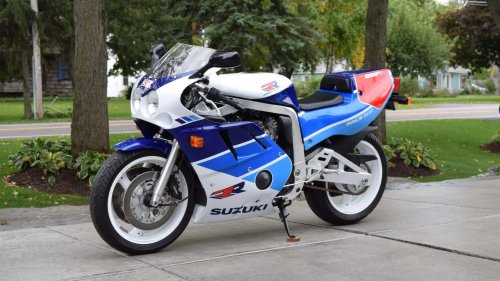
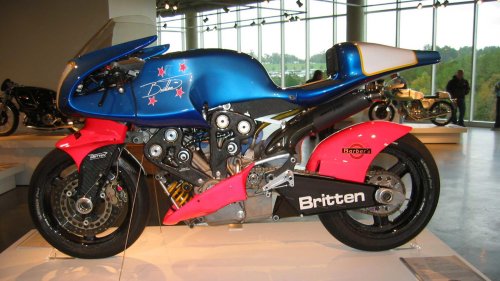
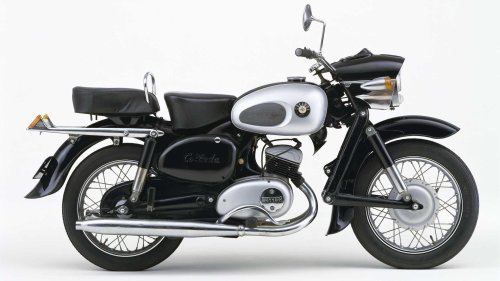
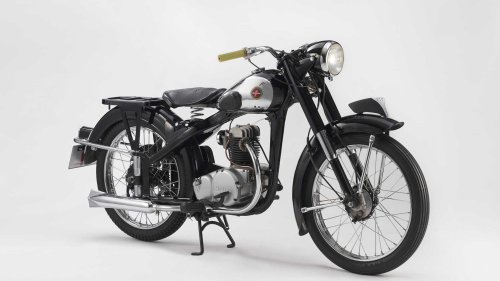

















Motorcycles are the cheap, plentiful workhorses of the world. Produced at scale, and costing less than a car and having fewer parts in most instances, a motorcycle is the perfect vehicle to make and sell again and again and again.That's not to say that they're always made in high numbers, though, as some of the world's most popular bikes are resoundingly difficult to find. And there’s good reason for it. Rare Bikes Come In Many Shapes And Sizes MecumWith an estimated 705 million motorcycles in the world, it’s hard to stand out. Some bikes try by having more power, others by having different features, some by their color schemes. It's a tricky rope to walk, but in the world of mass-produced motorcycles, there are some that stand out due to their sheer lack of production.Homologation specials are one such example, and are rare because manufacturers don’t always want to make them. Racing series like WSBK require manufacturers to produce road-going versions of the bikes they’ll race with, preventing them from spending millions upon millions on a prototype race bike with no semblance of something road-going. Brands will make as few bikes as possible to satisfy governing bodies, which leads to bikes like the Honda RC30 (3,000 made), the Honda SP1 (3,000 made), and the Suzuki GSX-R750RK (500 made). These bikes aren't designed with rarity in mind, but their scarcity is a byproduct of the teams wanting to go racing.Other times rarity comes from manufacturers just wanting to prove a point. Take the Honda NR750, for example. Only 300 examples of the bike were made; partly because of the expense of creating them, but also partly because Honda just wanted to show that it could make them. With prices starting at $50,000 in 1992, it was never going to be a massive production bike anyway, but it was made as a technical showcase and something to grab attention for the brand. With people still talking about the bike over 30 years later, it seems it’s done just that.Wikimedia RedhawkriderLimited production bikes from big brands are one thing, but another reason for bikes being hard to come by is the manufacturers themselves. This covers bikes like the Britten V1000. Only 10 examples of the Britten V1000 were ever made, partly because of its boutique nature (each one was hand-crafted by the Britten team) but partly because its founder, John Britten, passed away before he could design any more. Britten had only wanted 10 to be made anyway, but his death after just six had been finished meant that no further bikes could be created.As rare as all these bikes were, though, there’s one Japanese bike that had even fewer — the total number sitting in the single digits. The 1956 Suzuki Colleda 250TT Is An Exceptionally Rare Machine SuzukiWhile Suzuki the brand started in 1909, first making weaving looms, it wasn’t until 1952 that they branched out into transportation. That first step was a 36cc motorized bicycle, and with that under their belt, in 1954 they released their first proper motorcycle in the Suzuki Colleda CO. A 90cc four-stroke single cylinder, the Colleda CO ("Colleda" being the Japanese for "This Is The One"), was the brand's first proper motorcycle rather than a bicycle with an engine in it.From here, they iterated on the bike, releasing COX, DH-1 Porter Free, ST, and TT models before landing on the Colleda 250TT.The 250TT was different in both its power and its design. Starting with that design, Suzuki opted for a very futuristic aesthetic. Inspired by American design, it started with a huge headlight up front that had the speedo built in, and was flanked by two indicators that looked remarkably similar to jet engines coming off the side. The rear parcel shelf also had a fin design, similar to the rear of a Cadillac of the time.SuzukiThe TT part of the name also referenced aspects of its design, as the sportier styling comes from the Tourist Trophy style of motorcycles at the time. Eagle-eyed fans will notice that it also didn’t have any Suzuki branding, instead using the SJK name (which stands for “Suzuki Jidosha Kogyo”, translating to “Suzuki Automobile Manufacture” or “Suzuki Motor Industry”) that it used prior to the 1954 rename.Then we have the power. Suzuki had been nudging the displacement up slightly since that first offering, to the point where the 250TT became their first 250cc two-stroke twin, pioneering the engineering theory that they're still known for to this day.It all made for a very exciting, very interesting motorcycle. For reasons seemingly lost to time, though, Suzuki didn’t make many Colleda 250TTs. Perhaps it was the amount of other bikes they were making, or to make way for the cars they’d also started manufacturing (the Suzulight, a cheerful little kei car, was released the year prior), but only a handful were made. Today it’s estimated that just eight remain, mostly confined to Japanese museums and private collections, never to see the road again. Incredible Rarity Doesn’t Always Equal Incredible Price Rare doesn’t always equal expensive, and the Colleda 250TT is a surprising example of this; an auction of the only known Colleda 250TT outside of Japan yielded just a £13,225 ($17,800) hammer price in 2024. Less than $20,000 for a bike which is one of eight.There could be many reasons for its relatively low sale price. Did the bike being unknown outside of Japan mean that there weren't buyers? Was it just a bad day at the auction? Or, for whatever reason, is that just the value of the bike? It’s a tough one to call. There has to be a market for something to be expensive, and rarity alone doesn’t guarantee that interest. With no racing pedigree and no records to lie back on, there’s perhaps not as much reason to know that the bike exists, let alone to want to buy one. The bike’s considerable Japanese roots are also perhaps to its detriment outside the land of the rising sun, preventing it from getting notoriety elsewhere.Regardless of buyers’ reluctance to buy the bike, it’s still a piece of history. A bike from one of the most well-known and well-respected manufacturers in the world before they got big. When people ask what the first bike that started it all was, Suzuki can say, “This Is The One." And maybe that’s all it needs to be.