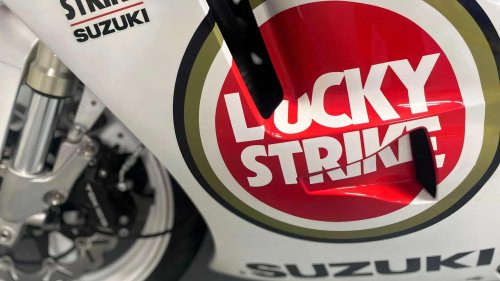
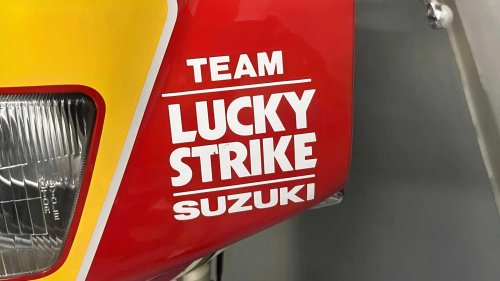

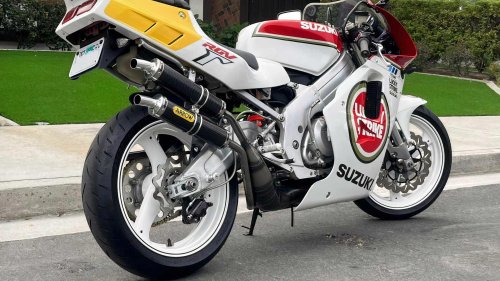
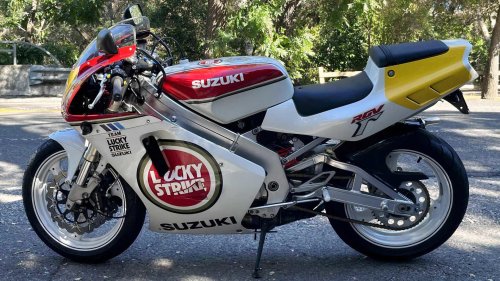
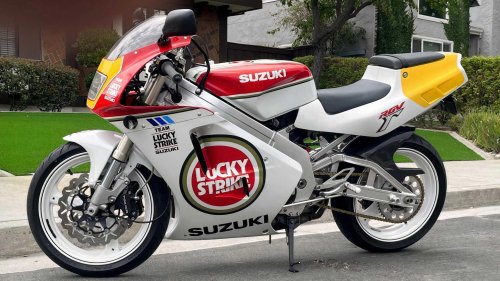
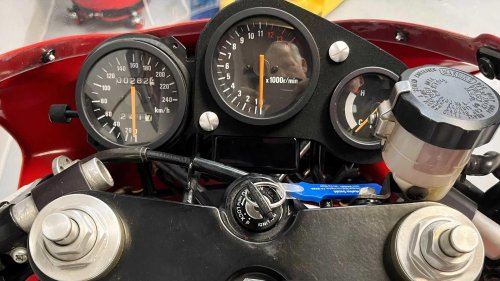



















There was a time when speed came from lightness, precision, and a willingness to live near the redline. Some machines from that era didn’t rely on big engines or electronic aids, and yet they could still rattle far more powerful bikes. And one of them rewrote expectations in a way that still feels uncomfortable today.That discomfort is part of the fun, because modern performance culture loves big horsepower numbers, giant rear tires, and enough rider aids to make a fighter jet blush. This little motorcycle, however, came from a different school entirely. It stayed small, sharp, and made speed the hard way. When Lightness Did The Heavy Lifting Bring A TrailerBack in the late '80s and early '90s, a fast motorcycle didn’t need a huge engine to feel outrageous. A machine weighing roughly 282 pounds with around 57 horsepower had a way of bending your sense of proportion. On paper, that output hardly sounds like the sort of thing that should scare modern superbikes. In practice, though, it absolutely had the manners of a caffeinated wasp with a personal grudge.That genuinely was the beauty of the era. Tight roads and technical circuits rewarded motorcycles that could brake late, flick into a corner without argument, and carry momentum with almost rude efficiency. You didn’t need a tidal wave of torque when the bike underneath you felt like it had skipped dessert for its entire life.It also meant riders had to participate. There was no lazy short-shifting your way past physics, and absolutely no mention of an electronic safety net quietly tidying up bad decisions in the background. You kept the engine singing, kept your lines clean, and kept your nerve. If you got it right, the payoff felt enormous. If you got it wrong, the bike was happy to remind you that bad inputs travel quickly when there isn’t much mass to slow them down. Suzuki Built A Quarter-Liter Missile For The Street Bring A TrailerSuzuki's answer to this moment arrived as a road-going extension of its Grand Prix thinking, and it came armed with the sort of hardware that made young riders stare through dealership windows like children outside an arcade. The aluminum beam frame was serious business, the handling was razor-sharp, and the whole motorcycle carried itself with the lean, taut stance of something designed by people who cared about lap times deeply. Unmatched Potency Bring A TrailerSuccessive versions sharpened the formula further. Later models brought bigger 34-mm carbs, fully adjustable suspension, upside-down forks, 17-inch wheels, and the signature banana swingarm that made the bike look like it had escaped from a paddock and wandered into traffic. By the time the M and N models arrived, the package had become even more convincing, with better midrange and a harder-edged connection to Suzuki’s Grand Prix image.It's a good time to point out that this was never about scary straight-line speed. The point was how eagerly the bike changed direction, how little effort it took to place exactly where you wanted, and how much confidence it gave a committed rider once the road got narrow and interesting. Bigger four-strokes still had the advantage in outright acceleration, but on a tight road, this little Suzuki could make them feel broad-shouldered and busy. The Suzuki RGV250 Hit Way Above Its Weight Bring A TrailerThe bike in question is the Suzuki RGV250, and the specs still make for entertaining reading. Its 249cc liquid-cooled 90-degree V-twin made around 57 horsepower in general road trim, with top speed hovering just shy of 130 mph. Some sharper variants pushed higher claimed output, which gives you a fair sense of how lively the package could get. Either way, this was serious performance for something so compact.The part that really mattered was the weight. At 282 pounds dry, the RGV explains itself before you even thumb the starter. Once the powerband arrived, it reportedly didn’t so much accelerate as snap into another mood entirely. Most of its punch lived high in the rev range, packed into a narrow, urgent surge that demanded precision and rewarded commitment. When the revs were there, the bike came alive with the kind of urgency that made larger motorcycles feel strangely overcomplicated.The RGV liked commitment. It liked corner speed. It liked a rider who understood that momentum was currency and braking too early was basically a charitable donation to whoever was behind you. It demanded something from you, and then paid it back in sensations that felt much bigger than the displacement suggested.It also looked the part. The later UK bikes, especially the ones with upside-down forks and that banana swingarm, wore their racing influence out in the open. Park one next to a bulky modern machine, and it still looks like the lighter, meaner thing in the room. Park one next to a couch and the couch probably offers better padding. Its Best Qualities Came With A Bill Attached Bring A TrailerAll that brilliance came with the usual two-stroke fine print, written in smoke, oil, and occasional financial regret. High-strung engines need attention, and the RGV was never shy about that fact. Powervalves could disintegrate within 10,000 miles and take the engine with them, while any lapse in maintenance opened the door to expensive trouble.Once you keep that in mind, it's easy to see why good examples are pretty scarce today. Many were raced and crashed, and plenty passed through owners who had more enthusiasm than mechanical sympathy. Ex-race examples are especially risky, and genuinely clean bikes have become increasingly rare. That is the predictable lifecycle of any lightweight cult machine that spent its youth being ridden exactly the way its makers secretly hoped it would be. Unfit For Its World Bring A TrailerThen the wider world changed. Emissions laws were tightening, four-stroke designs were becoming cleaner and easier to live with, and the road-going two-stroke race replica was running out of room. By the mid-'90s, the party was effectively over, and the era that created the RGV was closing fast. The industry moved on to motorcycles that made more sense on paper.All in, the RGV’s story stings a bit. It faded because the world became less tolerant of machines that mixed brilliance with inconvenience. It's kind of understandable if you look at it rationally. Emotionally, it's more like someone turned off the jukebox in favor of elevator music. Keeping The Legend Alive Bring A TrailerGiven everything, clean examples are, understandably, few and far between. That said, the market is starting to treat the bike like the icon it always was. As an example, a '90 RGV250 VJ22 sold for $12,962, while a '96 RGV250 VJ23T sold for $17,816. The latter doesn't exactly represent a ceiling, per se, but it's a good snapshot into how much condition, rarity, and specification matter.Also, it's well worth thinking what these sales represent. It essentially represents buyers paying for a kind of performance experience that's largely disappeared from modern showrooms. The RGV is light, demanding, vivid, and just compromised enough to feel alive. That combination doesn’t show up often anymore. Give And Take Bring A TrailerSources: Visor Down, Classic Bike Hub, Motorcycle News.