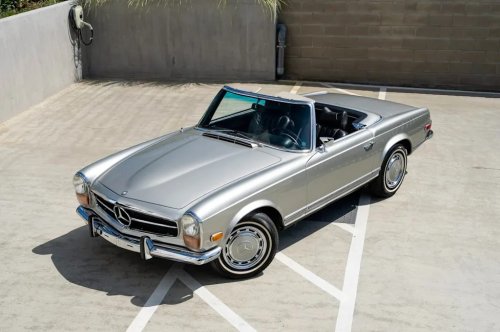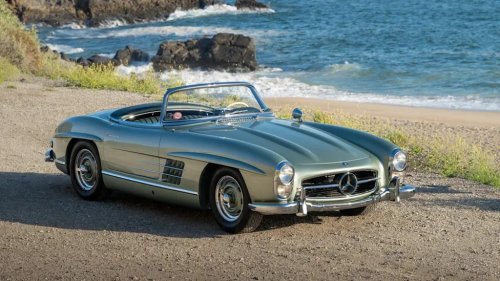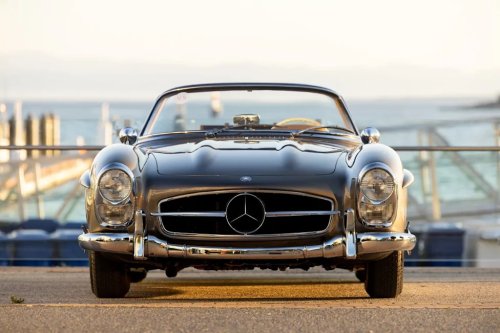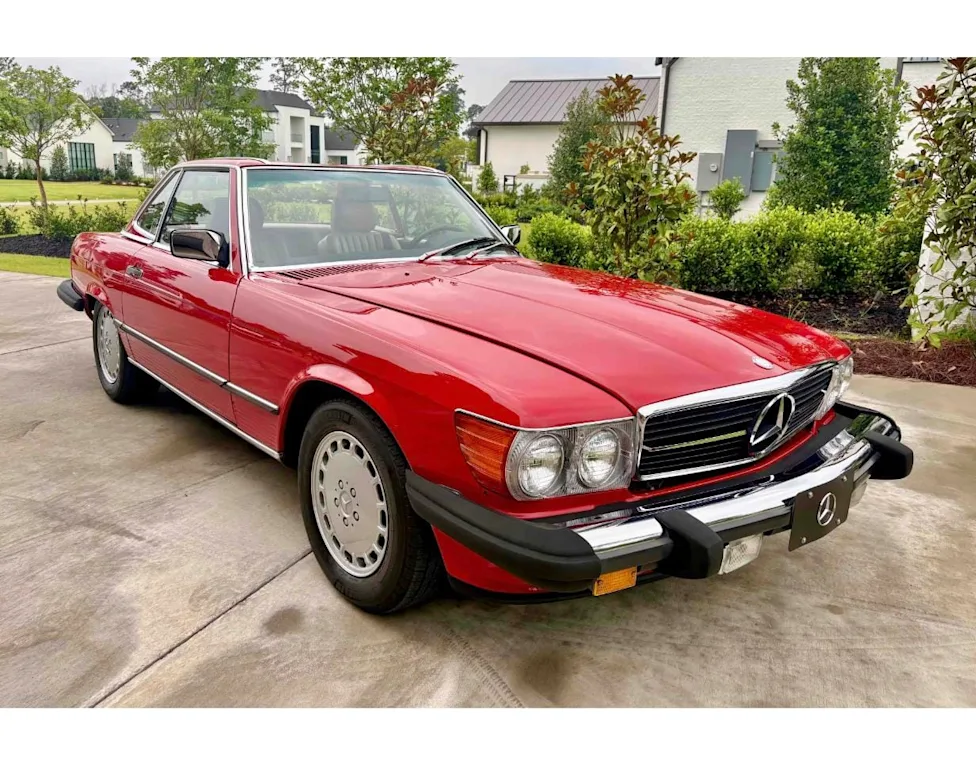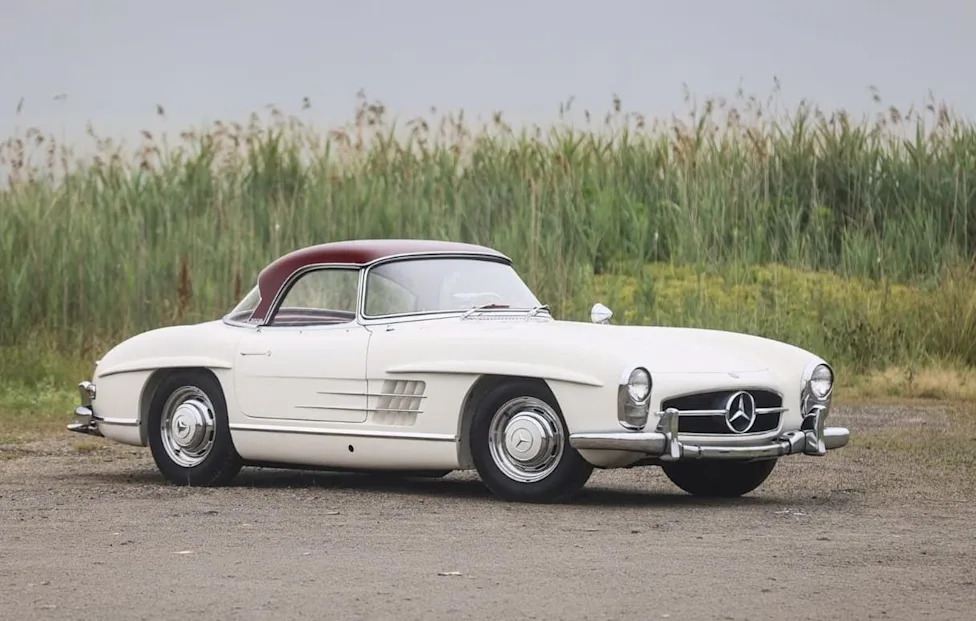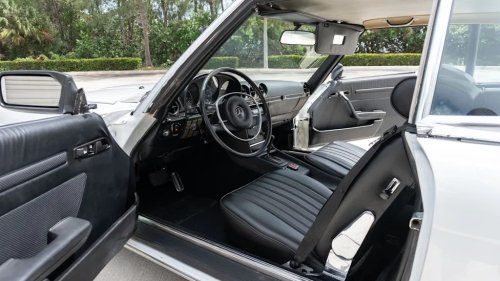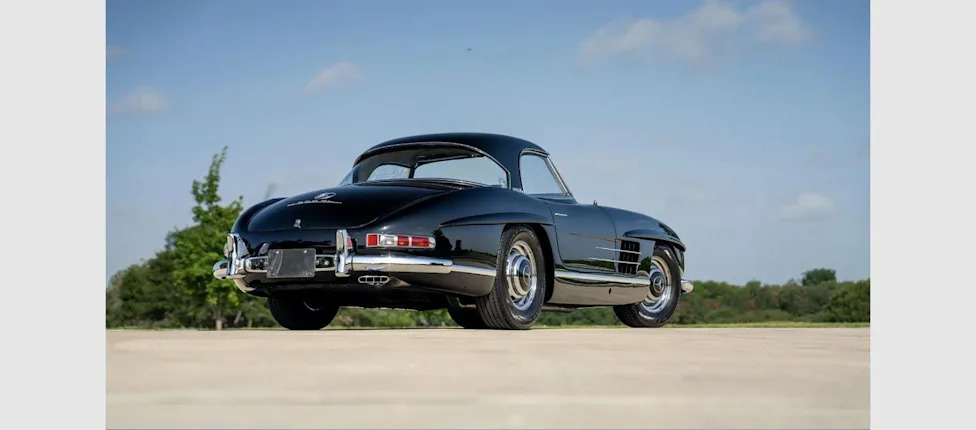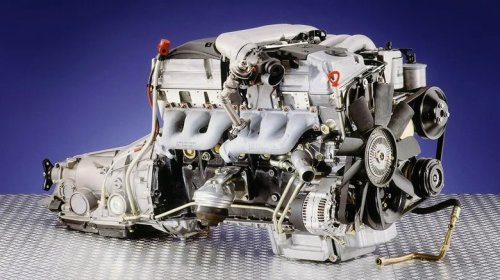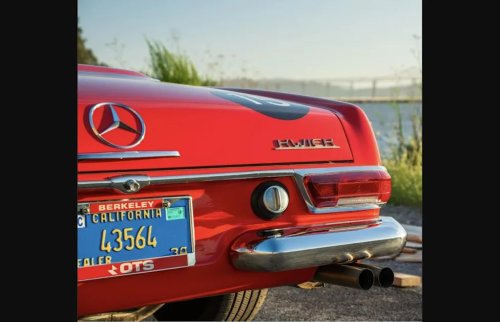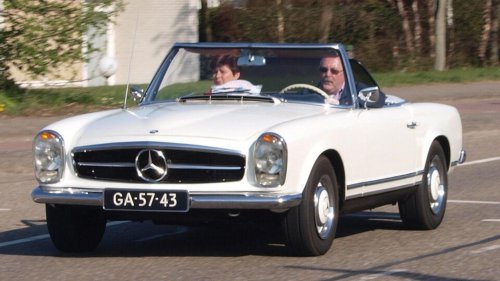
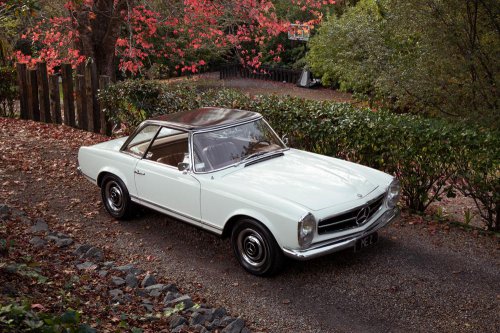
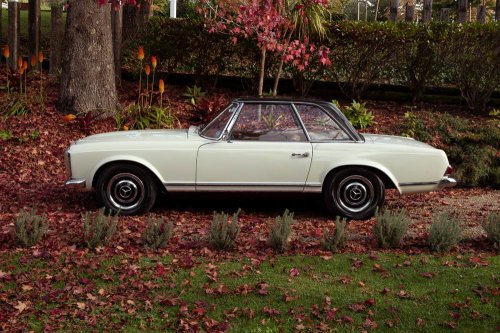
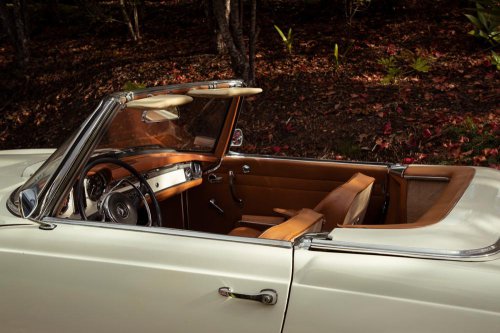
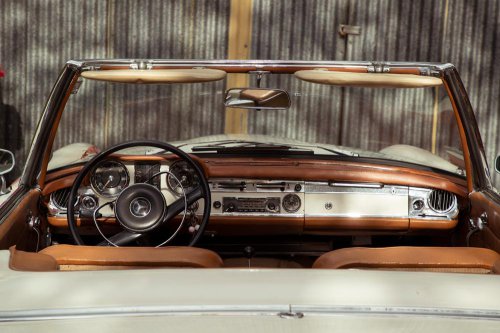
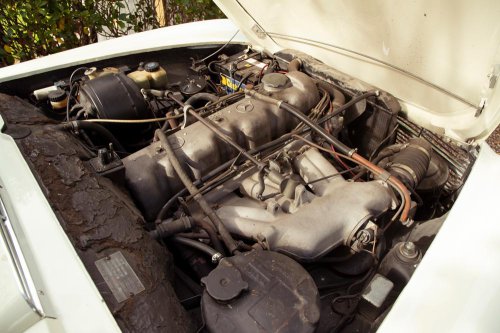
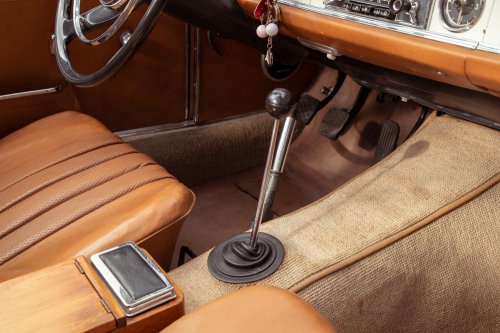
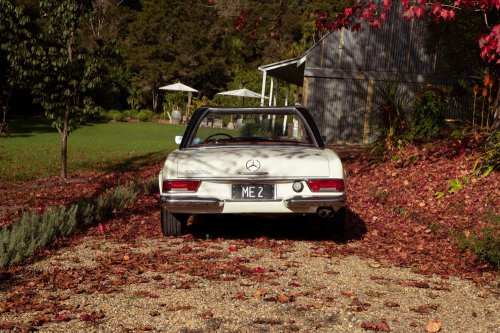



















Designed for long drives the 1965 Mercedes-Benz 230SL balanced comfort and speedThe 1965 Mercedes-Benz 230SL arrived at a moment when grand touring still meant crossing countries by road instead of runway. It was conceived as a car that could cover long distances quickly without tiring its driver, mixing genuine speed with a level of comfort that felt almost decadent for a compact two-seater. Six decades later, that balance still defines why the 230SL remains one of the most desirable classic Mercedes models. From Geneva showpiece to long-distance companion In March, Mercedes and Benz unveiled the new 230 SL at the Geneva Motor Show as a compact two-seater that would reset expectations for a sporting roadster. The car that appeared in Geneva was neither an uncompromising racer nor a soft boulevard cruiser. Instead, it was carefully pitched in between, a machine that could sustain high speeds on the autobahn while still feeling composed on a long drive to the Alps, a Riviera resort, or a distant business meeting. The company positioned the 230SL as a replacement for both the 190 SL and the legendary 300SL, a task that required a careful blend of approachability and performance. A video history of the Pagoda line explains that the new sports car 230 SL which Mercedes-Benz premiered in 1963 was intended to take over from the 190 SL and the 300SL at the same time, a clear sign that Mercedes and Benz wanted one car that could do the work of two distinct predecessors. That ambition shaped every major decision about the car’s design and engineering. Engineering the 230 for effortless pace The heart of the 1965 Mercedes-Benz 230SL was its inline six. Factory specifications list the engine as an Inline 6-cylinder unit, and period guides describe it simply as Engine: Inline, a configuration that Mercedes and Benz had refined for years in sedans and coupes before adapting it to this new sports car. The straight-six layout gave the 230SL the smoothness that drivers expected from a luxury tourer and the rev-happy character that a sports car demanded. Technical histories identify the powerplant as the M 127 II engine, its bore enlarged to give it a displacement of 2.3 litres and an output of 150 bhp, or 110 kW, at 5,500 rpm. That figure of 150 horsepower appears again in later enthusiast descriptions of a maroon 230SL, which note a 2.3-liter inline-six engine that produced 150 horsepower. The consistency of those numbers across sources underlines how carefully Mercedes and Benz calibrated the car’s performance: strong enough to cruise at modern highway speeds, yet tuned more for flexibility and refinement than for outright top speed. Earlier six-cylinder development also shaped the 230SL. One detailed profile explains that the 230 SL was powered by an SOHC straight-six of 2,306 cc, a bored-out variant of the 220 SE’s 2,195 cc six equipped with Bosch direct fuel injection. That description captures how Mercedes and Benz used an existing 220 base and pushed it further for sports car duty, while the Bosch injection system gave the engine more precise fueling and cleaner running at sustained high speeds. For drivers covering hundreds of kilometers in a day, that combination translated into consistent power delivery and a willingness to pull strongly in the middle of the rev range, exactly where a touring car spends most of its time. Safety and structure: the Pagoda roof as long-distance armor The 230SL’s nickname, Pagoda, came from the distinctive concave hardtop that gave the car its unmistakable silhouette. Official brand histories of the 230 SL ‘Pagoda’ describe how the roof shape was not just a styling flourish. Designers used the slightly raised outer edges and lower center section to increase rigidity and improve rollover protection while also allowing large windows for visibility. That structural focus mattered for long trips, where fatigue often comes as much from mental strain as from physical discomfort. Inside those tall glass surfaces, the cabin felt airy and open, which reduced the sense of confinement that some small sports cars imposed on their occupants. The same brand account of the 230 SL ‘Pagoda’ highlights how Mercedes and Benz approached the car as a compact two-seater that still needed to deliver the comfort of larger touring models. Generous seat padding, clear instrumentation, and logical control placement all served the same purpose: allow the driver to concentrate on the road instead of wrestling with the machine. Suspension tuning for real roads, not just racetracks Under the skin, the 230SL’s chassis setup reinforced its mission as a long-distance partner. The car shared structural principles with contemporary sedans, which meant a focus on stability and predictable behavior. Period descriptions of the Pagoda line emphasize that the 230SL was engineered to be a Sporty ride rather than a harsh one. A profile of a 1965 Mercedes-Benz 230 SL 1965 notes that the car was Introduced in 1963 as the successor to the 190SL and was powered by a 2.3L Inline-Six engine with Bosch mechanical injection, then goes on to praise its balance between agility and comfort. That balance came from suspension tuning that allowed enough compliance to absorb rough surfaces while still keeping body roll under control. On long journeys, this translated into a car that could be driven briskly on a mountain pass without feeling nervous, yet would also glide along a motorway for hours without punishing its occupants. Steering geared for precision rather than hyper-fast response further reduced fatigue by avoiding the constant corrections that some lighter sports cars demanded. Cabin comfort: grand tourer thinking in a compact footprint Inside, the 1965 230SL felt more like a small luxury coupe than a stripped-back roadster. Contemporary sales materials and later catalogues highlight the attention paid to seating and ergonomics. A detailed 1965 Mercedes-Benz 230SL Catalog and Classic Car Guide, listed within a broader Catalog and Classic Car Guide, Ratings and Features collection, describes the car in terms that emphasize its dual character as both sports car and comfortable tourer. The guide’s positioning of the 230SL among other Mercedes and Benz classics shows how the car’s equipment level and finish were closer to higher-end models than to entry-level roadsters. The same catalog’s technical section, presented under an MMP Rating table with Engine Specifications, reinforces that the engineering story was always told alongside comfort and quality. By foregrounding Engine Specifications and the Inline six, the guide reflects how buyers were expected to care about both performance figures and the driving experience that came with them. Leather or high-quality vinyl upholstery, wood trim, and thoughtful storage solutions turned the compact cabin into a place where two adults could spend a full day on the road without feeling cramped or shortchanged. Bridging the 300SL and 190SL for real-world use Period and modern commentary often describe the 230SL as a bridge between the exotic 300SL and the pretty but under-powered 190SL. One retrospective on the model notes that the 230SL was designed as a bridge between the racy but extravagantly expensive 300SL gullwing and the more modest 190SL, which lacked the performance to match its looks. That framing explains why the 230SL leaned so heavily into long-distance usability. Mercedes and Benz wanted a car that ordinary professionals could buy and then actually use for serious travel, not just for short weekend drives. The decision to combine strong performance with a comfortable ride and usable luggage space reflected that goal. The 230SL’s trunk could accommodate luggage for two, and the optional rear jump seat or parcel shelf provided additional room for bags or small passengers. With the removable hardtop in place, the car functioned as a snug coupe in winter or on high-speed journeys. With the soft top raised or folded, it became an open tourer for coastal roads and summer evenings. The 1965 model year: a sweet spot in the Pagoda story Among collectors, the 1965 Mercedes-Benz 230SL holds a special place as an early yet mature example of the Pagoda line. By that year, initial teething issues had been addressed, and the model still carried the purity of the original design before later engine enlargements changed the character of the car. A 1965 Mercedes-Benz 230SL Catalog and Classic Car Guide entry, posted by Scott Thompson in a section labeled Catalog and Classic Car Guide, Ratings and Features, underscores the continuing interest in that specific year, with detailed breakdowns of trim, options, and performance. Individual cars from 1965 continue to attract attention in enthusiast circles and on the classic market. A listing for a 1965 Mercedes-Benz 230SL 4-Speed, shared by a specialist seller, presents a car with a manual gearbox that appeals to drivers who want more involvement on long drives. Another advertisement for a 1965 Mercedes-Benz 230SL for Sale at $64,999, with a recorded Mileage of 47,691 and a clearly displayed VIN, shows how well-preserved examples command strong prices, particularly when they retain their original character and mechanical integrity. Real-world driving impressions: comfort at speed Owners and reviewers consistently describe the 230SL as a car that feels happiest when covering distance. A feature on a Golden Pagoda Mercedes-Benz 230 SL recounts how the SOHC six of 2,306 cc, derived from the 220 SE engine and paired with Bosch fuel injection, provides smooth, linear power that suits long highway stretches. The same account notes that the 230 and 220 figures that define the engine family are more than just badges; they represent an evolution that prioritized drivability as much as raw numbers. Modern enthusiasts echo those impressions. A social media post celebrating a 1965 Mercedes-Benz 230 SL W113 Pagoda describes it as a quintessential classic car celebrated for its elegant design and impressive engineering, highlighting how the Pagoda shape and mechanical refinement still feel special on contemporary roads. Another profile of a maroon 230SL, described as a study in clean, confident elegance and Powered by a 2.3-liter inline-six engine with 150 horsepower, emphasizes how the car delivers a refined yet engaging driving experience rather than a frantic one. These accounts align with the original engineering brief: a car that could be driven quickly for hours without leaving its driver exhausted. Design details that serve the long drive Many of the 230SL’s most admired styling cues also have practical benefits for extended journeys. The upright steering wheel and large, legible instruments reduce eye strain. Thin roof pillars and expansive glass improve situational awareness, which matters on unfamiliar roads and in changing weather. A detailed description of a 1965 Mercedes-Benz 230SL Convertible from a specialist dealer points out the color-matched wheel covers with whitewall tires and the blue convertible top with crisp fit, details that show how visual harmony and weather protection went hand in hand. Even the Pagoda roofline, which gives the car its nickname, plays a role in comfort. The concave shape allows more headroom at the edges while keeping the center low for structural strength. That design helps reduce wind noise and buffeting, especially with the hardtop installed. The result is a cabin that remains quiet enough for conversation at speed, a quality that owners still praise when they take their cars on rallies and tours. More from Fast Lane Only Unboxing the WWII Jeep in a Crate 15 rare Chevys collectors are quietly buying 10 underrated V8s still worth hunting down Police notice this before you even roll window down