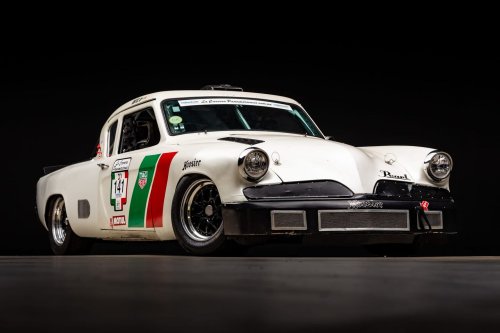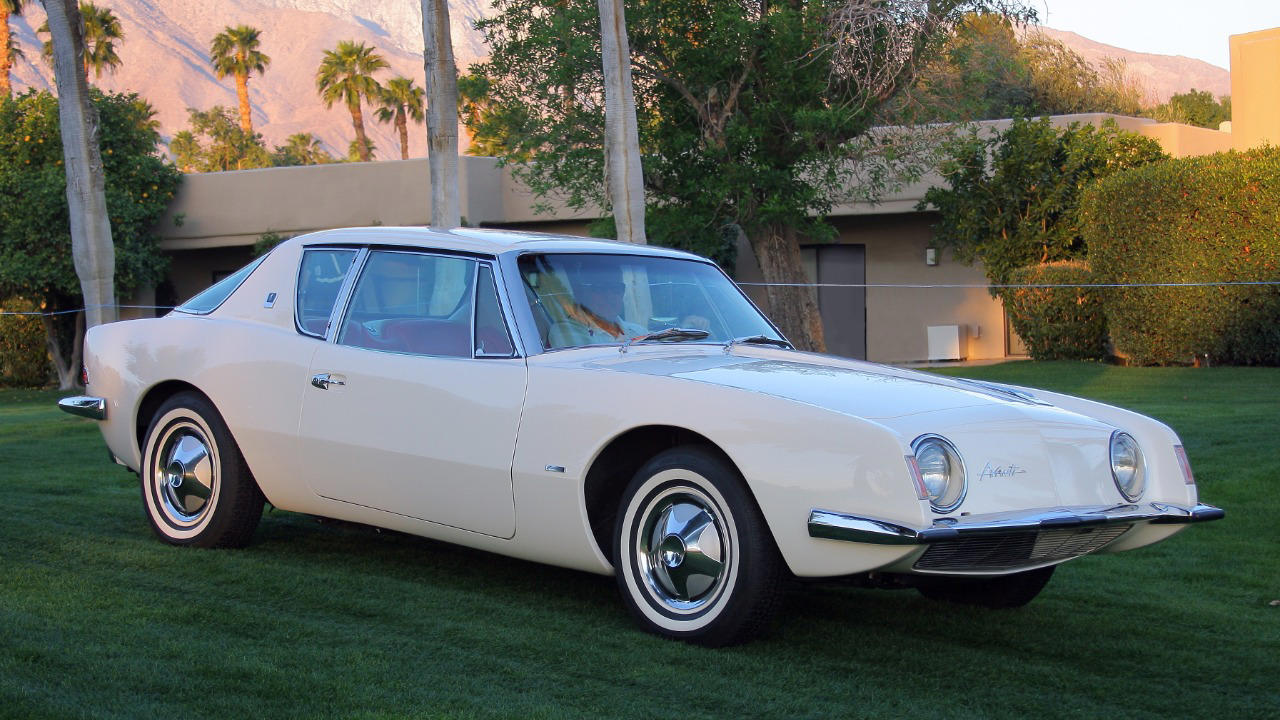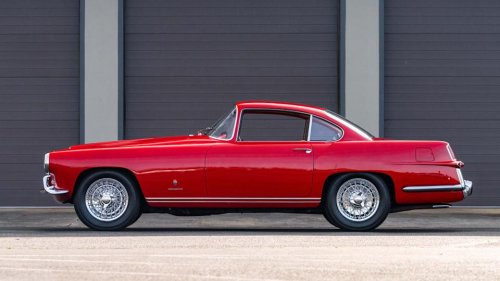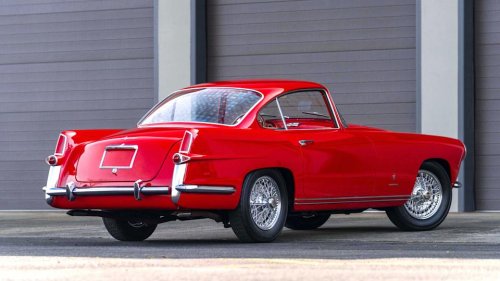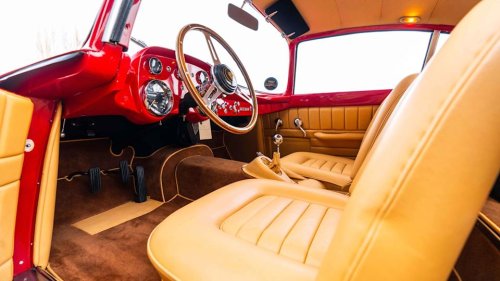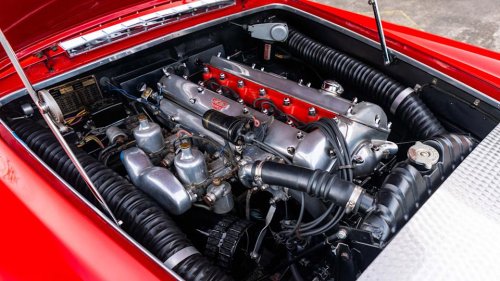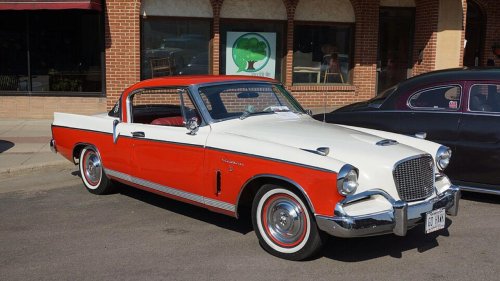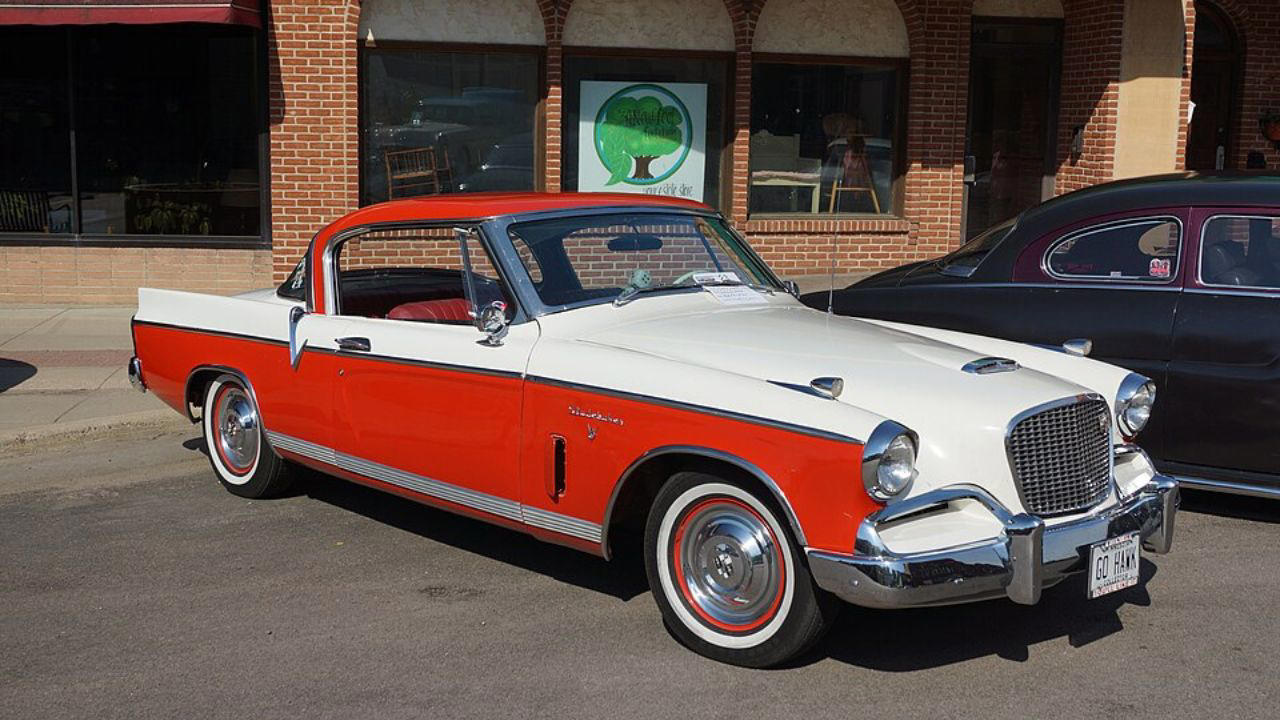



















Studebaker’s 1956 Golden Hawk mixed elegance with a surprising punchThe 1956 Golden Hawk arrived at a turbulent moment for Studebaker, yet the car itself looked anything but desperate. It wrapped a clean, European‑influenced coupe body around a big American V8, creating a grand touring machine with the manners of a gentleman and the acceleration of a street brawler. That contrast between tailored style and unexpected force is what still makes Studebaker’s Golden Hawk feel modern. From today’s perspective, the car reads like an early template for the personal performance coupe: elegant, compact by mid‑century standards, and built to cruise fast over long distances. Beneath the polished surface, Studebaker quietly engineered one of the most potent power‑to‑weight combinations of its era. From Loewy coupe to Golden Hawk The Golden Hawk did not start from a blank sheet of paper. Studebaker’s designers reworked the existing “Loewy coupe” body, a shape credited to Raymond Loewy’s studio that had given the company a distinctive, low‑slung hardtop in the early 1950s. For 1956, that basic form was updated into the new Hawk series, with the Golden Hawk positioned as the flagship. Period accounts describe how the raised hood and more prominent grille were not simply styling flourishes but practical changes that created space for a larger engine, specifically Packard’s 352 in³ (5.8 L) V8 rated at 275 bhp. The Golden Hawk’s sheetmetal was stretched and sharpened, yet the underlying proportions of the Loewy design remained, keeping the car looking lithe compared with many mid‑fifties rivals. Bob Bourke, identified as Studebaker’s chief designer in the Fifties, later said he regarded the 1956 Hawk series as an improvement over the company’s earlier coupes, even if he felt the basic body had been pushed about as far as it could go. His view, cited in a period analysis of the 1956-1961 Studebaker Hawk, underlines how the Golden Hawk represented both a design evolution and a last major development of the Loewy hardtop. Fiberglass fins and subtle flash On the surface, the Golden Hawk wore many of the styling cues that defined mid‑fifties American cars, yet it applied them with more restraint. Studebaker’s 1956 Golden Hawk featured subtle fiberglass tailfins grafted onto the steel Loewy coupe body, a detail that allowed the company to chase the fin trend without retooling the entire rear quarter. The fins themselves were relatively modest in height, especially when compared with contemporary Packards or later Detroit excess. The Studebaker National Museum describes how the Golden Hawk was Studebaker’s top model for 1956 and notes that these fiberglass appendages were unique to that first year, with later Hawk fins rendered in steel. In the museum’s own Studebaker Golden Hawk write‑up, the car is framed as a bold attempt to blend fashionable styling with serious performance. Viewed in period photos and modern restorations, the Golden Hawk’s exterior detailing supports that impression. Chrome is present but not overwhelming, the roofline is low and almost European in its sweep, and the overall stance is more compact than the typical full‑size American hardtop. The fins, brightwork, and two‑tone paint schemes add drama without fully masking the car’s relatively clean underlying form. Packard power in a lighter body The real surprise with the Golden Hawk lay under that raised hood. Studebaker turned to its corporate partner Packard for muscle, installing Packard’s 352‑cubic‑inch V8 in a body that was notably lighter than the big Packards that usually carried the engine. One account of a barn‑find car, for instance, notes that Studebaker paired the massive 352-cubic-inch V8, normally found in full‑size Packards, with the lighter Golden Hawk to create strong straight‑line performance. Specifications compiled by enthusiasts and historians consistently repeat the key figures. The Golden Hawk’s Packard engine displaced 352 cubic inches, or 5.8 liters, and produced 275 horsepower. A contemporary road test video of a stock car reiterates that the 1956 Studebaker Golden Hawk came standard with a Packard 352 cubic inch V8 overhead valve engine rated at 275 horsepower, which confirms the numbers quoted in written sources. That output went into a relatively light shell. One detailed history of the model points out that the shipping weight for the Golden Hawk was 3,360 pounds, unusually low for a mid‑fifties American coupe with such a large engine. With 275 horsepower moving 3,360 pounds, the car offered a power‑to‑weight ratio that rivaled or exceeded many contemporary performance models from larger manufacturers. Flagship status and equipment Within Studebaker’s lineup, the Golden Hawk sat at the top. A period specification summary describes The Golden Hawk as Studebaker’s flagship model in 1956 and highlights the fact that it used Packard’s 275‑horsepower, 352 cubic inch V8. That same overview notes that Studebaker did not skimp on comfort, which fits with the car’s positioning as a premium personal coupe rather than a stripped performance special. Standard equipment lists compiled from factory literature reinforce that image. Other standard items included cigar lighter, glove compartment light, electric windshield wipers, full hubcaps, Hill Holder for manual transmission cars, and coordinated upholstery and carpeting. The presence of Hill Holder, a device that prevented rollback on hills, underlined Studebaker’s reputation for engineering detail and made the Golden Hawk easier to drive briskly in everyday traffic. The model’s identity was also encoded in its internal designation. A specification sheet identifies the Golden Hawk hardtop as SERIES & BODY TYPE CODE GOLDEN HAWK (HDTP) 56J-K7, with the note that the first two numbers, 56, designate the model year. That combination of SERIES, BODY, TYPE, CODE, GOLDEN, HAWK, and 56J-K7 shows how tightly Studebaker tied the car’s identity to its single model‑year configuration. On the road: a proto pony car Performance impressions from both period tests and modern drives help explain why the Golden Hawk has gained a reputation as a sort of proto pony car. An overview that labels The Studebaker Golden Hawk as an early example of a personal performance coupe emphasizes its combination of sleek lines, a relatively compact footprint, and strong acceleration. In a table of Studebaker Golden Hawk Specs, that analysis treats the car as a forerunner to the later idea of an affordable sporty coupe with genuine power. A separate modern feature on the same theme describes how the Hawk’s styling evoked a fighter jet and notes that, in the Hawk, a major source of inspiration was the North Americ aviation aesthetic. That connection between jet‑age imagery and real performance helped the Golden Hawk stand apart from cars that wore fins and chrome but lacked the mechanical substance to back up their visual promises. Owners and enthusiasts who drive these cars today often comment on the immediacy of the power delivery. A detailed Facebook discussion of the 1956 Studebaker Golden Hawk’s features and comparisons notes that the big Packard engine gave the car strong performance, while later Hawks switched to a Studebaker 289 with Paxton supercharger in 57, a change some participants describe as a huge improvement. That later development underscores how central outright performance had become to the Hawk identity, but the 1956 Golden Hawk had already set the tone by pairing luxury equipment with serious speed. Balancing refinement and aggression Part of the Golden Hawk’s appeal lies in how it balances these traits. The cabin offered the comforts expected of a flagship Studebaker, from full instrumentation to thoughtful touches like the Hill Holder system. At the same time, the view over the raised hood and the knowledge of Packard power underfoot gave the car an edge that many contemporaries lacked. Modern video tours of surviving cars capture that dual character. In one walkaround of a restored 1956 Studebaker Golden Hawk, posted in Jun, the presenter lingers on the car’s “absolutely gorgeous” appearance while also emphasizing its performance reputation. The clip, which can be found under the search term 1956 Studebaker Golden, shows how the car still reads as elegant first, with the performance story emerging as viewers learn about the engine and specifications. Another video essay, introduced in Oct and focused on Studebaker’s decision to build such a potent coupe in 1956, frames the Golden Hawk as a bombshell in an era when many automakers were content to massage chrome and tailfins rather than chase raw speed. That commentary, available in a piece on Studebaker performance history, reinforces the idea that the Golden Hawk’s aggressive powertrain choice surprised the market. Inside the Studebaker strategy The Golden Hawk did not exist in a vacuum. Studebaker was under intense financial pressure in the mid‑1950s and had formed a corporate partnership with Packard to share resources. Using the Packard 352 engine in the Golden Hawk made sense from a parts‑sharing perspective, but it also signaled an attempt to move Studebaker upmarket and attract buyers who might otherwise look to larger brands for performance. Within the broader Hawk lineup, the Golden Hawk sat above plainer models that used Studebaker’s own engines. The decision to give the flagship the most powerful available V8 aligned with Detroit practice but stood out because of the Golden Hawk’s relatively compact body. Where many competitors simply dropped big engines into equally big sedans and hardtops, Studebaker created something closer to a grand touring coupe. Bob Bourke’s later comments about the Hawk series suggest that, from a design standpoint, the company understood it was stretching an older body to meet new market demands. Yet the combination of a proven Loewy shell, tasteful styling updates, and a muscular powertrain produced a car that has aged better than many of its contemporaries. Evolution after 1956 Although the focus here is on the 1956 model, the Golden Hawk’s later evolution helps clarify what made that first year distinctive. Enthusiast summaries point out that the big Packard engine was replaced by the Studebaker 289 with Paxton supercharger in 57, a change that reduced engine weight while maintaining or improving performance. That move effectively shifted the Hawk from big‑block torque to lighter, boosted power, but it also ended the brief experiment of combining Packard’s 352 with the Loewy body. From a styling perspective, later Hawks standardized steel fins and further differentiated trim levels, which made the 1956 Golden Hawk’s fiberglass appendages a one‑year detail. Collectors today often single out that combination of Packard V8, fiberglass fins, and the 56J‑K7 designation as the purest expression of Studebaker’s original Hawk concept. Why the Golden Hawk still matters For enthusiasts and historians, the Golden Hawk represents several intersecting stories. It is a case study in how a smaller independent automaker tried to compete with Detroit’s giants through design and engineering rather than sheer scale. It also illustrates an early attempt to create a personal performance coupe that could serve as both stylish transportation and a genuinely quick car. Modern features that revisit the Golden Hawk often describe it as a “proto pony car” because of its long hood, short deck proportions, relatively modest size, and strong engine. A detailed analysis on Studebaker Golden Hawk: and its Studebaker Golden Hawk Specs section argues that the car anticipated later trends in sporty coupes that became mainstream in the 1960s. More from Fast Lane Only Unboxing the WWII Jeep in a Crate 15 rare Chevys collectors are quietly buying 10 underrated V8s still worth hunting down Police notice this before you even roll window down