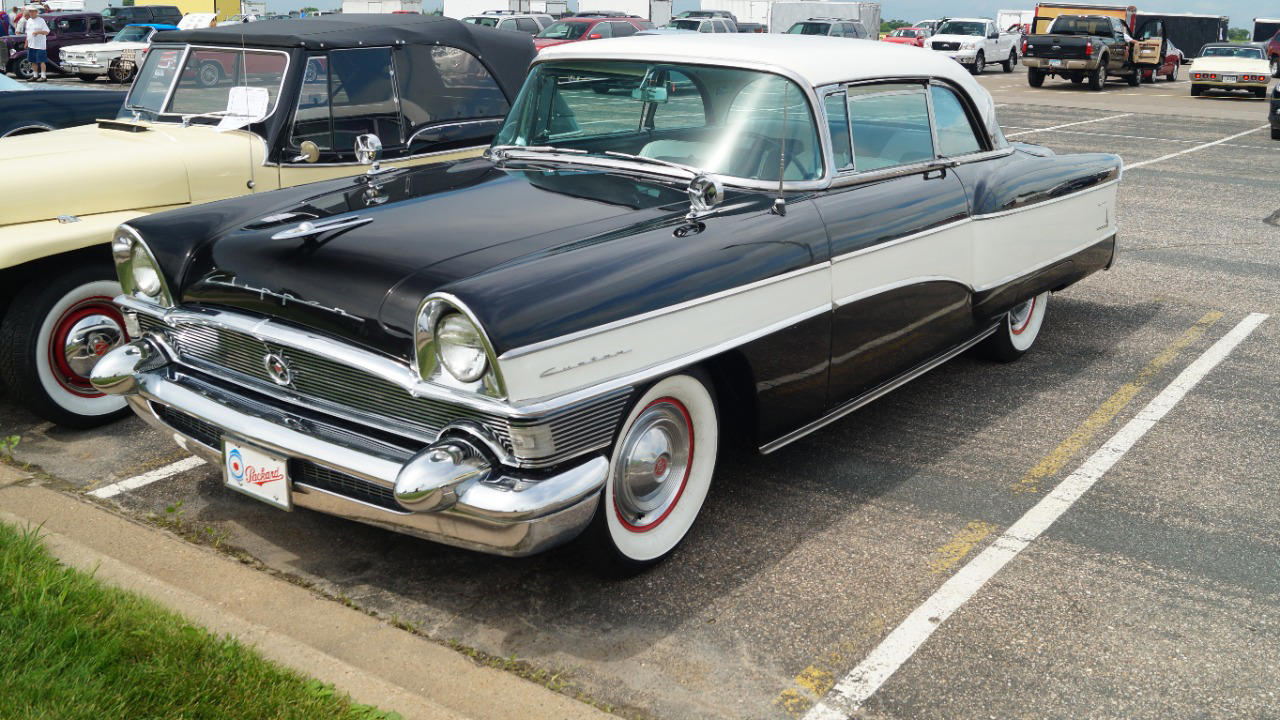
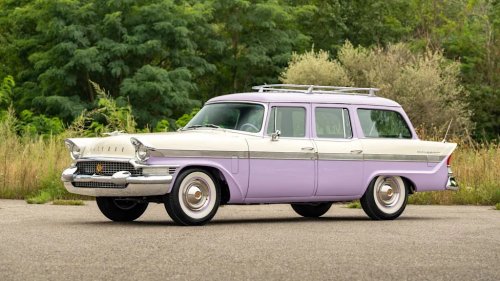
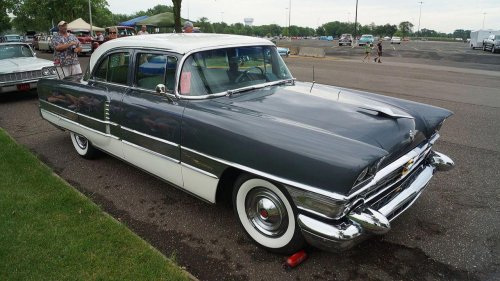
The 1956 Packard Clipper still turns heads, but under its long hood and sculpted fenders sits a collection of aging systems that demand far more attention than most modern owners expect. Mechanics who see these cars today describe a pattern: ingenious engineering paired with fragile late‑era components, all of it now filtered through seventy years of wear, deferred maintenance, and scarce parts. For anyone tempted by the Clipper’s midcentury glamour, the real test is not the first drive home but the patience and budget to keep its complex hardware alive. The last stand of a proud marque By the time the 1956 Packard Clipper reached showrooms, Packard was fighting for survival. Commentators looking back at the period describe how Packard Motorcar was already struggling financially in 1954, even as the company tried to project confidence with new models and ambitious technology. Analysts who have examined the period refer to the final chapter as Why Packard Failed and frame the years 1954 to 56 as “The End of the Road” for a once dominant luxury brand. Packard’s answer to Cadillac and Lincoln included the Clipper line, which shared the company’s long‑awaited OHV V‑8. Historians of the era note that Packard introduced this OHV engine in 1955, with low‑line Clipper models using a 320 cubic inch version that displaced 5,238 cc and produced 225 horsepower. On paper, the Clipper finally had the power to match its rivals; in practice, the rush to modernize left rough edges that mechanics are still smoothing out today. An engine that rewards meticulous care Owners who came from earlier straight‑eight Packards often praised the new V‑8 while quietly acknowledging its quirks. One long‑time owner on an enthusiast forum, identified as GB and writing as an owner of a 1953 Packard, remarked that While the Packard V‑8 is certainly a very reliable engine to a certain degree, it does not tolerate neglect. That sentiment has become a common refrain among mechanics who work on these cars today. The 320 and larger Packard V‑8s respond well to regular oil changes, careful warm‑up, and strict adherence to ignition tune‑ups. When those basics are ignored, worn valve guides, tired oil pumps, and sludged galleries appear quickly, especially in engines that sat for decades. Technicians who specialize in mid‑century American cars describe tearing down Clipper engines that show a sharp divide: components that were maintained look almost new, while neglected areas are deeply scored or varnished. Because the Packard V‑8 was produced only for a short run, mechanics also face limited parts support. Rebuilders rely on small specialist suppliers for items like hardened valve seats and updated oil pump kits. That scarcity raises costs and means that even a routine refresh can turn into a drawn‑out project if a single component is backordered. Ultramatic: innovation that became a liability If the engine demands diligence, the automatic transmission can require outright devotion. Packard had invested heavily in its own automatic, the Ultramatic, and by the mid‑fifties the company was still refining the design. Enthusiasts who have studied the drivetrain point out that the 1949 to 56 units were technically advanced for their time, something that later commentators such as MCG highlighted when discussing how the direct drive clutch functioned. By 1956, Packard offered a version with push‑button controls marketed as Touch Button Ultramatic. Period pricing shows that Touch Button Ultramatic was standard only on the 1956 Packard Caribbean and a $52 option for the Packard Patrician and Packard Four, a detail preserved in coverage of Touch Button Ultramatic. The Clipper shared Ultramatic hardware, and many examples on the road today still carry this complex transmission. Mechanics who cut their teeth on later three‑speed automatics often find Ultramatic unfamiliar. A discussion among vintage specialists notes that the 1956 units essentially were the original design that operated in high range, with extra features tacked on as Packard tried to keep pace with competitors. One forum contributor summarized the situation by explaining that They were basically the early Ultramatic with additional complexity layered in, which can create headaches when worn parts and outdated adjustments collide. The service challenge is compounded by the transmission’s rarity. Another mechanic on a related thread observed that virtually no one can service a T‑U, while virtually any transmission shop can work on a 700R4, and that Virtually all T‑U parts now come from a small circle of specialists. For owners of 1956 Packard Clipper sedans, that means transmission work often involves shipping components across the country or entrusting the car to one of a handful of experts. Torsion-Level suspension: genius with a fragile edge What really set the Clipper apart from its Detroit rivals was its Torsion-Level suspension. Commentators who have compared mid‑fifties luxury cars emphasize that What distinguished the Packard system was its Torsion Level design, an interlinked four‑wheel arrangement that distributed the load and weight of the vehicle to maintain a level ride. Period promotional material presented it as a magic carpet that automatically compensated for passengers and road imperfections. Modern video explainers produced by enthusiasts, such as one from Classic Performance, walk viewers through how the system uses long torsion bars and electric control to keep the body level. The setup includes sensors, solenoids, and a motorized compensator that twists the bars to correct pitch. When everything works, even jaded mechanics admit the ride quality remains impressive. Yet that same hardware is a maintenance trap. A widely shared clip from a Packard owner in Massachusetts, titled Testing ’55 Packard torsion solenoids, shows a mechanic troubleshooting why a 55 model will raise itself just fine but will not go down. The video captures a common scenario: the car responds in one direction, then refuses to complete the cycle, often due to corroded contacts or a failed solenoid. Specialists warn that Torsion-Level repairs require both electrical and mechanical expertise. Incorrectly jacking the car can bend components, and miswired control boxes can lead to sudden, dramatic changes in ride height. For owners of a 1956 Packard Clipper, routine inspections of wiring, bushings, and motor function become part of the regular checklist, not occasional jobs. Body, trim and the reality of late Packard quality Even before the company closed, some customers were questioning whether Packard’s build quality had slipped. A participant in a discussion about Packard Quality of recalled that one fellow poster kept criticizing the quality of Packards in that decade, and conceded that the 55 and 56 cars had some problems. The comment reflects a broader consensus among restorers who see recurring issues in panel fit, rust protection, and trim durability on late production cars. One modern video walk‑through of a 1956 Packard Clipper four‑door sedan, filmed by Steven at PNF Auto Parts in Mson Massachusetts for the Packard Clipper, shows how even a solid survivor can carry a mix of well‑preserved chrome and pitted, tired pieces. The presenter points out the car’s distinctive styling while also highlighting areas where weatherstripping has hardened and interior materials have faded. Mechanics tasked with keeping these bodies tight and quiet often find themselves improvising. Original weather seals are scarce, and reproduction trim clips may not match factory tolerances. Wind noise and water leaks that were marginal when new can become pronounced after decades of use, especially if the car spent time in harsh climates. Inside the cabin: charming details, fragile hardware Step into a 1956 Packard Clipper and the cabin tells its own story about maintenance. A writer who test drove a Clipper sedan described how the owner had to explain the window controls to younger passengers: Kids were told that the handle on the right controls the door window, and to Rotate it one direction to raise and the other to lower. The anecdote captures both the charm and the complexity of the car’s interior hardware. Those same handles, switches, and cables are now sources of constant tinkering. Door mechanisms can stick from dried grease, and power window motors (where fitted) strain against stiff tracks. Mechanics who regularly service mid‑fifties Packards say they spend nearly as much time removing door panels and lubricating linkages as they do working on the drivetrain. Electrical accessories provide another layer of work. The Clipper’s wiring harness was never designed to last seventy years, and owners who resist rewiring often face intermittent faults. Dash lights flicker, gauges drift, and original radios draw more current than fragile wiring can safely deliver. For technicians, tracing each issue becomes a slow process of cleaning grounds, repairing brittle insulation, and sometimes fabricating new harness sections. Enthusiasts, forums and the shared maintenance playbook Given the scarcity of factory support, owners and mechanics have turned to each other to keep these cars on the road. Online communities dedicated to Packard models host long threads where people trade tips about V‑8 quirks, Ultramatic behavior, and Torsion-Level troubleshooting. One discussion about the 1955 and 1956 V‑8 cars, which includes the observation from GB about reliability, has become a reference point for those trying to understand how Oct production changes affected engine behavior. Another thread focused on the 1956 Ultramatic units, where contributors explained that Sep documentation showed how the transmission evolved, helps mechanics identify which internal parts interchange and which do not. The shared knowledge has effectively replaced the dealer training that disappeared when Packard closed. These communities also surface upstream material that deepens understanding of the period. One link that enthusiasts often cite is a Constant Contact page, marked as Discovered through coverage of Packard Ultramatic Transmission in Over Drive Magazine, which collects technical notes and historical commentary. Another path leads from discussions of Discovered background on Why Packard Failed and The End of the Road to broader histories of the American auto industry. Financial strain and engineering ambition Behind the maintenance headaches lies a deeper story about corporate ambition outpacing resources. Analysts who study the period argue that Packard’s decision to invest in proprietary systems like Ultramatic and Torsion-Level, while admirable from an engineering standpoint, strained a company already under financial pressure. The narrative of End of the describes how the company tried to maintain a premium image even as budgets tightened. Some of the individuals who later shaped the broader auto industry intersected with this history. Biographical material on George_W._Romney notes that his career eventually placed him in leadership roles in the 56 period at another automaker, which illustrates how talent moved between companies as Packard declined. While that connection does not change the Clipper’s mechanical reality, it underscores how the car represents a turning point in Detroit’s postwar evolution. More from Fast Lane Only Unboxing the WWII Jeep in a Crate 15 rare Chevys collectors are quietly buying 10 underrated V8s still worth hunting down Police notice this before you even roll window down