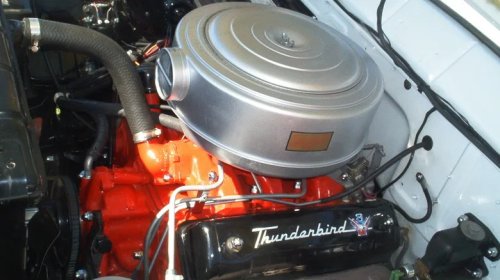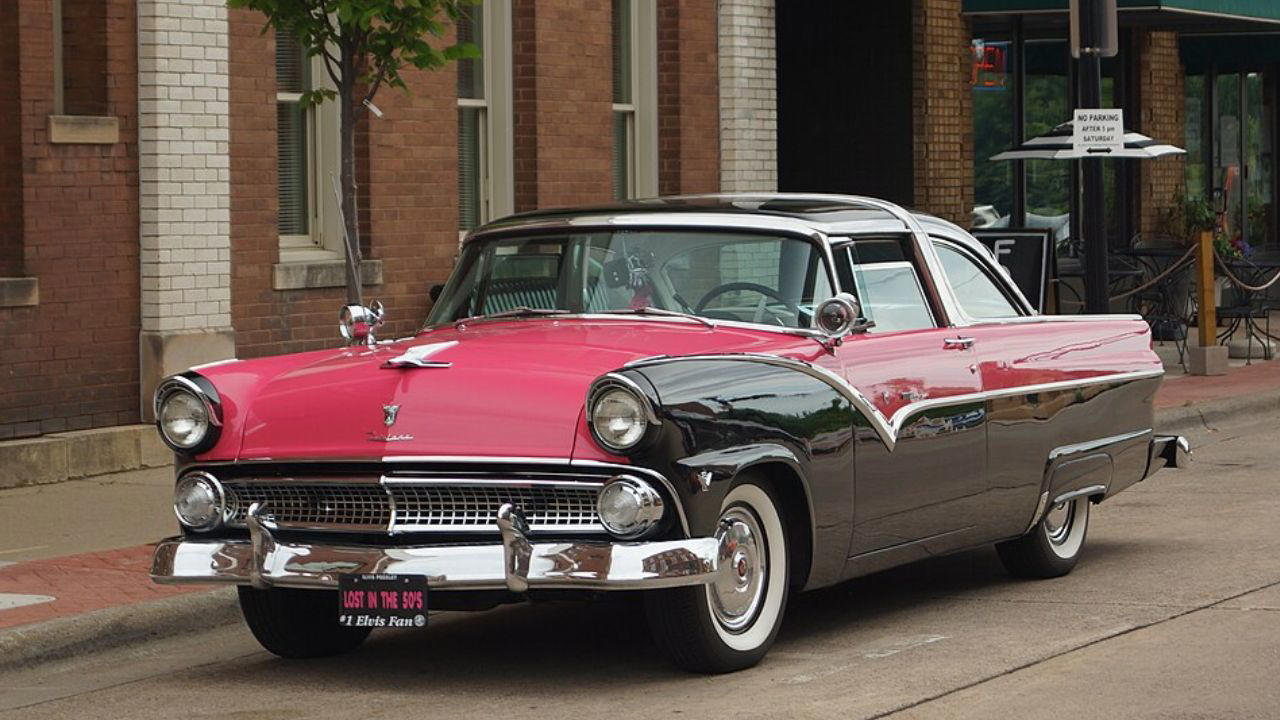


















Why the 1956 Ford Crown Victoria set itself apartThe 1956 Ford Crown Victoria arrived at a moment when Detroit styling and engineering were locked in fierce competition, yet it still managed to look and feel different from anything else on American roads. It combined daring midcentury design with meaningful advances in power, safety, and comfort that set it apart from both its rivals and its own siblings. That blend of spectacle and substance is why the car remains a touchstone for collectors and historians of the chrome age. From Fairlane flagship to design statement Ford had already raised eyebrows when it entered the fray, positioning it as a premium companion to the Thunderbird. Within that family, the Crown Victoria quickly emerged as the visual centerpiece, its sweeping chrome roof band and two-tone paint turning an ordinary sedan silhouette into something theatrical. By 1956, the formula had been refined, and the Crown Victoria sat at the top of the Fairlane hierarchy as a rolling showcase of Ford styling. Period observers compared the car’s freshness to contemporary rivals, noting that it could stand alongside attention grabbers such as the Chevrolet Nomad. In that context, the Crown Victoria was described as matching the excitement of that wagon while serving as the king of the Ford Fairlane series. The 1956 model did not simply repeat the previous year’s formula; subtle exterior updates, including a revised grille pattern and detail trim, signaled that Ford intended the Crown Victoria to stay on the cutting edge rather than coast on its initial impact. The “basket handle” and the Skyliner’s glass canopy What immediately separated the 1956 Ford Fairlane Crown Victoria from most contemporaries was its architecture. The car became known as the basket handle model because of the dramatic chrome band that wrapped over the roof at the B pillar. This feature visually split the greenhouse and accentuated the two-door hardtop profile, especially when paired with contrasting colors that often placed a white upper half over a richer body shade. The result was a car that looked custom from the factory, with lines that suggested speed even at rest. The design reached its most distinctive form in the Ford Fairlane Crown Victoria Skyliner. The 1956 Ford Fairlane Crown incorporated a tinted acrylic glass roof panel over the front seats, adding a futuristic canopy effect that bathed the cabin in light. Another description of the 1956 Ford Crown Victoria presents it as a Futuristic Vision, the model that still inspires designers. In a decade fascinated with jets and space travel, this transparent roof turned a family car into something that felt like a show car on the street. Powertrains that backed up the styling Under the dramatic sheet metal, the 1956 Fairlane offered a range of V8 engines that gave the Crown Victoria real performance. Contemporary descriptions of Engine Options list the 272 cubic inch V8 and the more powerful 292 cubic inch V8, both part of the Y block family that gave Ford a modern overhead valve design. These displacements, cited as 272 and 292, ensured that even a heavily trimmed Crown Victoria could move with authority on the highway. The driving character of the 1956 Ford Fairlane continues to attract attention in modern test drives. One detailed video walkaround of a Ford Fairlane from that year emphasizes how the V8, automatic transmission, and power steering combine for a relaxed yet responsive feel. Another period-correct example, described as a 1956 Fairlane Crown Victoria in White and Blue Color The, is praised for delivering a smooth and powerful ride that matches its glamorous appearance. These accounts reinforce that the car’s appeal extended beyond the showroom floor to the way it behaved on real roads. Safety and engineering advances One of the most significant ways the 1956 Ford Crown Victoria distinguished itself was through safety and electrical upgrades. Ford moved from a 6-volt system used in earlier Fairlanes to a 12-volt system for 1956, a change confirmed in a period discussion that notes the 1955 model’s 6-volt positive earth setup and explains that 1956 was 12. A separate technical overview of the 1956 Ford line further notes the adoption of a 30-amp generator. This upgrade improved starting, lighting, and accessory performance, essential for a car that carried more electrical equipment than its predecessors. Safety innovations were equally significant. Contemporary promotional material for 1956 models describes a new double-grip door latch design that reduced the chance of doors springing open in a collision, which gave occupants added protection against being thrown from the car. The same era saw Ford introduce a suite of lifeguard safety features, including a padded dashboard and deep dish steering wheel, as described in a summary of New for 1956 equipment. A broader overview of Seat Belt Development lists Ford among the Key Manufacturers that moved early to offer belts, underscoring how seriously the company treated occupant protection in this period. How it stacked up against rivals and siblings Within Ford’s own showroom, the Crown Victoria had to coexist with the Ford Fairlane Victoria hardtop. A detailed video on the 1956 Ford Fairlane Victoria points out that this closely related model lacked the Crown Victoria’s signature basket handle roof trim. That distinction mattered because it visually separated buyers who opted for the top specification from those who chose a slightly more restrained look. The Crown Victoria’s extra chrome and more elaborate two-tone schemes signaled status in a way that was immediately legible in midcentury suburbia. Against external competitors, the Crown Victoria also held its own. A detailed analysis of the mid-fifties market describes the matching of the Chevrolet character of the design, suggesting that Ford’s flagship Fairlane could match the flair of Chevrolet’s specialty wagon while appealing to a broader audience. Enthusiast commentary on the 1956 Ford Fairlane Crown even argues that Ford stole the show in 56, with the Fairlane beating the 56 Chevy in style contests and becoming one of the most collected Fords from the decade. Enduring legacy among collectors Today, the 1956 Ford Crown Victoria occupies a special place among classic car enthusiasts. One detailed enthusiast summary describes the 1956 Legacy and Appeal The Ford Crown Victoria as one of the most attractive and iconic cars of the 1950s, prized for offering a premium, comfortable, and stylish ride. Another modern listing of a restored Ford Crown Victoria notes upgrades such as electronic ignition and a new alternator that keep the car reliable while preserving its character, a common approach among owners who want to drive their cars rather than simply display them. Color choices also contribute to the model’s appeal. Enthusiast posts celebrate individual cars, such as a 1956 Ford Fairlane Crown in red and another in White and blue, each combination highlighting the sculpted side panels and chrome arcs differently. A broader reflection on the 56 era from a fan of the Fairlane Victoria describes that model as a true icon of the chrome-laden era, language that easily extends to the more ornate Crown Victoria. More from Fast Lane Only Unboxing the WWII Jeep in a Crate 15 rare Chevys collectors are quietly buying 10 underrated V8s still worth hunting down Police notice this before you even roll window down