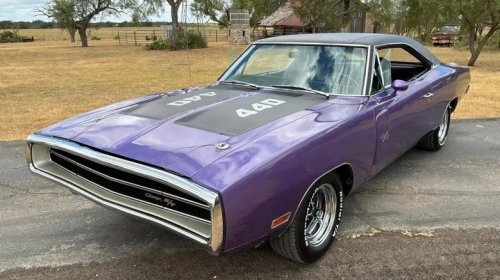
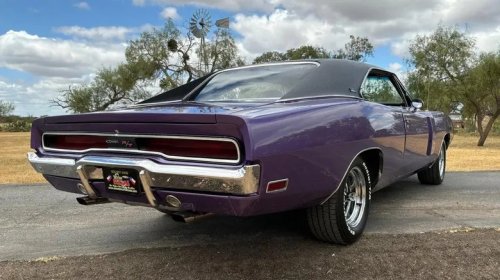
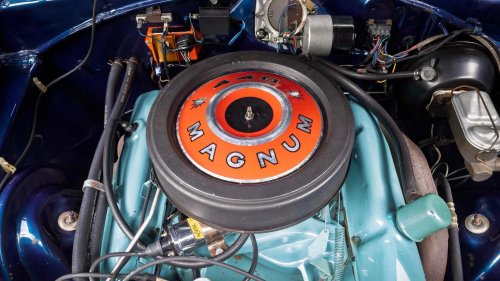
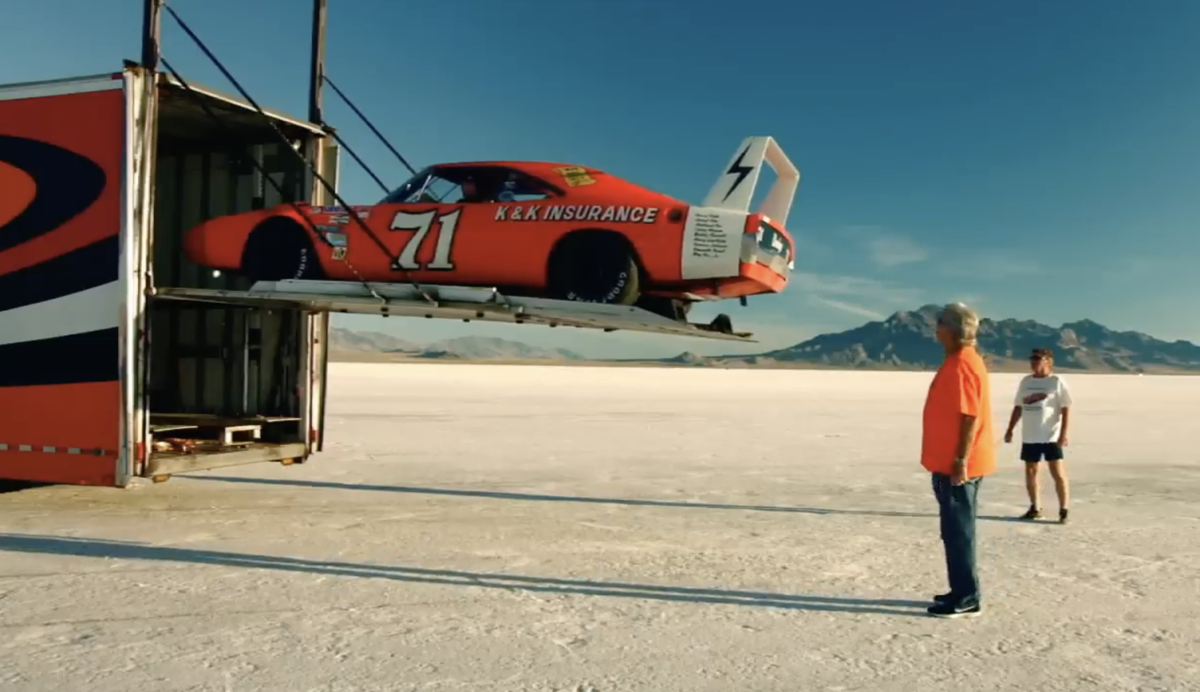
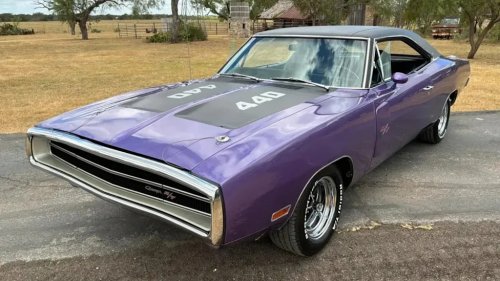
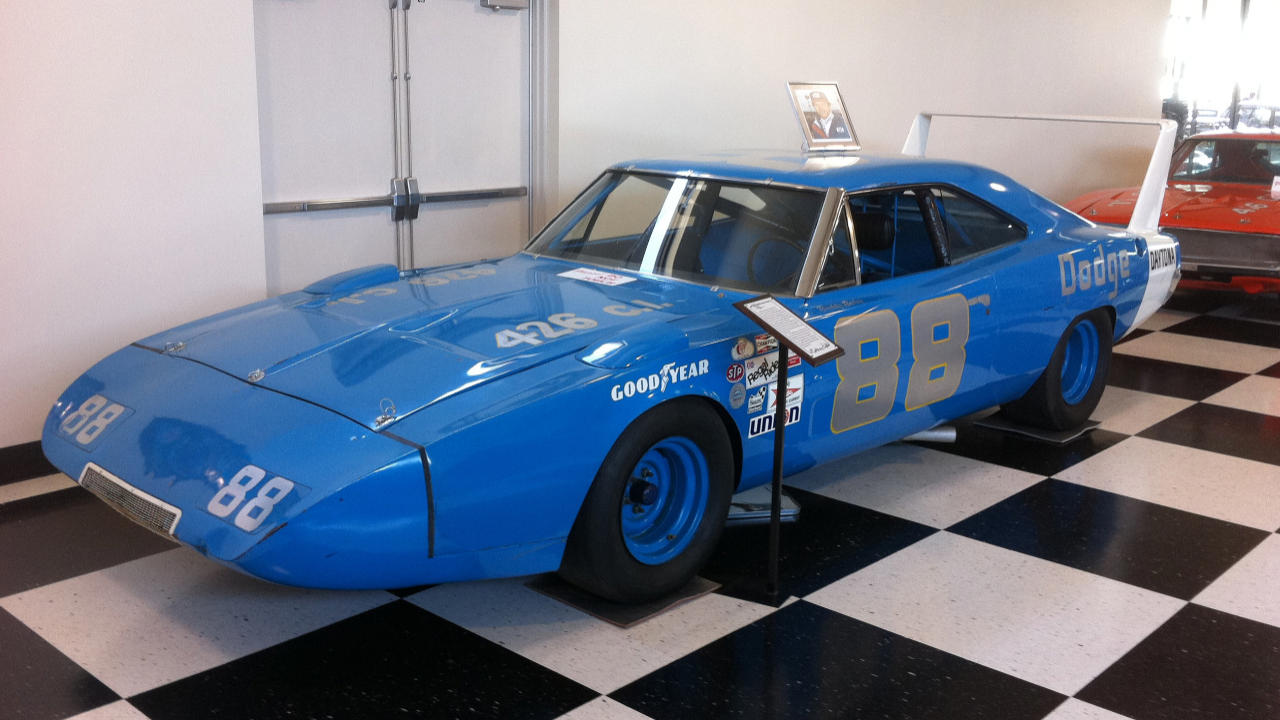
Dodge built the Daytona to win at speed and it didThe Dodge Charger Daytona arrived as a weapon, not a styling exercise. Built explicitly to conquer high-speed ovals, it turned wind-tunnel theory into raw lap time and rewrote what stock cars could do at full song. In a short, furious window, the Daytona proved that if engineers were allowed to chase speed without compromise, NASCAR would have to change to keep up. From frustration to a purpose-built missile The Dodge Charger did not begin life as a racing sledgehammer. It was a handsome fastback, designed more for showroom appeal than for slicing cleanly through the air at 190 miles per hour. On the track, that shape became a liability. At the big superspeedways, the regular Charger struggled aerodynamically, lifting in the draft and bleeding speed where it mattered most. Inside Chrysler, that frustration hardened into a clear mandate. Engineers were told to fix Dodge’s problem on the high-speed tracks, and they responded by treating the next race car like a guided project instead of a facelift. One account describes a key figure who moved from the Chrysler missile division to the testing grounds, bringing aerospace discipline to a stock car program that suddenly cared more about drag coefficients than chrome. The first attempt at an aero fix, the 1968 Dodge Charger 500, showed how far the brand still had to go. With the racing failure of the previous limited edition 1968 Dodge Charger in NASCAR, it was clear that a cleaned-up grille and flush rear window were not enough. Plymouth, chasing the same goal, had already aligned with superstar Richard Petty and needed a better platform. The message inside Dodge was simple: if the company wanted to win on Sunday, it had to stop massaging the Charger and start reinventing it for speed. The radical shape of the Charger Daytona The result of that reinvention was the 1969 Dodge Charger Daytona, a car that looked more like a prototype from Le Mans than a family coupe. Engineers focused on aerodynamics first and styling second. They extended the front with a massive nose cone that stretched roughly 18 inches ahead of the original bumper, reshaping the Charger into a long, pointed projectile. At the rear, they bolted on a towering wing that soared above the roofline, designed to sit in clean air and press the rear tires into the track at extreme speed. Contemporary descriptions of the project emphasize how strange the car seemed in the context of American ovals. One period-minded explainer asks what happens when a street car designed for cruising boulevards is handed to engineers and told to make it go 200 m. The Charger Daytona was that answer, a street-legal homologation special optimized around a single objective: win at the fastest tracks in the country. Under the skin, Dodge paired the aero work with serious power. Many of the road cars left the factory with big-block V8s, including the famous 440 Magnum. One detailed registry notes that only 505 examples of the Daytona were built as a high-performance, limited-edition version of the Dodge Charger, equipped with either a 440 M or a 426 Hemi. The small production run was not a marketing gimmick. NASCAR rules required a minimum number of street cars to legitimize any body style on the track, and Dodge built just enough to satisfy the rulebook and unleash the shape it really wanted to race. The combination of that long nose, tall wing, and powerful engine package created a car that looked outrageous in the dealership and devastating in the draft. Rivals joked that it resembled a wedge of cheese or a science experiment, yet those same rivals watched it drive away on the superspeedways. Homologation, Hemi power, and the business of speed Behind the wild shape sat a straightforward business calculation. Dodge did not expect to sell thousands of Charger Daytonas. It needed to build just enough to qualify the car as a stock body, then let the racing program justify the investment through trophies and television coverage. That limited-production mindset created some of the most coveted Mopar hardware of the era. A number of Daytonas were fitted with the legendary 426 Hemi, the racing-bred V8 that had already become a terror in stock car and drag competition. One surviving example, a 1969 Dodge Charger Daytona with a 426 Hemi, has been authenticated by Bobby Allison as a genuine race-connected car, a reminder of how tightly intertwined the showroom models were with the competition program. Another historically significant machine was the Dodge Charger Daytona HEMI fielded by the K&K Insurance team. That bright red car, often referred to as the Dodge Charger Daytona, carried sponsorship from K&K Insurance and became one of the most successful stock cars of its time. The same car, known in some accounts as the K&K Insurance Daytona, was piloted by Bobby Isaac to the NASCAR Points Championship in 1970, proving that the Daytona concept worked over a full season as well as in headline-grabbing qualifying runs. The K&K operation had its own arc of glory and hardship. A later retrospective on that car notes that Perhaps the hardest-hit of the teams when rules shifted was Nord Krauskopf’s K&K Insurance outfit, which had built a championship program around the Daytona only to see NASCAR move away from such extreme aero cars. For Dodge, the short-term payoff was obvious. The Charger Daytona delivered exactly what the company had promised dealers and fans. It took a car that had been a liability at high speed and turned it into a benchmark, then leveraged that success to burnish the entire brand. In the long term, the car also helped cement the legend of the Hemi and of the engineers who had treated a stock car like a wind-tunnel project. Buddy Baker, 200 MPH, and the Talladega breakthrough If the Charger Daytona was built to win at speed, its defining moment came when one driver pushed it through a barrier that had loomed over American oval racing for years. That driver was Buddy Baker, a tall, fearless racer with a reputation for raw pace on the big tracks. In the spring of 1970, Baker climbed into a Dodge Charger Daytona and attacked the newly built Alabama International Motor Speedway, better known as Talladega. On March 24 of that year, according to one detailed account, Buddy Baker broke at Talladega, officially clocking a lap that exceeded 200 MPH. The same narrative frames that run as a moment that reshaped racing history, and it notes that Baker, a race car driver from Charlotte, Mecklenburg County, North Carolina, had become the first to officially push a stock car past that psychological ceiling. Another commemoration of the day recounts that Buddy Baker broke at Alabama International Motor Speedway in a Dodge Charger Daytona, marking the first time a stock car had run that fast in sanctioned conditions. The speed was not just a number. It was a statement about what the Daytona’s long nose and high wing could do when paired with a willing right foot. Later reflections on that run tend to focus on how it changed the conversation around safety and technology. One modern storyteller asks how that American moment, when Dodge decided in 1969 that it had had enough of losing on the big tracks and built a car to go past 200 mph, forced everyone in the sport to reconsider what was possible. The Charger Daytona had not just won a race. It had pushed the entire discipline into a new speed bracket. Even with that achievement, the Daytona’s story at the superspeedways contained layers. Some fans point out that when someone mentions Buddy Bakers 200 M Dodge Daytona, the question often follows of why it was not fast enough to sit on the pole at Daytona. That nuance reinforces the idea that the car’s legend was built as much on symbolic milestones and season-long performance as on any single qualifying sheet. Bobby Isaac, championships, and land speed records While Buddy Baker gave the Charger Daytona its headline speed number, another driver turned the car into a championship tool. Bobby Isaac was not as physically imposing as Baker, but he had a reputation for precision and relentlessness. Paired with the K&K Insurance team, Isaac took the Daytona into the grind of a full NASCAR season and emerged with the ultimate prize. The same K&K Dodge Charger Daytona HEMI that terrorized superspeedways in qualifying trim became Isaac’s weapon of choice in points races. Accounts of that season emphasize that the K&K Insurance Daytona, with its bright red paint and Hemi power, delivered consistency as well as outright pace. Isaac used that combination to secure the NASCAR Points Championship in 1970, validating the Daytona concept in the only language that matters to team owners and sponsors: a title. Isaac’s story with the Daytona did not end with that championship. Later in his career, he took a version of the car to a high-speed test session aimed at setting land speed marks. In that setting, free from the constraints of traffic and race strategy, the Charger Daytona again showed what its aero package could do when unleashed. The same sources that celebrate the K&K car’s championship also reference its role in landspeedrecord attempts, reinforcing the idea that the Daytona was as much a laboratory for speed as it was a stock car. The partnership between Isaac, team owner Nord Krauskopf, and K&K Insurance also highlights the business side of the Daytona story. Sponsorship dollars flowed toward the fastest cars, and the Insurance branding on the red Hemi Daytona became a familiar sight at the front of the field. When rules changes later curtailed the use of such extreme aero machines, that same team felt the impact acutely, a reminder that engineering breakthroughs in racing often come with a short competitive half-life. Engineering details that made the Daytona work The Charger Daytona’s success did not come from brute force alone. Its most significant advantages were the product of careful aerodynamic thinking that had rarely been applied so aggressively in American stock car racing. The long nose cone at the front did more than look dramatic. By stretching the leading edge of the car, engineers reduced the frontal stagnation point and allowed air to flow more smoothly over the hood and windshield. This reduced drag and helped keep the front tires planted at high speed. The nose also enclosed the grille and headlights, eliminating the pockets and edges that had caused turbulence on the regular Charger body. At the rear, the tall wing was not a styling flourish. It was positioned deliberately high so that it sat in relatively undisturbed air above the car’s roofline. That placement allowed the wing to generate consistent downforce, pressing the rear tires into the track without adding as much drag as a lower, more turbulent-mounted spoiler might have. The result was a car that felt stable in the draft and under throttle, exactly what drivers needed when running side by side at Talladega or Daytona. Other details contributed as well. The rear window treatment on the Daytona, influenced by the lessons of the Charger 500, smoothed airflow off the roof and reduced the vacuum that had been pulling the back of the car upward at speed. Combined with the wing, this change helped keep the car settled as speeds climbed toward and beyond 200 mph. These changes were not theoretical. They were validated on track, where the Daytona began to collect numerous race and pole records.. The same reference that recounts the failure of the Charger 500 also credits the Charger Daytona with a string of new benchmarks, confirming that the radical bodywork had translated directly into competitive advantage. Inside Chrysler, those results vindicated the decision to bring aerospace-minded engineers into the program. One narrative describes how a key figure who had worked in the missile division shifted to the testing grounds to help create what some later called the fastest Dodge vehicle ever created. The Charger Daytona was no longer just a car. It was a proof of concept for applying high-level aerodynamic science to stock car racing. Rivals, regulation, and the end of the winged era The Charger Daytona did not operate in a vacuum. Its success pushed rivals to respond, and it forced NASCAR to confront the question of how far manufacturers would be allowed to go in the pursuit of speed. Plymouth, already aligned with Richard Petty, had its own aero car in the works and would soon field the Superbird, a cousin to the Daytona that shared the same long nose and towering wing philosophy. Together, these so-called winged cars dominated the big tracks and shifted the balance of power toward Chrysler brands. That dominance came at a cost. As speeds climbed and the gap between factory-backed aero specials and conventional stockers widened, concerns grew about safety and competitive balance. NASCAR responded with rule changes that effectively ended the winged era, limiting engine displacement for aero cars and tightening the homologation requirements that had allowed such radical shapes to appear in the first place. Teams like K&K Insurance, which had built their programs around the Daytona, were hit hard. One retrospective on the record-breaking K&K Charger Daytona notes that Nord Krauskopf and his Insurance-backed operation were among the hardest-hit by the shift, given how much they had invested in a car that could no longer run in its original form for more than a dozen years afterward. The rule changes did not erase what the Charger Daytona had accomplished. They did, however, freeze its achievements in a specific historical window. The car became a symbol of how quickly technology could leap ahead when regulations allowed it, and of how equally quickly a sanctioning body could move to rein it back in. For fans and collectors, that short window only added to the car’s mystique. With only 505 road-going examples and a handful of truly significant race cars, the Daytona became a rare artifact of a time when engineers were briefly given permission to chase the horizon as fast as they could. Legacy on the street and in memory Decades after its last competitive laps, the Dodge Charger Daytona still commands attention whenever one appears in public. Its long nose and high wing remain instantly recognizable, even to casual observers who may not know the details of Buddy Baker’s record run or Bobby Isaac’s championship season. Surviving race cars and authentic street models trade for significant sums, and they often carry detailed documentation to prove their lineage. The barn-find Hemi Daytona authenticated by Bobby Allison is a case in point, a car that moved from obscurity to headline status once its connection to period competition was confirmed. Enthusiast groups and historians continue to revisit the Daytona’s story, sometimes debating fine points such as how many cars were built for homologation or how the car’s performance at one track compared to another. One discussion highlights that only 503 of the 1969 Dodge Daytonas were produced for certain homologation purposes and revisits how the car that ran 200 M at Talladega was still not quite quick enough to dominate every qualifying sheet at Daytona. These nuances give the legend texture, reminding fans that even the most fearsome machines had strengths and weaknesses. Internationally, the Charger Daytona has attracted attention in multiple languages and regions. Variants of its story appear in resources like the German, Basque, Persian, and French versions of Dodge Charger Daytona coverage, as well as in other Wikipedia entries that trace its history. Even the infrastructure that supports those references, such as the fundraising pages at Discovered through the Dodge Charger Daytona Wikipedia trail, reflects how deeply the car has been woven into shared automotive knowledge. Modern storytellers return to the Daytona not just for nostalgia but for what it represents about engineering ambition. One video essay frames the question of what happens when a company like Dodge decides it has had enough of losing and commits to building a car that can run at 200 mph on a stock car oval. Another piece revisits how a mechanic’s “weird” trick helped the 1969 Dodge reach that 200 m target, suggesting that even within a highly engineered project, individual ingenuity still mattered. The Charger Daytona’s influence can be seen in later performance cars that embrace unapologetic aero devices, from track-focused modern muscle to purpose-built racing machines. Few of those later cars, however, were forced to pass through a dealer showroom in order to qualify for a rulebook. That tension between race and road is part of what makes the Daytona so compelling. It was a car that looked like a cheat code yet carried a license plate. Why the Daytona still defines speed The headline achievements associated with the Dodge Charger Daytona can be listed quickly. It helped Buddy Baker become the first stock car driver to officially break 200 MPH at Talladega. It carried Bobby Isaac and the K&K Insurance team to the NASCAR Points Championship in 1970. It set numerous race and pole records and forced NASCAR to rethink its rules for body shapes and engine sizes. Those facts alone would secure the Daytona a place in motorsport history. What elevates it further is the clarity of its purpose. The car existed because Dodge wanted to win at speed and was willing to reshape a production model around that single goal. From the extended nose to the towering wing, every controversial feature on the Daytona can be traced back to that mandate. More from Fast Lane Only Unboxing the WWII Jeep in a Crate 15 rare Chevys collectors are quietly buying 10 underrated V8s still worth hunting down Police notice this before you even roll window down



















 +39 others